第30集:马来亚共产党的领袖 — 陈平与阿都拉·西迪:一生影像
Episode 30: Key Leaders of the CPM — Chin Peng & Abdullah C.D.: A Life Album
在马来亚共产党跨越近六十载的反殖反帝民族解放运动与和平转型史中,中央委员会总书记陈平(1924年10月21日-2013年9月16日)与马共中央主席阿都拉·西迪(1923年10月2日-2024年1月13日)宛如双峰并峙,共同谱写了一曲跨越巫、华族群藩篱与冷战疆界的南洋革命史诗。本集完整典藏并深度考证《马来亚共产党的领袖 - 陈平与阿都拉•西迪:一生影像》(Life Album)大型历史图集档案的41幅珍贵历史照片与双语文献:从霹雳州实兆远王氏家族全家福与南洋骑楼故居,到1965年3月首次会见毛泽东主席及1986年与妻子李坤华海滨留影;从1989年12月《合艾和平协议》前夜中外记者招待会、陈平重着人民军戎装深入森林营地传达和平精神,到泰国诗丽吉王后亲访朱拉蓬公主第十村;从阔别53年后重逢二战盟军136部队拉波博医生、撰写《我方的历史》、接待赛·扎哈利夫妇来访、2004年出席新加坡东南亚研究院(ISEAS)学术研讨会,到同昔日马泰军警谈判对手(差瓦立上将、披讪中将、前全国总警长拉欣诺、前政治部顾问姚光耀)及宪法维权大律师(拉惹阿兹、汤米托马斯)的世纪握手;从1998年12月1日阿都拉·西迪、拉昔·迈丁与应敏钦获霹雳苏丹阿兹兰沙殿下伉俪接见、2009年《合艾和平协议》二十周年庆典,直至2013年陈平部分骨灰撒向公海与2019年9月16日魂归实兆远父母义山及中央山脉脚下的世纪归乡,完整定格两位革命领袖“不枉此生、死而无憾”的一生影像。
Across nearly six decades of anti-colonial national liberation struggle and eventual peace transition led by the Communist Party of Malaya (CPM), General Secretary Chin Peng (October 21, 1924 – September 16, 2013) and Party Chairman Abdullah C.D. (October 2, 1923 – January 13, 2024) stood together as twin pillars of a trans-ethnic Nanyang revolutionary epic. This episode comprehensively curates and contextualizes 41 rare archival photographs and bilingual inscriptions from the historical archive 'Key Leaders of the CPM: Chin Peng & Abdullah C.D. — A Life Album'. Spanning from Chin Peng and Lee Khoon Wah's family portrait and childhood shophouse home in Sitiawan, Perak, to his March 1965 first meeting with Chairman Mao Zedong and 1986 seaside portrait with his wife; from the December 1989 Haadyai Peace Accord press reception and Chin Peng's uniformed inspection visits to the jungle camps, to Thai Queen Sirikit's royal visit to Chulabhorn Village No. 10; from his reunion 53 years after WWII with Force 136 medical officer Dr. Rapoport, authoring 'My Side of History', hosting Said Zahari and his wife, and addressing the 2004 ISEAS seminar in Singapore, to historic handshakes with former Malaysian and Thai military/police negotiators (Gen. Chavalit, Lt. Gen. Pisan, Tan Sri Rahim Noor, Yau Kong Yew) and senior constitutional lawyers (Raja Aziz Addruse, Tommy Thomas); and from Abdullah C.D. and Suriani Abdullah's December 1, 1998 royal audience with Sultan Azlan Shah of Perak and the 2009 20th Anniversary of the Haadyai Accords, to the scattering of Chin Peng's ashes on the high seas (2013) and his final homecoming to Sitiawan, his parents' cemetery, the foothills of the Main Range near Chemor, and the hillside near Lumut Jetty on September 16, 2019.
第一章:实兆远故土与峥嵘岁月:从南洋骑脚车店少年、首次会见毛泽东主席到革命伴侣相濡以沫(1923–1986)
Chapter 1: Sitiawan Roots and Years of Struggle: From a Nanyang Bicycle Shophouse Youth and First Meeting with Chairman Mao to Revolutionary Companionship (1923–1986)
在马来亚共产党横跨近六十载的反殖反帝武装斗争与和平转型史中,中央委员会总书记陈平(Chin Peng,原名王文华 Ong Boon Hua,1924年10月21日—2013年9月16日)与马共中央主席阿都拉·西迪(Abdullah C.D.,原名 Cik Dat bin Anjang Abdullah,1923年10月2日—2024年1月13日)宛如双峰并峙,共同构成了一部跨越族群与国界的南洋革命史诗。陈平诞生于霹雳州曼绒县实兆远(Sitiawan)甘文阁一户经营脚车与轮胎修理生意的福清籍华侨家庭;阿都拉·西迪则出生在同属霹雳州的中霹雳巴力(Parit)兰波基里(Lambor Kiri)马来乡村。两位同在霹雳河流域与实兆远海岸成长起来的青年,在二十世纪三十年代末反法西斯救亡运动与反英殖民浪潮的洗礼下投身马来亚共产党,并在日占时期的马来亚人民抗日军(MPAJA)及1948年开启的抗英民族解放战争中生死与共、并肩作战。文献卷首以深沉的绛红色铭文,镌刻了陈平对全体战友与牺牲先烈的庄严致敬,作为整幅“一生影像”(Life Album)的精神序言。
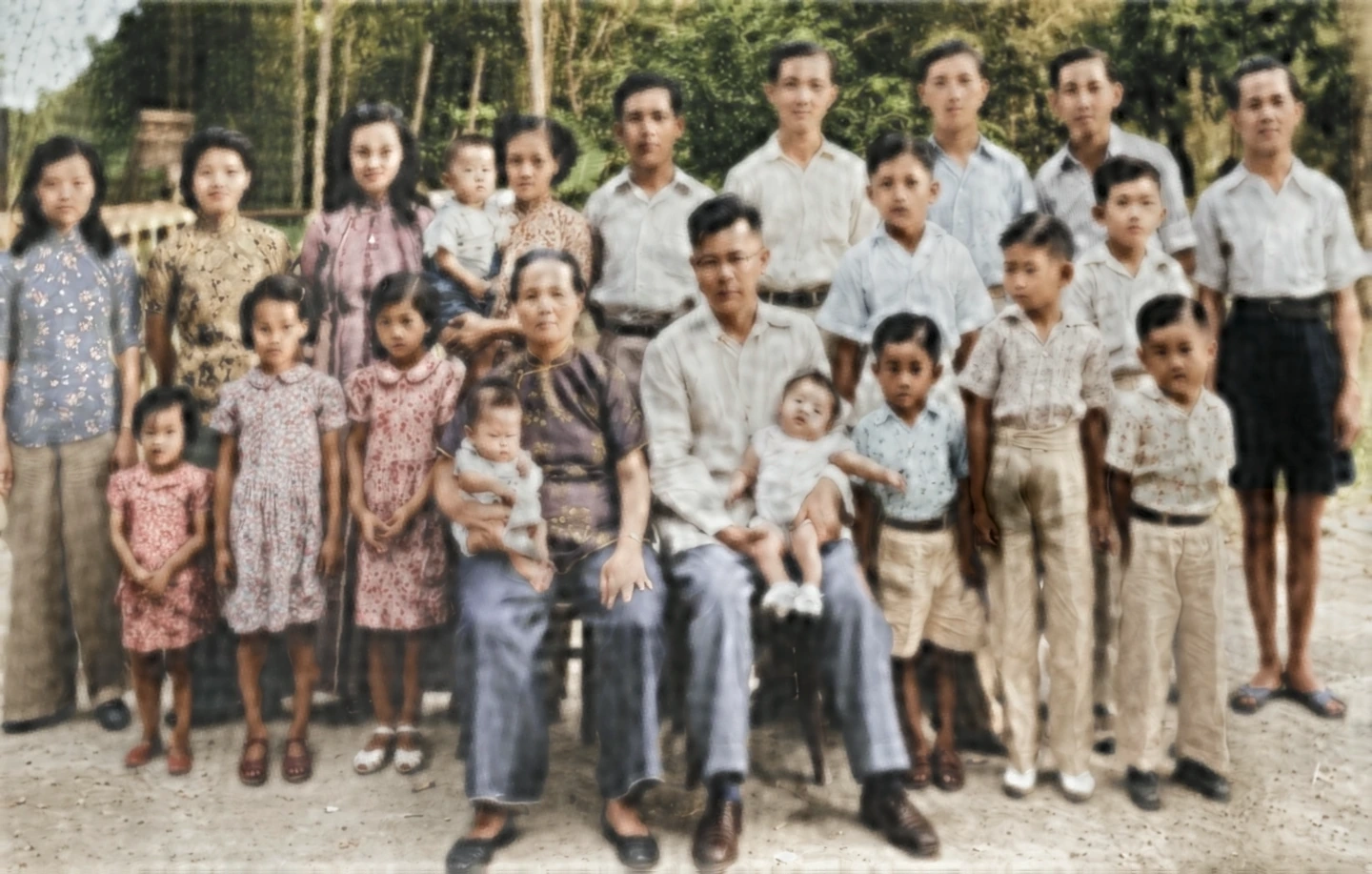
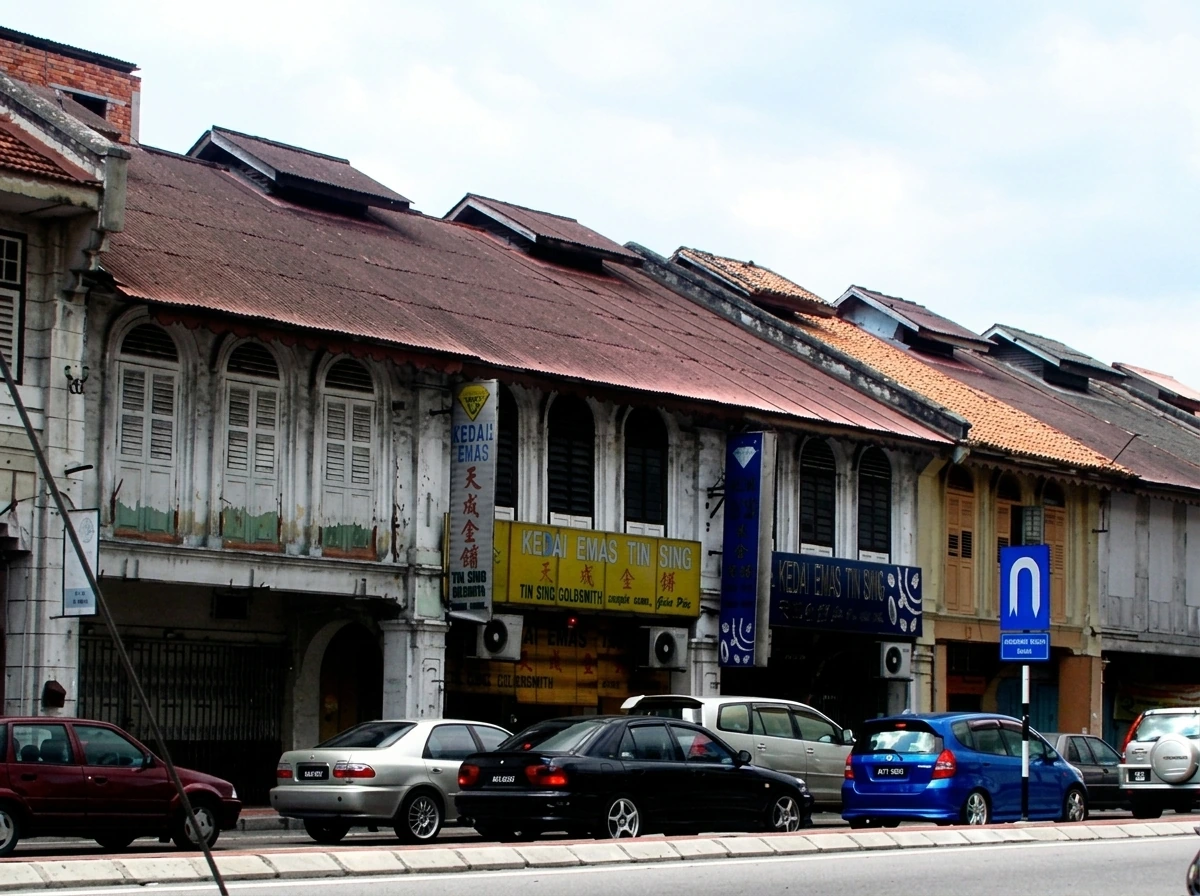
实兆远的街巷与骑楼店屋,是陈平革命生涯的地理起点与终生魂牵梦萦的情感归宿。其父王声标在实兆远十字路经营脚车行,这座两层南洋骑楼(一楼后为“天成金铺” Kedai Emas Tin Sing 毗邻店屋)不仅是王氏家族生息之所,更见证了少年王文华挑灯夜读进步书刊、立志终结殖民统治的初心。在四十年代的地下工作与抗日烽火中,陈平与同样投身革命的进步女青年李坤华(Lee Khoon Wah)结为终生伴侣。实兆远王氏家族的珍贵大合照中,青年时期的陈平与李坤华并立于后排,定格了他们在转入漫长丛林战争与跨国流亡前夕,与父母兄妹共聚天伦的温情瞬间。
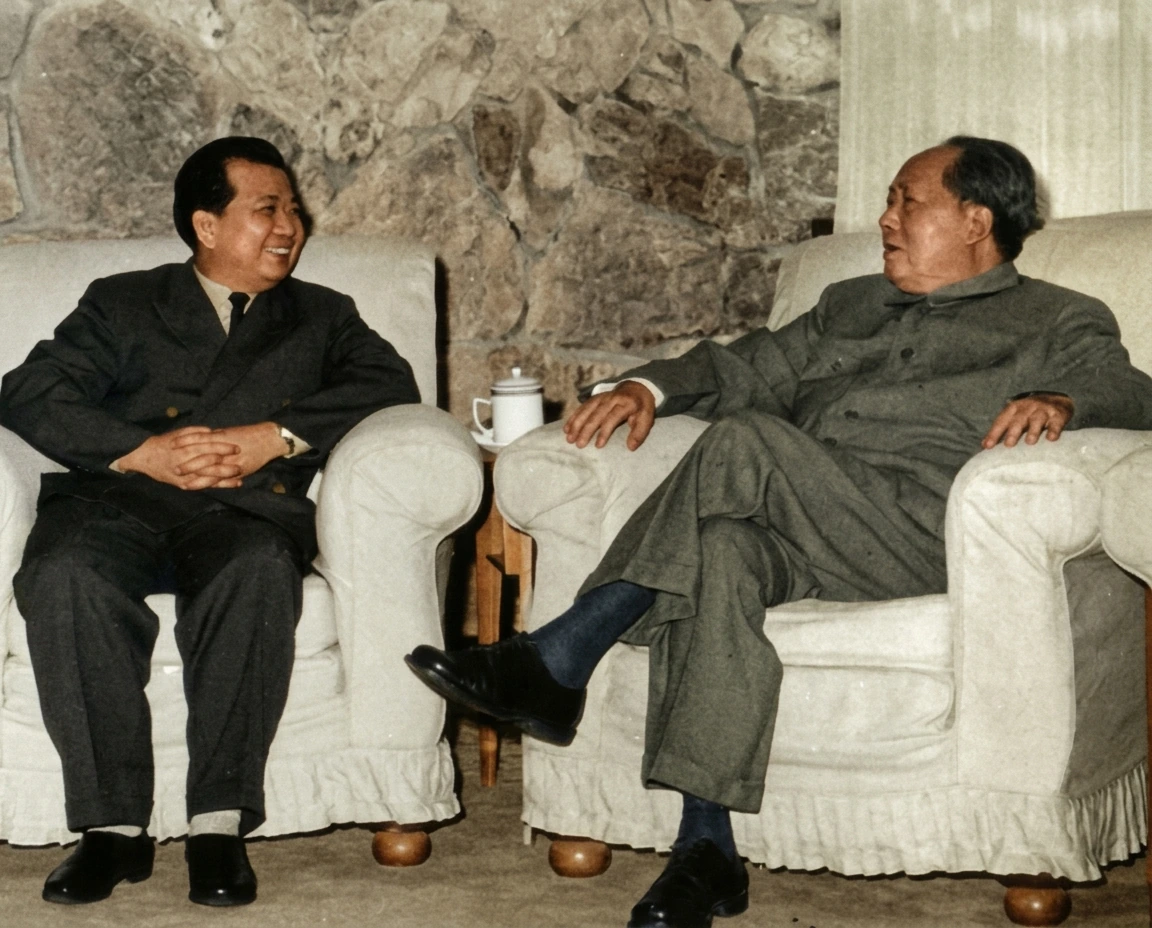
1955年12月华玲和谈(Baling Talks)因英方与东姑政权坚持变相受降条件而破裂后,马共武装部队坚守泰马边境丛林根据地。1960年底,鉴于边境游击战转入战略相持阶段,马共中央决定派遣总书记陈平秘密北上中国,统筹部署新阶段的反殖反帝民族解放运动并争取国际主义援助。1965年3月,毛泽东主席首次亲切会见陈平,双方就东南亚反帝民族解放运动形势与武装斗争战略方针进行了深入交谈,留下了极具历史分量的珍贵合影。
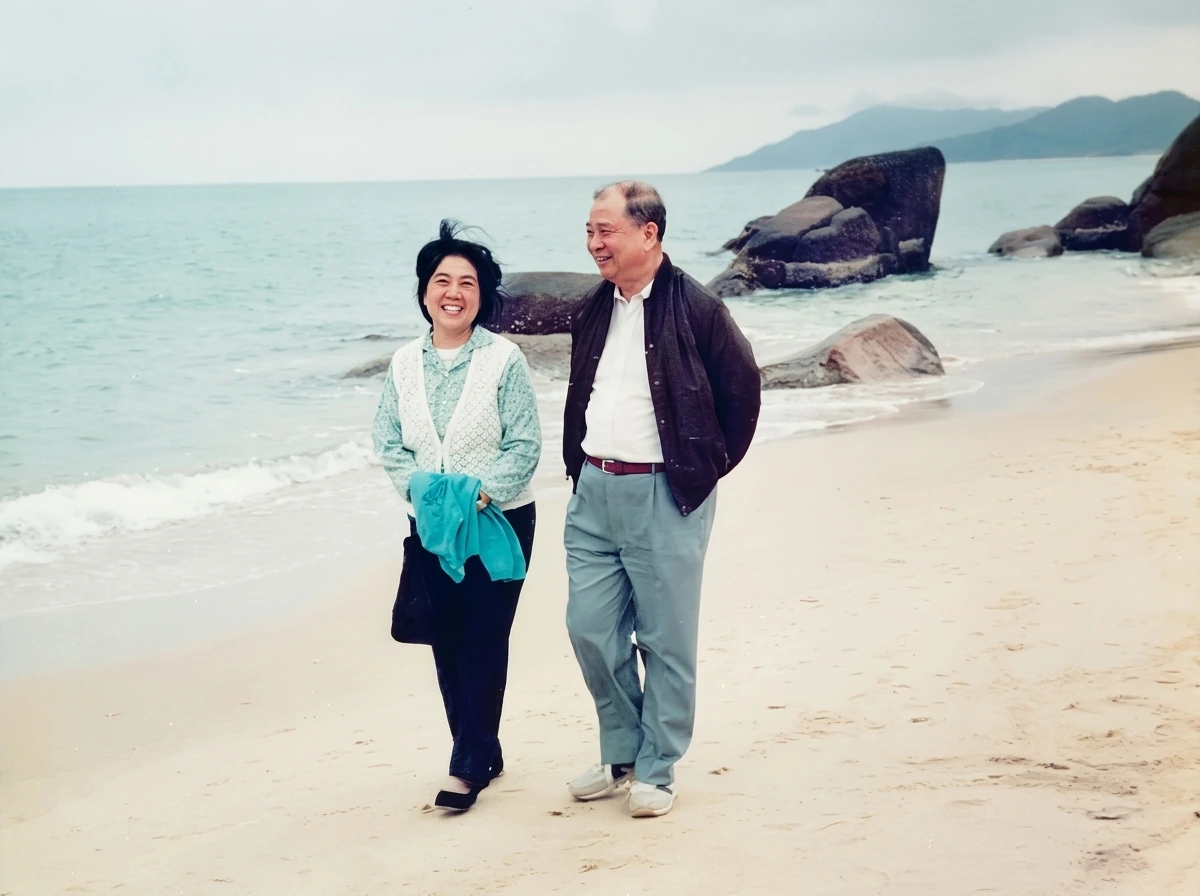
而在漫长的海外工作与流亡岁月中,陈平与始终默默承担家庭重担、支持革命事业的妻子李坤华相濡以沫。两人于1986年在海滨长椅上留下的合影,生动映照出这对革命伴侣历经半世纪地下斗争、丛林烽火与风雨沧桑后的宁静与坚韧。
Across nearly six decades of anti-colonial, anti-imperialist armed struggle and eventual peace transition led by the Communist Party of Malaya (CPM), Central Committee General Secretary Chin Peng (born Ong Boon Hua, October 21, 1924 – September 16, 2013) and Party Chairman Abdullah C.D. (born Cik Dat bin Anjang Abdullah, October 2, 1923 – January 13, 2024) stood side by side as twin pillars of a trans-ethnic Nanyang revolutionary epic. Born into a Hockchia immigrant family running a bicycle and tire repair shophouse in Sitiawan, Perak, Chin Peng grew up in the same Perak state where Abdullah C.D. was born in the Malay village of Lambor Kiri, Parit. Tempered by the late-1930s anti-fascist salvation movement and anti-colonial awakening, both young men joined the CPM and fought shoulder to shoulder through the Japanese Occupation in the Malayan People's Anti-Japanese Army (MPAJA) and the subsequent Anti-British National Liberation War launched in 1948. At the top of the exhibition board, a deep crimson inscription preserves Chin Peng's solemn tribute to his fallen comrades as the spiritual prologue to the entire 'Life Album'.
The streets and arcaded shophouses of Sitiawan formed both the geographical starting point and lifelong emotional anchor of Chin Peng's revolutionary journey. His father, Ong Seng Peow, ran a bicycle dealership in a two-story Nanyang shophouse near the Sitiawan crossroads (later adjacent to Kedai Emas Tin Sing), which witnessed young Ong Boon Hua reading progressive literature late into the night and resolving to end colonial rule. During the underground struggle and anti-Japanese resistance of the 1940s, Chin Peng married fellow revolutionary Lee Khoon Wah. In a rare Ong family group portrait taken in Sitiawan, the young Chin Peng and Lee Khoon Wah stand in the back row—capturing a precious moment of domestic warmth with his parents and siblings prior to decades of jungle warfare and transnational exile.
Following the breakdown of the Baling Talks in December 1955 over the British and Alliance government's insistence on terms tantamount to surrender, CPM armed forces held fast to their base areas along the Thai-Malaysian border. At the end of 1960, as the border campaign entered a protracted strategic phase, the CPM Central Committee dispatched General Secretary Chin Peng northward to China to coordinate internationalist support and strategic direction for the Malayan national liberation struggle. In March 1965, Chairman Mao Zedong met Chin Peng for the first time for in-depth discussions on anti-imperialist national liberation movements across Southeast Asia, recorded in a historic photograph.
Throughout the decades of overseas revolutionary work and exile, Chin Peng and his devoted wife Lee Khoon Wah—who quietly shouldered family responsibilities in steadfast support of the cause—weathered every trial together, as captured in their serene 1986 seaside photograph.
你们作出的牺牲,昭示了你们对国家和人民的深厚情感。一个人只要曾参与过为他人建立更美好世界的努力,他就可以感觉不枉此生、死而无憾。The sacrifices that you made testify to the depth of your love for our country and fellow countrymen. Our lives take on its full meaning only when, by the time we depart from this world, we know we have done our bit in making it a better place for others.— 陈平 | Chin Peng
在马来亚共产党横跨近六十载的反殖反帝武装斗争与和平转型史中,中央委员会总书记陈平(Chin Peng,原名王文华 Ong Boon Hua,1924年10月21日—2013年9月16日)与马共中央主席阿都拉·西迪(Abdullah C.D.,原名 Cik Dat bin Anjang Abdullah,1923年10月2日—2024年1月13日)宛如双峰并峙,共同构成了一部跨越族群与国界的南洋革命史诗。陈平诞生于霹雳州曼绒县实兆远(Sitiawan)甘文阁一户经营脚车与轮胎修理生意的福清籍华侨家庭;阿都拉·西迪则出生在同属霹雳州的中霹雳巴力(Parit)兰波基里(Lambor Kiri)马来乡村。两位同在霹雳河流域与实兆远海岸成长起来的青年,在二十世纪三十年代末反法西斯救亡运动与反英殖民浪潮的洗礼下投身马来亚共产党,并在日占时期的马来亚人民抗日军(MPAJA)及1948年开启的抗英民族解放战争中生死与共、并肩作战。文献卷首以深沉的绛红色铭文,镌刻了陈平对全体战友与牺牲先烈的庄严致敬,作为整幅“一生影像”(Life Album)的精神序言。
实兆远的街巷与骑楼店屋,是陈平革命生涯的地理起点与终生魂牵梦萦的情感归宿。其父王声标在实兆远十字路经营脚车行,这座两层南洋骑楼(一楼后为“天成金铺” Kedai Emas Tin Sing 毗邻店屋)不仅是王氏家族生息之所,更见证了少年王文华挑灯夜读进步书刊、立志终结殖民统治的初心。在四十年代的地下工作与抗日烽火中,陈平与同样投身革命的进步女青年李坤华(Lee Khoon Wah)结为终生伴侣。实兆远王氏家族的珍贵大合照中,青年时期的陈平与李坤华并立于后排,定格了他们在转入漫长丛林战争与跨国流亡前夕,与父母兄妹共聚天伦的温情瞬间。
Across nearly six decades of anti-colonial, anti-imperialist armed struggle and eventual peace transition led by the Communist Party of Malaya (CPM), Central Committee General Secretary Chin Peng (born Ong Boon Hua, October 21, 1924 – September 16, 2013) and Party Chairman Abdullah C.D. (born Cik Dat bin Anjang Abdullah, October 2, 1923 – January 13, 2024) stood side by side as twin pillars of a trans-ethnic Nanyang revolutionary epic. Born into a Hockchia immigrant family running a bicycle and tire repair shophouse in Sitiawan, Perak, Chin Peng grew up in the same Perak state where Abdullah C.D. was born in the Malay village of Lambor Kiri, Parit. Tempered by the late-1930s anti-fascist salvation movement and anti-colonial awakening, both young men joined the CPM and fought shoulder to shoulder through the Japanese Occupation in the Malayan People's Anti-Japanese Army (MPAJA) and the subsequent Anti-British National Liberation War launched in 1948. At the top of the exhibition board, a deep crimson inscription preserves Chin Peng's solemn tribute to his fallen comrades as the spiritual prologue to the entire 'Life Album'.
The streets and arcaded shophouses of Sitiawan formed both the geographical starting point and lifelong emotional anchor of Chin Peng's revolutionary journey. His father, Ong Seng Peow, ran a bicycle dealership in a two-story Nanyang shophouse near the Sitiawan crossroads (later adjacent to Kedai Emas Tin Sing), which witnessed young Ong Boon Hua reading progressive literature late into the night and resolving to end colonial rule. During the underground struggle and anti-Japanese resistance of the 1940s, Chin Peng married fellow revolutionary Lee Khoon Wah. In a rare Ong family group portrait taken in Sitiawan, the young Chin Peng and Lee Khoon Wah stand in the back row—capturing a precious moment of domestic warmth with his parents and siblings prior to decades of jungle warfare and transnational exile.
1955年12月华玲和谈(Baling Talks)因英方与东姑政权坚持变相受降条件而破裂后,马共武装部队坚守泰马边境丛林根据地。1960年底,鉴于边境游击战转入战略相持阶段,马共中央决定派遣总书记陈平秘密北上中国,统筹部署新阶段的反殖反帝民族解放运动并争取国际主义援助。1965年3月,毛泽东主席首次亲切会见陈平,双方就东南亚反帝民族解放运动形势与武装斗争战略方针进行了深入交谈,留下了极具历史分量的珍贵合影。
而在漫长的海外工作与流亡岁月中,陈平与始终默默承担家庭重担、支持革命事业的妻子李坤华相濡以沫。两人于1986年在海滨长椅上留下的合影,生动映照出这对革命伴侣历经半世纪地下斗争、丛林烽火与风雨沧桑后的宁静与坚韧。
Following the breakdown of the Baling Talks in December 1955 over the British and Alliance government's insistence on terms tantamount to surrender, CPM armed forces held fast to their base areas along the Thai-Malaysian border. At the end of 1960, as the border campaign entered a protracted strategic phase, the CPM Central Committee dispatched General Secretary Chin Peng northward to China to coordinate internationalist support and strategic direction for the Malayan national liberation struggle. In March 1965, Chairman Mao Zedong met Chin Peng for the first time for in-depth discussions on anti-imperialist national liberation movements across Southeast Asia, recorded in a historic photograph.
Throughout the decades of overseas revolutionary work and exile, Chin Peng and his devoted wife Lee Khoon Wah—who quietly shouldered family responsibilities in steadfast support of the cause—weathered every trial together, as captured in their serene 1986 seaside photograph.
第二章:合艾破晓与密林巡礼:1989年《合艾和平协议》前夜、重返第10与第12支队营地及泰王后访视第十村(1989–1990s)
Chapter 2: Dawn at Haadyai and Jungle Inspections: Eve of the 1989 Haadyai Peace Accord, Visits to the 10th and 12th Regiments, and Queen Sirikit's Visit to Village No. 10 (1989–1990s)
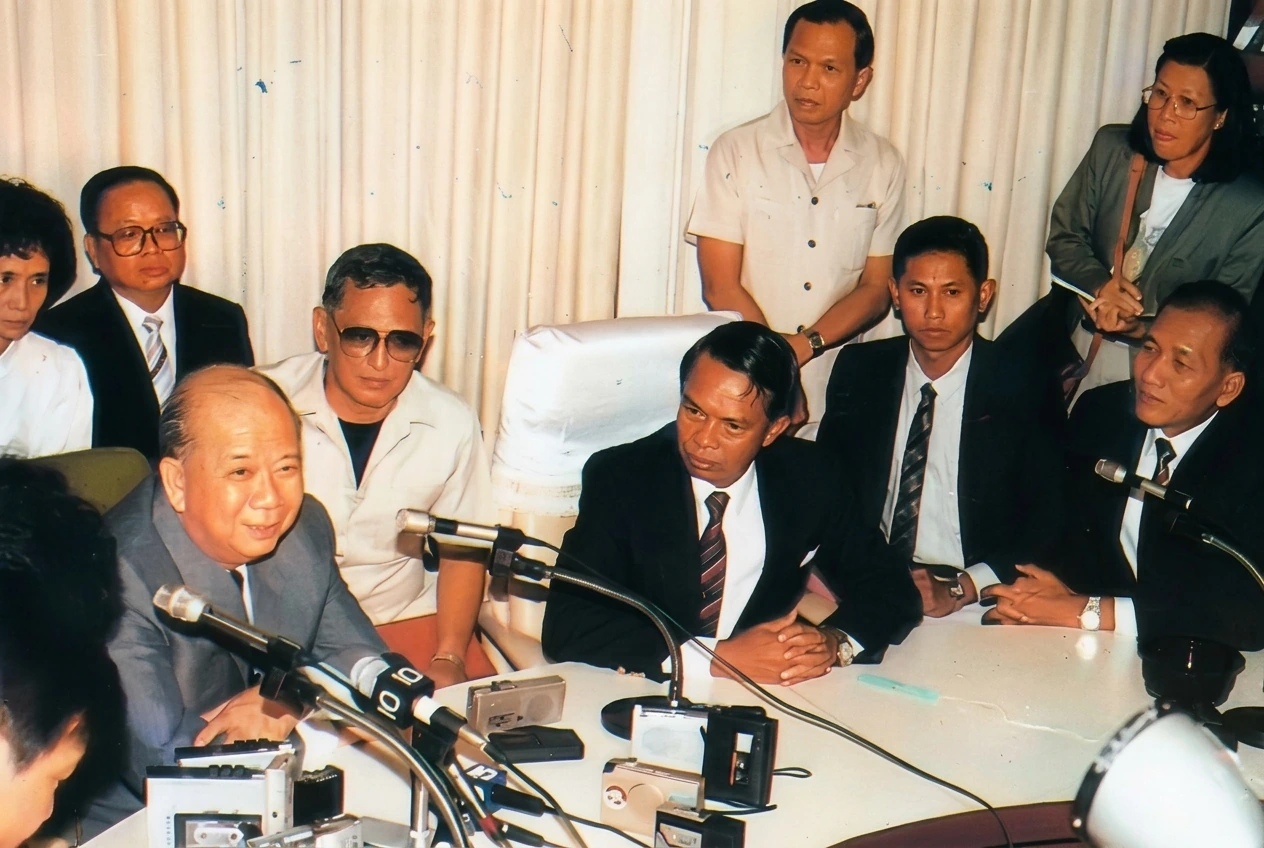
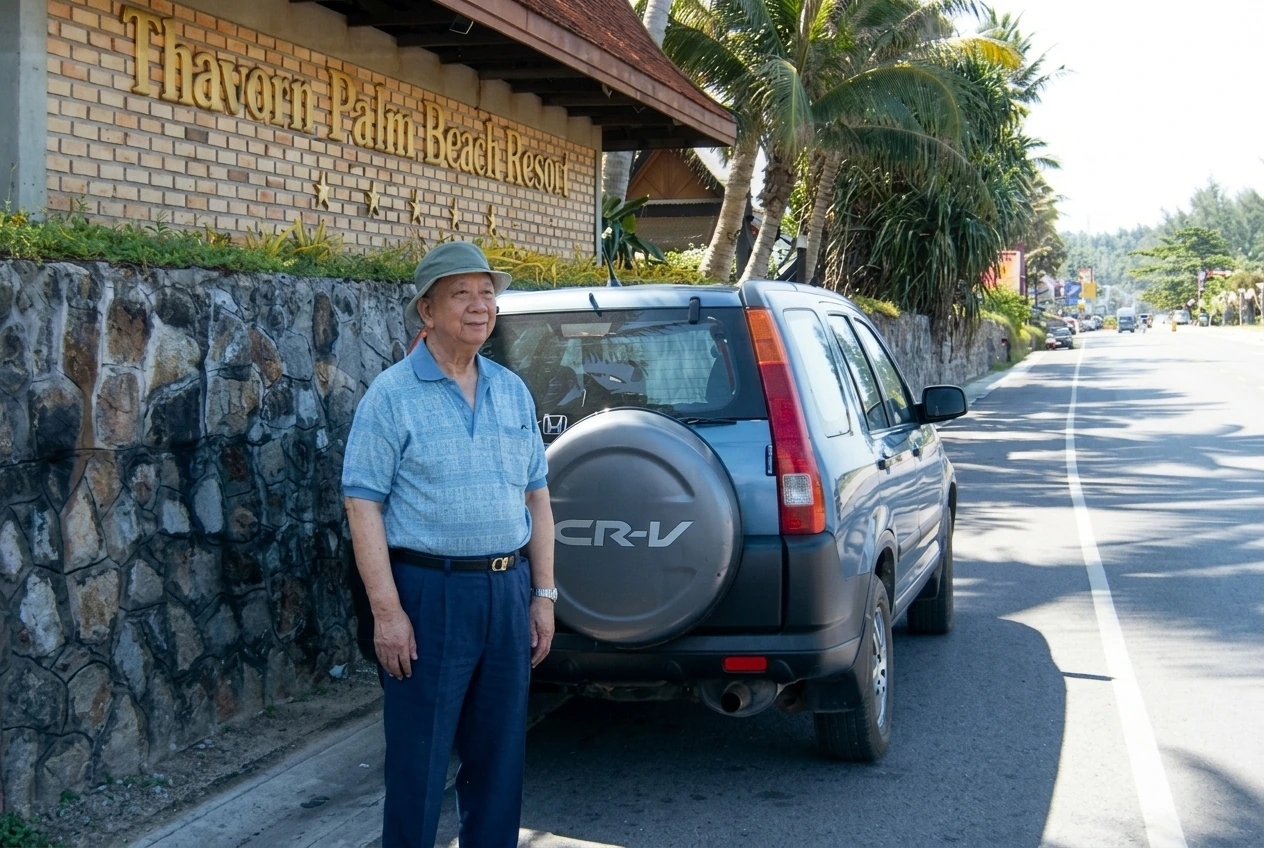
二十世纪八十年代末,随着冷战格局剧变与东南亚区域和平浪潮兴起,马共中央顺应历史大势,同马来西亚政府与泰王国政府展开了五轮艰苦卓绝的三方秘密会谈,其中最后一轮关键谈判在泰国普吉岛(Phuket)圆满收官。1989年12月1日晚,即《合艾和平协议》正式签署前夕,陈平与马共中央主席阿都拉·西迪、中委拉昔·迈丁(Rashid Maidin)在合艾蠡园大酒店(Lee Gardens Hotel)举行历史性的中外记者招待会。聚光灯与林立的麦克风前,隐身国际视野长达三十四年的陈平首次公开亮相,向全世界庄严宣告马共本着尊严、对等与爱国立场结束长达四十一年的武装斗争。多年后,陈平亦曾专程重返当年举行最后一轮三方会谈的普吉岛谈判旧址留影,回望这一改写马泰两国现代史的转折之地。
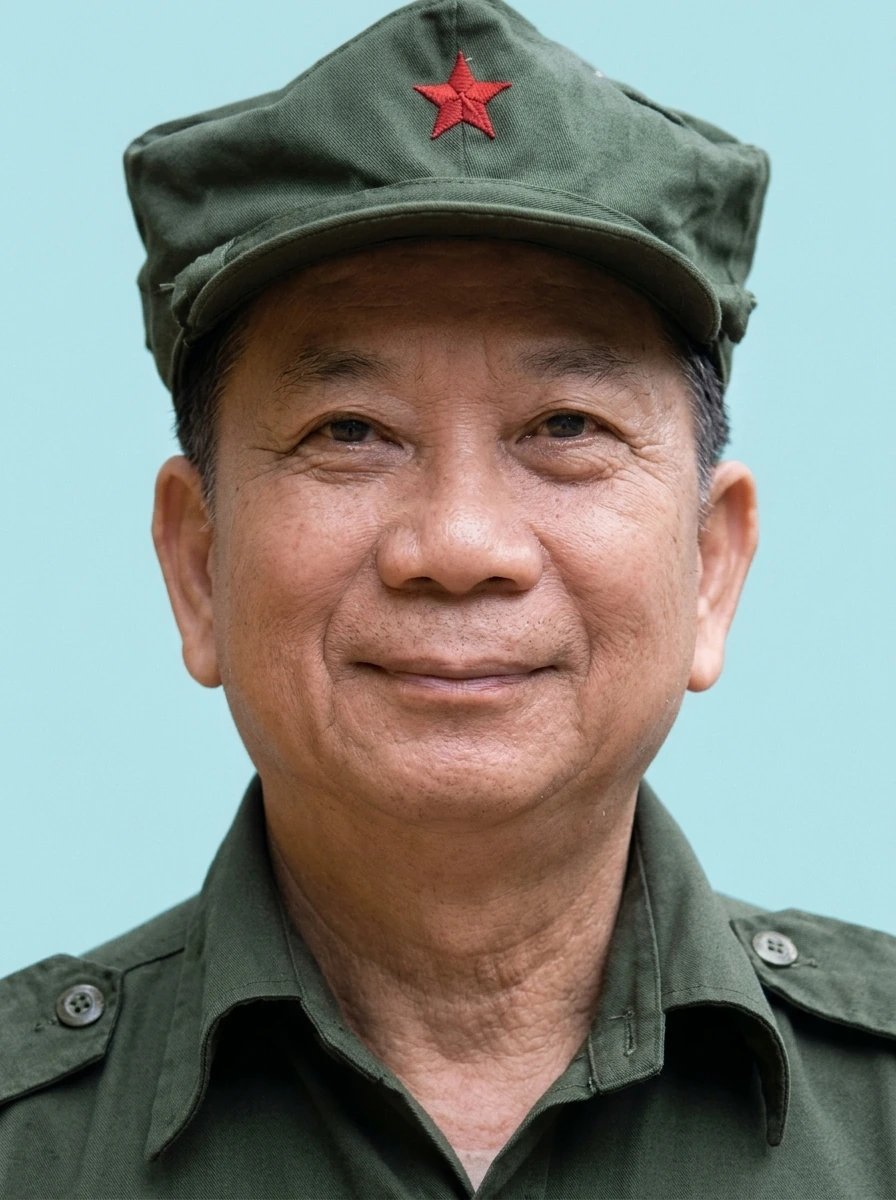
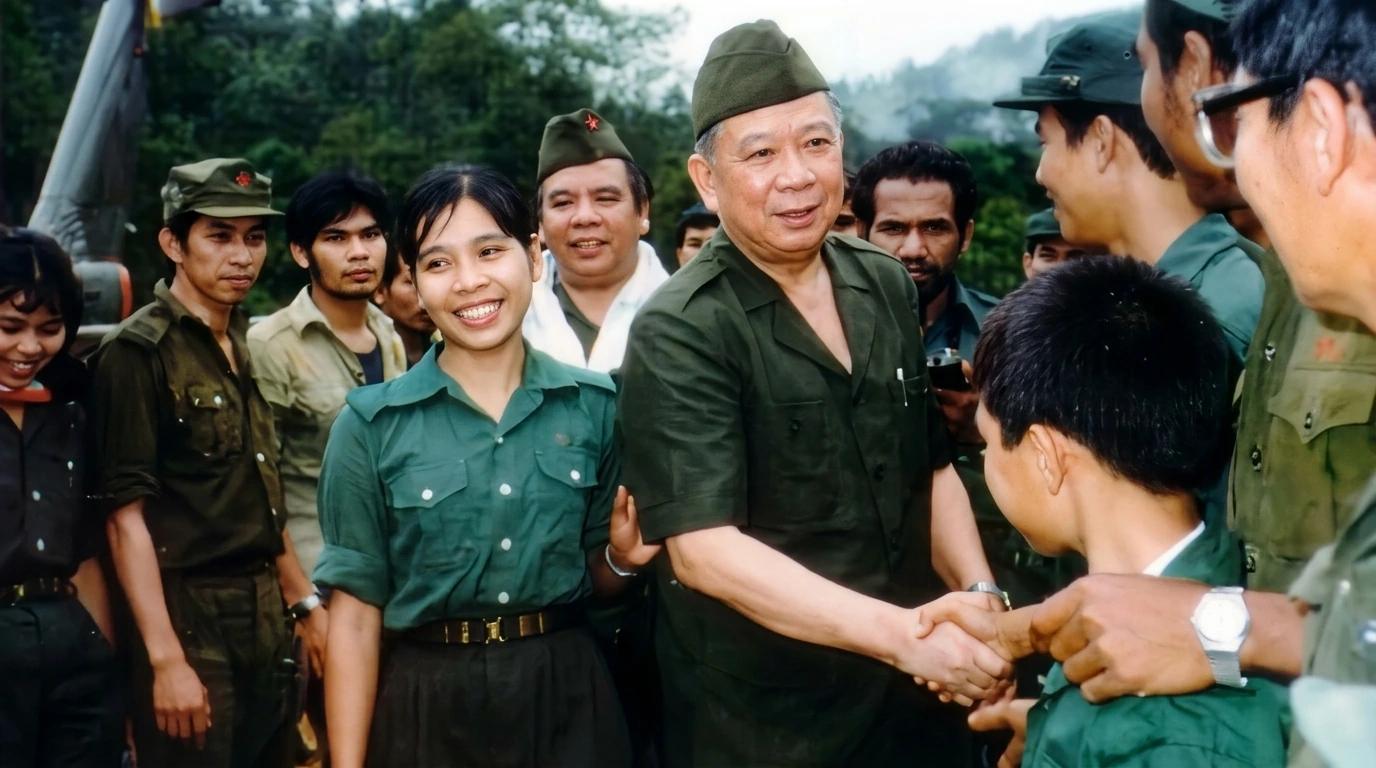
《合艾和平协议》签署后,陈平立即风尘仆仆地深入泰南丛林腹地,先后前往驻扎在陶公府素基琳(Sukhirin)山区的马来亚人民军第10支队(以阿都拉·西迪、拉昔·迈丁领导的马来族指战员为主体)与驻扎在也拉府勿洞(Betong)山区的第12支队等营地视察慰问,亲自向全体指战员传达和平协议精神与下山安置方案。在丛林大礼堂与队列前,年逾六旬的陈平再度换上全套草绿色人民军军服、佩戴五角红星军帽,在阿都拉·西迪与各支队司令员陪同下检阅部队、向战士们挥手致意,受到指战员们夹道热烈欢呼。这组身穿戎装的珍贵留影,成为马来亚人民军在光荣解甲归田前夕最具象征意义的谢幕定格。
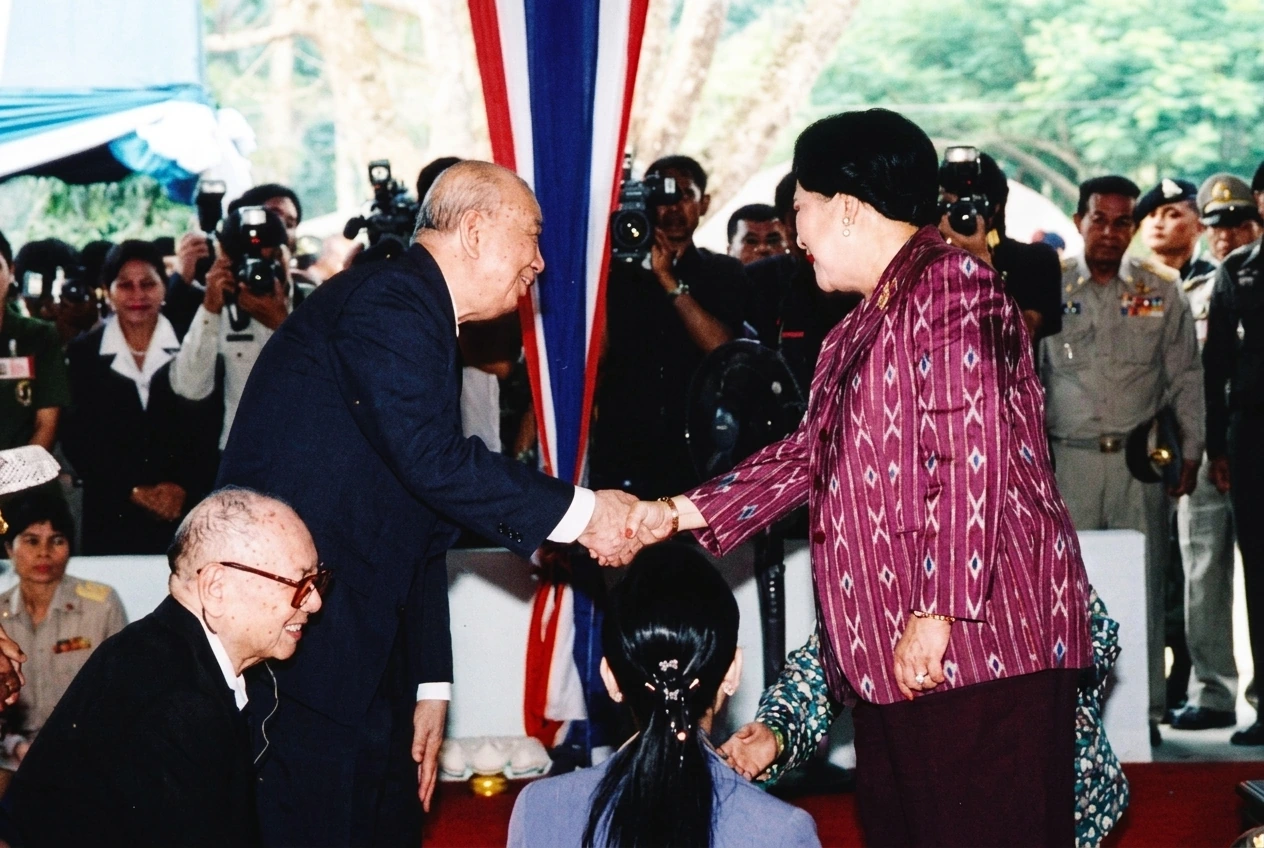
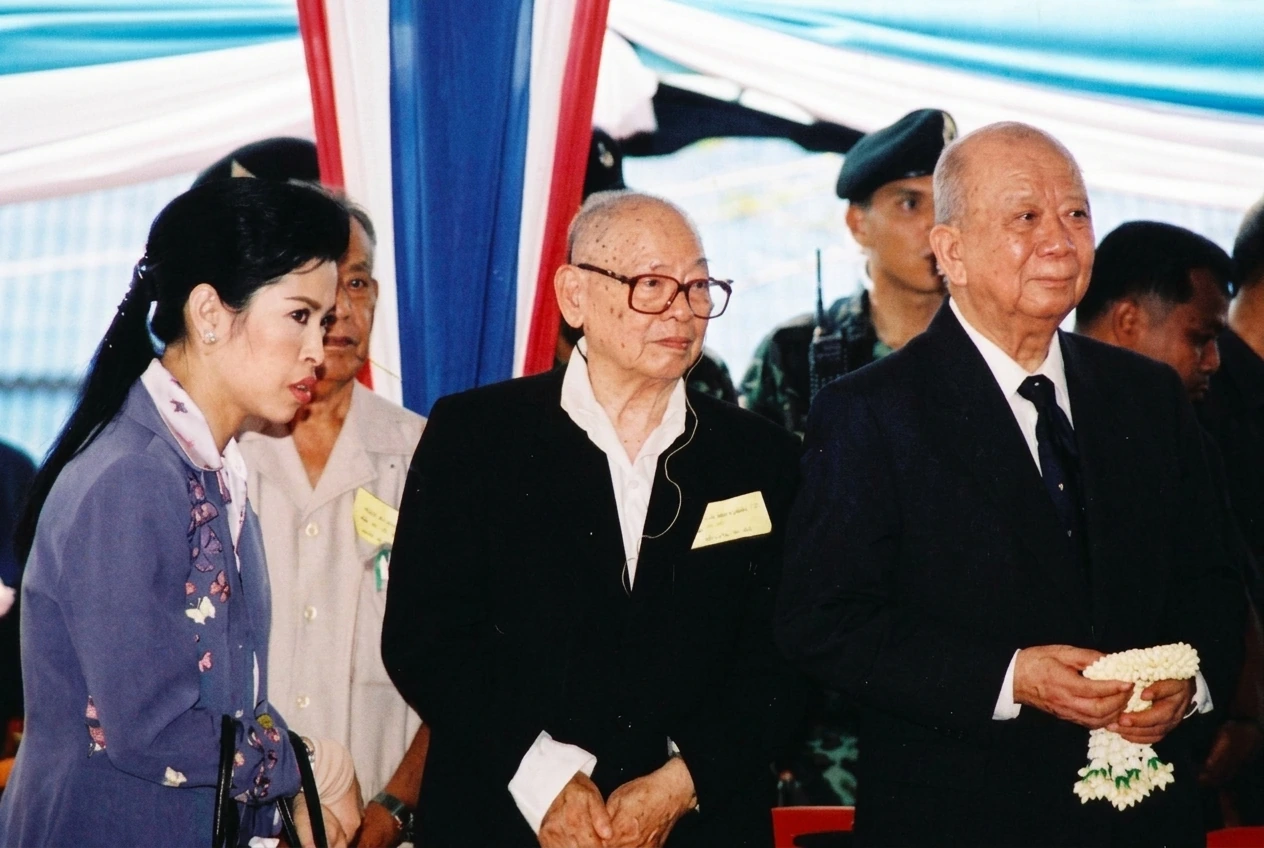
根据《合艾和平协议》及泰王国政府的妥善安排,原马来亚人民军四大支队走出丛林,在泰南陶公府与也拉府边境共建了四个“邦朗和平村”(Chulabhorn Development Villages No. 9–12,即朱拉蓬公主发展村第九至第十二村)。其中,由阿都拉·西迪与拉昔·迈丁率领的第10支队全体马来族指战员在陶公府素基琳县建立了“朱拉蓬公主发展村第十村”(Chulabhorn Development Village No. 10 / 10th Regiment Peace Village)。泰国王室对和平村的建设与民生发展给予了高度关怀。泰国诗丽吉王后(Queen Sirikit)曾亲自莅临朱拉蓬公主第十村视察访问,阿都拉·西迪、拉昔·迈丁及第十村领导层率领村民隆重迎驾并全程陪同介绍社区建设成果,展现了昔日游击战士在泰南土地上安居乐业、融入和平社会的崭新面貌。
In the late 1980s, responding to sweeping global shifts at the end of the Cold War and the regional tide of peace in Southeast Asia, the CPM Central Committee engaged in five rounds of intensive tripartite negotiations with the Malaysian Government and the Royal Thai Government, culminating in the final decisive round on Phuket Island, Thailand. On the evening of December 1, 1989—the eve of the formal signing of the Haadyai Peace Accord—Chin Peng, alongside Party Chairman Abdullah C.D. and Central Committee member Rashid Maidin, held a historic international press reception at the Lee Gardens Hotel in Haadyai. Appearing in public for the first time in thirty-four years before a bank of microphones and cameras, Chin Peng declared the honorable termination of forty-one years of armed struggle. Years later, Chin Peng also revisited the Phuket resort venue where the final negotiation round had taken place.
Immediately after the signing of the Haadyai Peace Accord, Chin Peng trekked deep into the southern Thai rainforest to inspect the jungle camps of the Malayan People's Army, including the predominantly Malay 10th Regiment in Sukhirin, Narathiwat Province (led by Abdullah C.D. and Rashid Maidin) and the 12th Regiment in the Betong hills of Yala Province. There he personally briefed the rank-and-file fighters on the spirit of the peace accord and the resettlement arrangements. Donning the olive-green uniform and red-star cap of the Malayan People's Army once more, the sixty-five-year-old General Secretary reviewed the troops alongside Abdullah C.D. and regiment commanders and received a tumultuous welcome in the bamboo assembly halls—an iconic farewell to arms prior to honorable demobilization.
Under the Haadyai Peace Accord and the developmental stewardship of the Royal Thai Government, the four regiments of the former Malayan People's Army emerged from the jungle to establish four Peace Villages—officially designated Chulabhorn Development Villages No. 9 through No. 12—across Narathiwat and Yala Provinces. The predominantly Malay fighters of the 10th Regiment, led by Abdullah C.D. and Rashid Maidin, founded Chulabhorn Development Village No. 10 in Sukhirin District, Narathiwat. The Thai Royal Family took a close interest in the livelihood and agrarian integration of the former guerrillas. Her Majesty Queen Sirikit of Thailand personally visited Chulabhorn Village No. 10, where she was warmly received and escorted by Abdullah C.D. and Rashid Maidin—symbolizing the peaceful transformation of the former border fighters into thriving rural communities.
二十世纪八十年代末,随着冷战格局剧变与东南亚区域和平浪潮兴起,马共中央顺应历史大势,同马来西亚政府与泰王国政府展开了五轮艰苦卓绝的三方秘密会谈,其中最后一轮关键谈判在泰国普吉岛(Phuket)圆满收官。1989年12月1日晚,即《合艾和平协议》正式签署前夕,陈平与马共中央主席阿都拉·西迪、中委拉昔·迈丁(Rashid Maidin)在合艾蠡园大酒店(Lee Gardens Hotel)举行历史性的中外记者招待会。聚光灯与林立的麦克风前,隐身国际视野长达三十四年的陈平首次公开亮相,向全世界庄严宣告马共本着尊严、对等与爱国立场结束长达四十一年的武装斗争。多年后,陈平亦曾专程重返当年举行最后一轮三方会谈的普吉岛谈判旧址留影,回望这一改写马泰两国现代史的转折之地。
《合艾和平协议》签署后,陈平立即风尘仆仆地深入泰南丛林腹地,先后前往驻扎在陶公府素基琳(Sukhirin)山区的马来亚人民军第10支队(以阿都拉·西迪、拉昔·迈丁领导的马来族指战员为主体)与驻扎在也拉府勿洞(Betong)山区的第12支队等营地视察慰问,亲自向全体指战员传达和平协议精神与下山安置方案。在丛林大礼堂与队列前,年逾六旬的陈平再度换上全套草绿色人民军军服、佩戴五角红星军帽,在阿都拉·西迪与各支队司令员陪同下检阅部队、向战士们挥手致意,受到指战员们夹道热烈欢呼。这组身穿戎装的珍贵留影,成为马来亚人民军在光荣解甲归田前夕最具象征意义的谢幕定格。
In the late 1980s, responding to sweeping global shifts at the end of the Cold War and the regional tide of peace in Southeast Asia, the CPM Central Committee engaged in five rounds of intensive tripartite negotiations with the Malaysian Government and the Royal Thai Government, culminating in the final decisive round on Phuket Island, Thailand. On the evening of December 1, 1989—the eve of the formal signing of the Haadyai Peace Accord—Chin Peng, alongside Party Chairman Abdullah C.D. and Central Committee member Rashid Maidin, held a historic international press reception at the Lee Gardens Hotel in Haadyai. Appearing in public for the first time in thirty-four years before a bank of microphones and cameras, Chin Peng declared the honorable termination of forty-one years of armed struggle. Years later, Chin Peng also revisited the Phuket resort venue where the final negotiation round had taken place.
Immediately after the signing of the Haadyai Peace Accord, Chin Peng trekked deep into the southern Thai rainforest to inspect the jungle camps of the Malayan People's Army, including the predominantly Malay 10th Regiment in Sukhirin, Narathiwat Province (led by Abdullah C.D. and Rashid Maidin) and the 12th Regiment in the Betong hills of Yala Province. There he personally briefed the rank-and-file fighters on the spirit of the peace accord and the resettlement arrangements. Donning the olive-green uniform and red-star cap of the Malayan People's Army once more, the sixty-five-year-old General Secretary reviewed the troops alongside Abdullah C.D. and regiment commanders and received a tumultuous welcome in the bamboo assembly halls—an iconic farewell to arms prior to honorable demobilization.
根据《合艾和平协议》及泰王国政府的妥善安排,原马来亚人民军四大支队走出丛林,在泰南陶公府与也拉府边境共建了四个“邦朗和平村”(Chulabhorn Development Villages No. 9–12,即朱拉蓬公主发展村第九至第十二村)。其中,由阿都拉·西迪与拉昔·迈丁率领的第10支队全体马来族指战员在陶公府素基琳县建立了“朱拉蓬公主发展村第十村”(Chulabhorn Development Village No. 10 / 10th Regiment Peace Village)。泰国王室对和平村的建设与民生发展给予了高度关怀。泰国诗丽吉王后(Queen Sirikit)曾亲自莅临朱拉蓬公主第十村视察访问,阿都拉·西迪、拉昔·迈丁及第十村领导层率领村民隆重迎驾并全程陪同介绍社区建设成果,展现了昔日游击战士在泰南土地上安居乐业、融入和平社会的崭新面貌。
Under the Haadyai Peace Accord and the developmental stewardship of the Royal Thai Government, the four regiments of the former Malayan People's Army emerged from the jungle to establish four Peace Villages—officially designated Chulabhorn Development Villages No. 9 through No. 12—across Narathiwat and Yala Provinces. The predominantly Malay fighters of the 10th Regiment, led by Abdullah C.D. and Rashid Maidin, founded Chulabhorn Development Village No. 10 in Sukhirin District, Narathiwat. The Thai Royal Family took a close interest in the livelihood and agrarian integration of the former guerrillas. Her Majesty Queen Sirikit of Thailand personally visited Chulabhorn Village No. 10, where she was warmly received and escorted by Abdullah C.D. and Rashid Maidin—symbolizing the peaceful transformation of the former border fighters into thriving rural communities.
第三章:书写《我方的历史》与跨国重逢:晚年著述、战时盟友重聚、赛·扎哈利来访与狮城学术破冰(1998–2004)
Chapter 3: Writing 'My Side of History' and Transnational Reunions: Late-Life Memoirs, Wartime Ally Reunion, Said Zahari's Visit, and Academic Ice-Breaking in Singapore (1998–2004)
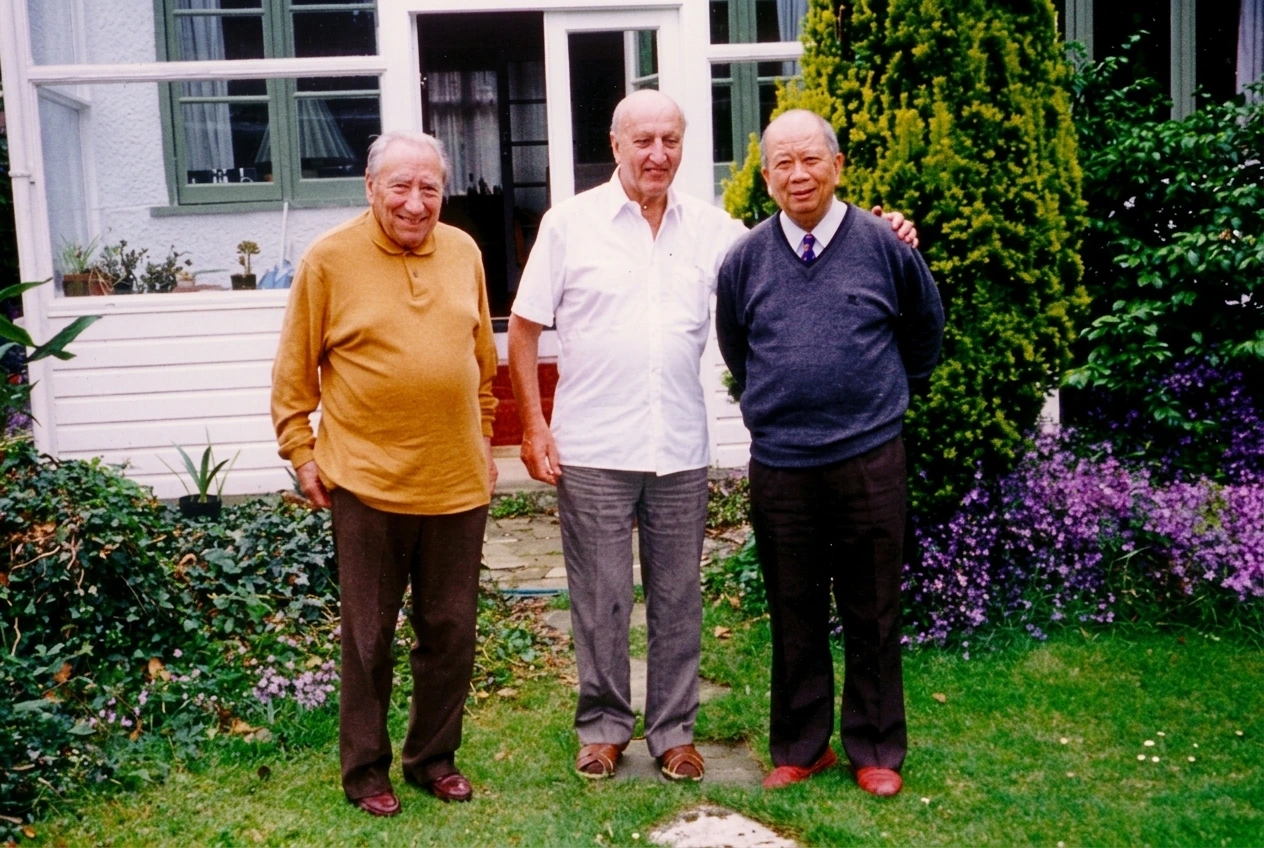
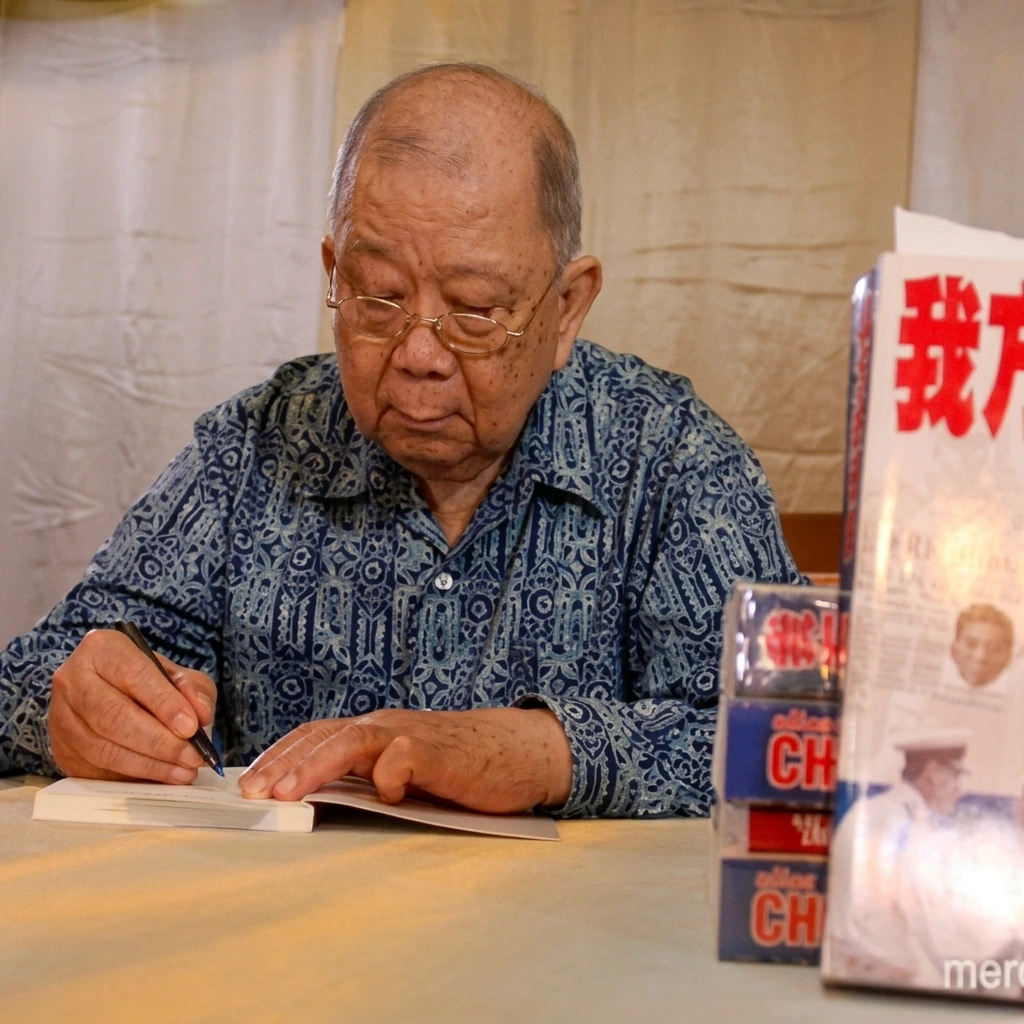
放下武器后的晚年岁月里,陈平将主要精力投入到历史档案整理与回忆录撰写之中,力求为后世留下一部来自马共亲历者视角的信史。在资深记者伊恩·沃德(Ian Ward)与诺玛·米拉弗洛尔(Norma Miraflor)历时数年的深入访谈与协助撰稿下,陈平口述回忆录《我方的历史》(My Side of History,中文版亦称《陈平:我方的历史》)于2003年正式出版,在国际史学界与新马社会引发强烈反响。与此同时,陈平也在晚年迎来了多次跨越半个多世纪的历史性重逢:在二战日占时期(1943年)作为盟军东南亚司令部136部队(Force 136)先遣人员第一批伞降马来亚霹雳丛林、与青年陈平并肩抗日的英国军医拉波博医生(Dr. Rapoport),在阔别53年后与陈平及当年老战友欣然聚首;霹雳怡保矿业名流、知名著者兼挚友拿督叶林生(Datuk Yap Lim Sen)亦多次与陈平会晤畅谈历史。
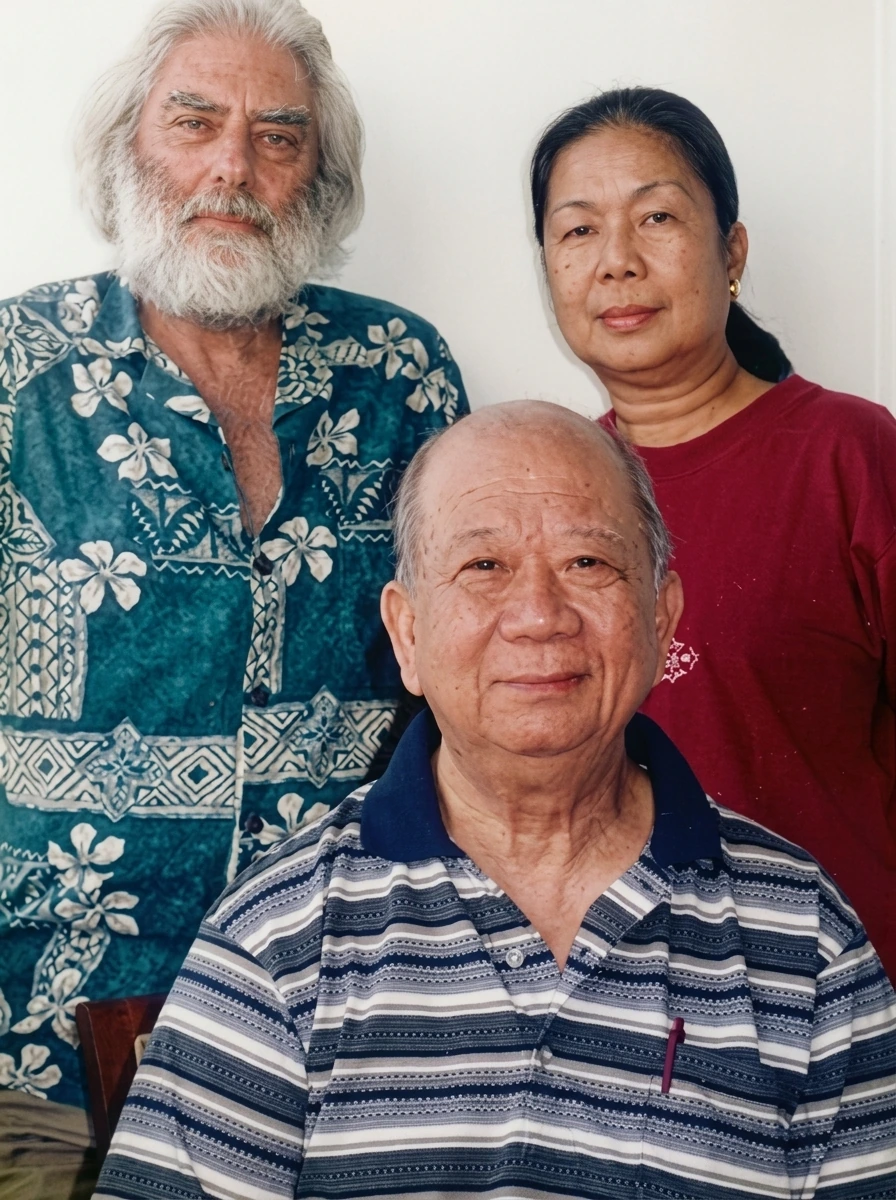
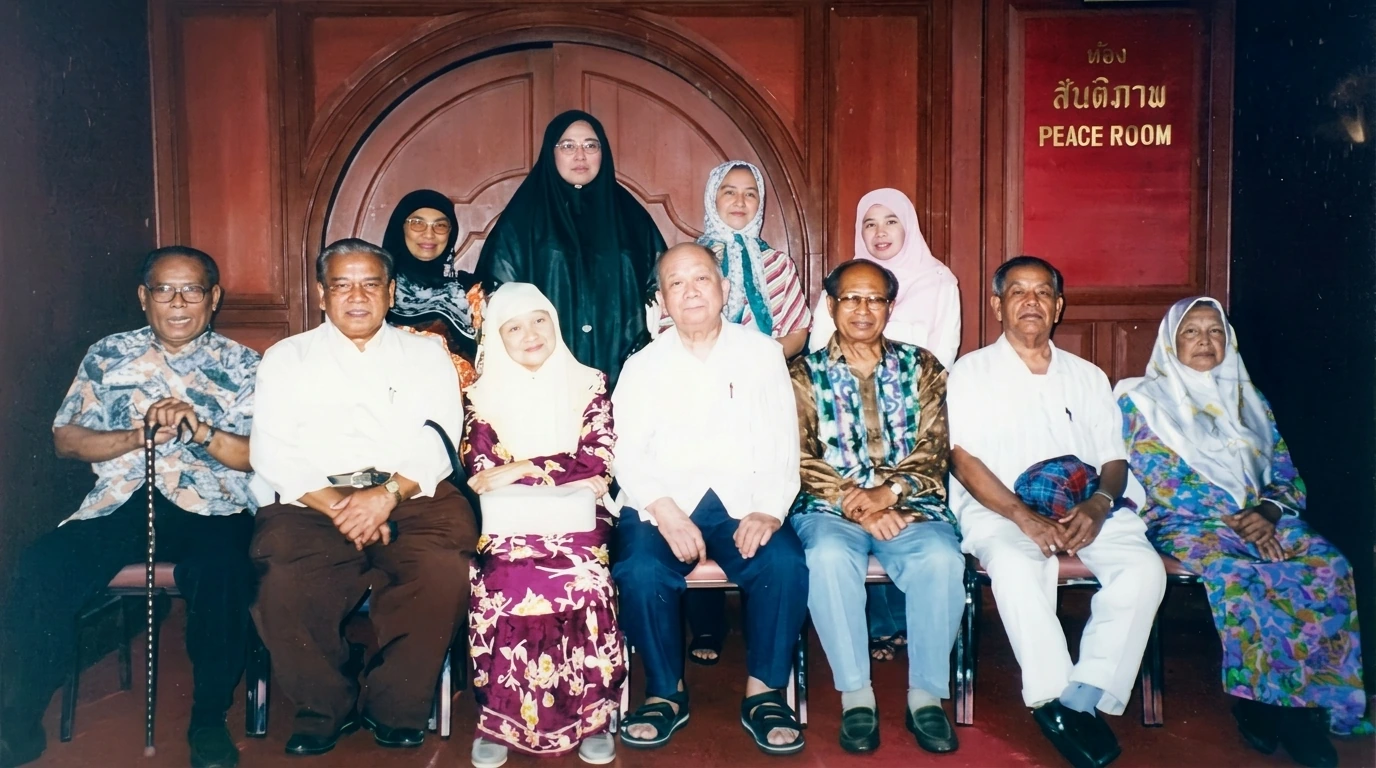
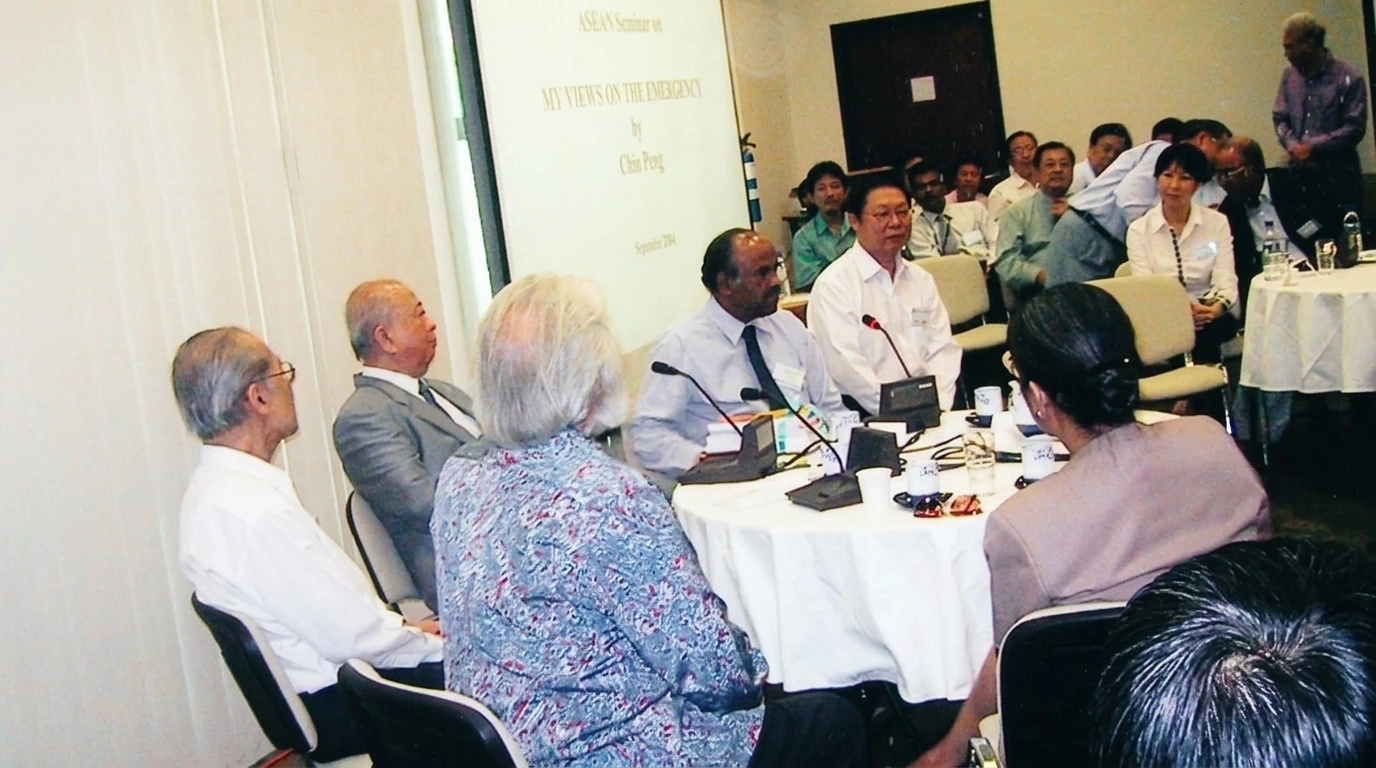
在泰南与新加坡,陈平与阿都拉·西迪的晚年交往同样见证了新马左翼反殖运动史的汇流。新加坡著名马来族左翼报人、《马来前锋报》(Utusan Melayu)前总编辑、新加坡人民党前主席赛·扎哈利(Said Zahari,曾因1963年新加坡“冷藏行动”遭未审讯拘留长达十七年)偕夫人莎拉玛(Salamah Abdul Wahab)专程前往泰南探访陈平、阿都拉·西迪与应敏钦(Suriani Abdullah),两代反殖志士在挂有“PEACE ROOM”(和平室)门牌的会客室门前留下了珍贵合影。2004年10月,应新加坡东南亚研究院(ISEAS)之邀,八十高龄的陈平获新加坡政府特批入境,在狮城出席学术研讨会并发表公开演讲,与来自世界各地的冷战史与东南亚史学者展开面对面对话,实现了轰动一时的“狮城学术破冰之旅”。
In the decades after laying down arms, Chin Peng devoted his energies to historical documentation and the composition of his memoirs, determined to leave posterity an authentic record from the perspective of the CPM participants themselves. Working closely over several years with veteran journalists and co-authors Ian Ward and Norma Miraflor, Chin Peng published his landmark autobiography 'My Side of History' in 2003, sparking intense interest across international historiography and Malaysian-Singaporean society. During these years, Chin Peng also experienced moving reunions spanning more than half a century: fifty-three years after World War II, he reunited with Dr. Rapoport, one of the very first British Force 136 medical officers to parachute into Japanese-occupied Malaya in 1943 to liaise with Chin Peng's MPAJA guerrillas; he also shared warm conversations with his close friend Datuk Yap Lim Sen, the prominent Ipoh tin-mining industrialist and author.
In southern Thailand and Singapore, the later years of Chin Peng and Abdullah C.D. also witnessed historic convergences across the broader Malayan and Singaporean anti-colonial left. Renowned Malay journalist, poet, former Utusan Melayu editor-in-chief, and former Partai Rakyat Singapura chairman Said Zahari—who had endured seventeen years of detention without trial under Singapore's 1963 Operation Coldstore—traveled with his wife Salamah Abdul Wahab to visit Chin Peng, Abdullah C.D., and Suriani Abdullah, posing together in front of the 'PEACE ROOM' doorway. In October 2004, at the invitation of the Institute of Southeast Asian Studies (ISEAS), the eighty-year-old Chin Peng was granted special permission to enter Singapore, where he addressed an international academic seminar and engaged directly with historians of Southeast Asia and the Cold War.
第四章:跨越半世纪鸿沟的历史性握手:与和平村战友、宪法维权律师及昔日马泰军警谈判对手的世纪和解(1998–2009)
Chapter 4: Historic Handshakes Across a Half-Century Divide: Century-Spanning Reconciliation with Peace Village Comrades, Constitutional Lawyers, and Former Malaysian-Thai Military & Police Negotiators (1998–2009)
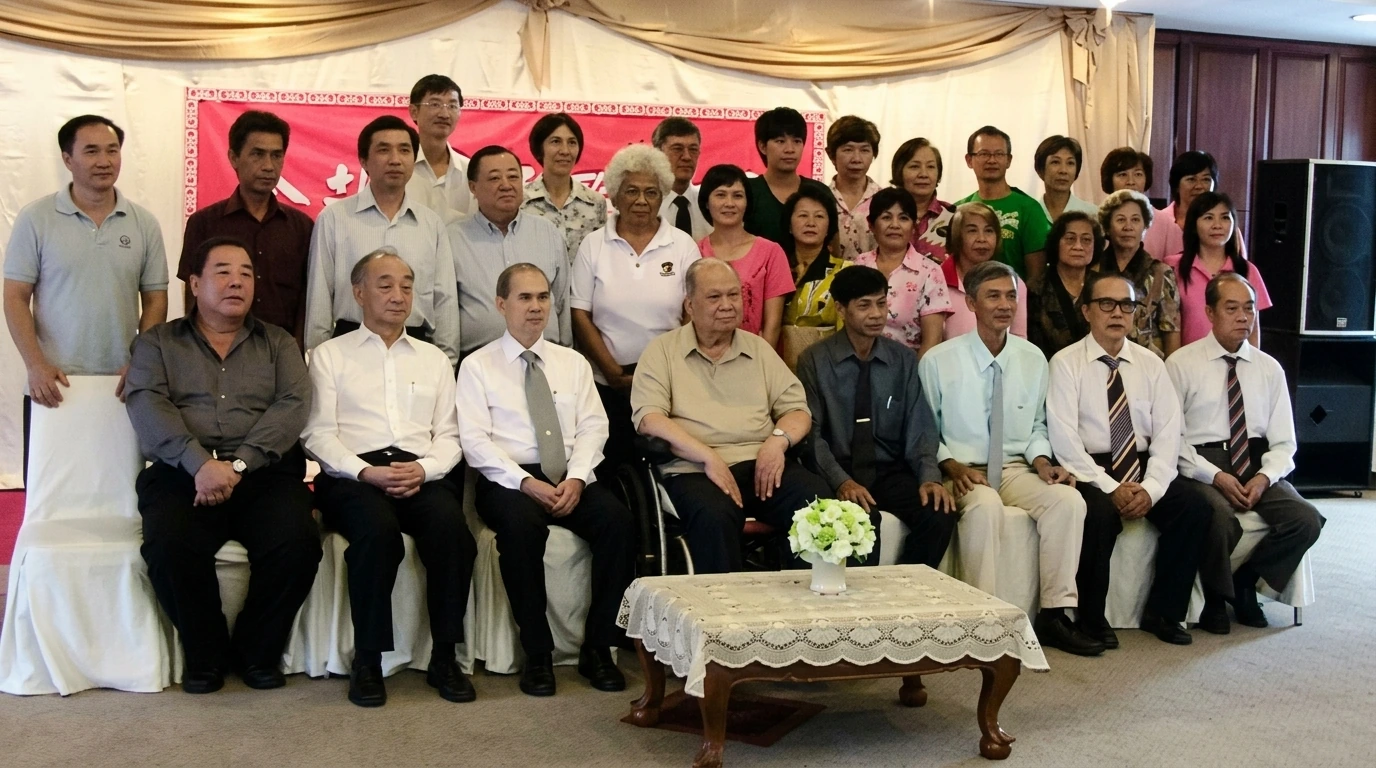
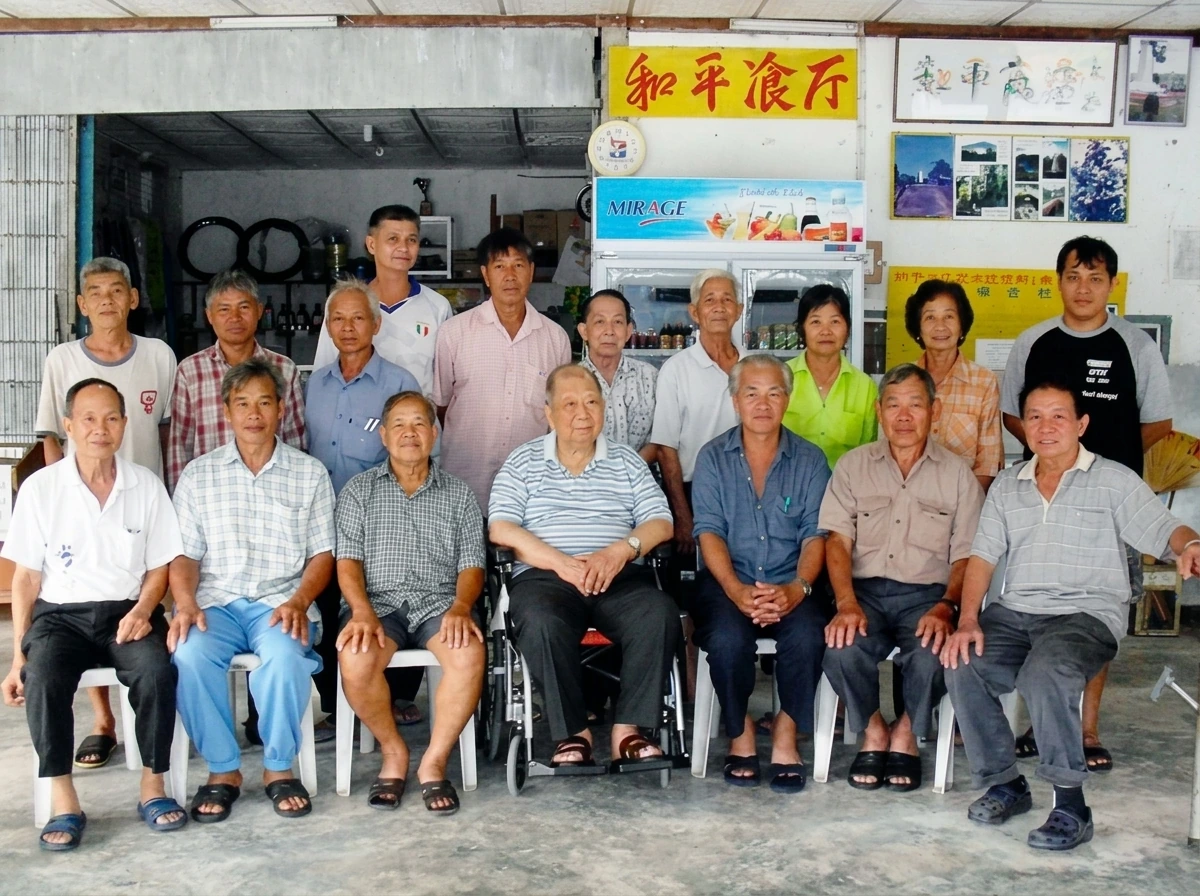
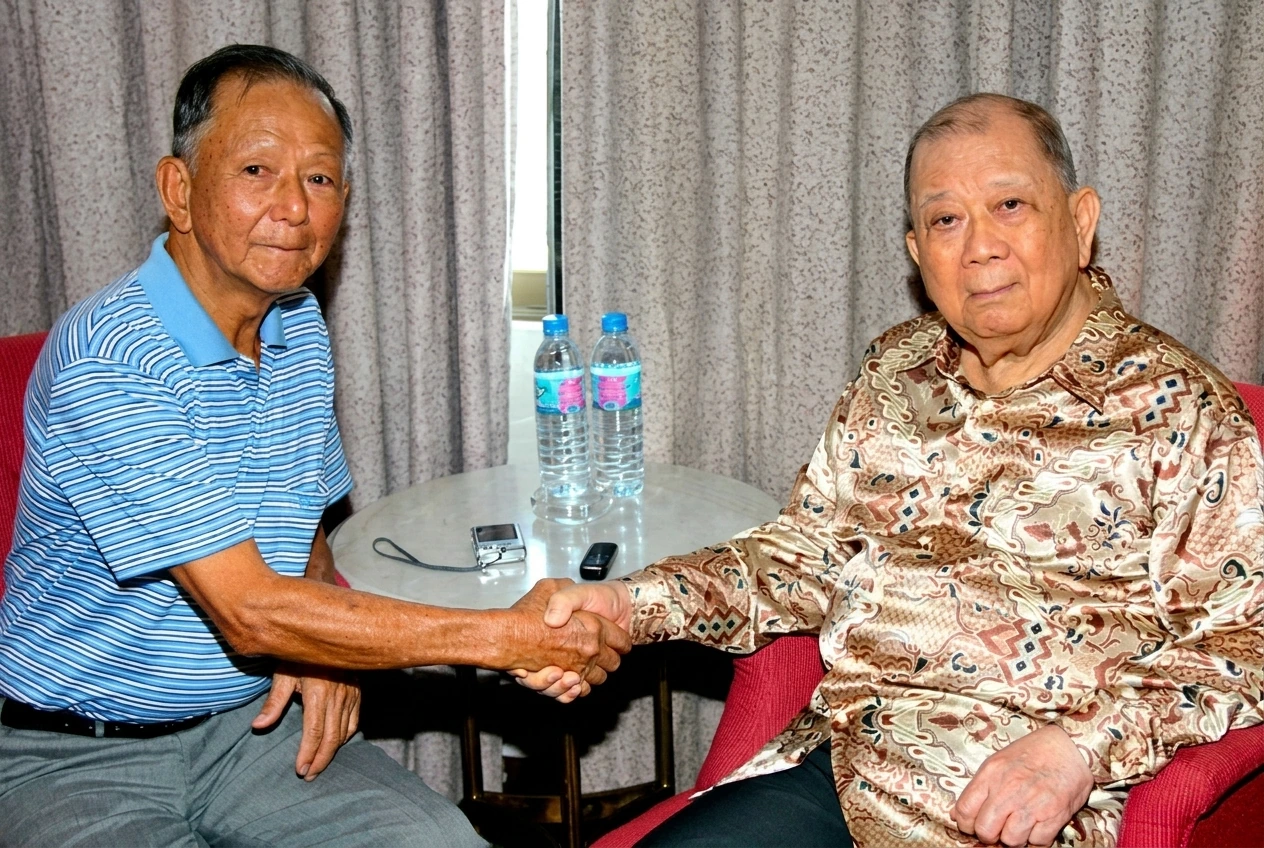
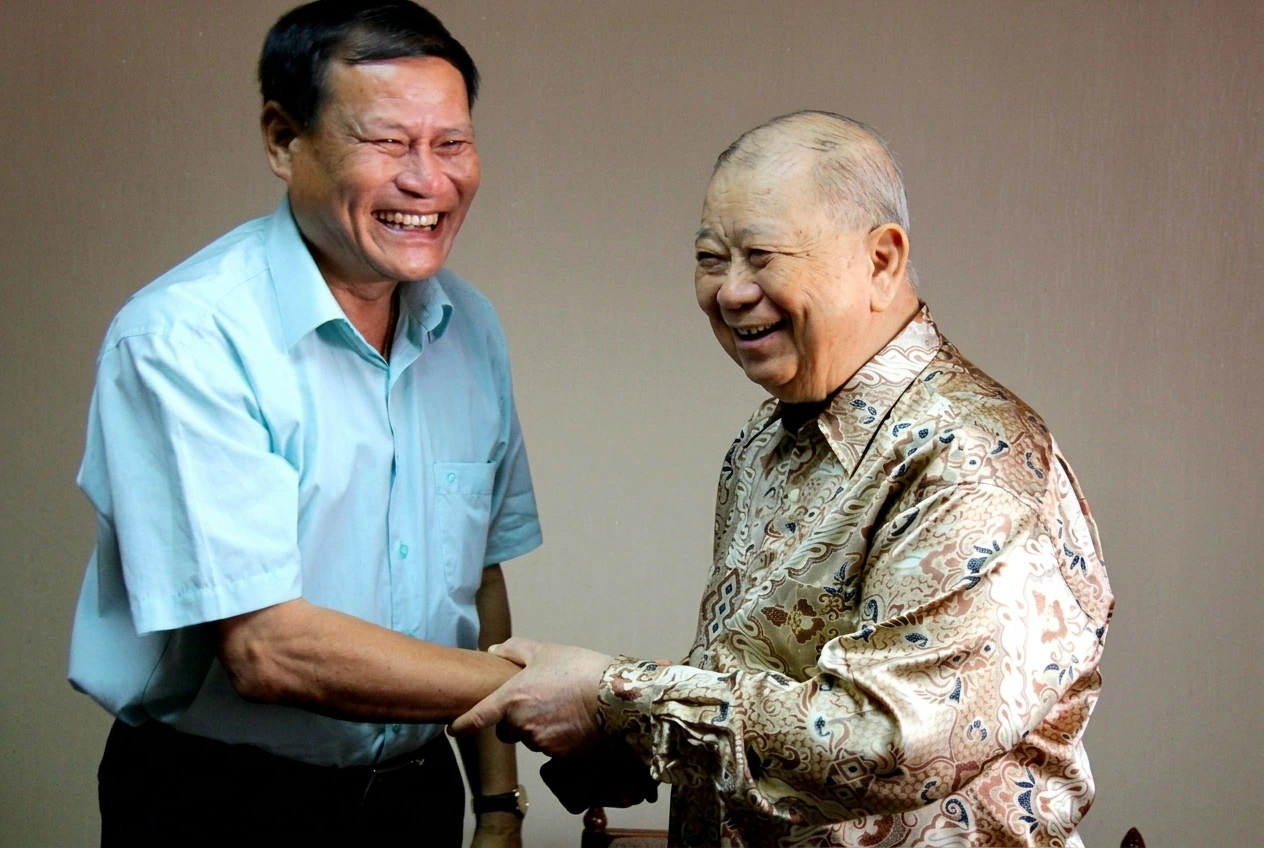
《合艾和平协议》不仅终结了丛林中的枪炮声,更开启了一场超越意识形态藩篱的世纪和解。在泰南勿洞与合艾,陈平和阿都拉·西迪经常与“合艾和平联谊会”(Hatyai Peace Association)的老战友及勿洞和平村(Chulabhorn Village No. 11)干部欢聚一堂,在“和平展厅”前共商社区公益与历史保育。与此同时,为了依据《合艾和平协议》第三项条款争取重返故土马来西亚的宪赋权利,陈平自2005年起委托马来西亚顶尖宪法与人权大律师团队入禀法院,其中包括德高望重的前律师公会主席拉惹·阿兹(Raja Aziz Addruse)以及后来出任马来西亚总检察长的汤米·托马斯(Tommy Thomas)。两位大律师不计个人毁誉,为陈平的返国权与历史公正奔走抗辩,留下了法治史上的感人篇章。
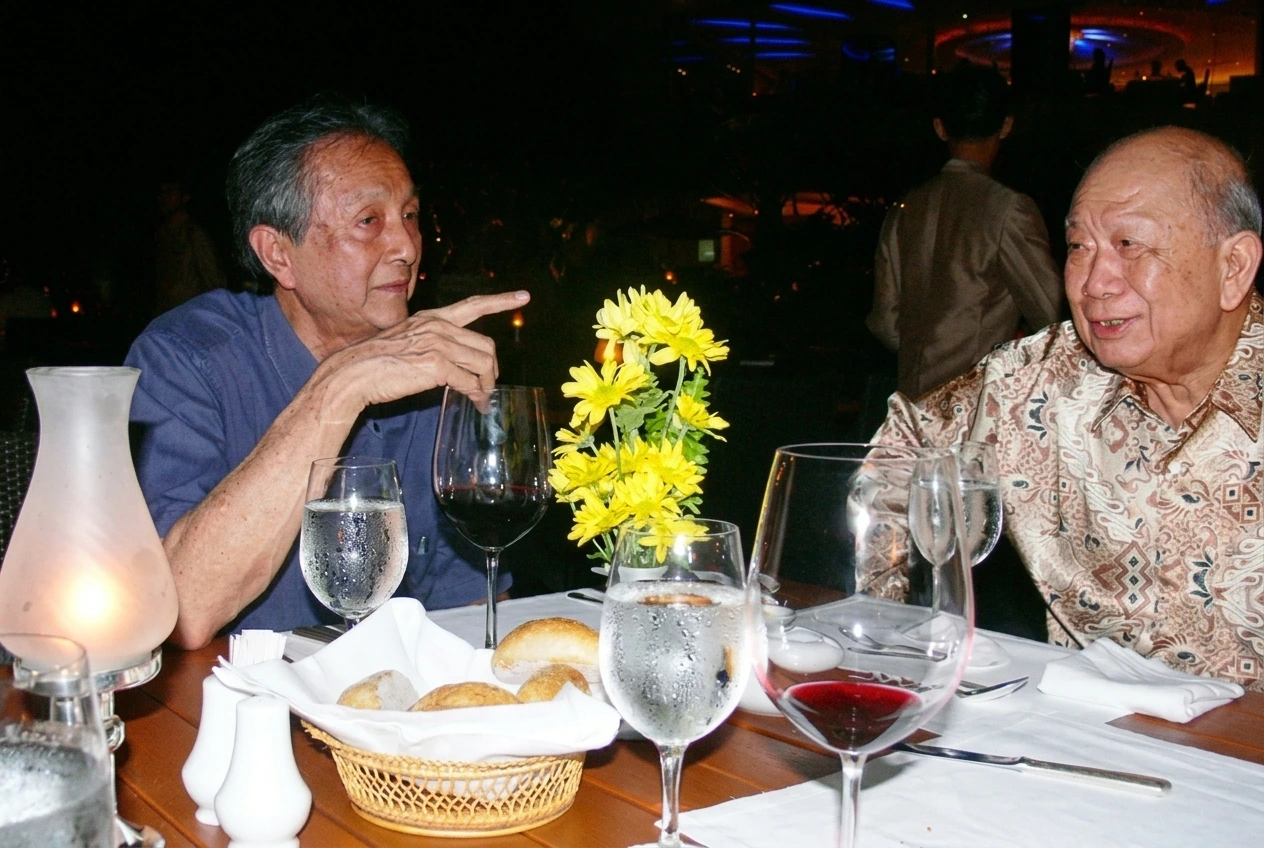
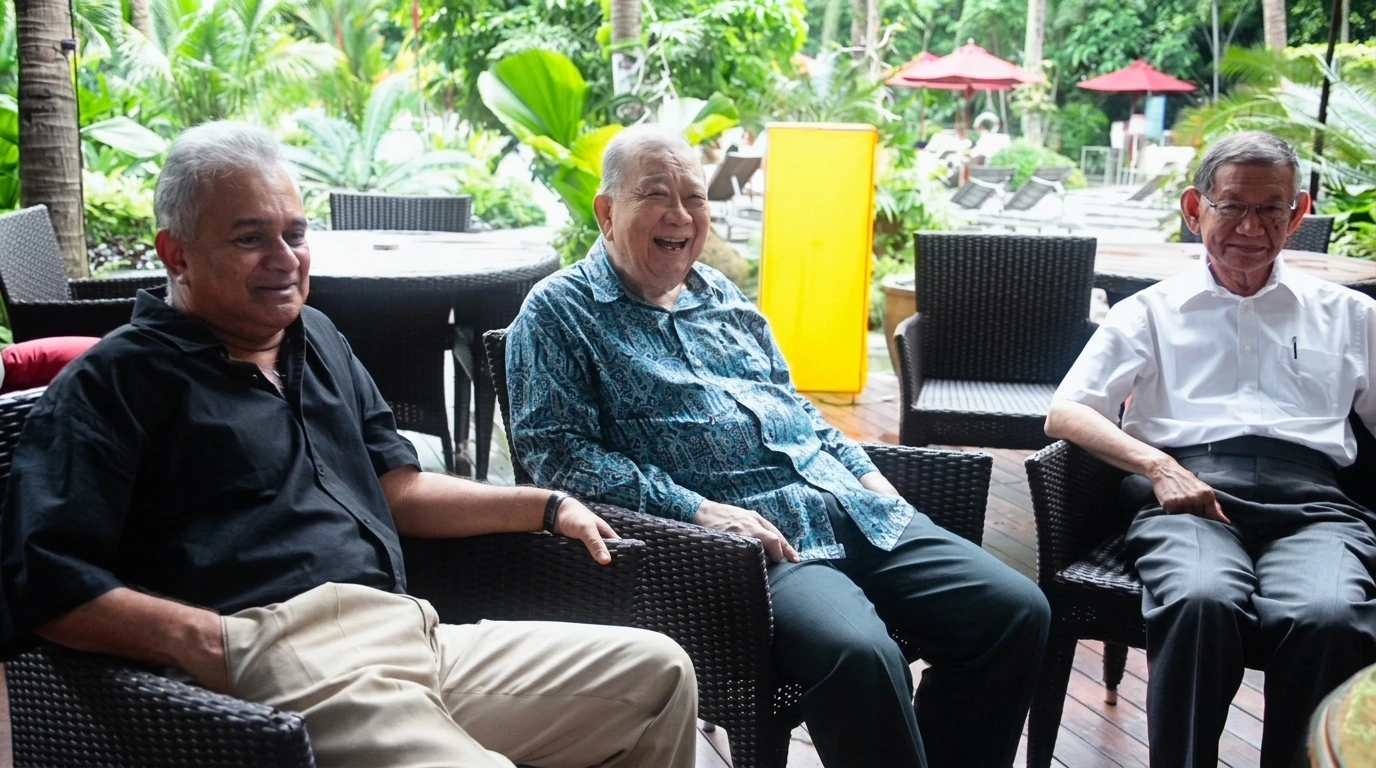
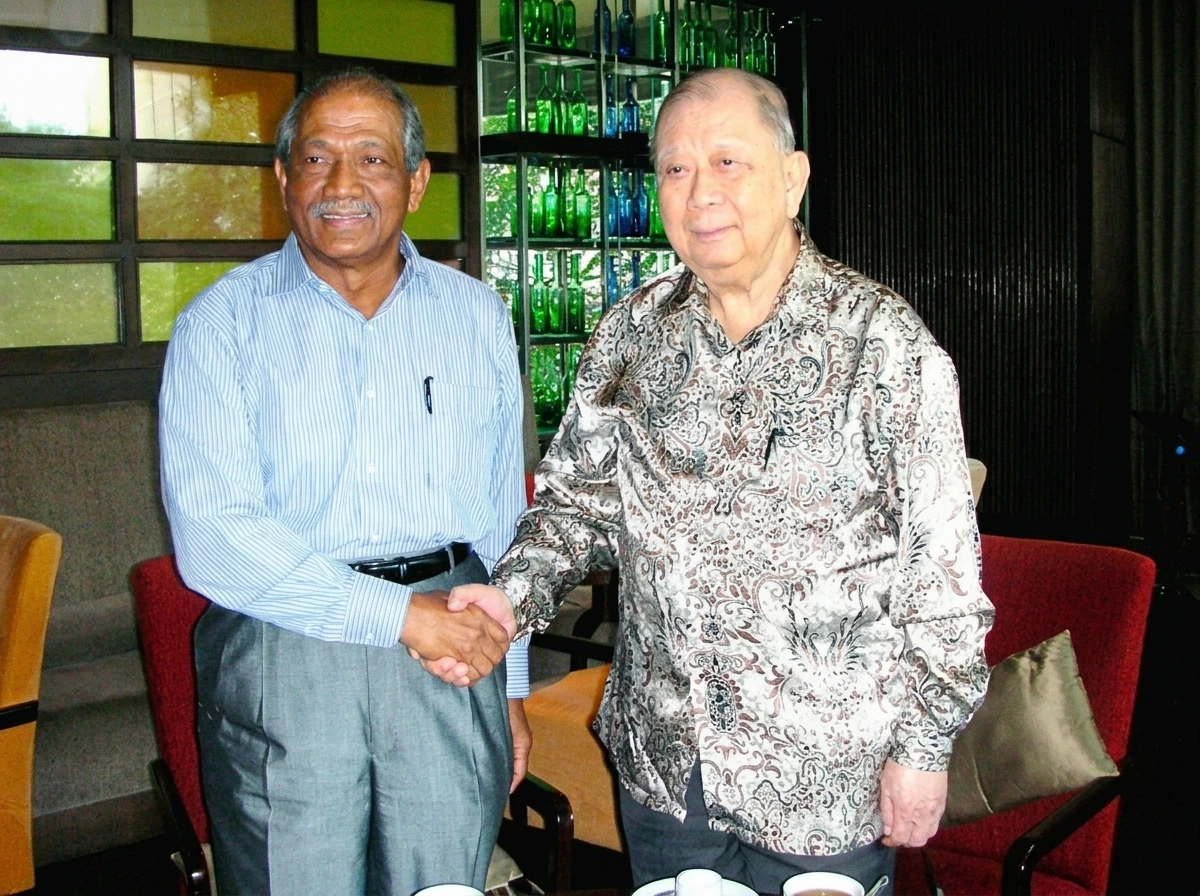
最令世人动容的,是陈平与当年在战场上兵戎相见、在谈判桌上唇枪舌剑的马泰两国军警最高指挥官及情报首脑之间的深厚情谊。1989年主导马方谈判团队的原马来西亚皇家警察政治部(Special Branch)总监、后任全国总警长的丹斯里拉欣·诺(Tan Sri Rahim Noor),以及自1955年华玲和谈起便参与对马共情报工作、1989年担任合艾和谈马方首席顾问的前政治部资深顾问姚光耀(Yau Kong Yew),在晚年均多次与陈平把酒言欢、坦诚交流。而在泰国方面,当年直接促成《合艾和平协议》的泰国陆军总司令兼代理最高统帅、后任泰国首相的差瓦立·永猜裕上将(General Chavalit Yongchaiyudh),以及曾指挥泰南边境军事行动并主持和谈安全保障的前泰国第四军区司令披讪中将(Lt. Gen. Pisan Wattanawongkiri),始终以军人敬重英雄的礼遇对待陈平。昔日宿敌化作晚年挚友,生动诠释了《合艾和平协议》“没有战胜者与战败者,唯有和平与尊严”的崇高精神。
The Haadyai Peace Accord not only silenced the guns in the rainforest but also inaugurated a remarkable era of personal and historical reconciliation across former ideological lines. In Betong and Haadyai, Chin Peng and Abdullah C.D. regularly gathered with members of the Hatyai Peace Association and cadres of the Betong Peace Village in front of the Peace Exhibition Hall to support community welfare and historical preservation. Simultaneously, seeking to exercise his legitimate right under Clause 3 of the Haadyai Peace Accord to return to his homeland of Malaysia, Chin Peng instructed a distinguished team of Malaysian constitutional lawyers beginning in 2005—led by revered former Bar Council President Raja Aziz Addruse and prominent constitutional litigator (later Attorney General) Tommy Thomas—who tirelessly championed his right of return before the Malaysian courts.
Perhaps most poignant of all was the genuine camaraderie forged in later years between Chin Peng and the very Malaysian and Thai military, police, and intelligence chiefs who had once been his fiercest adversaries across the battlefield and negotiation table. Tan Sri Rahim Noor—who headed the Royal Malaysia Police Special Branch delegation during the 1989 talks and later served as Inspector-General of Police (IGP)—and former Special Branch advisor Yau Kong Yew, whose involvement stretched all the way back to the 1955 Baling Talks through the 1989 Haadyai negotiations, met warmly with Chin Peng for candid historical dialogues. On the Thai side, General Chavalit Yongchaiyudh—the Royal Thai Army Commander-in-Chief and later Prime Minister of Thailand who served as principal architect of the 1989 Peace Accord—and Lt. Gen. Pisan Wattanawongkiri, former Commander of the Thai 4th Army Region, consistently honored Chin Peng with deep mutual respect. Former adversaries conversing as friends embodied the highest spirit of the Haadyai Accord: peace with honor and dignity.
第五章:双星并峙与和平廿载:阿都拉·西迪觐见霹雳苏丹、革命元勋并肩与《合艾和平协议》二十周年庆典(1998–2009)
Chapter 5: Twin Stars and Twenty Years of Peace: Abdullah C.D.'s Audience with the Sultan of Perak, Revolutionary Founders Side by Side, and the 20th Anniversary of the Haadyai Accord (1998–2009)
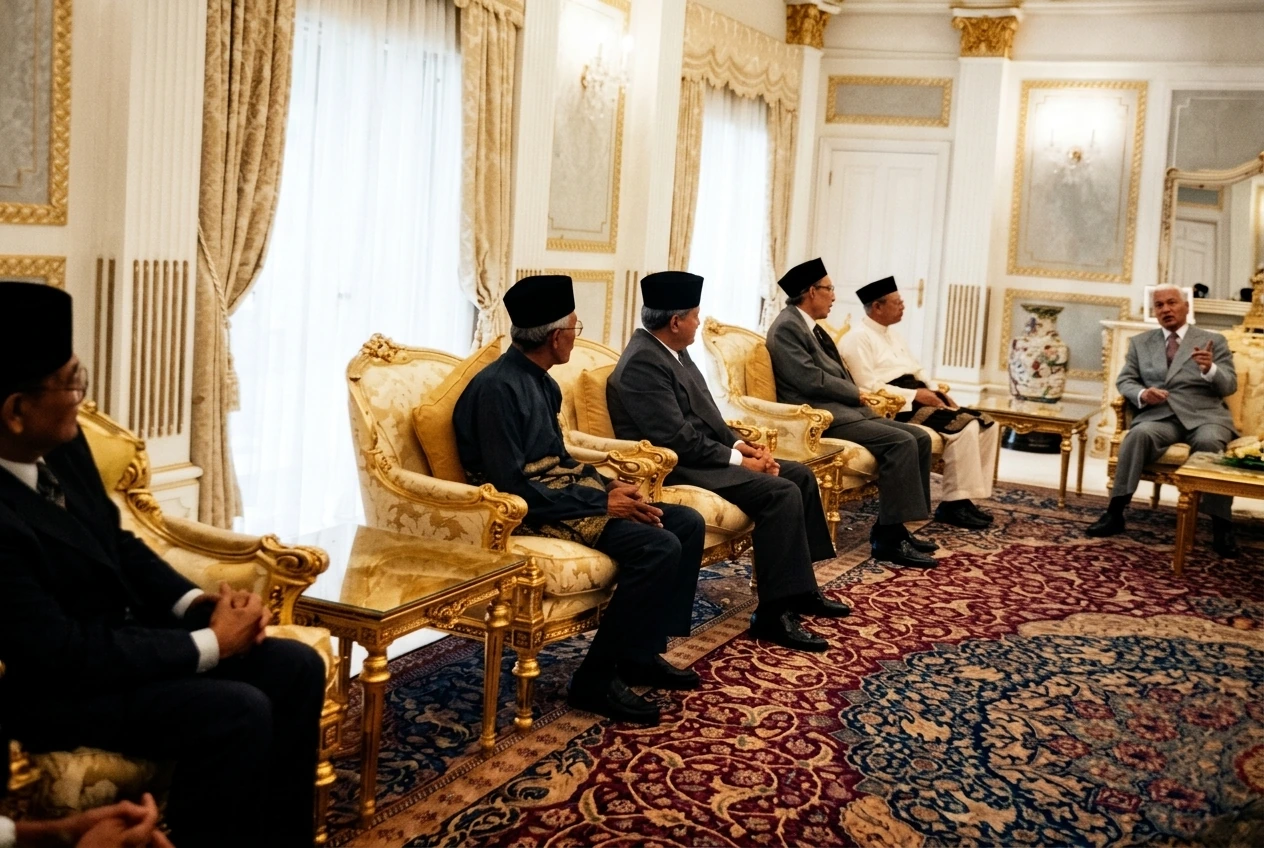
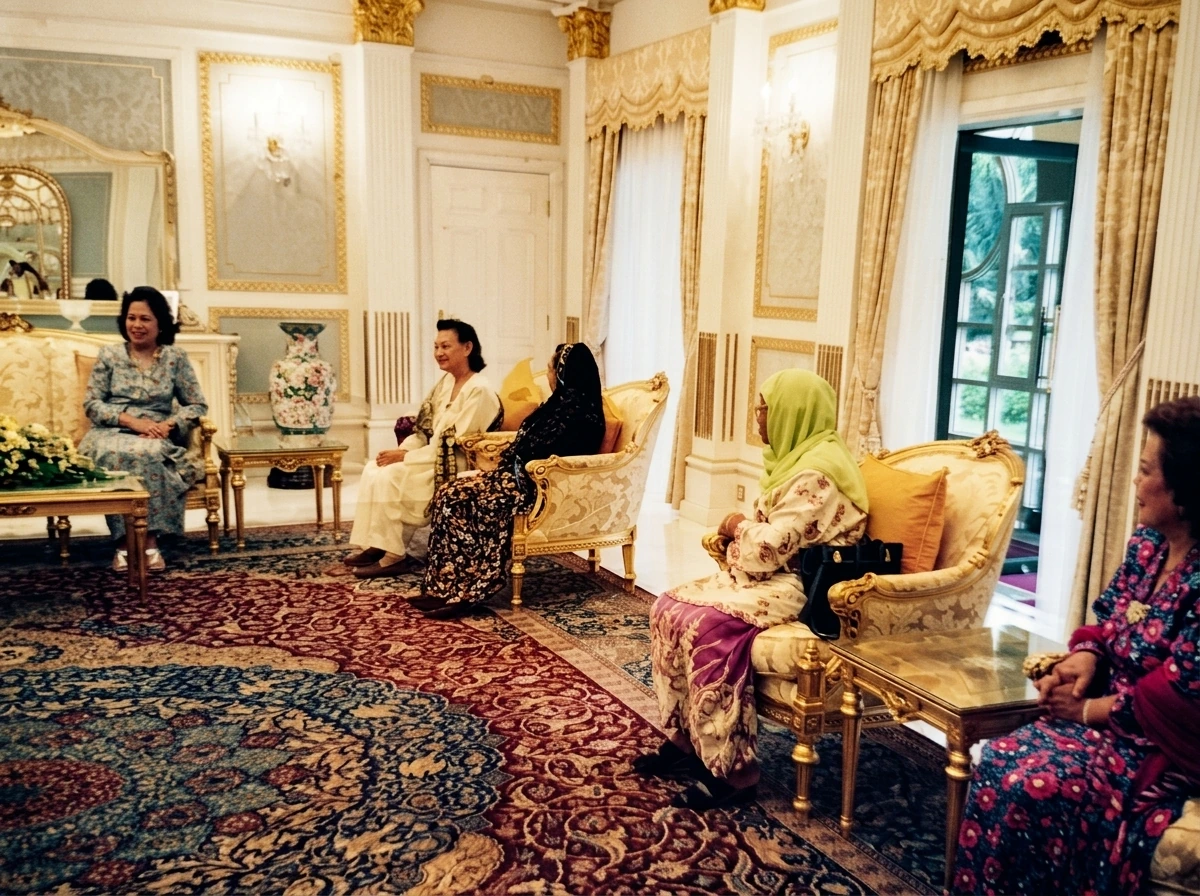
相较于陈平因政治阻力迟迟未能踏足故土的遗憾,马共中央主席阿都拉·西迪、夫人应敏钦(Suriani Abdullah,原名 Eng Ming Ching,1924—2013,霹雳实兆远人,陈平早年同乡学友及抗日巾帼英雄)与中委拉昔·迈丁等第10支队领导人,在1990年代末率先实现了与故乡霹雳州王室及马来西亚社会的圆满和解。1998年12月1日,出生在霹雳河畔的阿都拉·西迪与拉昔·迈丁、应敏钦等率团返回马来西亚霹雳州,获霹雳州第34任苏丹阿兹兰沙殿下(Sultan Azlan Shah,曾任马来西亚联邦首席大法官及第九任最高元首)与苏丹后端姑拜润(Raja Permaisuri Tuanku Bainun)的隆重接见。殿下与昔日反殖游击领袖亲切交谈、合影留念,不仅彰显了霹雳王室对这批毕生追求民族独立的老一辈马来亚儿女的宽厚包容与历史肯定,更成为《合艾和平协议》民族和解精神的崇高典范。
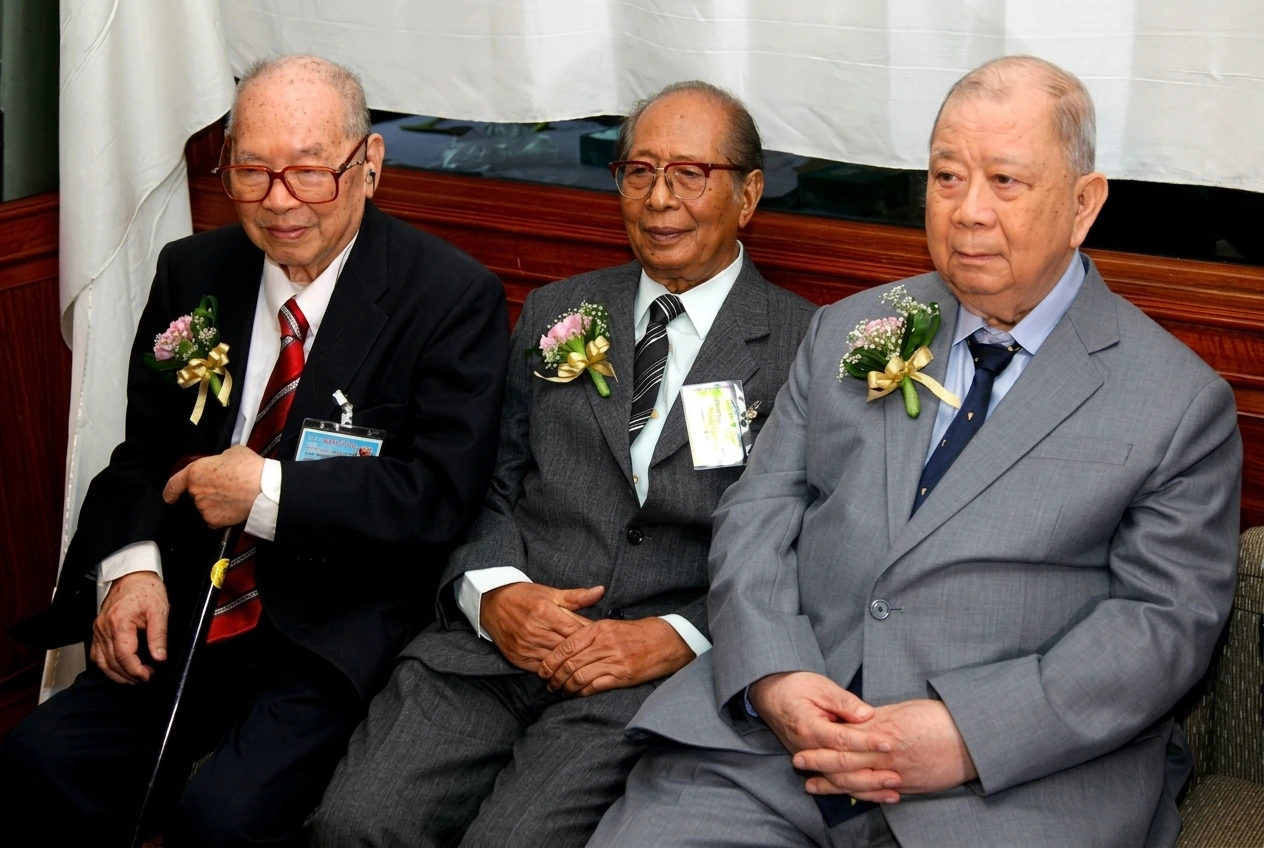
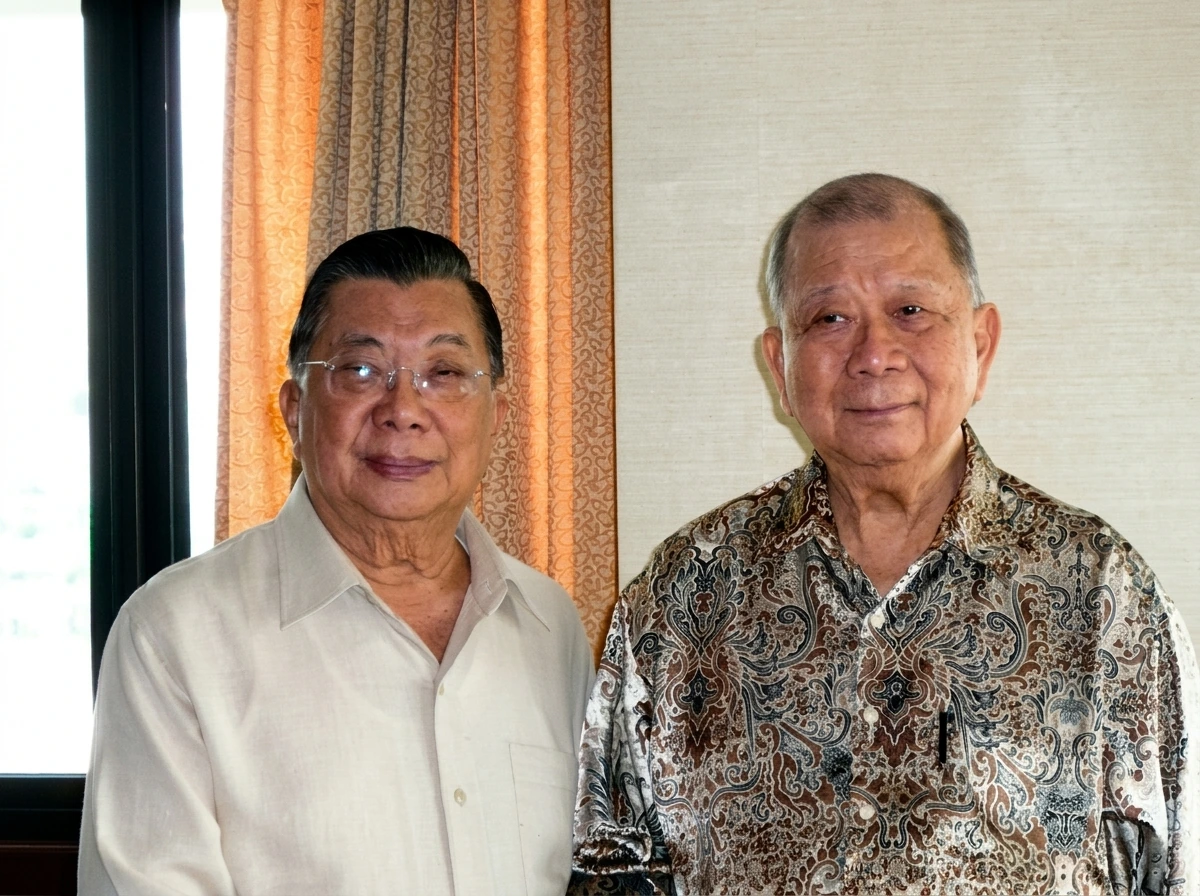
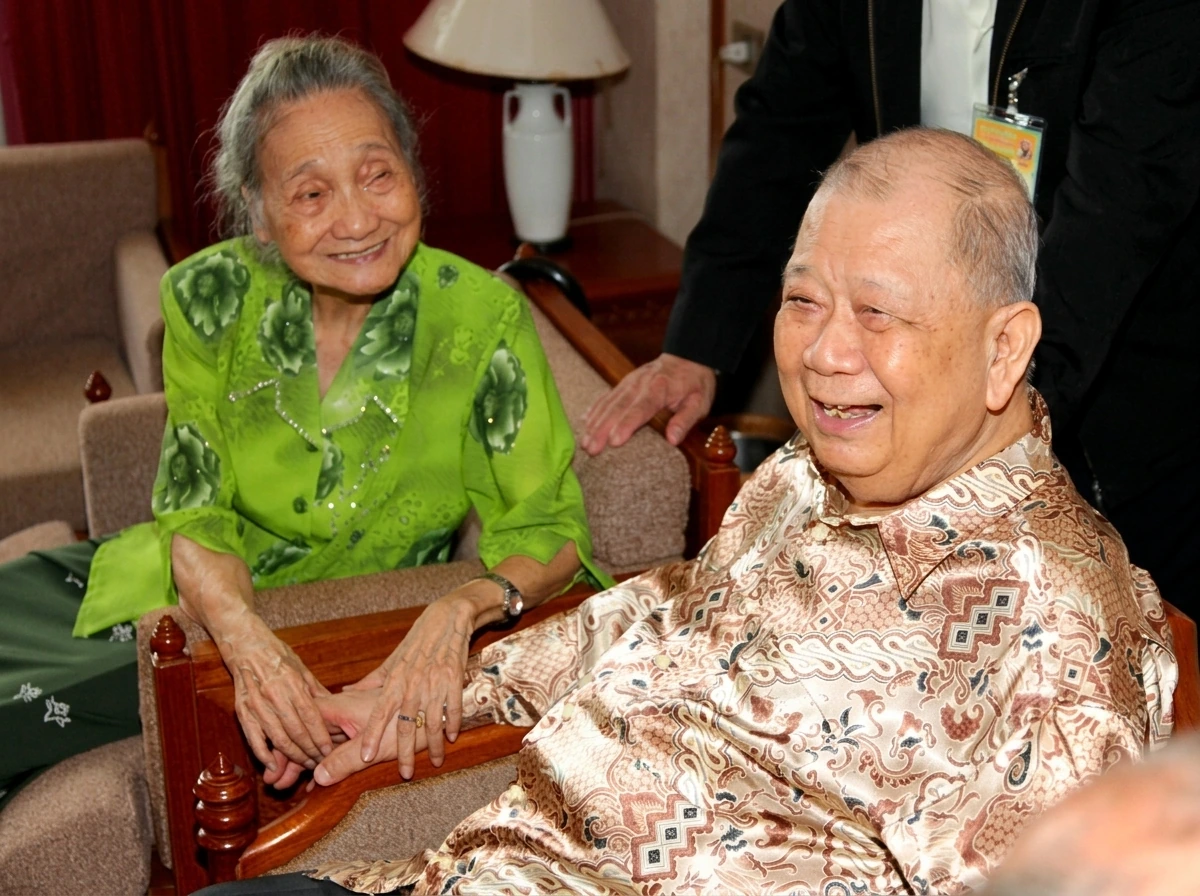
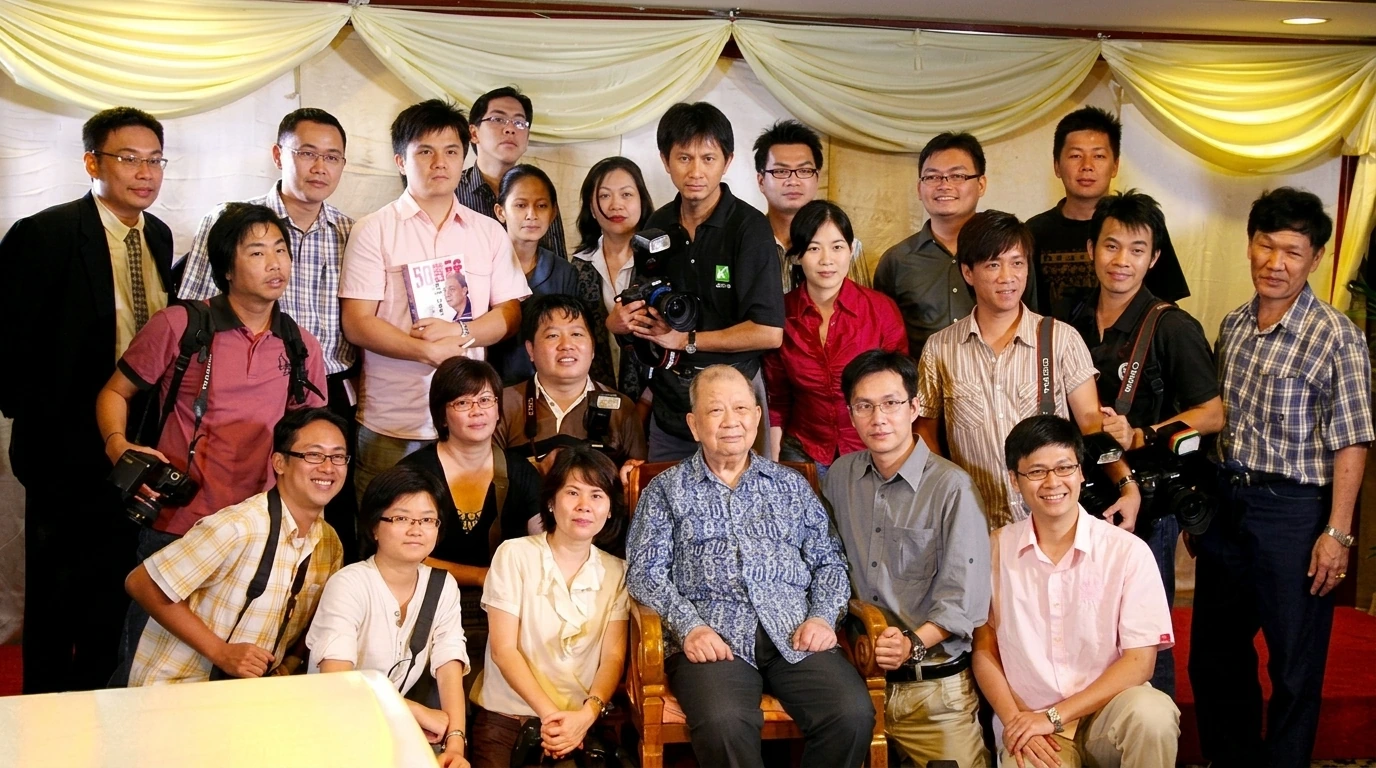
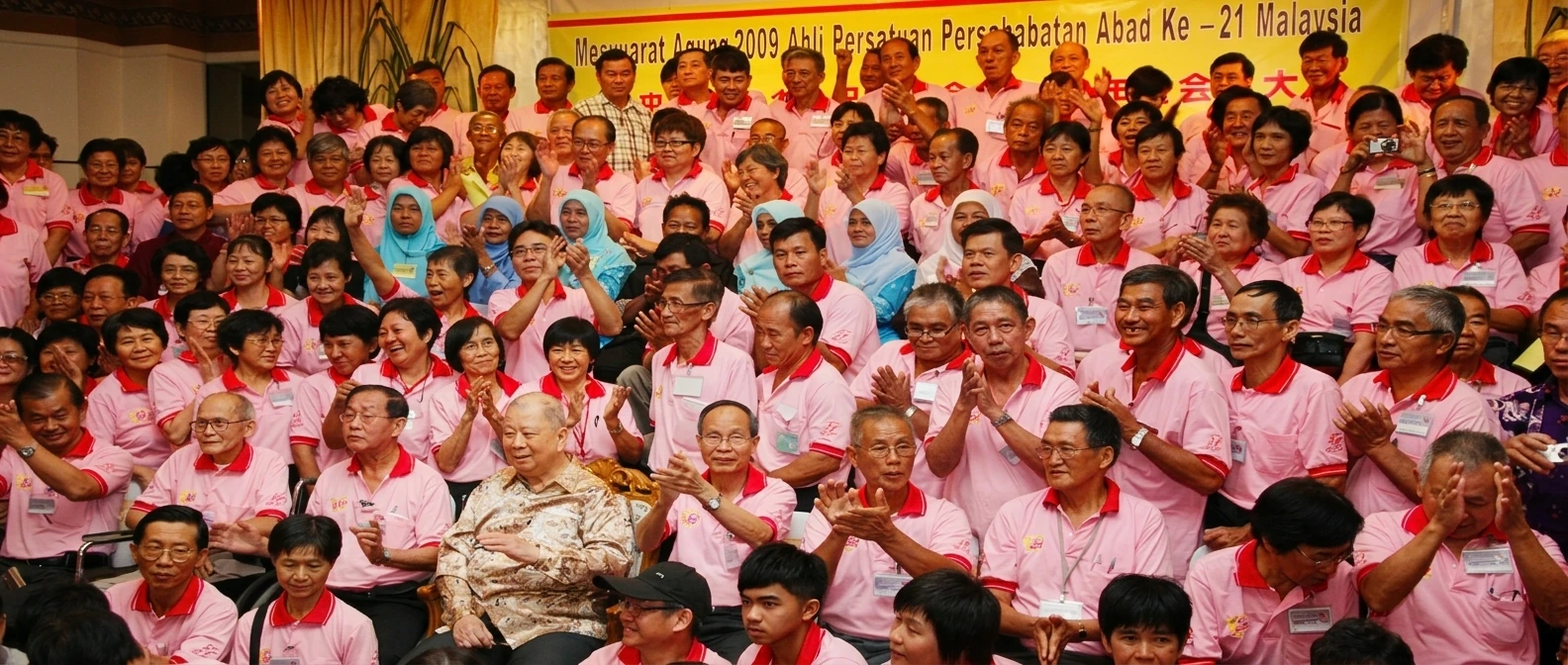
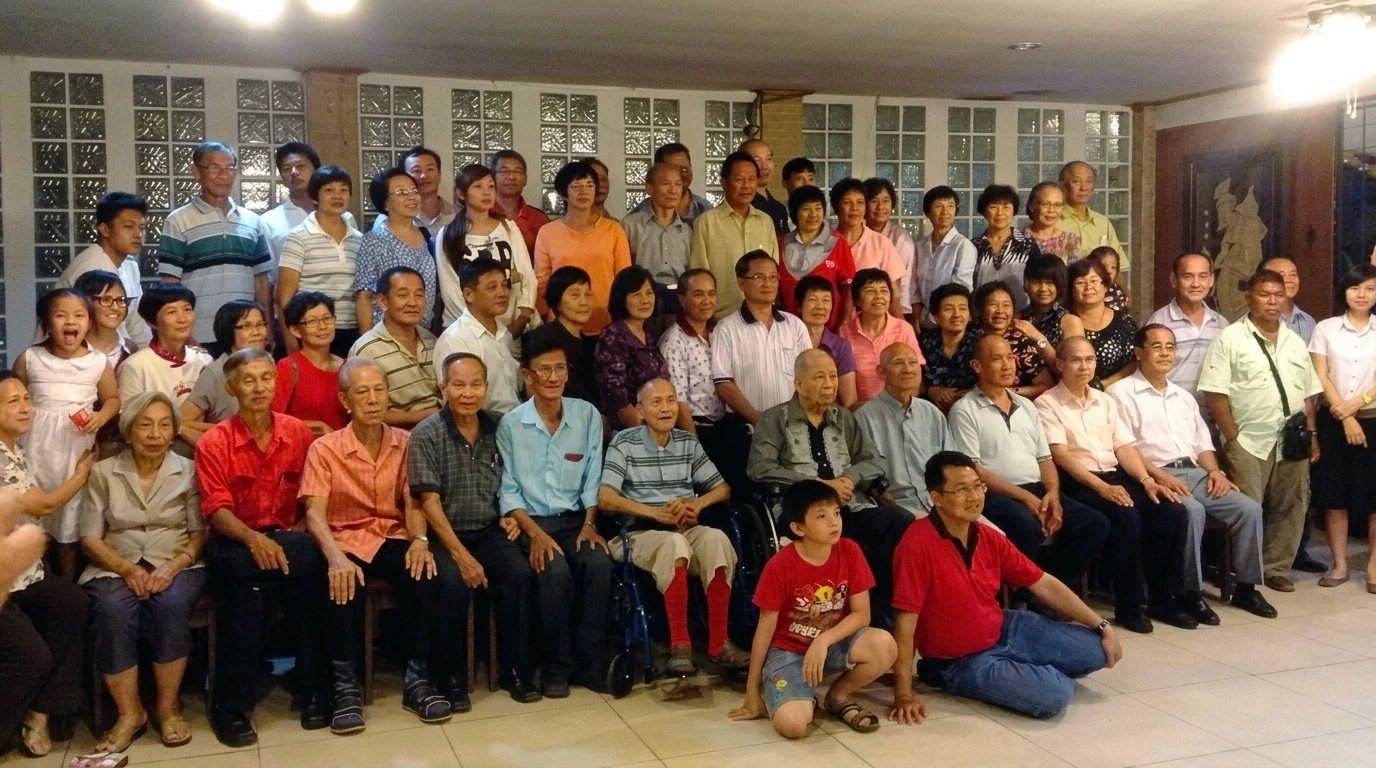
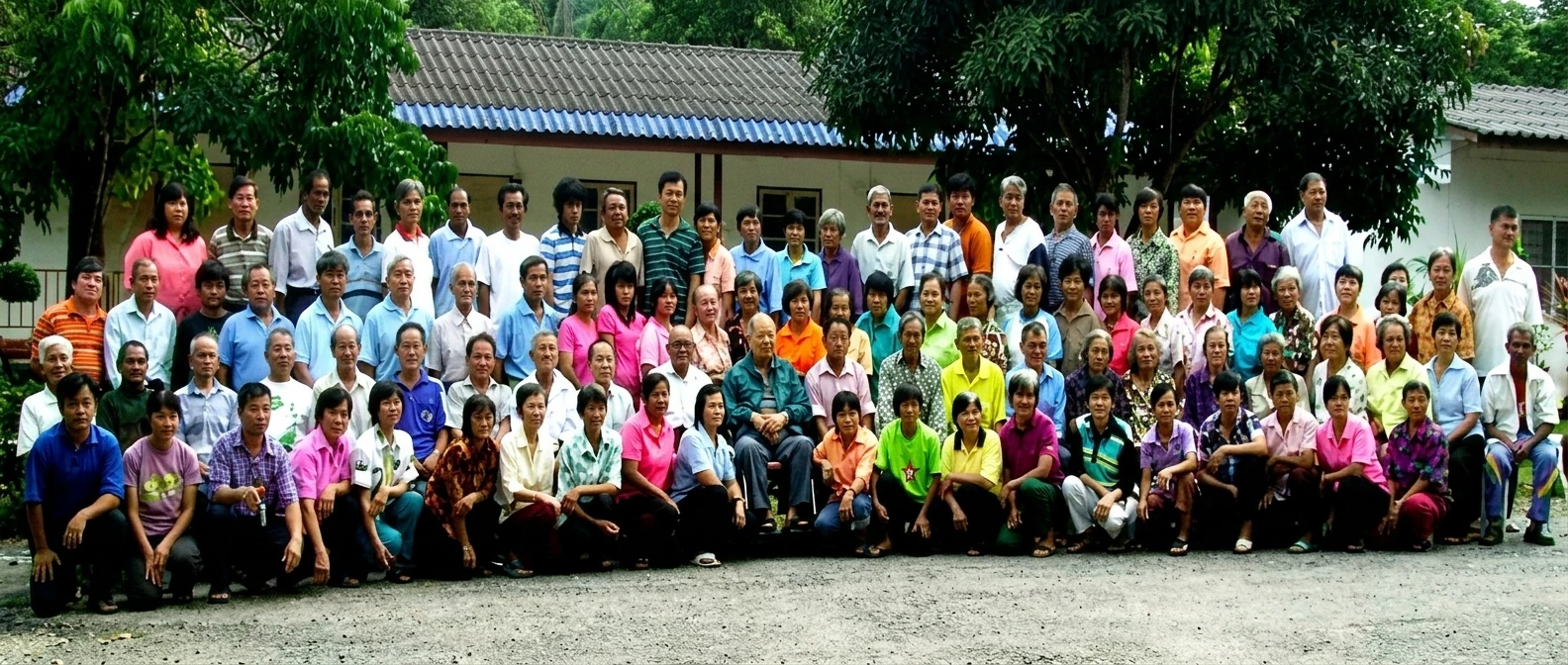
在泰南与曼谷的岁月里,陈平、阿都拉·西迪、应敏钦与马共中央副总书记阿海(单汝洪,又名阿成、陈瑞)始终保持着深厚的革命手足之情。陈平与同乡学友应敏钦重聚时的灿烂笑容,以及阿都拉·西迪、阿海与陈平三位马共最高核心元勋并肩而立的珍贵合影,凝聚了跨越巫、华族群界限的毕生信任。2009年12月,《合艾和平协议》签署二十周年纪念大会在合艾隆重举行,来自泰南四个和平村的全体老战士、马来西亚各地返乡同志与国际友人逾千人齐聚一堂。八十五岁高龄的陈平与八十六岁的阿都拉·西迪共同出席盛会,并欣然接受大批年轻一代马来西亚新闻工作者的专访与合影,寄语青年世代铭记多元族群并肩争取独立的真实历史。
While political obstacles prevented Chin Peng from setting foot on Malaysian soil, CPM Chairman Abdullah C.D., his wife Suriani Abdullah (born Eng Ming Ching, 1924–2013, a fellow native of Sitiawan, Perak, Chin Peng's schoolmate, and renowned anti-Japanese resistance heroine), and Central Committee member Rashid Maidin achieved a landmark royal reconciliation in their home state of Perak. On December 1, 1998, Abdullah C.D., Rashid Maidin, and Suriani Abdullah were granted a formal royal audience by His Royal Highness Sultan Azlan Shah of Perak (formerly Lord President of the Federal Court and the 9th Yang di-Pertuan Agong of Malaysia) and Her Royal Highness Raja Permaisuri Tuanku Bainun. The warm royal audience affirmed the historical place of these veteran anti-colonial fighters as sons and daughters of Perak and stood as a crowning symbol of post-Haadyai national reconciliation.
Throughout their post-accord years in Thailand, Chin Peng, Abdullah C.D., Suriani Abdullah, and CPM Deputy General Secretary Ah Hai (Shan Ruhong, also known as Ah Cheng and Chen Rui) maintained an unbreakable bond of revolutionary fellowship. Photographs of Chin Peng smiling alongside his fellow Sitiawan native Suriani Abdullah, and of Abdullah C.D., Ah Hai, and Chin Peng standing shoulder to shoulder, embody a lifetime of inter-ethnic trust between Malay and Chinese revolutionaries. In December 2009, the 20th Anniversary of the Haadyai Peace Accord was celebrated in grand style in Haadyai, bringing together over a thousand veterans from the four southern Thai Peace Villages, former comrades from across Malaysia, and international friends. The 85-year-old Chin Peng and 86-year-old Abdullah C.D. presided together at the gathering and warmly met a new generation of Malaysian journalists, urging young Malaysians to remember the shared multi-ethnic struggle for independence.
第六章:不枉此生、死而无憾:从公海烟波到实兆远义山与中央山脉脚下的世纪归乡(2013–2019)
Chapter 6: A Life Lived Without Regret: From the High Seas to the Sitiawan Cemetery and the Foothills of the Main Range — The Final Homecoming (2013–2019)
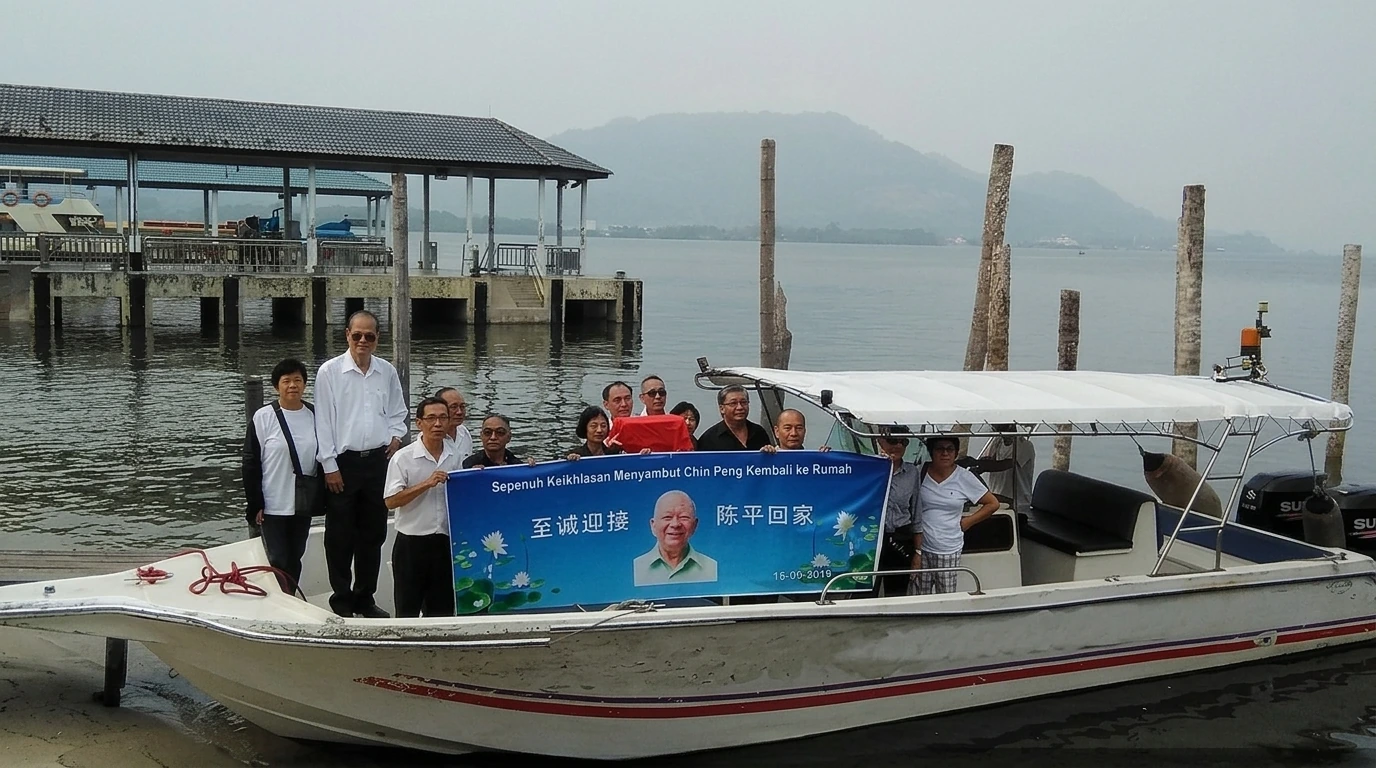
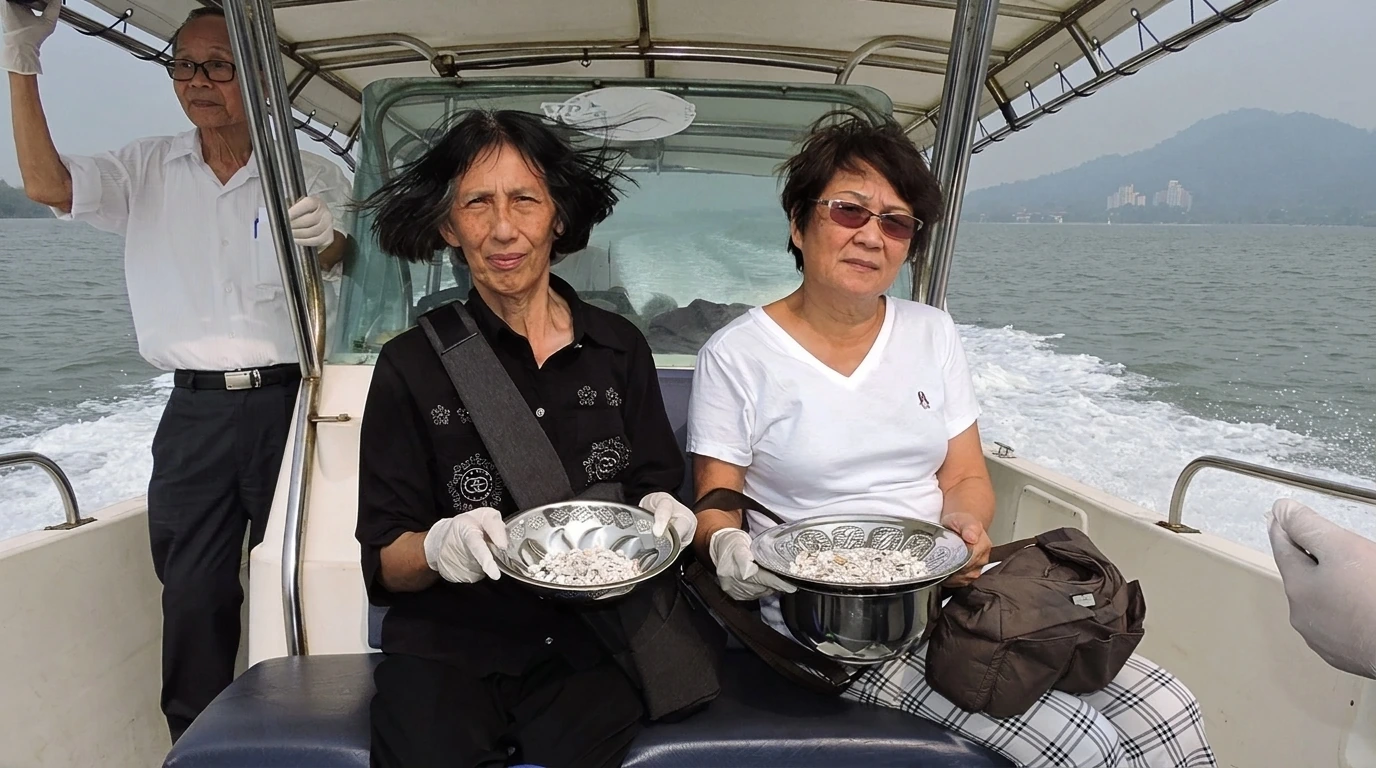
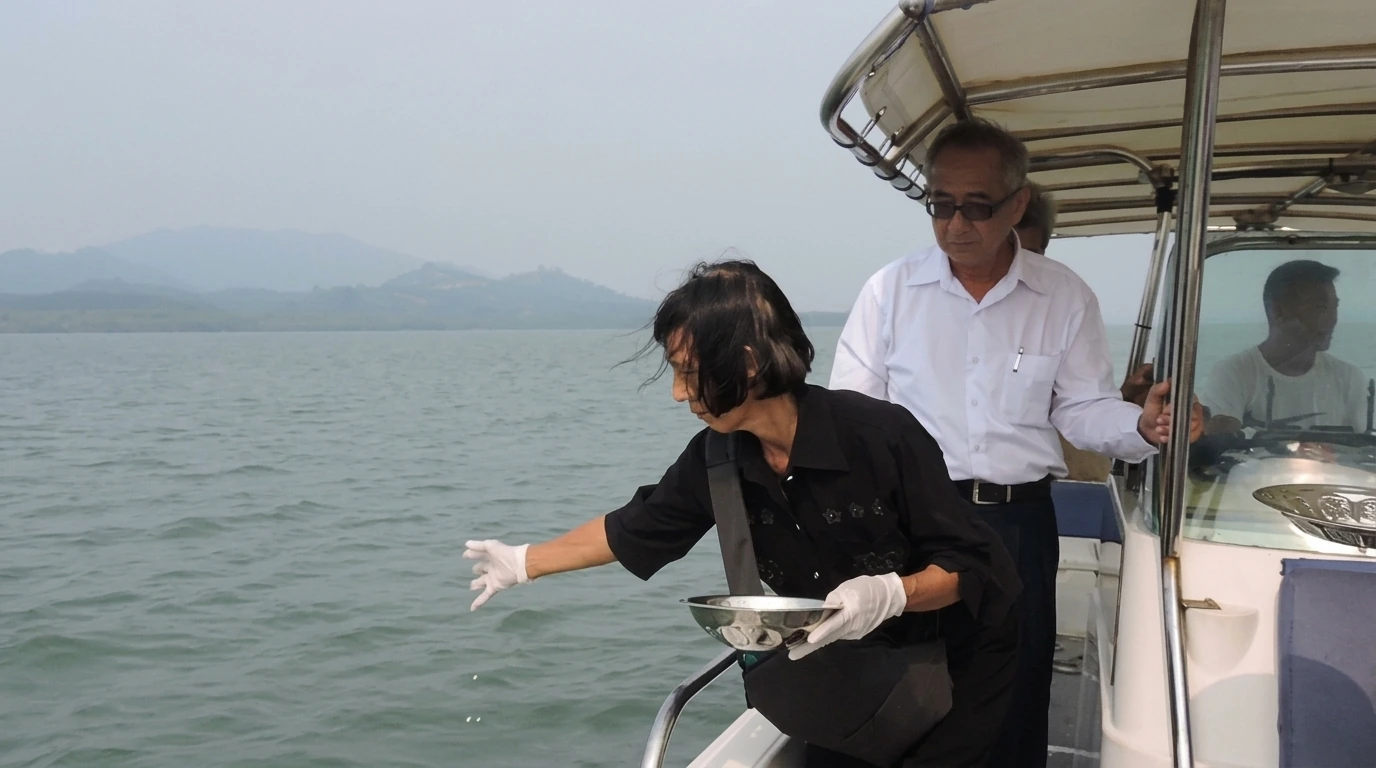
2013年9月16日(马来西亚日)清晨,马来亚共产党最后一任总书记陈平在泰国曼谷病逝,享年八十九岁。由于当时的马来西亚政府仍拒绝让其遗体或骨灰入境安葬,亲属与战友们首先遵照其遗愿,将陈平的一部分骨灰配以缤纷花瓣,乘船护送至波澜壮阔的公海之上,在“至诚迎接 陈平回家”的横幅伴随下撒入大海,寄托这位革命家胸怀四海、情系南洋的博大襟怀。
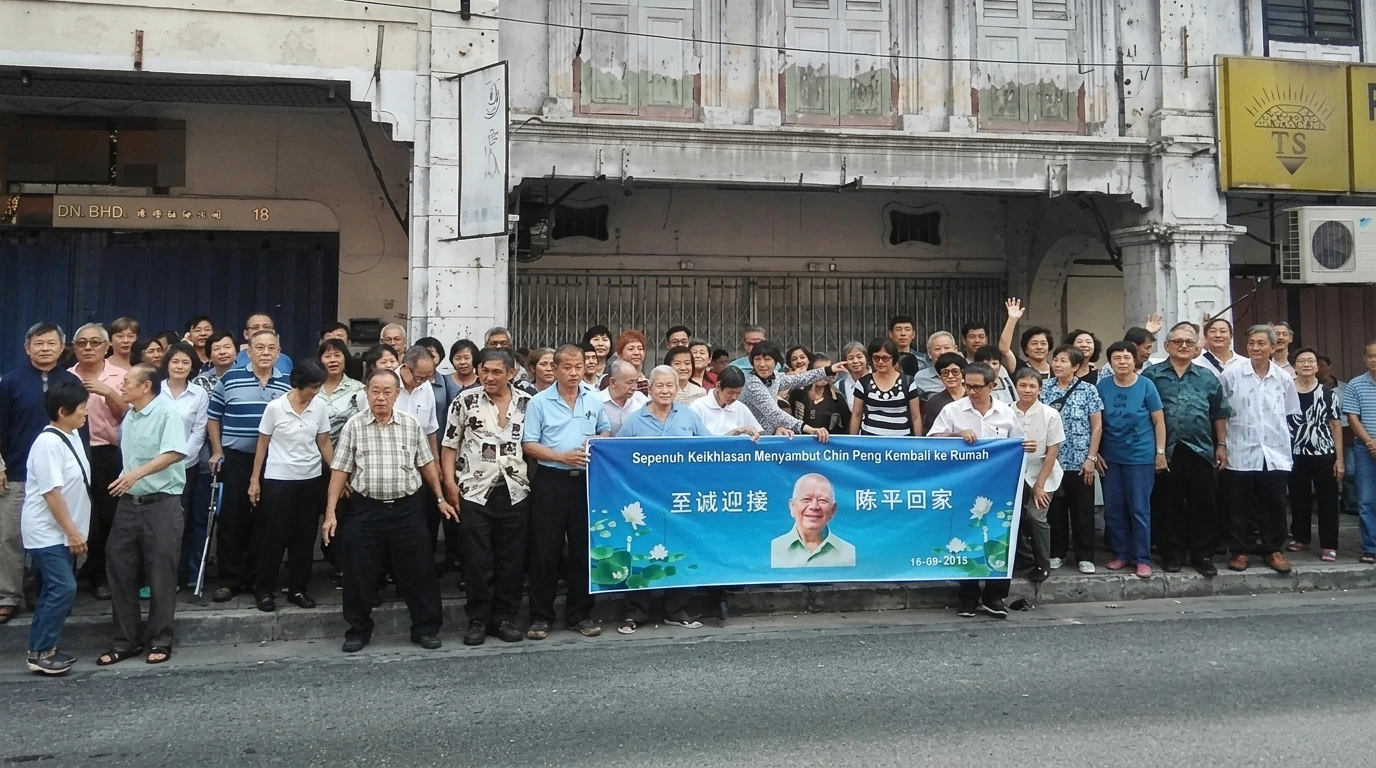
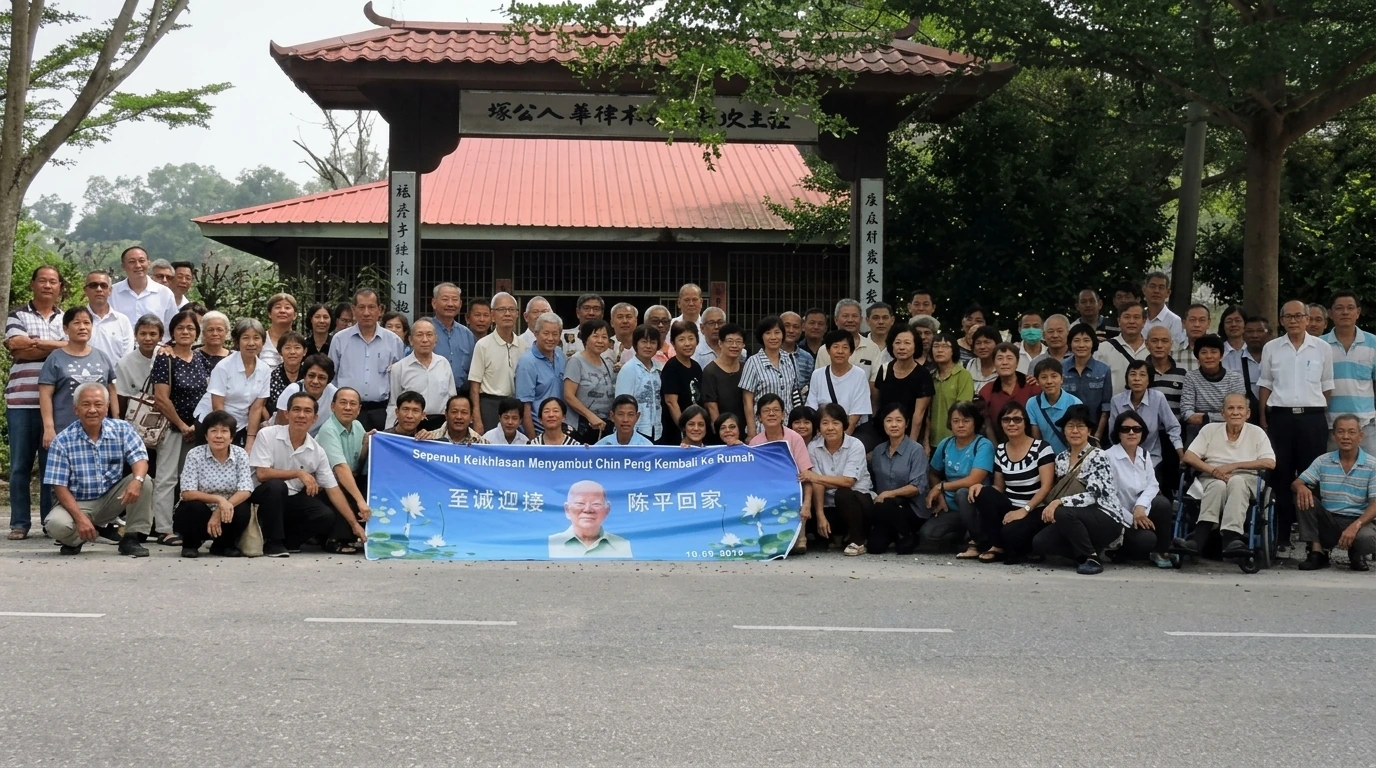
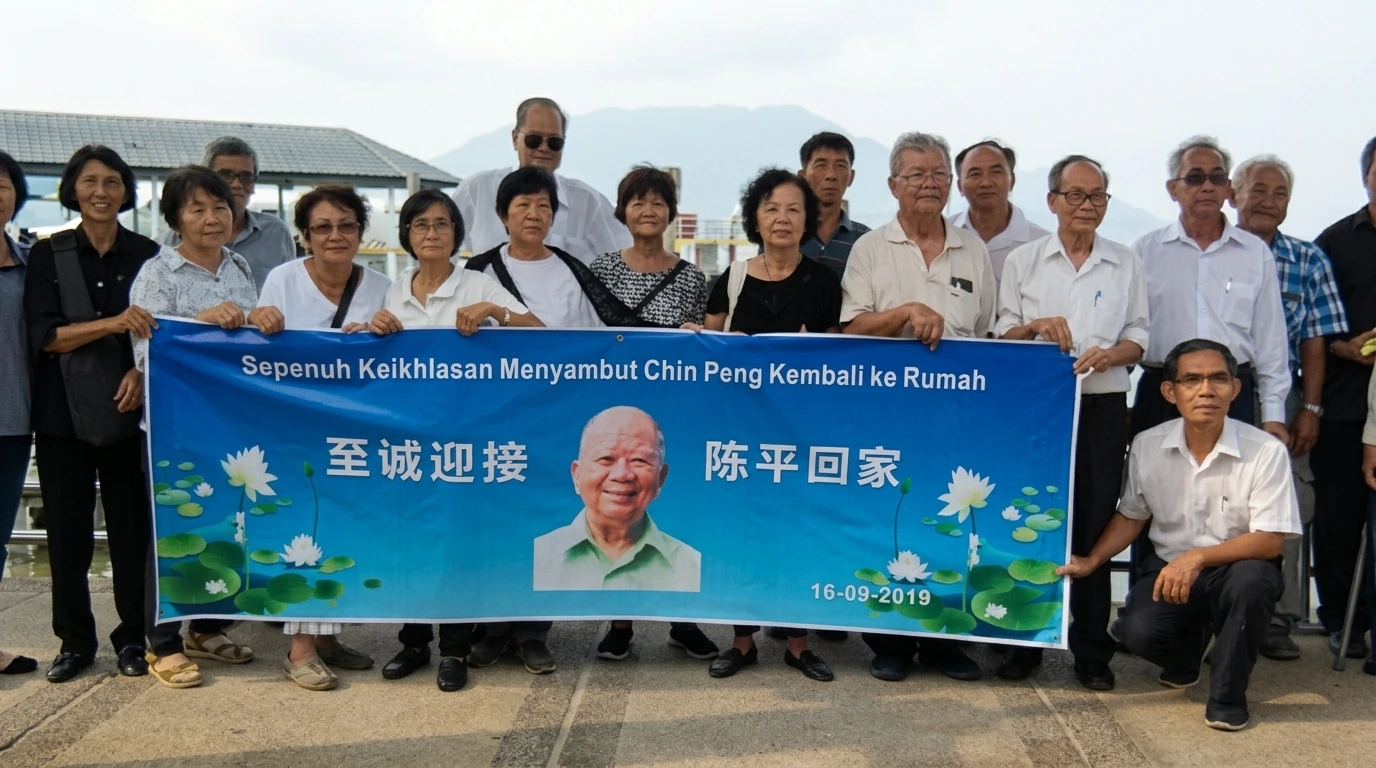
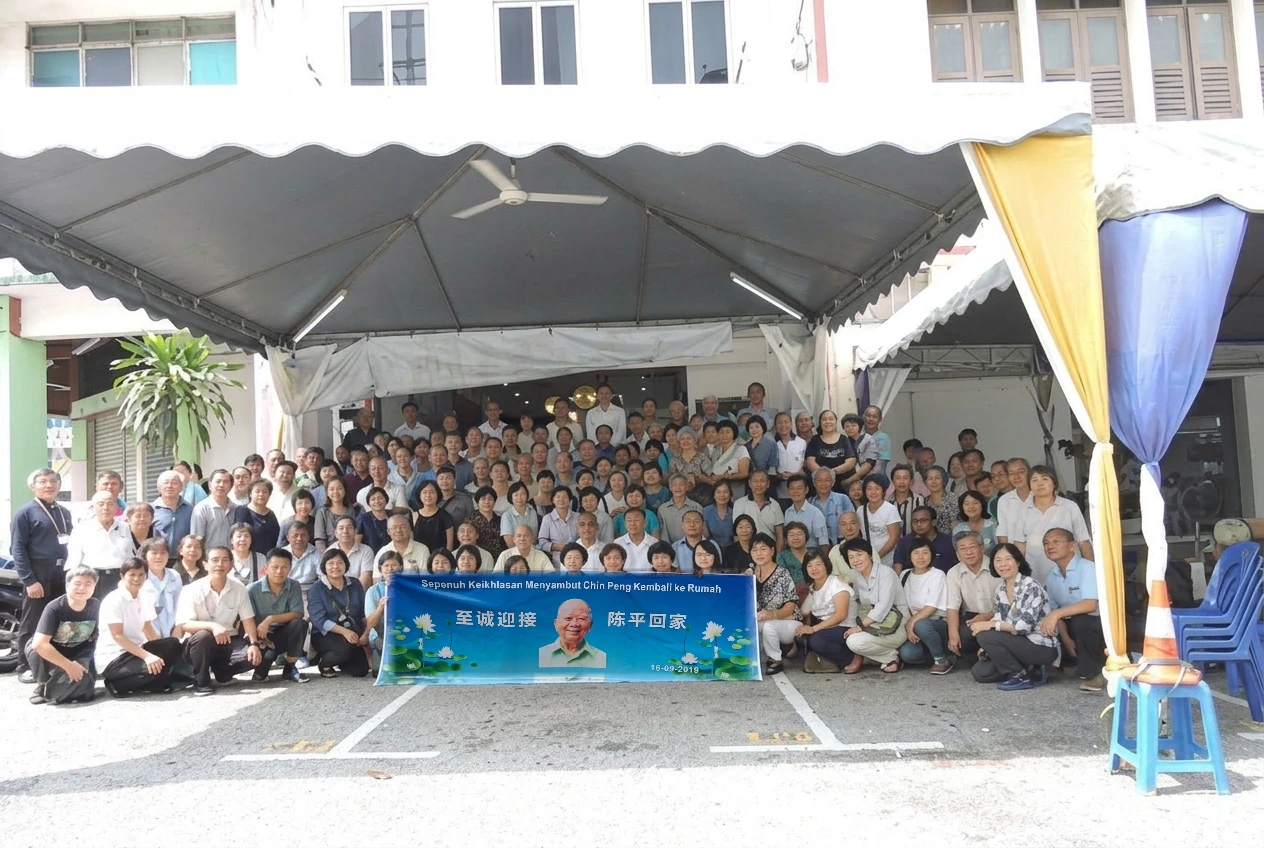
陈平生前最大的心愿,是回到阔别逾六十载的故乡霹雳州实兆远,向父母坟茔叩拜,并长眠于曾经战斗过的马来亚青山绿水之间。历经六年的静默守护与周密筹备,在陈平逝世六周年纪念日,即2019年9月16日(16-09-2019),由陈平生前挚友与老战友组成的骨灰护送工作组,终于将陈平的骨灰秘密护送回马来西亚霹雳州。护送队伍手举印有陈平中老年双肖像与“至诚迎接 陈平回家(16-09-2019)”字样的横幅,首先回到他的故乡实兆远老街店屋前驻足致意,随后前往实兆远红土坎广福义山(华人公冢)其父母墓园牌楼前庄严合影,完成了游子对双亲跨越世纪的归乡叩拜。
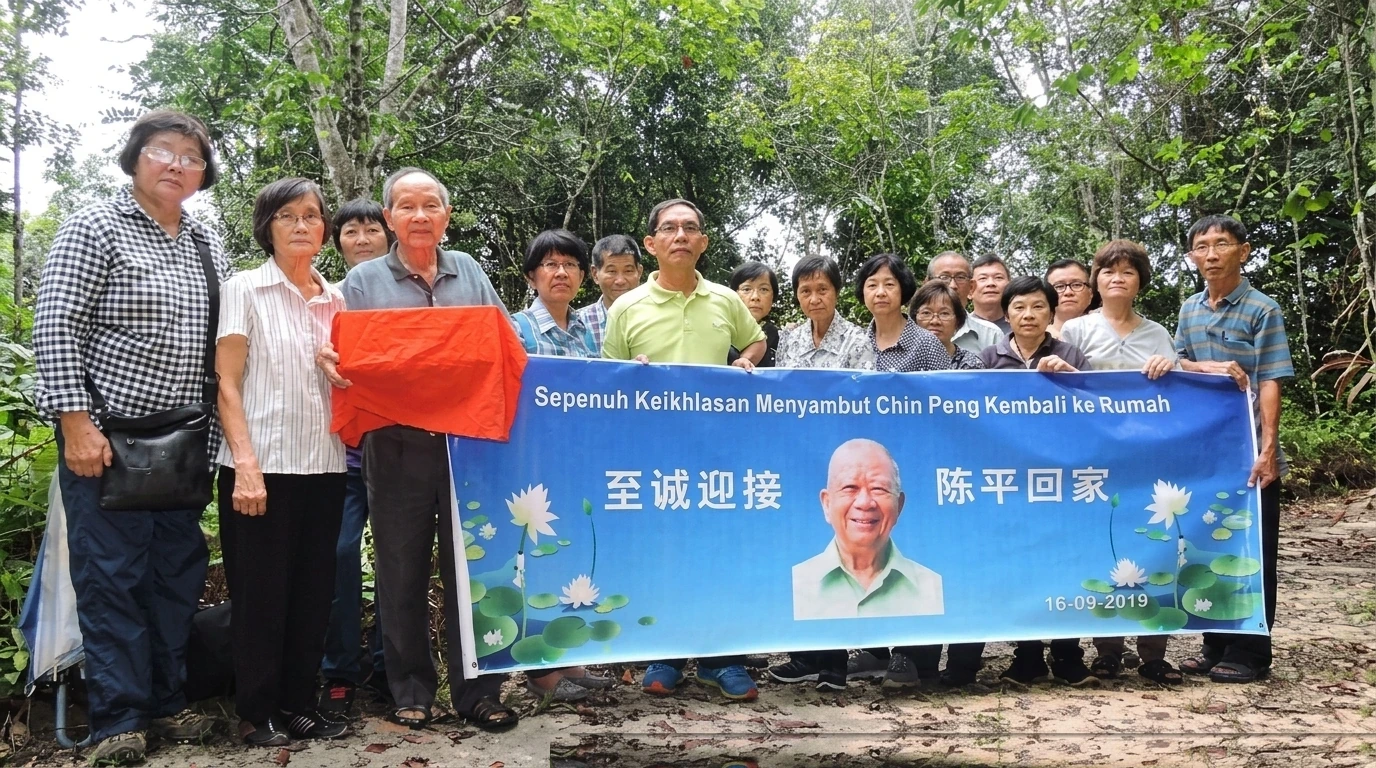
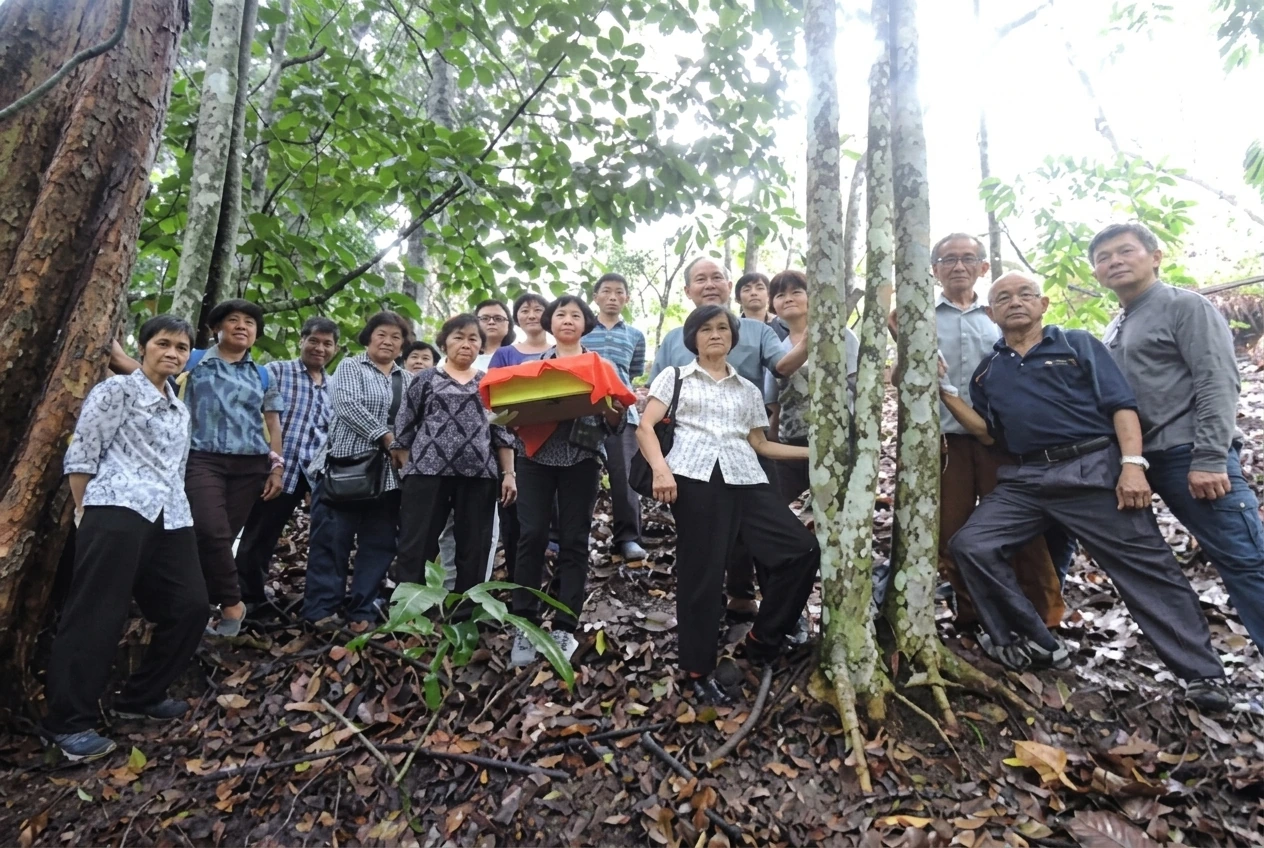
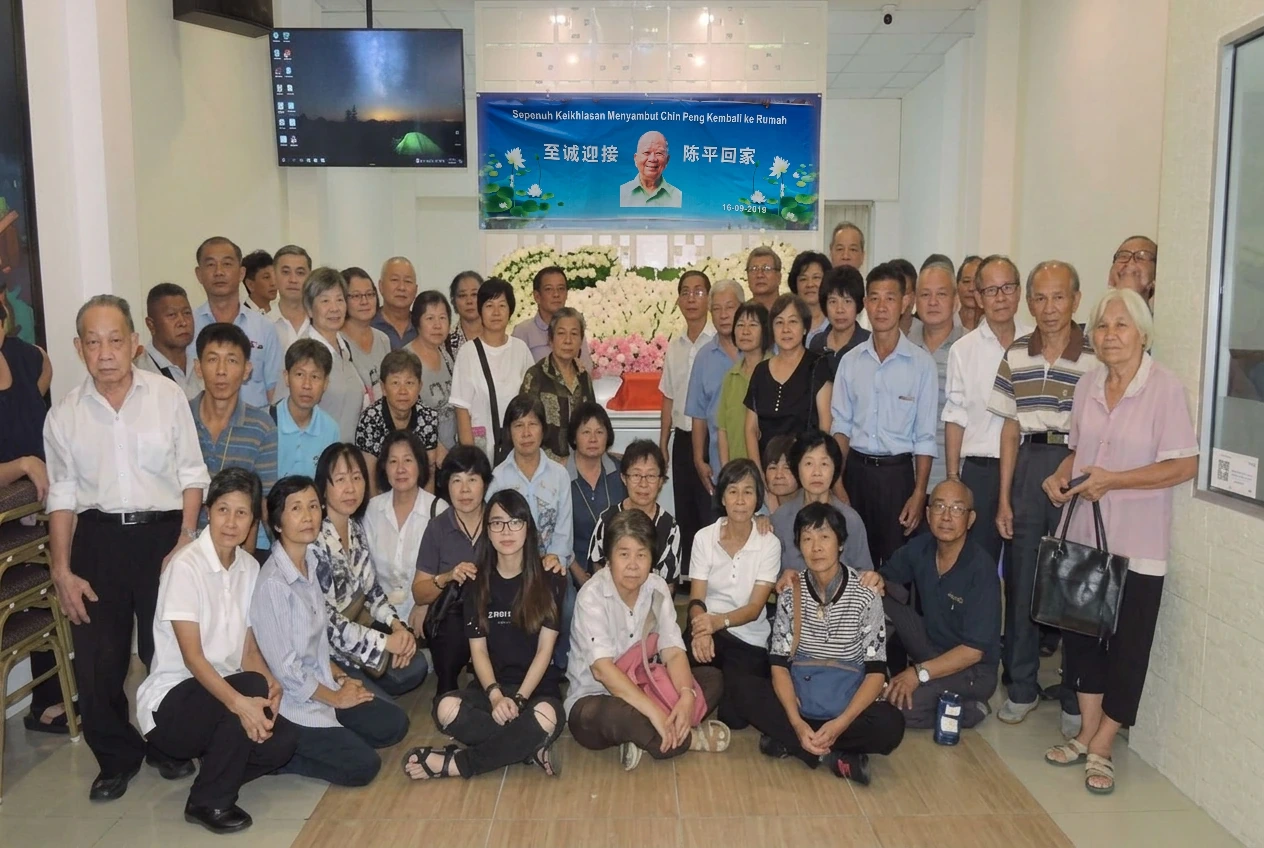
接着,战友们捧着覆以红绸的骨灰盒,来到当年马来亚民族解放军纵横驰骋的蒂蒂旺沙中央山脉(Titiwangsa Main Range)脚下、怡保珠宝(Chemor)附近的葱茏山坡,以及距离实兆远红土坎码头(Lumut Jetty)数公里外的海岸山坡,将陈平的骨灰敬撒于故国的大地、森林与海湾之中。同日,战友与各界友人在怡保举行了庄重的迎归追思会。至此,这位毕生为马来亚独立与人民解放事业献身的传奇领袖,终于真正融归于他深爱的故土山河,正应了文献卷首那句不朽誓言:“一个人只要曾参与过为他人建立更美好世界的努力,他就可以感觉不枉此生、死而无憾。”
In the early morning of September 16, 2013 (Malaysia Day), Chin Peng, the last General Secretary of the Communist Party of Malaya, passed away in Bangkok, Thailand, at the age of eighty-nine. Because the Malaysian authorities at the time barred his body or ashes from entering the country, family members and comrades initially escorted a portion of his ashes aboard a vessel out to the open sea, scattering them alongside vibrant flower petals beneath a banner reading 'Wholeheartedly Welcoming Chin Peng Home'—a tribute to his boundless spirit and lifelong devotion to Nanyang.
Chin Peng's deepest lifelong wish was to return to his hometown of Sitiawan, Perak, after more than sixty years of separation, pay respects at his parents' graves, and rest eternally amidst the mountains and waters of Malaya where he and his comrades had fought. After six years of quiet safekeeping and careful preparation, on the sixth anniversary of his passing—September 16, 2019 (16-09-2019)—a dedicated group of close friends and veteran comrades successfully escorted Chin Peng's remaining ashes back to Perak, Malaysia. Holding a banner emblazoned with twin portraits of Chin Peng and the words 'Wholeheartedly Welcoming Chin Peng Home (16-09-2019)', the group first paused on the old shophouse street of his hometown in Sitiawan, and then stood before the archway of the Sitiawan-Lumut Kwong Fook Chinese Cemetery where his parents are buried, fulfilling the prodigal son's long-awaited homecoming to his parents.
Carrying the red-cloth-draped urn, his comrades then ascended the forested slopes at the foot of the Titiwangsa Main Range near Chemor, Ipoh—once the heartland of the Malayan National Liberation Army—and traveled to a hillside a few kilometers from Lumut Jetty, scattering his ashes across the soil, jungle, and sea of his homeland before holding a solemn memorial gathering. At last, the revolutionary leader merged forever with the mountains and waters of the country he loved—fulfilling the timeless words at the head of this exhibition: 'Our lives take on its full meaning only when, by the time we depart from this world, we know we have done our bit in making it a better place for others.'
2013年9月16日(马来西亚日)清晨,马来亚共产党最后一任总书记陈平在泰国曼谷病逝,享年八十九岁。由于当时的马来西亚政府仍拒绝让其遗体或骨灰入境安葬,亲属与战友们首先遵照其遗愿,将陈平的一部分骨灰配以缤纷花瓣,乘船护送至波澜壮阔的公海之上,在“至诚迎接 陈平回家”的横幅伴随下撒入大海,寄托这位革命家胸怀四海、情系南洋的博大襟怀。
In the early morning of September 16, 2013 (Malaysia Day), Chin Peng, the last General Secretary of the Communist Party of Malaya, passed away in Bangkok, Thailand, at the age of eighty-nine. Because the Malaysian authorities at the time barred his body or ashes from entering the country, family members and comrades initially escorted a portion of his ashes aboard a vessel out to the open sea, scattering them alongside vibrant flower petals beneath a banner reading 'Wholeheartedly Welcoming Chin Peng Home'—a tribute to his boundless spirit and lifelong devotion to Nanyang.
陈平生前最大的心愿,是回到阔别逾六十载的故乡霹雳州实兆远,向父母坟茔叩拜,并长眠于曾经战斗过的马来亚青山绿水之间。历经六年的静默守护与周密筹备,在陈平逝世六周年纪念日,即2019年9月16日(16-09-2019),由陈平生前挚友与老战友组成的骨灰护送工作组,终于将陈平的骨灰秘密护送回马来西亚霹雳州。护送队伍手举印有陈平中老年双肖像与“至诚迎接 陈平回家(16-09-2019)”字样的横幅,首先回到他的故乡实兆远老街店屋前驻足致意,随后前往实兆远红土坎广福义山(华人公冢)其父母墓园牌楼前庄严合影,完成了游子对双亲跨越世纪的归乡叩拜。
接着,战友们捧着覆以红绸的骨灰盒,来到当年马来亚民族解放军纵横驰骋的蒂蒂旺沙中央山脉(Titiwangsa Main Range)脚下、怡保珠宝(Chemor)附近的葱茏山坡,以及距离实兆远红土坎码头(Lumut Jetty)数公里外的海岸山坡,将陈平的骨灰敬撒于故国的大地、森林与海湾之中。同日,战友与各界友人在怡保举行了庄重的迎归追思会。至此,这位毕生为马来亚独立与人民解放事业献身的传奇领袖,终于真正融归于他深爱的故土山河,正应了文献卷首那句不朽誓言:“一个人只要曾参与过为他人建立更美好世界的努力,他就可以感觉不枉此生、死而无憾。”
Chin Peng's deepest lifelong wish was to return to his hometown of Sitiawan, Perak, after more than sixty years of separation, pay respects at his parents' graves, and rest eternally amidst the mountains and waters of Malaya where he and his comrades had fought. After six years of quiet safekeeping and careful preparation, on the sixth anniversary of his passing—September 16, 2019 (16-09-2019)—a dedicated group of close friends and veteran comrades successfully escorted Chin Peng's remaining ashes back to Perak, Malaysia. Holding a banner emblazoned with twin portraits of Chin Peng and the words 'Wholeheartedly Welcoming Chin Peng Home (16-09-2019)', the group first paused on the old shophouse street of his hometown in Sitiawan, and then stood before the archway of the Sitiawan-Lumut Kwong Fook Chinese Cemetery where his parents are buried, fulfilling the prodigal son's long-awaited homecoming to his parents.
Carrying the red-cloth-draped urn, his comrades then ascended the forested slopes at the foot of the Titiwangsa Main Range near Chemor, Ipoh—once the heartland of the Malayan National Liberation Army—and traveled to a hillside a few kilometers from Lumut Jetty, scattering his ashes across the soil, jungle, and sea of his homeland before holding a solemn memorial gathering. At last, the revolutionary leader merged forever with the mountains and waters of the country he loved—fulfilling the timeless words at the head of this exhibition: 'Our lives take on its full meaning only when, by the time we depart from this world, we know we have done our bit in making it a better place for others.'