第3集:碧血黑风洞与九一忠魂节:从殖民奴隶到当家作主的觉醒长歌
Episode 3: Blood on the Limestone of Batu Caves and the September 1st Martyrs' Day: An Awakening Anthem from Colonial Slavery to National Sovereignty
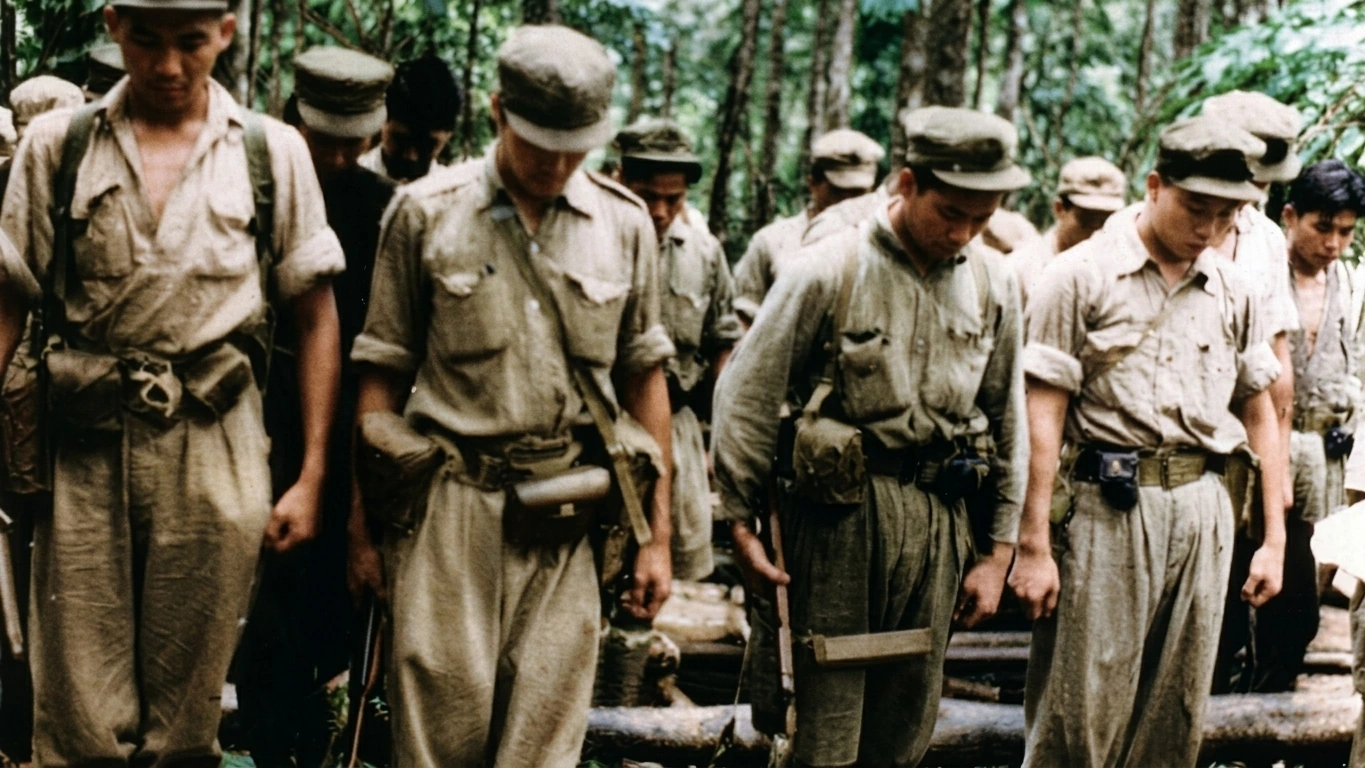
1942年9月1日拂晓,因内奸莱特秘密出卖,日军精锐包围雪兰莪黑风洞石山脚,十八位马共高级领导干部与警卫指战员浴血奋战壮烈殉国。烈火涅槃的马共迅速重建领导中枢,颁布《抗日九大纲领》,将悲愤化为不可遏制的战斗力量,成为指引全马人民夺取抗日最后胜利的指路灯塔。
At dawn on September 1, 1942, betrayed by British triple agent Lai Te, Japanese forces surrounded Batu Caves. Eighteen senior CPM cadres and guards fell in heroic combat. Emerging from the ashes, the Party reconstituted its leadership and promulgated the historic Nine-Point Anti-Japanese Programme.
第一章:黑风洞石山脚的拂晓枪声与内奸出卖下的至暗时刻
Chapter 1: Gunfire at Batu Caves: The Treachery of the Triple Agent
1942年9月1日拂晓,吉隆坡近郊著名的黑风洞石山脚(Batu Caves)一处隐蔽的林间临时会场,笼罩在乳白色的晨雾与刺骨的寒气之中。马共中央原定于当天在此秘密召开第八次扩大的中央执行委员会全体会议,在会场的共有三十位同志。然而,正当代表们整理文卷、准备开会之际,外围放哨的警卫员突然发出了急促的敌情警报!
两千多名全副武装的日本侵略军精锐部队与宪兵队(Kempeitai),在重机枪与装甲车辆的掩护下,悄然完成了对会址的四道封锁线包围。日军不仅准确掌握了开会的绝密时间、地点,甚至连进出临时会场的山野小径都了如指掌。这根本不是一次偶然的巡逻遭遇,而是一场蓄谋已久、企图一网打尽马共高级干部的阴谋围歼!
这场灭顶之灾的幕后黑手,正是当时把持着马共最高领导职位的内奸总书记莱特(Lai Te)。此时的莱特已沦为日本宪兵队的秘密间谍,正是他提前将会议全盘情报密报给了日军指挥官,而他本人则狡猾地借故未到会场,从而避开了这场死亡陷阱。
面对居高临下倾泻而来的密集弹雨,三十位与会同志瞬间陷入重围。然而,在生与死的考验面前,没有一名共产党人屈服投降,一场浴血突围战在黑风洞石山脚下悲壮打响。
At dawn on September 1, 1942, mist swirled around a concealed temporary conference venue at the foot of Batu Caves on the outskirts of Kuala Lumpur, where the CPM Central Executive Committee had convened its 8th Enlarged Plenary Meeting with thirty comrades in attendance. As delegates prepared the agenda, the outer sentry sounded an urgent alarm.
More than two thousand elite Japanese troops and Kempeitai military police had encircled the venue with four concentric cordon lines, supported by heavy machine guns and armored vehicles. Possessing precise intelligence regarding the venue and schedule, the enemy launched an orchestrated operation designed to wipe out the CPM's senior leadership in a single swoop.
The culprit behind this catastrophe was the Party's Secretary-General, the triple agent Lai Te. Having secretly served the Japanese Kempeitai after the fall of Singapore, Lai Te betrayed the conference coordinates to Japanese intelligence while deliberately absenting himself from the meeting.
Confronted by overwhelming firepower, the thirty trapped comrades faced a desperate battle. Yet not a single cadre wavered or surrendered, launching a heroic breakout through the four enemy cordon lines.
1942年9月1日拂晓,吉隆坡近郊著名的黑风洞石山脚(Batu Caves)一处隐蔽的林间临时会场,笼罩在乳白色的晨雾与刺骨的寒气之中。马共中央原定于当天在此秘密召开第八次扩大的中央执行委员会全体会议,在会场的共有三十位同志。然而,正当代表们整理文卷、准备开会之际,外围放哨的警卫员突然发出了急促的敌情警报!
两千多名全副武装的日本侵略军精锐部队与宪兵队(Kempeitai),在重机枪与装甲车辆的掩护下,悄然完成了对会址的四道封锁线包围。日军不仅准确掌握了开会的绝密时间、地点,甚至连进出临时会场的山野小径都了如指掌。这根本不是一次偶然的巡逻遭遇,而是一场蓄谋已久、企图一网打尽马共高级干部的阴谋围歼!
At dawn on September 1, 1942, mist swirled around a concealed temporary conference venue at the foot of Batu Caves on the outskirts of Kuala Lumpur, where the CPM Central Executive Committee had convened its 8th Enlarged Plenary Meeting with thirty comrades in attendance. As delegates prepared the agenda, the outer sentry sounded an urgent alarm.
More than two thousand elite Japanese troops and Kempeitai military police had encircled the venue with four concentric cordon lines, supported by heavy machine guns and armored vehicles. Possessing precise intelligence regarding the venue and schedule, the enemy launched an orchestrated operation designed to wipe out the CPM's senior leadership in a single swoop.
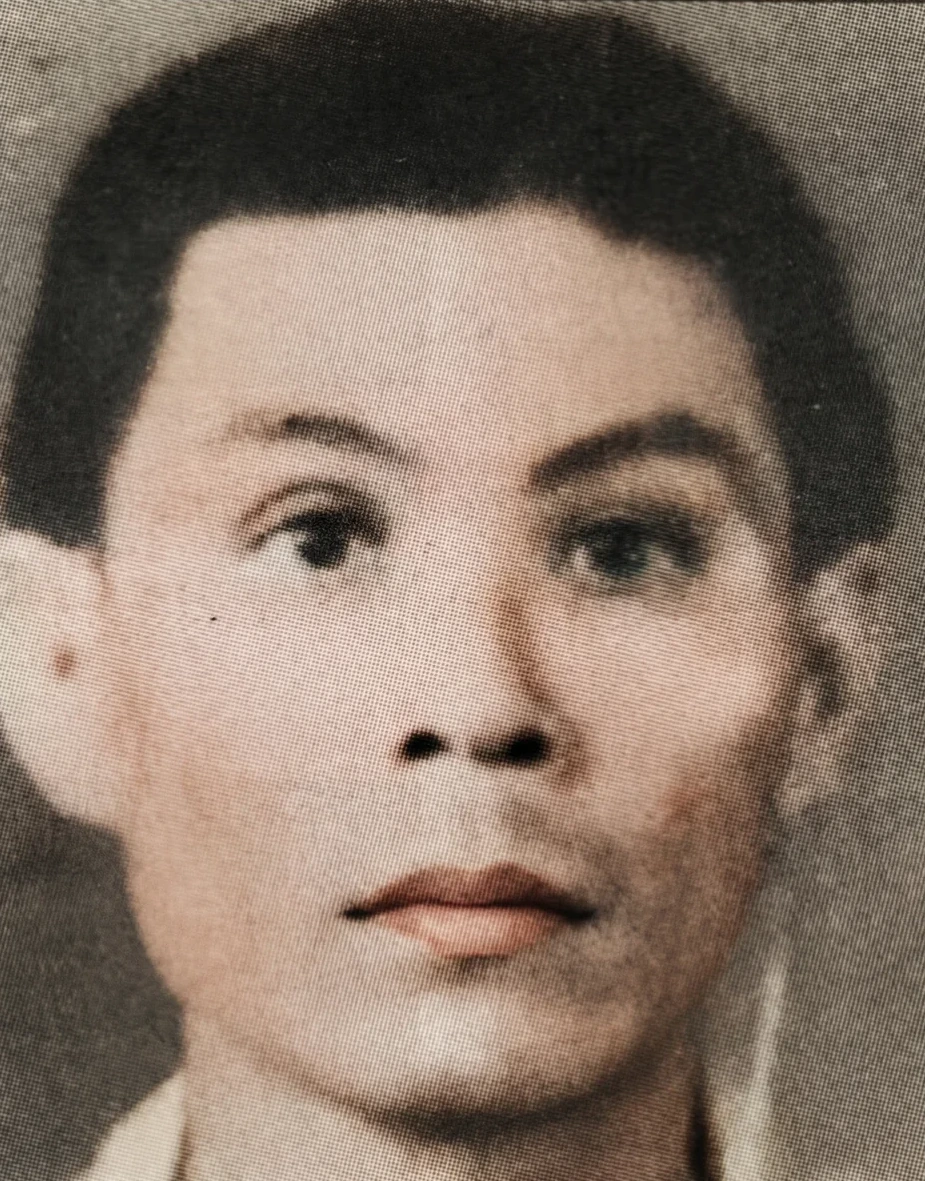
这场灭顶之灾的幕后黑手,正是当时把持着马共最高领导职位的内奸总书记莱特(Lai Te)。此时的莱特已沦为日本宪兵队的秘密间谍,正是他提前将会议全盘情报密报给了日军指挥官,而他本人则狡猾地借故未到会场,从而避开了这场死亡陷阱。
面对居高临下倾泻而来的密集弹雨,三十位与会同志瞬间陷入重围。然而,在生与死的考验面前,没有一名共产党人屈服投降,一场浴血突围战在黑风洞石山脚下悲壮打响。
The culprit behind this catastrophe was the Party's Secretary-General, the triple agent Lai Te. Having secretly served the Japanese Kempeitai after the fall of Singapore, Lai Te betrayed the conference coordinates to Japanese intelligence while deliberately absenting himself from the meeting.
Confronted by overwhelming firepower, the thirty trapped comrades faced a desperate battle. Yet not a single cadre wavered or surrendered, launching a heroic breakout through the four enemy cordon lines.
第二章:碧血洒长空:十八位领导干部与抗日指战员的壮烈殉国
Chapter 2: Blood on the Limestone: The Martyrdom of Eighteen Vanguard Leaders and Fighters
面对两千余名日军精锐部队的四层铁壁合围,会场内的三十位同志临危不惧,当即销毁会议机密文件,紧握短枪与手榴弹向敌军封锁线发起决死突围。山谷间枪声震天、硝烟弥漫,与会领导干部与警卫战士依托岩石和林木掩护英勇还击,用血肉之躯杀开一条血路,在激战中毙伤日军官兵一百余人,冲破了敌人的四道封锁线。
在这场惨烈的突围血战中,共有九位领导干部、六位警卫员与三位服务员(合计十八位同志)壮烈牺牲。其中,包括1939年6月在马共第六次中央扩大会议上当选为中央常务委员会委员(相当于后来的政治局委员)的小忠同志(原名李振宗,又名李英、亚川,牺牲时年仅二十七、八岁),以及1942年1月1日成立的马来亚人民抗日军第一独立队首任司令部党代表许庆彪同志(牺牲时年仅二十一岁)。
与此同时,由于内奸莱特自1942年春至1943年春的接连出卖,马共第一代中央核心领导层与抗日军骨干在“九一”事件前后遭受了极其惨重的损失:中央常务委员会委员黄诚(原名张詹熹,又名黄石,1942年4月19日被捕牺牲,年仅三十一、二岁)、中央常务委员会委员白衣(原名李良,又名李雪峰,1942年4月19日被捕牺牲,年仅三十一、二岁)、中央常务委员会委员林江石(原名黄伯遂,又名老黑,1942年4月20日被捕,7月18日被害,年约三十岁)、中央执行委员会委员老翁(党名阿普,1942年10月被捕被害),以及后来起草《抗日九大纲领》的中央常务委员会委员蔡克明(1943年4月被莱特诱骗赴新加坡开会途中被捕被害,年仅三十岁),先后为马来亚民族解放事业流尽了最后一滴血。
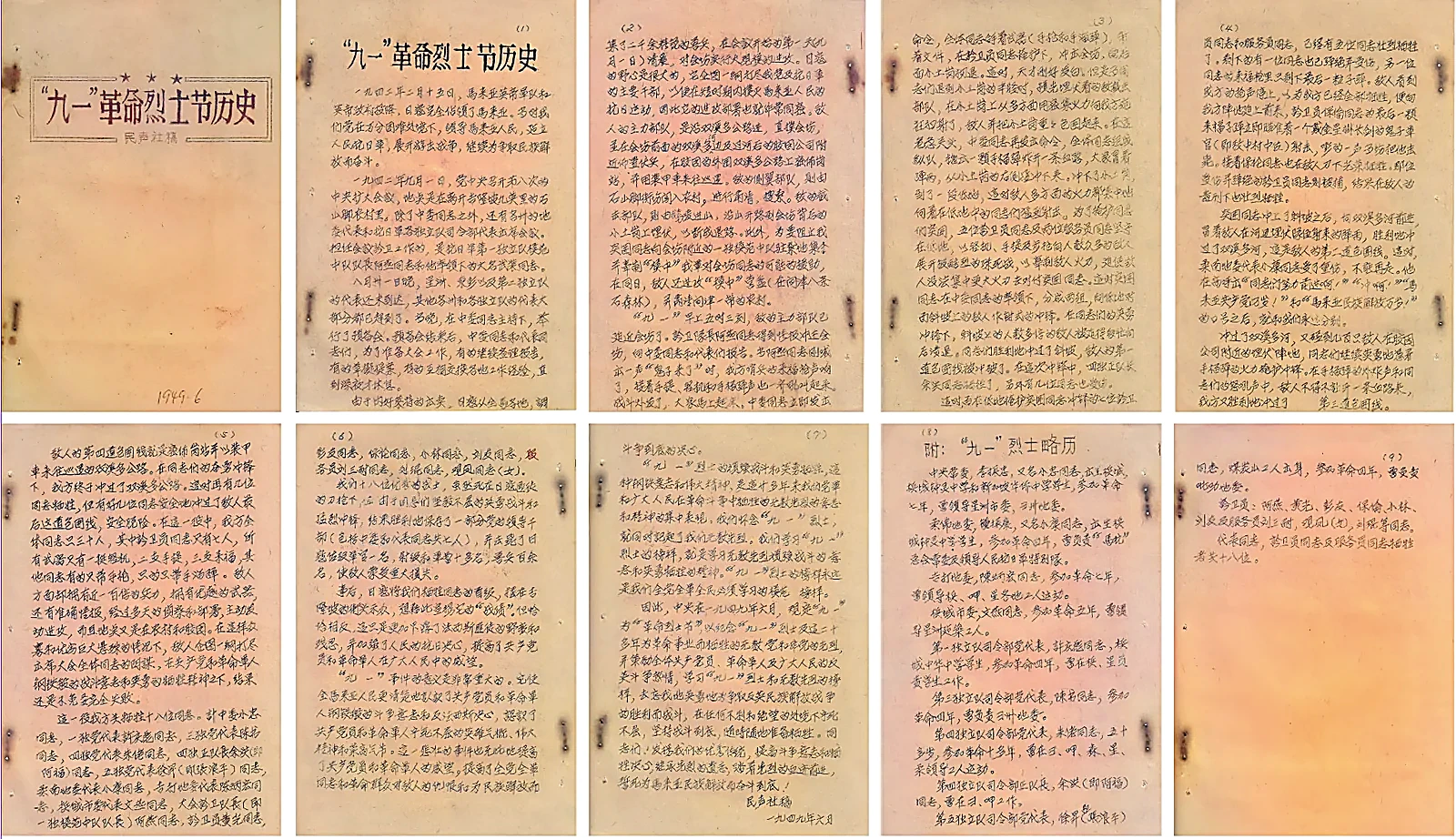
十八位“九一”烈士及抗日时期殉难的马共高层领导人的鲜血没有白流。同志们的英勇战斗粉碎了日寇妄图一举歼灭马共高级干部的阴谋,他们视死如归的浩然正气,化作了全马各族人民胸中不可扑灭的抗日烽火。1949年6月,马来亚共产党中央委员会正式颁布通告,将每年的9月1日定名为“革命烈士节”,永久缅怀在“九一”事件中壮烈牺牲的烈士以及其他为革命、为人民献出生命的先烈。
Confronted by four concentric cordons of over two thousand elite Japanese troops, the thirty comrades at the venue destroyed confidential documents and fought their way out with pistols and hand grenades. Using limestone boulders and forest cover, leading cadres and guards battled fiercely, killing or wounding over one hundred enemy officers and soldiers and breaking through four enemy blockade lines.
In this heroic battle, nine leading cadres, six guards, and three service staff - eighteen comrades in total - laid down their lives. Among the fallen at Batu Caves were Central Standing Committee Member Xiao Zhong (original name Li Zhenzong, also known as Li Ying and Ya Chuan, elected to the Central Standing Committee at the 6th Enlarged Plenum in June 1939, martyred at age 27-28) and Xu Qingbiao, the first Party Representative (Political Commissar) of the MPAJA 1st Independent Regiment (established January 1, 1942), who fell heroically at just 21 years of age.
Across 1942 and 1943, Lai Te's systematic betrayals decimated the first-generation central leadership of the CPM: Central Standing Committee Member Huang Cheng (Zhang Zhanxi / Huang Shi, arrested April 19, 1942 and martyred in prison aged 31-32), Central Standing Committee Member Bai Yi (Li Liang / Li Xuefeng, arrested April 19, 1942 and martyred in prison aged 31-32), Central Standing Committee Member Lin Jiangshi (Huang Bosui / Lao Hei, arrested April 20, 1942 and executed July 18, 1942 aged around 30), Central Executive Committee Member Lao Weng (Party name A Pu, arrested and killed in October 1942), and Central Standing Committee Member Cai Keming (who drafted the Nine-Point Anti-Japanese Programme in February 1943 before being lured by Lai Te to travel to Singapore in April 1943 and killed en route aged 30).
The sacrifice of the eighteen September 1st martyrs and the fallen senior leaders thwarted the Japanese plot to annihilate the Party's leadership in a single blow. In June 1949, the Central Committee of the Communist Party of Malaya officially designated September 1st as 'Revolutionary Martyrs' Day' to eternally honor the heroes who fell in the September 1st Incident and all martyrs who gave their lives for the revolution and the people.
面对两千余名日军精锐部队的四层铁壁合围,会场内的三十位同志临危不惧,当即销毁会议机密文件,紧握短枪与手榴弹向敌军封锁线发起决死突围。山谷间枪声震天、硝烟弥漫,与会领导干部与警卫战士依托岩石和林木掩护英勇还击,用血肉之躯杀开一条血路,在激战中毙伤日军官兵一百余人,冲破了敌人的四道封锁线。
在这场惨烈的突围血战中,共有九位领导干部、六位警卫员与三位服务员(合计十八位同志)壮烈牺牲。其中,包括1939年6月在马共第六次中央扩大会议上当选为中央常务委员会委员(相当于后来的政治局委员)的小忠同志(原名李振宗,又名李英、亚川,牺牲时年仅二十七、八岁),以及1942年1月1日成立的马来亚人民抗日军第一独立队首任司令部党代表许庆彪同志(牺牲时年仅二十一岁)。
Confronted by four concentric cordons of over two thousand elite Japanese troops, the thirty comrades at the venue destroyed confidential documents and fought their way out with pistols and hand grenades. Using limestone boulders and forest cover, leading cadres and guards battled fiercely, killing or wounding over one hundred enemy officers and soldiers and breaking through four enemy blockade lines.
In this heroic battle, nine leading cadres, six guards, and three service staff - eighteen comrades in total - laid down their lives. Among the fallen at Batu Caves were Central Standing Committee Member Xiao Zhong (original name Li Zhenzong, also known as Li Ying and Ya Chuan, elected to the Central Standing Committee at the 6th Enlarged Plenum in June 1939, martyred at age 27-28) and Xu Qingbiao, the first Party Representative (Political Commissar) of the MPAJA 1st Independent Regiment (established January 1, 1942), who fell heroically at just 21 years of age.
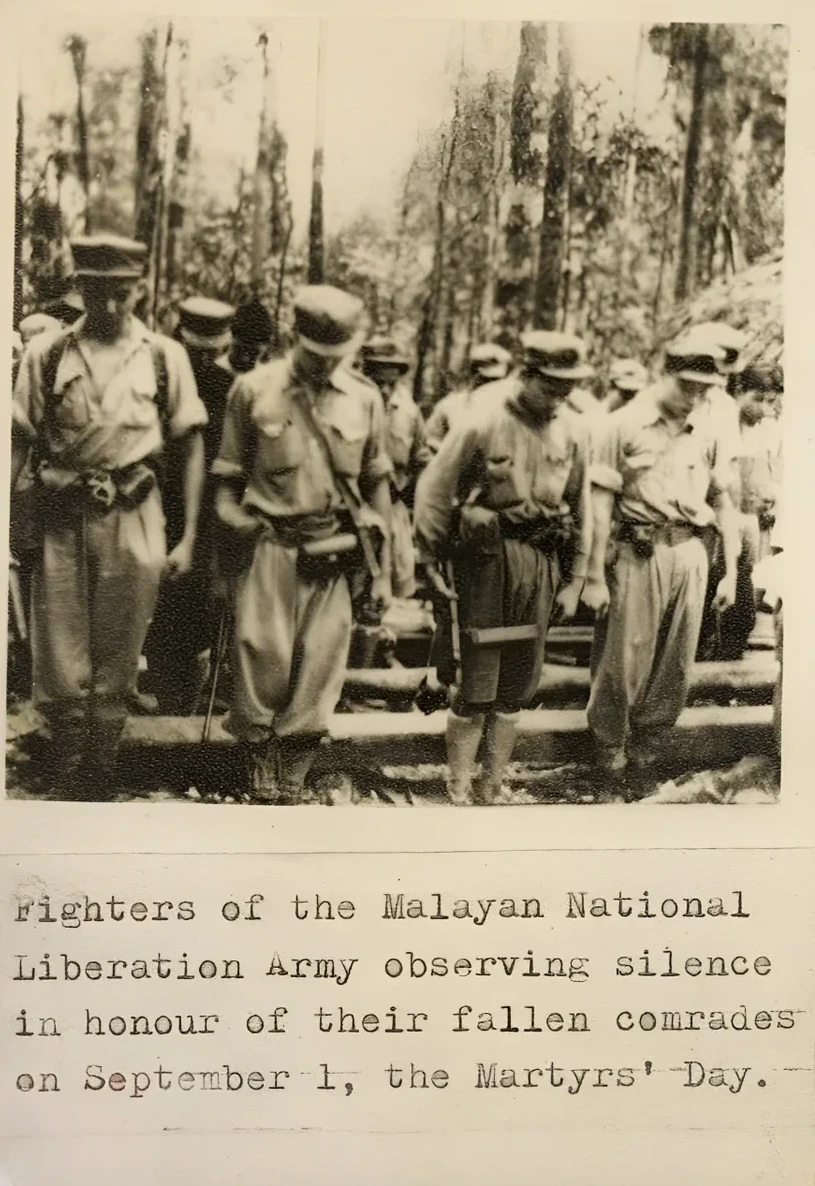
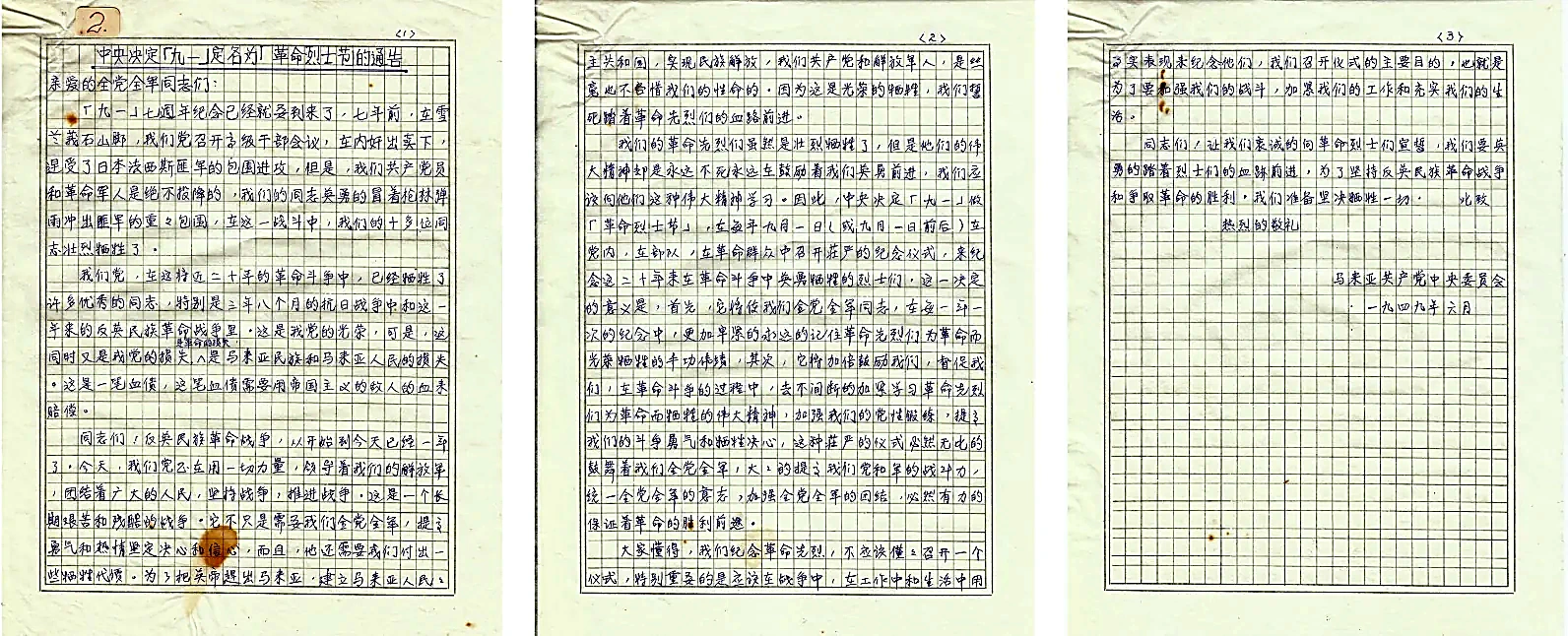
1949年6月,马来亚共产党中央委员会把9月1日定名为“革命烈士节”,缅怀在这一事件中壮烈牺牲的烈士以及其他为革命、为人民牺牲的烈士。In June 1949, the Central Committee of the Communist Party of Malaya officially designated September 1 as 'Revolutionary Martyrs' Day' in memory of those who fell heroically in this incident and all others who sacrificed their lives for the revolution and the people.— 马共中央委员会《中央决定“九一”定名为“革命烈士节”的通告》(1949年6月) | CPM Central Committee Notice Designating September 1st as Revolutionary Martyrs' Day (June 1949)
与此同时,由于内奸莱特自1942年春至1943年春的接连出卖,马共第一代中央核心领导层与抗日军骨干在“九一”事件前后遭受了极其惨重的损失:中央常务委员会委员黄诚(原名张詹熹,又名黄石,1942年4月19日被捕牺牲,年仅三十一、二岁)、中央常务委员会委员白衣(原名李良,又名李雪峰,1942年4月19日被捕牺牲,年仅三十一、二岁)、中央常务委员会委员林江石(原名黄伯遂,又名老黑,1942年4月20日被捕,7月18日被害,年约三十岁)、中央执行委员会委员老翁(党名阿普,1942年10月被捕被害),以及后来起草《抗日九大纲领》的中央常务委员会委员蔡克明(1943年4月被莱特诱骗赴新加坡开会途中被捕被害,年仅三十岁),先后为马来亚民族解放事业流尽了最后一滴血。
十八位“九一”烈士及抗日时期殉难的马共高层领导人的鲜血没有白流。同志们的英勇战斗粉碎了日寇妄图一举歼灭马共高级干部的阴谋,他们视死如归的浩然正气,化作了全马各族人民胸中不可扑灭的抗日烽火。1949年6月,马来亚共产党中央委员会正式颁布通告,将每年的9月1日定名为“革命烈士节”,永久缅怀在“九一”事件中壮烈牺牲的烈士以及其他为革命、为人民献出生命的先烈。
Across 1942 and 1943, Lai Te's systematic betrayals decimated the first-generation central leadership of the CPM: Central Standing Committee Member Huang Cheng (Zhang Zhanxi / Huang Shi, arrested April 19, 1942 and martyred in prison aged 31-32), Central Standing Committee Member Bai Yi (Li Liang / Li Xuefeng, arrested April 19, 1942 and martyred in prison aged 31-32), Central Standing Committee Member Lin Jiangshi (Huang Bosui / Lao Hei, arrested April 20, 1942 and executed July 18, 1942 aged around 30), Central Executive Committee Member Lao Weng (Party name A Pu, arrested and killed in October 1942), and Central Standing Committee Member Cai Keming (who drafted the Nine-Point Anti-Japanese Programme in February 1943 before being lured by Lai Te to travel to Singapore in April 1943 and killed en route aged 30).
The sacrifice of the eighteen September 1st martyrs and the fallen senior leaders thwarted the Japanese plot to annihilate the Party's leadership in a single blow. In June 1949, the Central Committee of the Communist Party of Malaya officially designated September 1st as 'Revolutionary Martyrs' Day' to eternally honor the heroes who fell in the September 1st Incident and all martyrs who gave their lives for the revolution and the people.
第三章:烈火涅槃:粉碎聚歼阴谋与党的坚韧重建
Chapter 3: Phoenix from the Ashes: Rebuilding the Party in the Jungle
九一惨案给初创不久的马来亚抗日斗争造成了极其沉重、令人痛心疾首的巨大损失。日军在吉隆坡各大报纸上狂妄叫嚣“马共领导中枢已彻底被消灭”,企图从心理上瓦解全马人民的抵抗意志。然而,侵略者彻底打错了算盘。马来亚共产党是一个深深植根于工农大众血肉之中的坚强政党,它在血泊中站立起来,拍落身上的尘土,再次展现出了惊人的自我修复与战斗意志。
惨案发生后,幸存的马共高级干部迅速在雪兰莪北部密林集结。中央常委蔡克明以及在霹雳、雪兰莪敌后战场展现出卓越组织与军事才能的陈平(Chin Peng)、刘尧(Lau Yew)等坚强骨干临危不乱,迅速整肃组织纪律,切断了所有已被敌人知悉的旧秘密交通线,重新建立起联络各州地委与各支抗日军独立队的地下交通网络。
更为可贵的是,马共在极端严峻的白色恐怖下,展现出了高超的群众路线本领。各州游击支队深入华工矿场、马来甘榜与橡胶庄园,向广大群众如实通报烈士们英勇牺牲的事迹。无数被烈士精神感召的热血青年,纷纷拿起柴刀步枪,成群结队地投奔抗日军营地。九一惨案不仅没有消灭马共,反而使抗日军在短短数月内规模扩大了一倍以上!
这场血火淬炼的考验,让马共变得更加警惕、更加坚强、更加紧密地与人民群众结合在一起。游击健儿们在密林深处整修营房,擦亮枪炮,以更加坚定的步伐走向了抗日民族解放战争的决胜阶段。
The Batu Caves tragedy inflicted severe losses upon the young resistance. Japanese propaganda declared that the CPM high command had been liquidated. Yet the imperialists miscalculated: rooted deeply in the working masses, the Party absorbed the blow and demonstrated extraordinary resilience.
Surviving senior cadres regrouped in the dense forests of northern Selangor. Central Standing Committee member Cai Keming, alongside military commander Lau Yew and young Perak cadre Chin Peng, swiftly tightened organizational discipline, severed all compromised channels, and rebuilt the underground courier network linking the state committees and MPAJA independent regiments.
Under intense surveillance, the Party mobilized the masses. Regional detachments visited Chinese tin mines, Malay kampongs, and rubber estates, chronicling the bravery of the fallen heroes. Thousands of young men and women volunteered to take up arms in the jungle. Rather than annihilating the resistance, the massacre doubled the strength of the MPAJA within months.
Tempered by blood, the Party emerged more vigilant and bonded to the popular will. In their hidden jungle redoubts, fighters drilled, forged munitions, and marched purposefully toward final victory over fascism.
九一惨案给初创不久的马来亚抗日斗争造成了极其沉重、令人痛心疾首的巨大损失。日军在吉隆坡各大报纸上狂妄叫嚣“马共领导中枢已彻底被消灭”,企图从心理上瓦解全马人民的抵抗意志。然而,侵略者彻底打错了算盘。马来亚共产党是一个深深植根于工农大众血肉之中的坚强政党,它在血泊中站立起来,拍落身上的尘土,再次展现出了惊人的自我修复与战斗意志。
惨案发生后,幸存的马共高级干部迅速在雪兰莪北部密林集结。中央常委蔡克明以及在霹雳、雪兰莪敌后战场展现出卓越组织与军事才能的陈平(Chin Peng)、刘尧(Lau Yew)等坚强骨干临危不乱,迅速整肃组织纪律,切断了所有已被敌人知悉的旧秘密交通线,重新建立起联络各州地委与各支抗日军独立队的地下交通网络。
The Batu Caves tragedy inflicted severe losses upon the young resistance. Japanese propaganda declared that the CPM high command had been liquidated. Yet the imperialists miscalculated: rooted deeply in the working masses, the Party absorbed the blow and demonstrated extraordinary resilience.
Surviving senior cadres regrouped in the dense forests of northern Selangor. Central Standing Committee member Cai Keming, alongside military commander Lau Yew and young Perak cadre Chin Peng, swiftly tightened organizational discipline, severed all compromised channels, and rebuilt the underground courier network linking the state committees and MPAJA independent regiments.
更为可贵的是,马共在极端严峻的白色恐怖下,展现出了高超的群众路线本领。各州游击支队深入华工矿场、马来甘榜与橡胶庄园,向广大群众如实通报烈士们英勇牺牲的事迹。无数被烈士精神感召的热血青年,纷纷拿起柴刀步枪,成群结队地投奔抗日军营地。九一惨案不仅没有消灭马共,反而使抗日军在短短数月内规模扩大了一倍以上!
这场血火淬炼的考验,让马共变得更加警惕、更加坚强、更加紧密地与人民群众结合在一起。游击健儿们在密林深处整修营房,擦亮枪炮,以更加坚定的步伐走向了抗日民族解放战争的决胜阶段。
Under intense surveillance, the Party mobilized the masses. Regional detachments visited Chinese tin mines, Malay kampongs, and rubber estates, chronicling the bravery of the fallen heroes. Thousands of young men and women volunteered to take up arms in the jungle. Rather than annihilating the resistance, the massacre doubled the strength of the MPAJA within months.
Tempered by blood, the Party emerged more vigilant and bonded to the popular will. In their hidden jungle redoubts, fighters drilled, forged munitions, and marched purposefully toward final victory over fascism.
第四章:照亮抗战胜利的政治航标:1943年马共中央第三次执委会五页全本决议与《抗日九大纲领》
Chapter 4: Political Beacon of Victory: The Complete Five-Page Manuscript of the 1943 Third CEC Plenum Resolutions and the Nine-Point Anti-Japanese Programme
在深刻总结九一事件经验教训与科学研判世界反法西斯战争战略转折的基础上,1943年2月20日,马共中央执行委员会秘密召开七中扩大会议后的第三次执委会议,集中讨论全马抗战形势与最高政治斗争纲领。会议正式通过了由马共中央常委蔡克明同志起草的《七中扩会议后第三次执委会会议(决议)》与《抗日九大纲领》。历经战火完整保存至今的五页全本手抄原件(第1至第5页),系统收录了《A. 当前的政治形势与党的任务》、《B. 抗日纲领》、《C. 当前武装部队的任务》及《D. 策略问题》四大核心章节,并在第(5)页下半部附录了1943年6月8日的《四三年雪州六月谈话》,完整呈现了马共中央从国际战局研判、各民族统一战线、人民军队建设到独立自主建国方略的战略全局。
在手抄原件第(1)至(3)页上部的《A. 当前的政治形势与党的任务》中,决议深刻指出苏联红军在斯大林格勒冬季反攻的伟大胜利,已使德意日法西斯陷入军事与经济的严重恐慌,促成了欧洲与远东被压迫民族解放斗争的全面汇合。基于这一国际转折,马共中央确立了三大基本政治任务与五项迫切工作任务,明确提出“巩固与扩大抗日武装队伍,争取全民族的拥护,加强政治和军事学习”,号召严厉打击汉奸走狗、粉碎日寇无耻宣传;尤为关键的是,文件专门强调“加强各民族的抗日工作,争取马来、印度和生番(原住民)民族到抗日战线中来粉碎日寇的民族分裂政策”,并规定“加紧工农干部的培养和提拔,加强领导的骨干作用”,从根本上击碎了日本军政当局挑动族群对立以瓦解抵抗的阴谋。
手抄原件第(3)页中部完整列出了《B. 抗日纲领》的全部九大条文:第一条即旗帜鲜明地宣告“驱逐日本法西斯出马来亚,建立马来亚民主共和国”;第二至六条系统勾勒了战后独立国家的民主宪政与民生蓝图,包括建立“由各民族普选的国家机构”、开放人民言论、出版、组织、信仰的绝对自由、救济失业难民、取消苛捐杂税与高利贷、将人民抗日军改编为正规国防军,以及“以各民族言语实行普遍免费教育,发展民族文化”;第七至九条则确立了没收德意日法西斯及其走狗财产归国有、实行关税自主与贸易自由、联合苏联与中国并赞助日本人民反法西斯斗争的国际主义外交原则。紧随其后的《C. 当前武装部队的任务》则严肃指出,各武装部队绝不能脱离客观环境从事单纯消耗自身力量的“军事上的冒险”,警示“对于武装部队最危险就是脱离民众,陷于孤立主义的冒险倾向”,号召全体指战员通过政治工作与民运工作,“使武装的抗日队伍,成为真正人民的军队”。
尤为珍贵的是,原件第(4)至(5)页的《D. 策略问题》从理论上阐明了《抗日九大纲领》的革命阶段论与民族自主原则。马共中央明确判定马来亚革命必须经过“资产阶级性的民主革命的阶段”,在未来人民掌权的民主共和国建设中,应在工农力量制约与非资本主义发展道路的原则下,“大量吸收友邦外来的贸易、投资”与先进科技机械,改造殖民地单一原料经济,同时绝不沦为任何宗主国势力范围的附属品。文件更在结尾处发出了确立马来亚人民反殖历史主体地位的庄严宣告:“我们不是准备自己的力量等待英美的反攻,而是以自己民族的力量来确保民族解放的成功,因此,自己的民族解放力量是最宝贵的资本,不能随便消耗牠;相反,只有民族解放力量的力强和充实,才能实际地解决这个谁胜谁败的基本问题。”
1943年4月,起草该决议与《抗日九大纲领》的马共中央常委蔡克明同志在被莱特诱骗赴新加坡开会途中被捕牺牲,马共中央机关遭到严重破坏。原件第(5)页下半部收录的1943年6月8日《四三年雪州六月谈话》,真实定格了这一重大历史转折:谈话一方面在共产国际(第三国际)宣布解散仅两周后,迅速向地方党组织传达“第三国际已经完成了它的历史使命,共产主义脱离不了民族问题”的理论总结;另一方面明确宣布“今天中央不能像过去直接帮助各地党变成各斗争高潮的司令部”,要求各地委发挥独立作战与创造策略的布尔什维克精神。自此,马共各州地委会与人民抗日军各独立队司令部正式担负起独立领导全马抗日战争的艰巨使命,在华人村镇、马来甘榜、印度胶工社区与原住民山林中筑起了坚不可摧的抗日根据地。
Synthesizing the hard-won lessons of the September 1st Incident and assessing the global turning tide of the Anti-Fascist War, the Central Executive Committee of the Communist Party of Malaya convened its Third Plenary Session following the Seventh Enlarged Plenum on 20 February 1943. The meeting formally adopted the Resolutions and the Nine-Point Anti-Japanese Programme drafted by Central Standing Committee member Comrade Cai Keming. Preserved in full across five handwritten pages (Pages 1 to 5), this foundational manuscript encompasses Section A (Current Political Situation and Tasks of the Party), Section B (The Anti-Japanese Programme), Section C (Current Tasks of the Armed Forces), and Section D (Questions of Strategy), alongside the June 8, 1943 "Selangor Talk" recorded on the lower half of Page 5.
In Section A (Pages 1 to 3), the resolution analyzed the Soviet Red Army's decisive winter counter-offensive at Stalingrad as the turning point that shattered Axis strategic ambitions and united the national liberation movements of Europe and the Far East. On this basis, the CPM Central Committee defined three basic political tasks and five urgent organizational tasks: consolidating Party and mass resistance bodies, expanding armed units alongside political-military education, striking down collaborators, and crucially "strengthening anti-Japanese work among all nationalities, winning over the Malay, Indian, and indigenous (Orang Asli) peoples into the anti-Japanese front to smash the Japanese invaders' policy of ethnic division," while accelerating the promotion of worker-peasant cadres.
Page (3) of the manuscript sets forth the nine articles of "B. The Anti-Japanese Programme": proclaiming the overarching goal to "expel Japanese fascism from Malaya and establish a Malayan Democratic Republic," establishing state organs elected by universal suffrage across all nationalities, guaranteeing absolute democratic freedoms, abolishing usury and enslaving decrees, reorganizing the MPAJA into a regular national defense force, implementing universal free education in the languages of all nationalities, and enacting tariff autonomy and anti-fascist solidarity. Section C ("Current Tasks of the Armed Forces") codified people's war doctrine, warning against isolationist military adventurism and emphasizing mass mobilization (Min Yuen) to forge the resistance units into a true people's army.
Crucially, Section D ("Questions of Strategy") on Pages (4) and (5) expounded the theoretical foundation of the Nine-Point Programme. Defining the current stage as an indispensable bourgeois-democratic revolution leading toward the Malayan Democratic Republic, the resolution envisioned absorbing foreign trade, investment, and advanced industrial technology from friendly nations under people's state power to transform Malaya's backward colonial raw-material economy without becoming an appendage to any imperialist power. Above all, the resolution issued a historic declaration of national self-reliance: "We are not preparing our forces merely to wait for an Anglo-American counter-offensive; rather, we rely upon our own national strength to guarantee the triumph of national liberation. Our national liberation force is our most precious capital and must never be squandered; only by strengthening and consolidating our own national liberation forces can we resolve the fundamental question of victory or defeat."
In April 1943, Comrade Cai Keming, drafter of the Nine-Point Programme, was arrested and martyred en route to Singapore following Lai Te's betrayal, severely disrupting the central apparatus. Recorded on the lower half of Page (5), the "June 1943 Selangor Talk" (8 June 1943) captures this pivotal transition: delivered just two weeks after the dissolution of the Comintern, it declared that "the Third International has fulfilled its historical mission; Communism cannot be divorced from the national question," while instructing that "today the Central Committee can no longer directly command each local Party organization as the headquarters of every struggle upsurge." From that moment onward, CPM State Committees and MPAJA independent regiment headquarters shouldered the historic task of independently leading the anti-Japanese war across the peninsula.
在深刻总结九一事件经验教训与科学研判世界反法西斯战争战略转折的基础上,1943年2月20日,马共中央执行委员会秘密召开七中扩大会议后的第三次执委会议,集中讨论全马抗战形势与最高政治斗争纲领。会议正式通过了由马共中央常委蔡克明同志起草的《七中扩会议后第三次执委会会议(决议)》与《抗日九大纲领》。历经战火完整保存至今的五页全本手抄原件(第1至第5页),系统收录了《A. 当前的政治形势与党的任务》、《B. 抗日纲领》、《C. 当前武装部队的任务》及《D. 策略问题》四大核心章节,并在第(5)页下半部附录了1943年6月8日的《四三年雪州六月谈话》,完整呈现了马共中央从国际战局研判、各民族统一战线、人民军队建设到独立自主建国方略的战略全局。
在手抄原件第(1)至(3)页上部的《A. 当前的政治形势与党的任务》中,决议深刻指出苏联红军在斯大林格勒冬季反攻的伟大胜利,已使德意日法西斯陷入军事与经济的严重恐慌,促成了欧洲与远东被压迫民族解放斗争的全面汇合。基于这一国际转折,马共中央确立了三大基本政治任务与五项迫切工作任务,明确提出“巩固与扩大抗日武装队伍,争取全民族的拥护,加强政治和军事学习”,号召严厉打击汉奸走狗、粉碎日寇无耻宣传;尤为关键的是,文件专门强调“加强各民族的抗日工作,争取马来、印度和生番(原住民)民族到抗日战线中来粉碎日寇的民族分裂政策”,并规定“加紧工农干部的培养和提拔,加强领导的骨干作用”,从根本上击碎了日本军政当局挑动族群对立以瓦解抵抗的阴谋。
Synthesizing the hard-won lessons of the September 1st Incident and assessing the global turning tide of the Anti-Fascist War, the Central Executive Committee of the Communist Party of Malaya convened its Third Plenary Session following the Seventh Enlarged Plenum on 20 February 1943. The meeting formally adopted the Resolutions and the Nine-Point Anti-Japanese Programme drafted by Central Standing Committee member Comrade Cai Keming. Preserved in full across five handwritten pages (Pages 1 to 5), this foundational manuscript encompasses Section A (Current Political Situation and Tasks of the Party), Section B (The Anti-Japanese Programme), Section C (Current Tasks of the Armed Forces), and Section D (Questions of Strategy), alongside the June 8, 1943 "Selangor Talk" recorded on the lower half of Page 5.
In Section A (Pages 1 to 3), the resolution analyzed the Soviet Red Army's decisive winter counter-offensive at Stalingrad as the turning point that shattered Axis strategic ambitions and united the national liberation movements of Europe and the Far East. On this basis, the CPM Central Committee defined three basic political tasks and five urgent organizational tasks: consolidating Party and mass resistance bodies, expanding armed units alongside political-military education, striking down collaborators, and crucially "strengthening anti-Japanese work among all nationalities, winning over the Malay, Indian, and indigenous (Orang Asli) peoples into the anti-Japanese front to smash the Japanese invaders' policy of ethnic division," while accelerating the promotion of worker-peasant cadres.
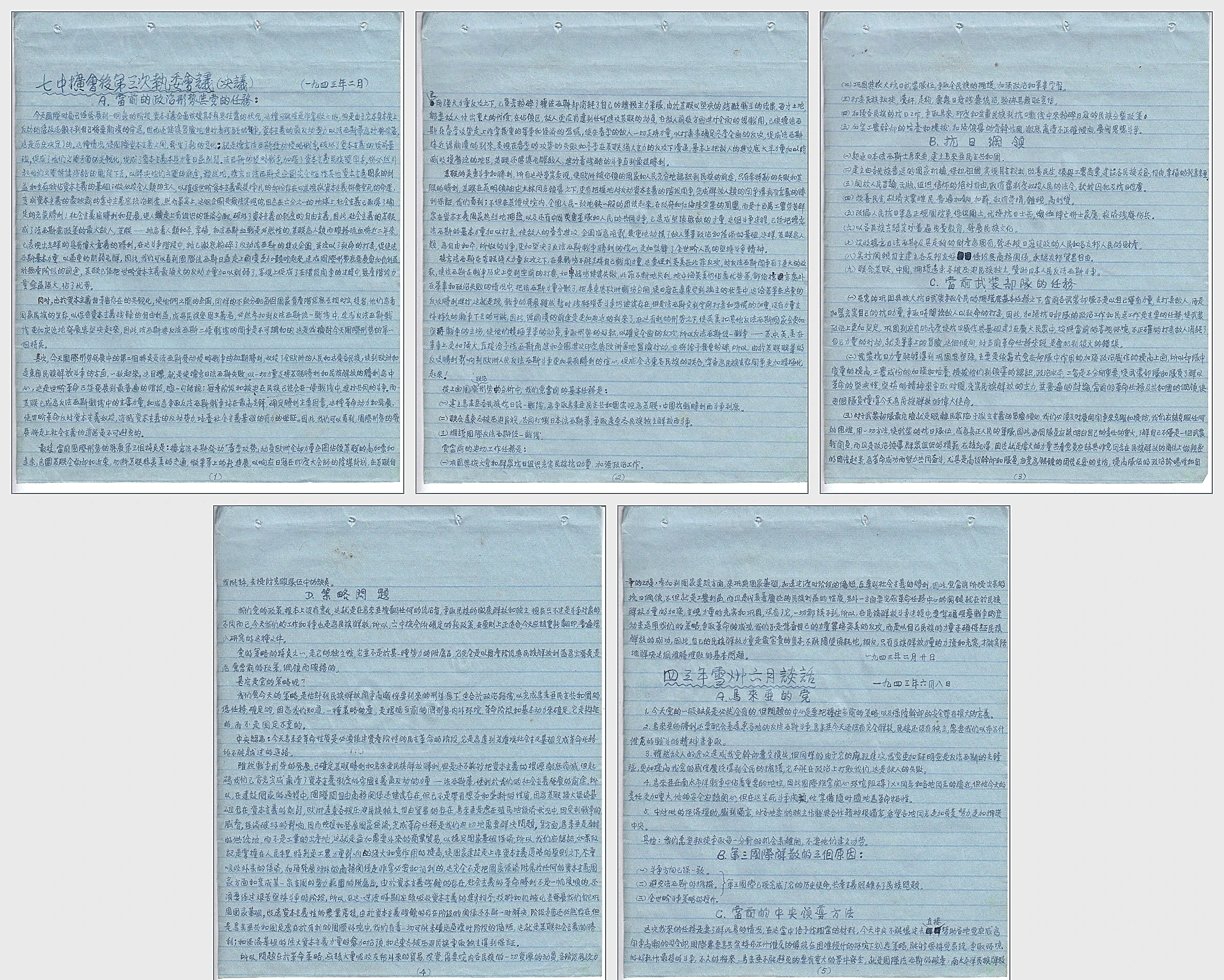
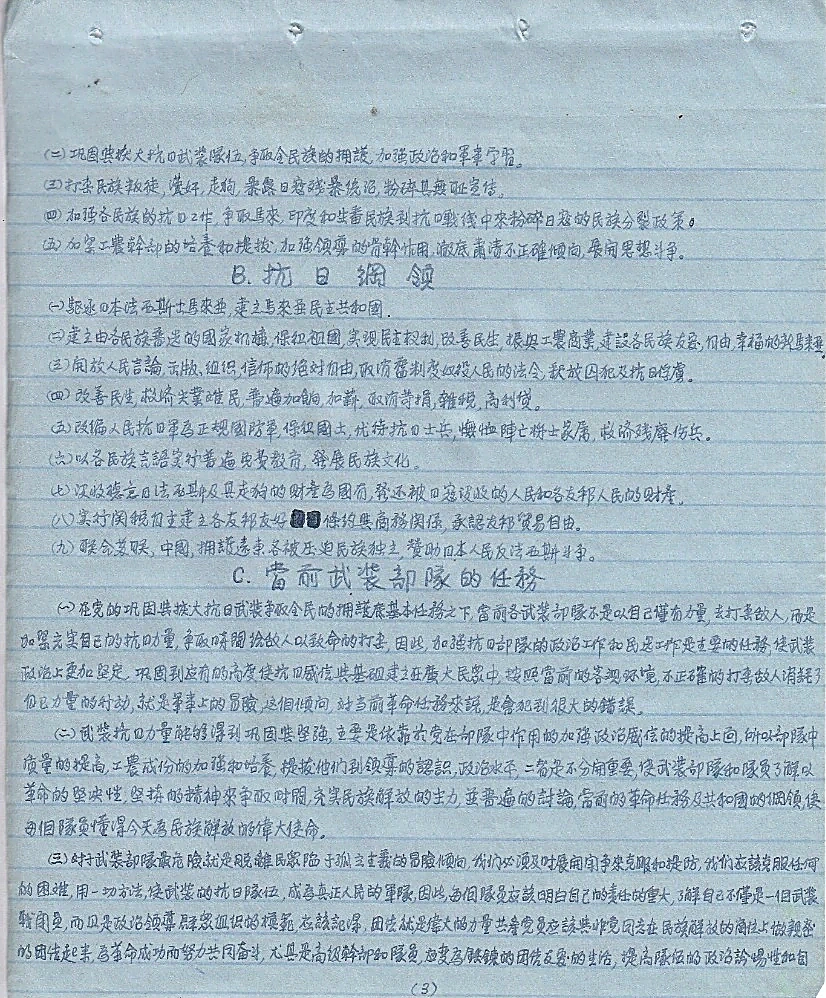
<strong class="text-[#771113] font-bold">《七中扩会议后第三次执委会会议(决议)》(一九四三年二月廿日 · 核心纲领与策略摘录)</strong>
<strong class="text-[#771113] font-bold">A. 党当前的迫切工作任务(节录):</strong>
(四)加强各民族的抗日工作,争取马来、印度和生番(原住民)民族到抗日战线中来粉碎日寇的民族分裂政策。
<strong class="text-[#771113] font-bold">B. 抗日纲领:</strong>
(一)驱逐日本法西斯出马来亚,建立马来亚民主共和国。
(二)建立由各民族普选的国家机构,保卫祖国,实现民主权利,改善民生,振兴工农商业,建设各民族友爱,自由,幸福的新马来亚。
(三)开放人民言论,出版,组织,信仰的绝对自由,取消旧制度奴役人民的法令,释放囚犯及抗日俘虏。
(四)改善民生,救济失业难民,普遍加饷,加薪,取消苛捐,杂税,高利贷。
(五)改编人民抗日军为正规国防军,保卫国土,优待抗日士兵,抚恤阵亡将士家属,救济残废伤兵。
(六)以各民族言语实行普遍免费教育,发展民族文化。
(七)没收德意日法西斯及其走狗的财产为国有,发还被日寇没收的人民和各友邦人民的财产。
(八)实行关税自主建立各友邦友好条约与商务关系,承认友邦贸易自由。
(九)联合苏联,中国,拥护远东各被压迫民族独立,赞助日本人民反法西斯斗争。
<strong class="text-[#771113] font-bold">C & D. 建军方针与独立自主策略(节录):</strong>
“对于武装部队最危险就是脱离民众,陷于孤立主义的冒险倾向……我们应该克服任何的困难,用一切方法,使武装的抗日队伍,成为真正人民的军队。”
“我们不是准备自己的力量等待英美的反攻,而是以自己民族的力量来确保民族解放的成功,因此,自己的民族解放力量是最宝贵的资本,不能随便消耗牠;相反,只有民族解放力量的力强和充实,才能实际地解决这个谁胜谁败的基本问题。”<strong class="text-[#771113] font-bold">Resolutions of the Third CEC Meeting Following the Seventh Enlarged Plenum (20 February 1943 · Core Programme & Strategy Excerpts)</strong>— 马共中央《七中扩会议后第三次执委会会议(决议)》及《四三年雪州六月谈话》五页手抄原件(蔡克明起草,1943年2月20日 / 6月8日) | Original Five-Page Handwritten Manuscript of the Resolutions of the Third CEC Meeting & June 1943 Selangor Talk (Drafted by Cai Keming, 20 February / 8 June 1943)
<strong class="text-[#771113] font-bold">A. Urgent Work Tasks of the Party (Excerpt):</strong>
(4) Strengthen anti-Japanese work among all nationalities, winning over the Malay, Indian, and indigenous (Orang Asli) peoples into the anti-Japanese front to smash the Japanese invaders' policy of ethnic division.
<strong class="text-[#771113] font-bold">B. The Anti-Japanese Programme:</strong>
(1) Expel Japanese fascism from Malaya and establish a Malayan Democratic Republic.
(2) Establish a state apparatus through universal suffrage of all nationalities, defend the homeland, realize democratic rights, improve livelihoods, revitalize industry, agriculture, and commerce, and build a new Malaya of inter-ethnic fraternity, freedom, and happiness.
(3) Guarantee absolute freedom of speech, press, organization, and belief for the people; abolish laws of the old regime that enslaved the people; release prisoners and anti-Japanese captives.
(4) Improve livelihoods, relieve the unemployed and refugees, enact general increases in military pay and wages, and abolish harsh levies, miscellaneous taxes, and usury.
(5) Reorganize the People's Anti-Japanese Army into a regular national defense force to defend the territory, grant preferential treatment to anti-Japanese soldiers, pension the families of fallen officers and soldiers, and aid disabled and wounded veterans.
(6) Implement universal free education in the languages of all nationalities and develop national cultures.
(7) Confiscate the property of German, Italian, and Japanese fascists and their collaborators for state ownership, and restituate property seized by the Japanese invaders to the people and citizens of friendly nations.
(8) Exercise tariff autonomy, conclude treaties of friendship and commercial relations with friendly nations, and recognize freedom of trade with friendly nations.
(9) Unite with the Soviet Union and China, uphold the independence of oppressed nations across the Far East, and support the Japanese people's anti-fascist struggle.
<strong class="text-[#771113] font-bold">C & D. People's Army Doctrine & Strategic Self-Reliance (Excerpts):</strong>
"For the armed forces, the greatest danger lies in becoming divorced from the masses and falling into isolationist adventurism... We must overcome every difficulty and use every means to forge our armed anti-Japanese ranks into a true people's army."
"We are not preparing our forces merely to wait for an Anglo-American counter-offensive; rather, we rely upon our own national strength to guarantee the triumph of national liberation. Our national liberation force is our most precious capital and must never be squandered; only by strengthening and consolidating our own national liberation forces can we resolve the fundamental question of victory or defeat."
手抄原件第(3)页中部完整列出了《B. 抗日纲领》的全部九大条文:第一条即旗帜鲜明地宣告“驱逐日本法西斯出马来亚,建立马来亚民主共和国”;第二至六条系统勾勒了战后独立国家的民主宪政与民生蓝图,包括建立“由各民族普选的国家机构”、开放人民言论、出版、组织、信仰的绝对自由、救济失业难民、取消苛捐杂税与高利贷、将人民抗日军改编为正规国防军,以及“以各民族言语实行普遍免费教育,发展民族文化”;第七至九条则确立了没收德意日法西斯及其走狗财产归国有、实行关税自主与贸易自由、联合苏联与中国并赞助日本人民反法西斯斗争的国际主义外交原则。紧随其后的《C. 当前武装部队的任务》则严肃指出,各武装部队绝不能脱离客观环境从事单纯消耗自身力量的“军事上的冒险”,警示“对于武装部队最危险就是脱离民众,陷于孤立主义的冒险倾向”,号召全体指战员通过政治工作与民运工作,“使武装的抗日队伍,成为真正人民的军队”。
尤为珍贵的是,原件第(4)至(5)页的《D. 策略问题》从理论上阐明了《抗日九大纲领》的革命阶段论与民族自主原则。马共中央明确判定马来亚革命必须经过“资产阶级性的民主革命的阶段”,在未来人民掌权的民主共和国建设中,应在工农力量制约与非资本主义发展道路的原则下,“大量吸收友邦外来的贸易、投资”与先进科技机械,改造殖民地单一原料经济,同时绝不沦为任何宗主国势力范围的附属品。文件更在结尾处发出了确立马来亚人民反殖历史主体地位的庄严宣告:“我们不是准备自己的力量等待英美的反攻,而是以自己民族的力量来确保民族解放的成功,因此,自己的民族解放力量是最宝贵的资本,不能随便消耗牠;相反,只有民族解放力量的力强和充实,才能实际地解决这个谁胜谁败的基本问题。”
1943年4月,起草该决议与《抗日九大纲领》的马共中央常委蔡克明同志在被莱特诱骗赴新加坡开会途中被捕牺牲,马共中央机关遭到严重破坏。原件第(5)页下半部收录的1943年6月8日《四三年雪州六月谈话》,真实定格了这一重大历史转折:谈话一方面在共产国际(第三国际)宣布解散仅两周后,迅速向地方党组织传达“第三国际已经完成了它的历史使命,共产主义脱离不了民族问题”的理论总结;另一方面明确宣布“今天中央不能像过去直接帮助各地党变成各斗争高潮的司令部”,要求各地委发挥独立作战与创造策略的布尔什维克精神。自此,马共各州地委会与人民抗日军各独立队司令部正式担负起独立领导全马抗日战争的艰巨使命,在华人村镇、马来甘榜、印度胶工社区与原住民山林中筑起了坚不可摧的抗日根据地。
Page (3) of the manuscript sets forth the nine articles of "B. The Anti-Japanese Programme": proclaiming the overarching goal to "expel Japanese fascism from Malaya and establish a Malayan Democratic Republic," establishing state organs elected by universal suffrage across all nationalities, guaranteeing absolute democratic freedoms, abolishing usury and enslaving decrees, reorganizing the MPAJA into a regular national defense force, implementing universal free education in the languages of all nationalities, and enacting tariff autonomy and anti-fascist solidarity. Section C ("Current Tasks of the Armed Forces") codified people's war doctrine, warning against isolationist military adventurism and emphasizing mass mobilization (Min Yuen) to forge the resistance units into a true people's army.
Crucially, Section D ("Questions of Strategy") on Pages (4) and (5) expounded the theoretical foundation of the Nine-Point Programme. Defining the current stage as an indispensable bourgeois-democratic revolution leading toward the Malayan Democratic Republic, the resolution envisioned absorbing foreign trade, investment, and advanced industrial technology from friendly nations under people's state power to transform Malaya's backward colonial raw-material economy without becoming an appendage to any imperialist power. Above all, the resolution issued a historic declaration of national self-reliance: "We are not preparing our forces merely to wait for an Anglo-American counter-offensive; rather, we rely upon our own national strength to guarantee the triumph of national liberation. Our national liberation force is our most precious capital and must never be squandered; only by strengthening and consolidating our own national liberation forces can we resolve the fundamental question of victory or defeat."
In April 1943, Comrade Cai Keming, drafter of the Nine-Point Programme, was arrested and martyred en route to Singapore following Lai Te's betrayal, severely disrupting the central apparatus. Recorded on the lower half of Page (5), the "June 1943 Selangor Talk" (8 June 1943) captures this pivotal transition: delivered just two weeks after the dissolution of the Comintern, it declared that "the Third International has fulfilled its historical mission; Communism cannot be divorced from the national question," while instructing that "today the Central Committee can no longer directly command each local Party organization as the headquarters of every struggle upsurge." From that moment onward, CPM State Committees and MPAJA independent regiment headquarters shouldered the historic task of independently leading the anti-Japanese war across the peninsula.
第五章:丰碑永铸与跨世纪祭奠:“九一忠魂节”的诞生与八十载公祭不辍
Chapter 5: The Immortal Monument and Centennial Commemoration: The Genesis of September 1st Martyrs' Day and 80 Years of Public Memorials
抗日战争胜利后的1946年至1947年和平时期,马共与全马各族民众在黑风洞及各地隆重举行“九一烈士纪念”公祭并建立烈士纪念碑;1949年6月,马共中央正式颁布《中央决定“九一”定名为“革命烈士节”的通告》,将每年的9月1日确立为全党全军与各族革命群众共同铭记的“革命烈士节”(民间深情敬称为“九一烈士节”或“忠魂节”)。
这一庄严节日的深远意义,深植于这片土地上各族劳苦大众觉醒抗争的血泪历史之中。近代以来,大英帝国将马来亚视作源源不断榨取橡胶与锡矿的殖民原料地,各族工人、胶工、矿工被视为形同牛马的廉价劳力与政治无权的草芥奴隶;日寇铁蹄踏来,更施加了残暴血腥的法西斯高压。正是九一殉难烈士与无数游击儿女在绝境深渊中的奋起反抗,用鲜血打破了殖民者不可战胜的虚妄神话,彻底唤醒了数百万被压迫民众“不做亡国奴、誓做国家主人”的强烈主权意志!从匍匐屈从、任人践踏的殖民奴隶时代,迈向敢于握紧枪杆、用生命捍卫民族独立与人民主权的伟大觉醒时代,这一不可逆转的历史跨越,凝聚着先辈最深沉、最刻骨铭心的血泪与牺牲。
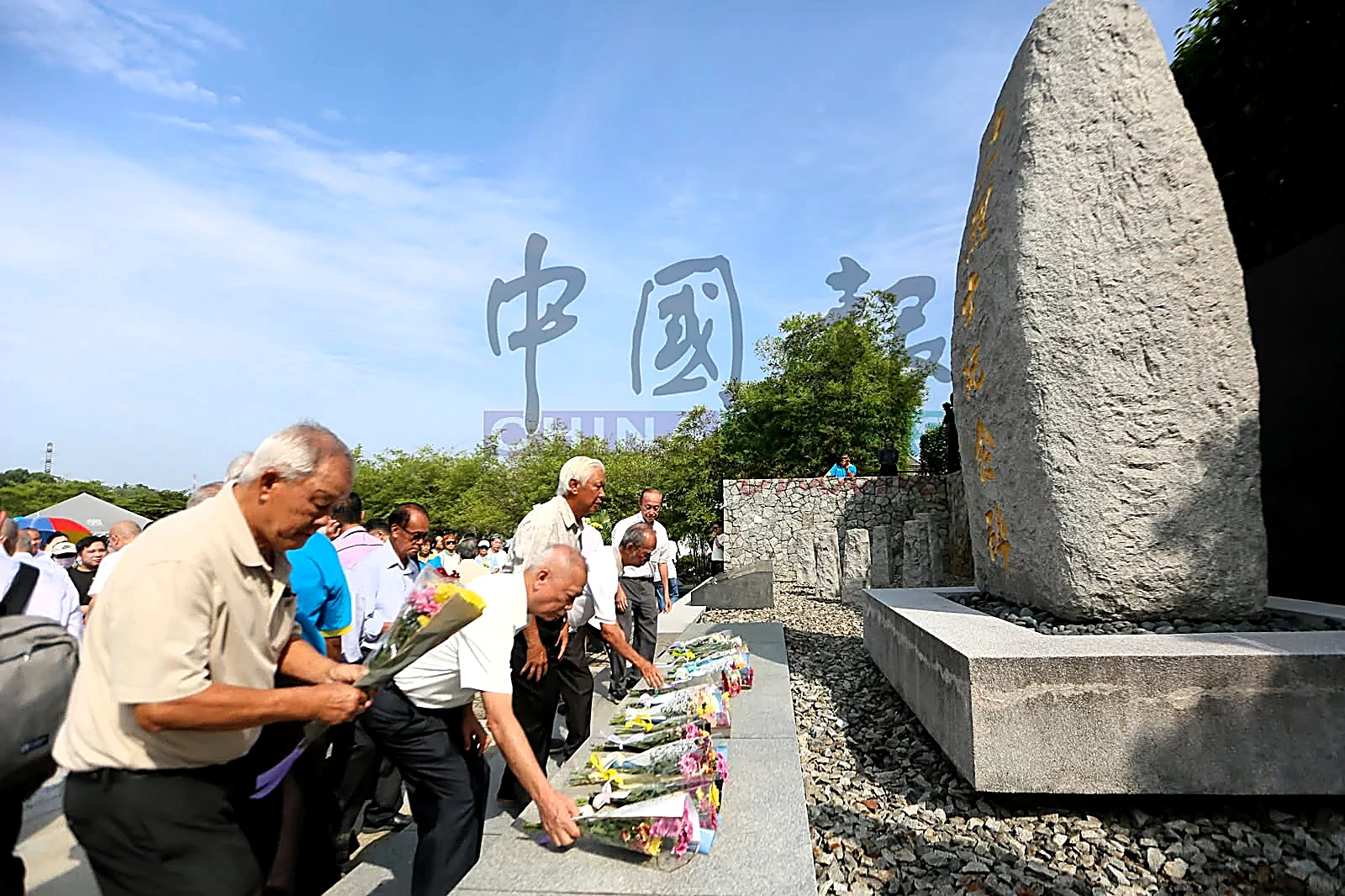
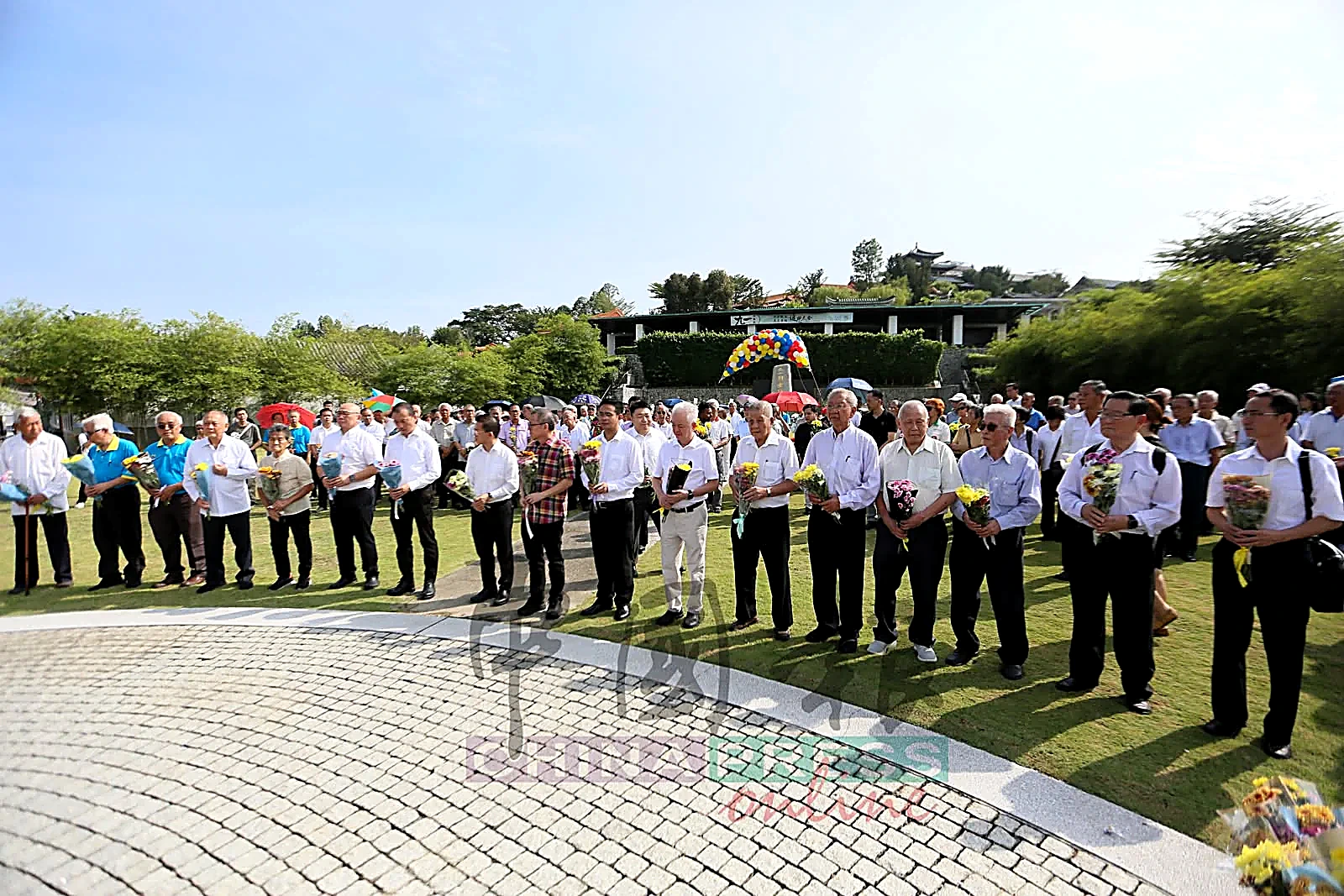
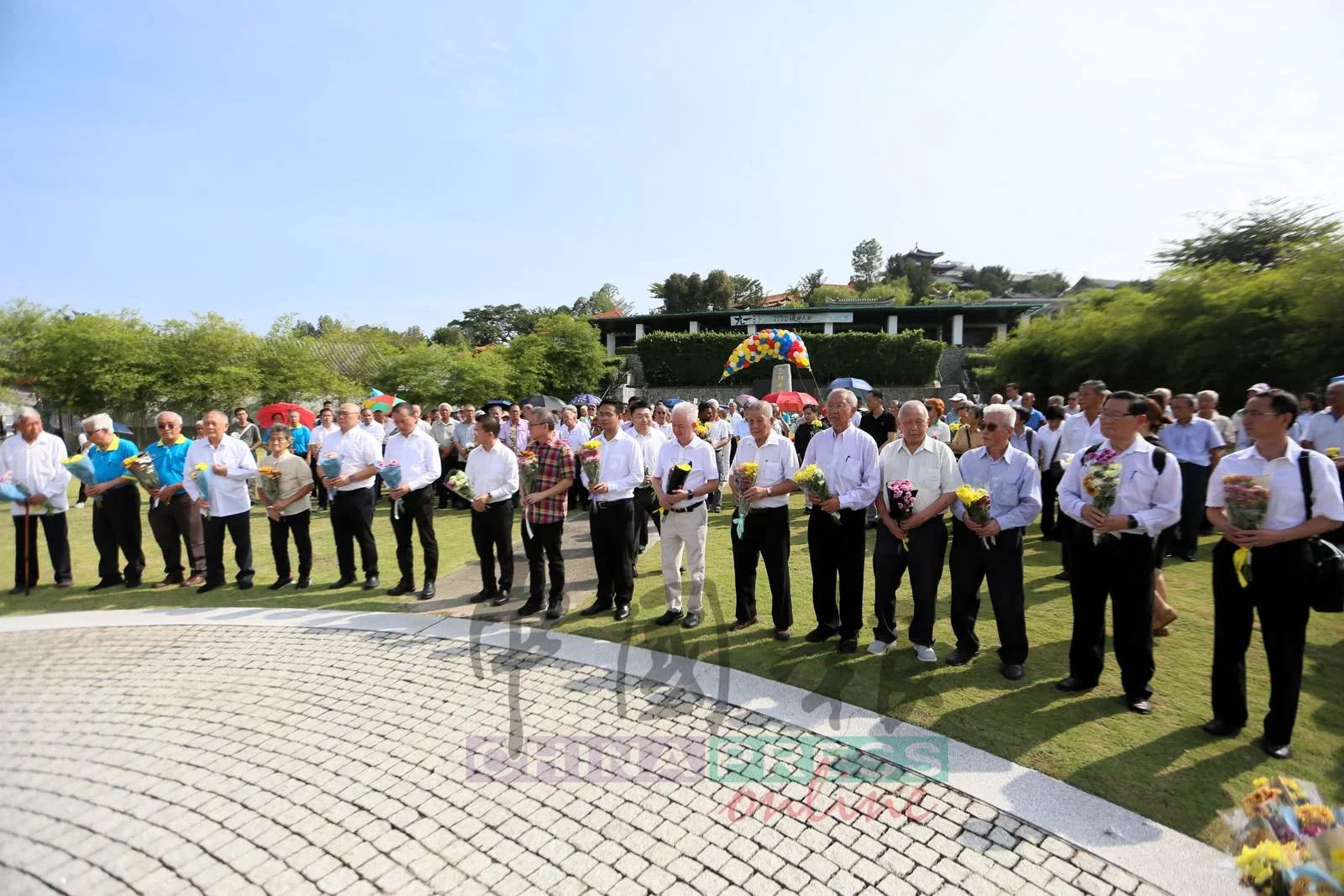
历经八十余载历史风云变幻,这盏由先烈热血点燃的精神灯塔从未熄灭。从战后全马数十万各族民众走上街头的隆重公祭,到1989年《合艾和平协议》后在泰国勿洞和平村、朱拉蓬发展村矗立起庄严的爱国忠魂碑,再到马来西亚本土吉隆坡广东义山与雪兰莪汝来孝恩园和平纪念园,每年的9月1日,海内外白发苍苍的老战士、烈士遗属、老友联谊会及年轻一代的文史学者与民间后辈,都会手捧素洁白菊庄严肃立,举行一年一度的“九一忠魂节”公祭大典。岁月更迭,一代代亲历者即便逐渐老去,但那份目睹祖国从奴役深渊走向主权自尊的崇高情怀,已化作不可磨灭的集体记忆与精神基因,年年岁岁在青山松柏间激荡回响。
During the postwar peace period of 1946–1947, the CPM and people of all ethnic groups held grand public memorial services at Batu Caves and across Malaya, erecting monuments to the fallen martyrs. In June 1949, the CPM Central Committee issued the official circular 'Central Committee Decision Naming September 1 as Revolutionary Martyrs' Day,' formally designating September 1 as 'Revolutionary Martyrs' Day' (reverently known among the public as 'September 1 Martyrs' Day' or 'Loyal Souls' Day').
The profound resonance of this solemn commemoration is rooted in the hard-won awakening of Malaya's multi-ethnic working masses. For decades under British colonial rule, the peoples of the peninsula—rubber tappers, tin miners, and peasants—were treated as commodified labor and disenfranchised subjects, trapped in systemic servility; the Japanese invasion deepened this oppression through fascist barbarity. It was precisely through the fearless martyrdom at Batu Caves and the unyielding resistance of the MPAJA that the illusion of colonial invincibility was shattered forever, awakening millions to the resolute conviction that they would never live as enslaved subjects, but would rise as sovereign masters of their own destiny. The monumental leap from passive subjugation to active revolutionary sovereignty was purchased with the dearest blood of that courageous generation.
Over more than eight decades of epochal shifts, this spiritual beacon ignited by the martyrs' sacrifice has burned ever bright. From massive post-war civic rallies in Kuala Lumpur to the erection of monumental Cenotaphs at Betong Peace Village and Chulabhorn Development Village following the 1989 Haadyai Peace Agreement, and alongside memorials at the Kwong Tong Cemetery and Nilai Memorial Park in Malaysia, September 1st remains an unbroken sacred tradition. Every year, silver-haired guerrilla veterans, martyr families, friendship associations, and younger generations assemble with white chrysanthemums to conduct solemn public memorials. Though generations pass, the memory of transition from imperial servitude to sovereign dignity remains an indelible moral compass deeply woven into the nation's historical conscience.
抗日战争胜利后的1946年至1947年和平时期,马共与全马各族民众在黑风洞及各地隆重举行“九一烈士纪念”公祭并建立烈士纪念碑;1949年6月,马共中央正式颁布《中央决定“九一”定名为“革命烈士节”的通告》,将每年的9月1日确立为全党全军与各族革命群众共同铭记的“革命烈士节”(民间深情敬称为“九一烈士节”或“忠魂节”)。
During the postwar peace period of 1946–1947, the CPM and people of all ethnic groups held grand public memorial services at Batu Caves and across Malaya, erecting monuments to the fallen martyrs. In June 1949, the CPM Central Committee issued the official circular 'Central Committee Decision Naming September 1 as Revolutionary Martyrs' Day,' formally designating September 1 as 'Revolutionary Martyrs' Day' (reverently known among the public as 'September 1 Martyrs' Day' or 'Loyal Souls' Day').
一九四二年九月一日,马来亚共产党在雪兰莪石山脚(黑风洞)附近主持召开之各州代表与高干会议,因遭日寇宪兵围袭,发生剧烈战斗,当时在会场之中央常委小忠同志及各州代表与警卫同志共十八人壮烈牺牲。为了永远纪念这一光荣悲壮的事件,为了深入教育全党同志,中央决定把‘九一’定名为革命烈士节,并在每年这一天举行追悼,纪念在民族解放斗争中牺牲的先烈。On September 1, 1942, the conference of state representatives and senior cadres convened by the Communist Party of Malaya near Batu Caves in Selangor was surrounded and attacked by Japanese Kempeitai. In the fierce battle that ensued, Central Standing Committee member Comrade Xiao Zhong together with state representatives and guards—eighteen comrades in all—heroically gave their lives. To forever commemorate this glorious and tragic event and to educate all comrades of the Party, the Central Committee has decided to designate 'September 1' as Revolutionary Martyrs' Day.— 马共中央委员会:《中央决定“九一”定名为“革命烈士节”的通告》(1949年6月历史原件) | CPM Central Committee: 'Notice on the Central Committee Decision Naming September 1 as Revolutionary Martyrs' Day' (Original Document, June 1949)
这一庄严节日的深远意义,深植于这片土地上各族劳苦大众觉醒抗争的血泪历史之中。近代以来,大英帝国将马来亚视作源源不断榨取橡胶与锡矿的殖民原料地,各族工人、胶工、矿工被视为形同牛马的廉价劳力与政治无权的草芥奴隶;日寇铁蹄踏来,更施加了残暴血腥的法西斯高压。正是九一殉难烈士与无数游击儿女在绝境深渊中的奋起反抗,用鲜血打破了殖民者不可战胜的虚妄神话,彻底唤醒了数百万被压迫民众“不做亡国奴、誓做国家主人”的强烈主权意志!从匍匐屈从、任人践踏的殖民奴隶时代,迈向敢于握紧枪杆、用生命捍卫民族独立与人民主权的伟大觉醒时代,这一不可逆转的历史跨越,凝聚着先辈最深沉、最刻骨铭心的血泪与牺牲。
The profound resonance of this solemn commemoration is rooted in the hard-won awakening of Malaya's multi-ethnic working masses. For decades under British colonial rule, the peoples of the peninsula—rubber tappers, tin miners, and peasants—were treated as commodified labor and disenfranchised subjects, trapped in systemic servility; the Japanese invasion deepened this oppression through fascist barbarity. It was precisely through the fearless martyrdom at Batu Caves and the unyielding resistance of the MPAJA that the illusion of colonial invincibility was shattered forever, awakening millions to the resolute conviction that they would never live as enslaved subjects, but would rise as sovereign masters of their own destiny. The monumental leap from passive subjugation to active revolutionary sovereignty was purchased with the dearest blood of that courageous generation.
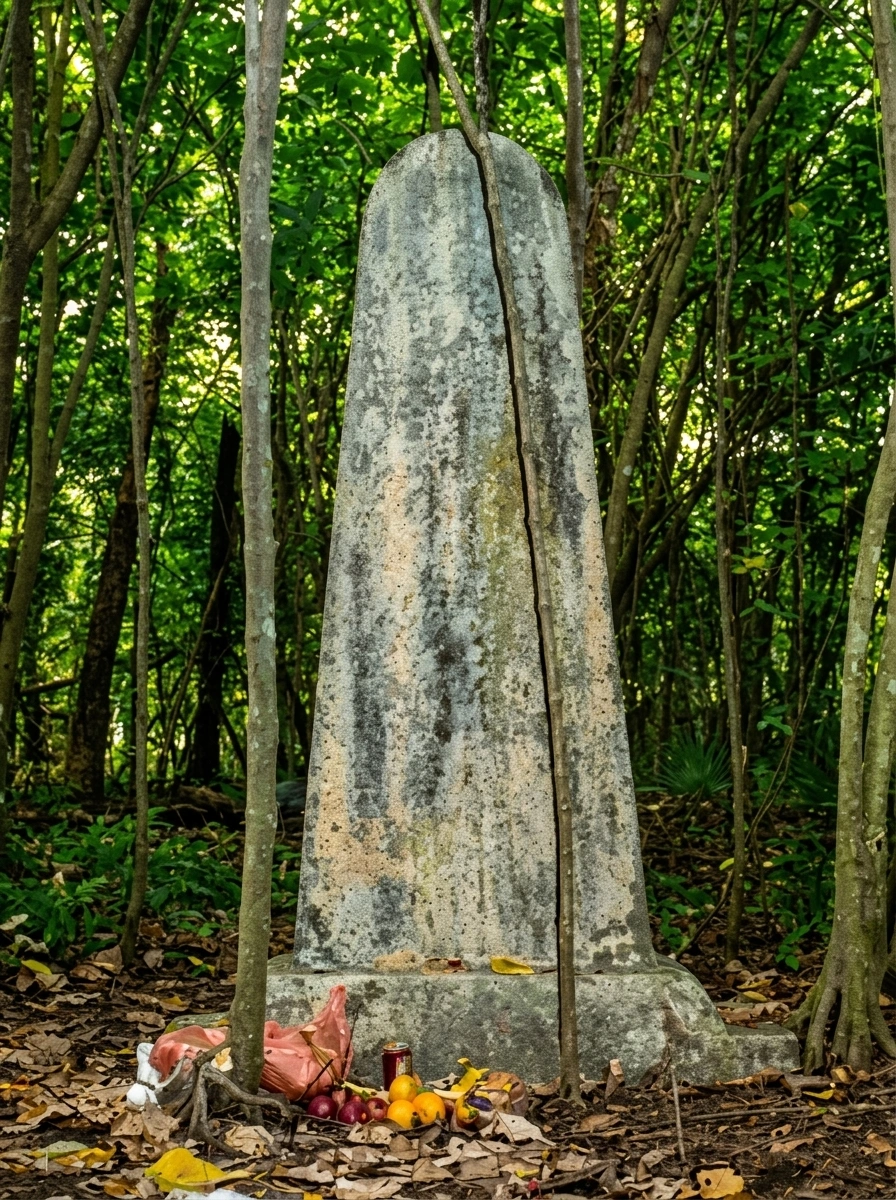
历经八十余载历史风云变幻,这盏由先烈热血点燃的精神灯塔从未熄灭。从战后全马数十万各族民众走上街头的隆重公祭,到1989年《合艾和平协议》后在泰国勿洞和平村、朱拉蓬发展村矗立起庄严的爱国忠魂碑,再到马来西亚本土吉隆坡广东义山与雪兰莪汝来孝恩园和平纪念园,每年的9月1日,海内外白发苍苍的老战士、烈士遗属、老友联谊会及年轻一代的文史学者与民间后辈,都会手捧素洁白菊庄严肃立,举行一年一度的“九一忠魂节”公祭大典。岁月更迭,一代代亲历者即便逐渐老去,但那份目睹祖国从奴役深渊走向主权自尊的崇高情怀,已化作不可磨灭的集体记忆与精神基因,年年岁岁在青山松柏间激荡回响。
Over more than eight decades of epochal shifts, this spiritual beacon ignited by the martyrs' sacrifice has burned ever bright. From massive post-war civic rallies in Kuala Lumpur to the erection of monumental Cenotaphs at Betong Peace Village and Chulabhorn Development Village following the 1989 Haadyai Peace Agreement, and alongside memorials at the Kwong Tong Cemetery and Nilai Memorial Park in Malaysia, September 1st remains an unbroken sacred tradition. Every year, silver-haired guerrilla veterans, martyr families, friendship associations, and younger generations assemble with white chrysanthemums to conduct solemn public memorials. Though generations pass, the memory of transition from imperial servitude to sovereign dignity remains an indelible moral compass deeply woven into the nation's historical conscience.
九一先烈们以自己滚烫的鲜血,浇灌了马来亚民族解放的自由之花。他们面对法西斯强敌宁死不屈的革命气节,永远是全党、全军与全马各族人民反抗帝国主义殖民统治、争取民族独立与人民民主的不朽精神火炬。With their warm blood, the September 1 martyrs watered the flower of Malayan national liberation. Their unyielding revolutionary integrity in the face of the fascist enemy remains forever an immortal spiritual torch for the whole Party, the whole Army, and the people of all ethnic groups in Malaya.— 民声社:《“九一”革命烈士节历史》(1949年6月版历史文献) | Min Sheng Press: History of the 'September 1' Revolutionary Martyrs' Day (June 1949 Historical Pamphlet)