第2集:马来亚共产党领导的马来亚抗日民族解放战争(1941年12月—1945年8月)
Episode 2: The Anti-Japanese National Liberation War Led by the CPM (1941–1945)
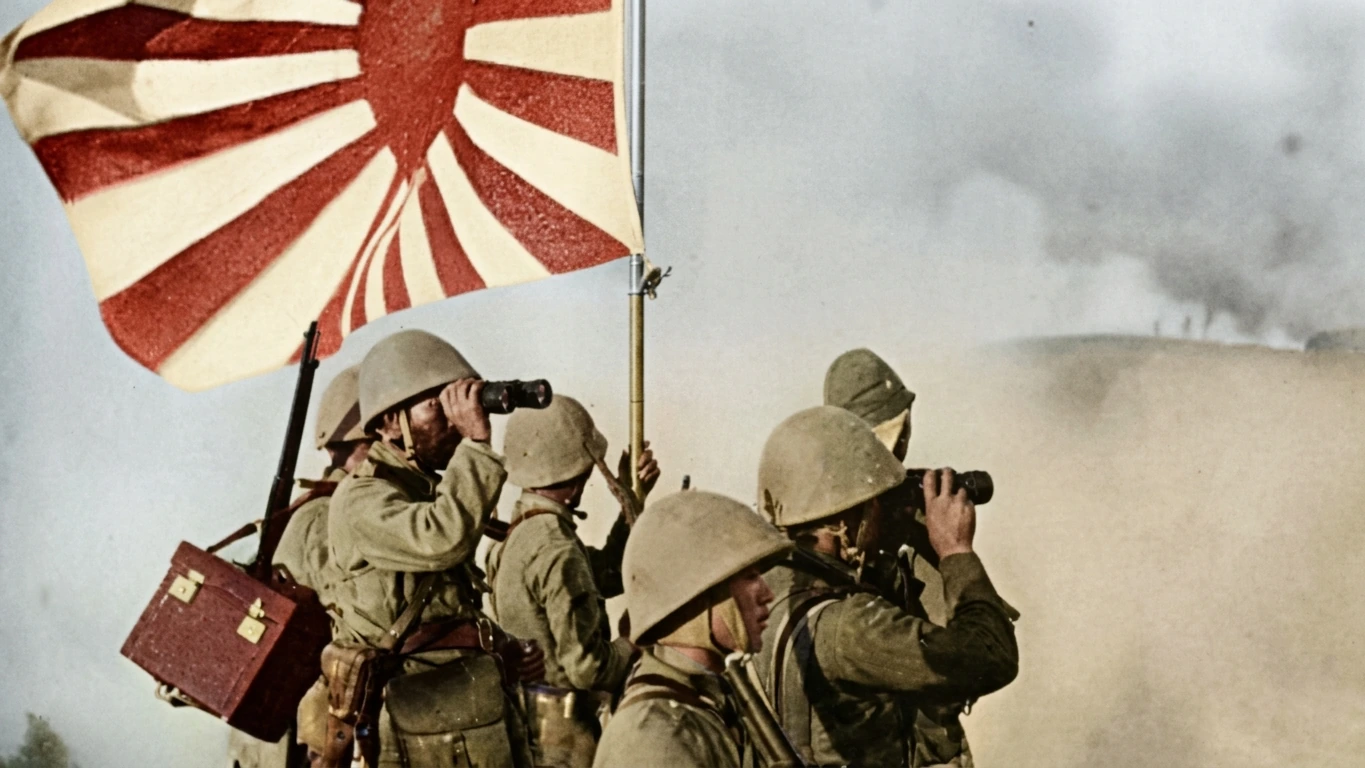
1941年12月8日凌晨,日军山下奉文第25军在哥打巴鲁抢滩登陆,仅两日后英国远东舰队主力“威尔士亲王号”与“反击号”在东海岸海域倾覆沉没,大英帝国的海权神话轰然崩解。1942年2月15日,白思华中将在新加坡福特汽车厂签下英军史上最耻辱的投降书,八万余名英联邦官兵沦为战俘。在正规军土崩瓦解的绝境之中,马来亚共产党在密林中点燃抗日烽火,八支独立队相继挺立于半岛山野。面对日军野蛮的“肃清”屠杀与焦土扫荡,这支由各族工人、胶工、青年组成的游击武装在热带丛林中浴血坚持三年零八个月,成为马来半岛唯一坚持武装抗日的反法西斯中流砥柱。
In the early hours of December 8, 1941, General Tomoyuki Yamashita's 25th Army stormed ashore at Kota Bharu. Within forty-eight hours, the pride of the Royal Navy—HMS Prince of Wales and HMS Repulse—were sent to the ocean floor, obliterating British naval supremacy. On February 15, 1942, Lieutenant General Arthur Percival signed the largest surrender in British military history at the Ford Motor Factory in Singapore, sending over 80,000 Commonwealth troops into captivity. As the colonial apparatus disintegrated, the Communist Party of Malaya ignited the flames of resistance, organizing the Malayan People's Anti-Japanese Army into eight Independent Regiments. Enduring the brutal Sook Ching massacres and jungle deprivation, the MPAJA stood for three years and eight months as the sole organized anti-fascist bulwark defending the peninsula.
第一章:帝国崩塌:哥打巴鲁抢滩、无敌舰队覆灭与新加坡耻辱投降
Chapter 1: The Imperial Collapse: Kota Bharu Landings, Naval Destruction and the Surrender of Singapore
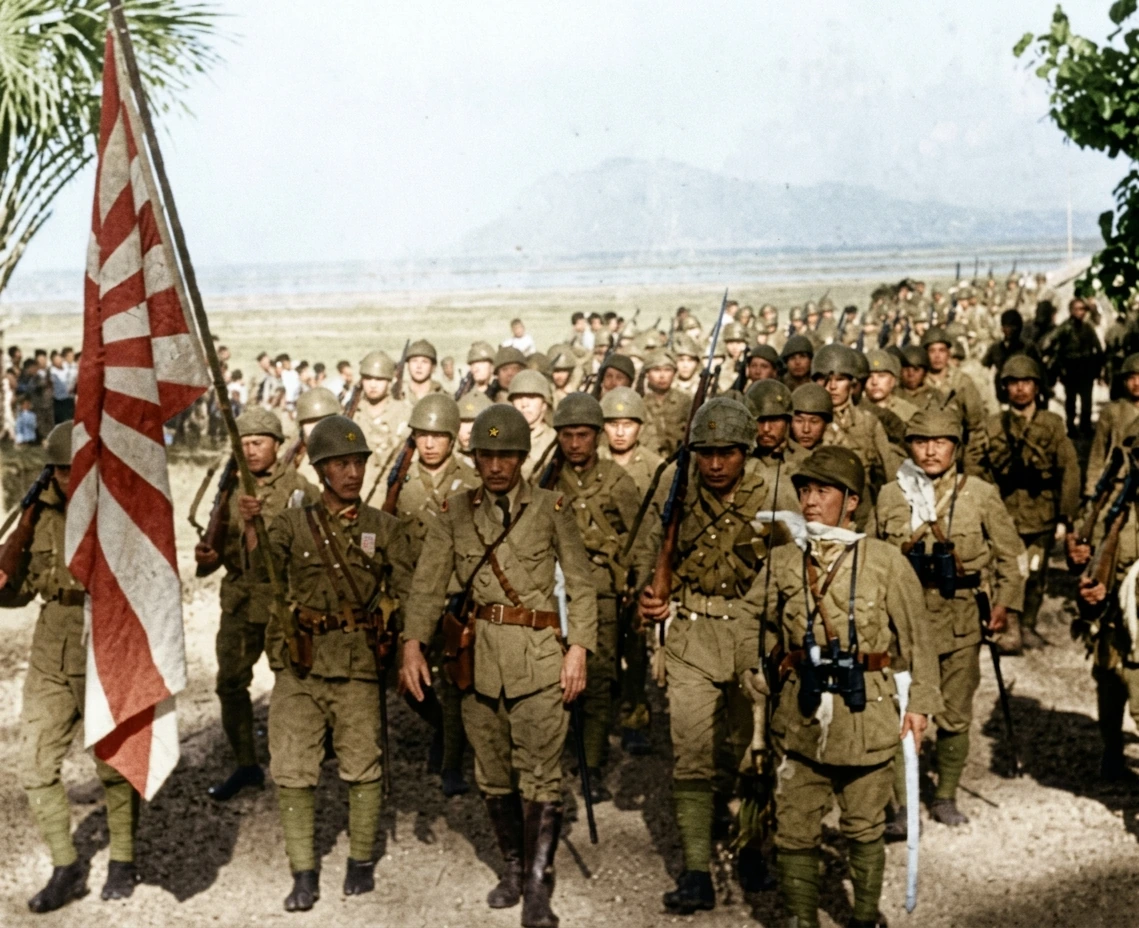
1941年12月8日凌晨,凄厉的海风撕裂了南中国海的夜空。甚至在日军偷袭夏威夷珍珠港前70分钟,大日本帝国第25军司令官山下奉文中将便已率领精锐登陆部队,在马来半岛东北部的吉兰丹哥打巴鲁强行抢滩。密集的舰炮轰鸣与刺刀冲锋瞬间撕碎了英澳驻军薄弱的滩头防线,正式揭开了马来亚战役乃至整个太平洋战争血腥暴烈的序幕。
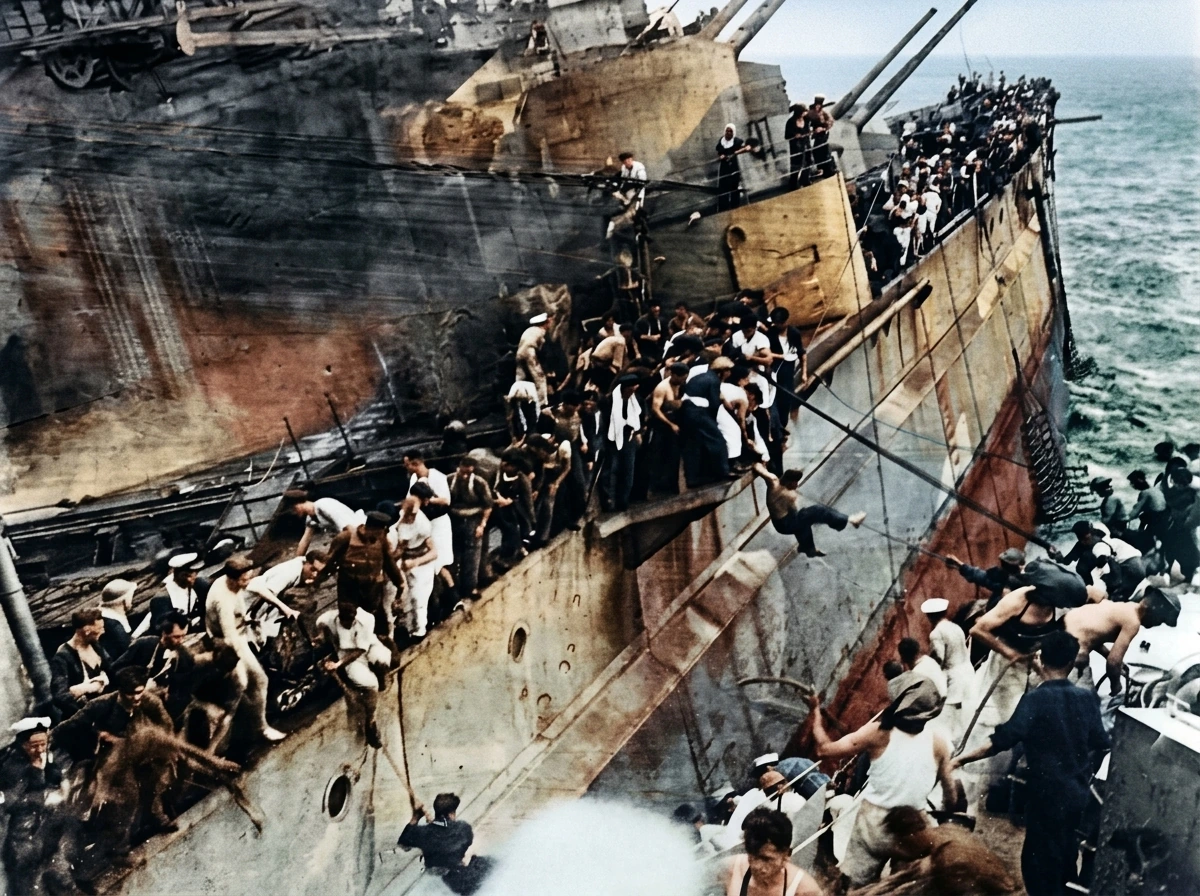
仅仅两天之后的12月10日,大英帝国在远东自诩不可摧毁的军事图腾遭受了毁灭性的致命一击。英国皇家海军倾全国之力派往远东震慑日本的远东舰队主力:现代化战列舰“威尔士亲王号”(HMS Prince of Wales)与战列巡洋舰“反击号”(HMS Repulse),在没有空中战斗机掩护的绝境下,在彭亨州关丹以东海域遭遇日本帝国海军航空兵数十架鱼雷轰炸机的毁灭性围攻。短短两小时内,巨舰倾覆,海水沸腾,包括远东舰队司令菲利普斯海军上将在内的八百余名官兵葬身海底。这场海战彻底击碎了大英帝国在东南亚维系了一百多年的制海权与无敌神话。
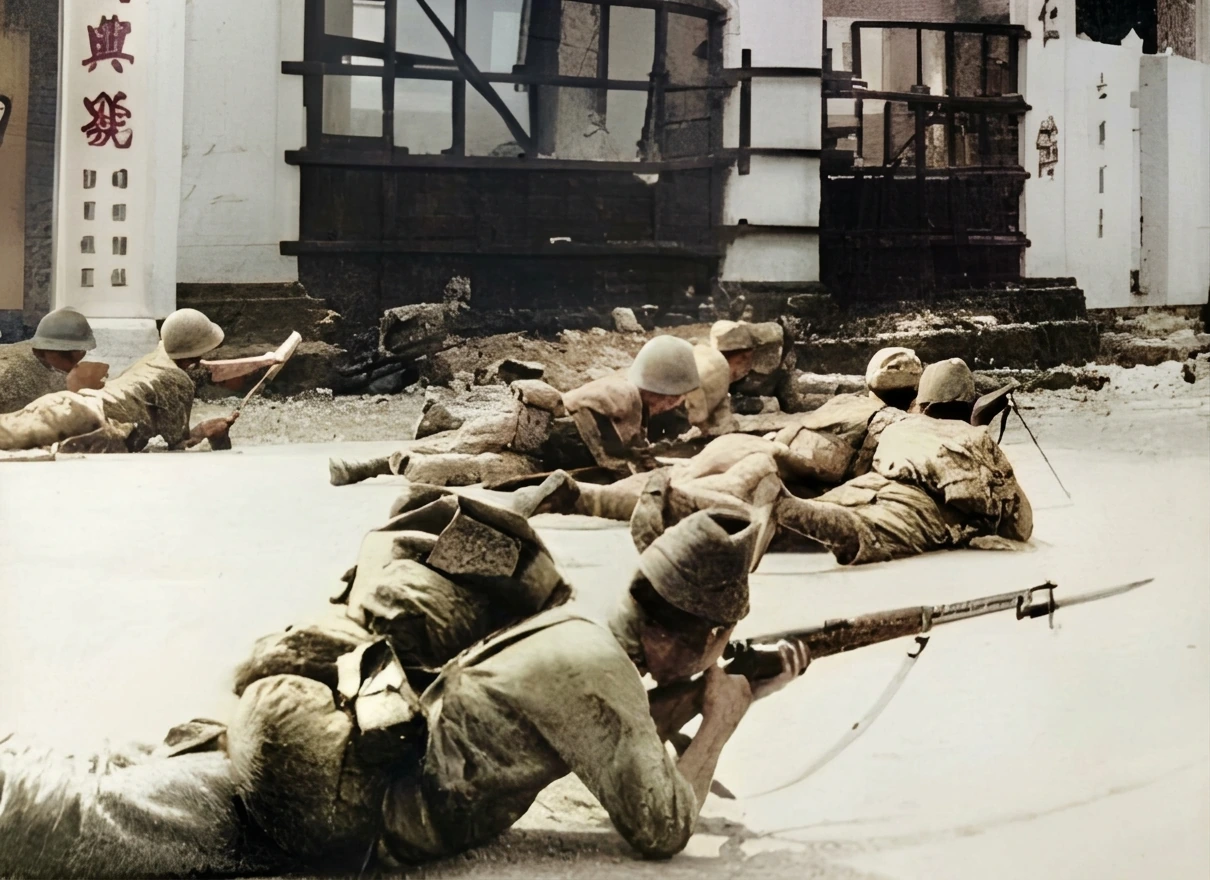
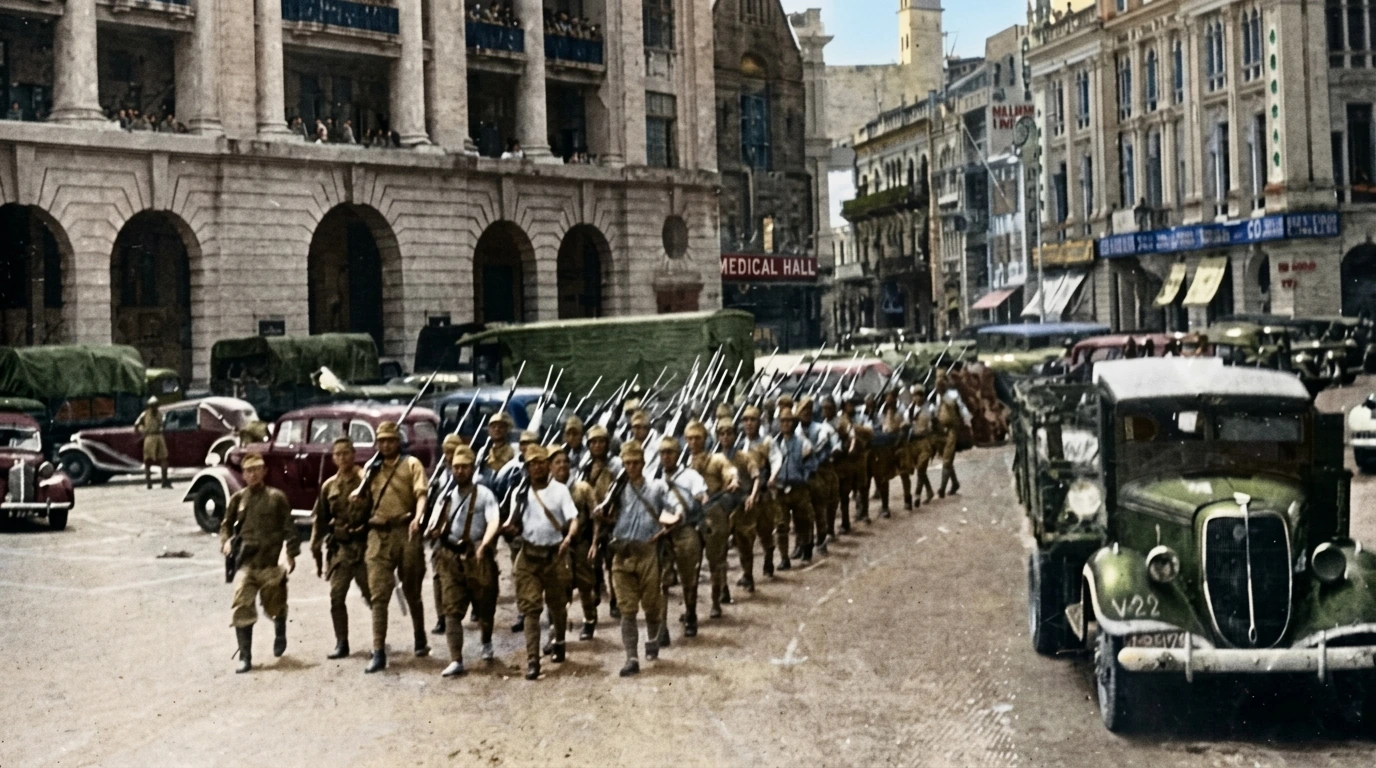
失去海上屏障与空中掩护的英联邦陆军兵败如山倒。山下奉文的装甲部队与自行车步兵闪击战一路沿半岛公路长驱直入,英军节节溃败,遗弃了数以万计的重炮、车辆与军需物资。1942年1月11日,吉隆坡陷落,马来联邦首府落入敌手。日军铁蹄势如破竹,将残存的十万英军逼退至孤岛新加坡。
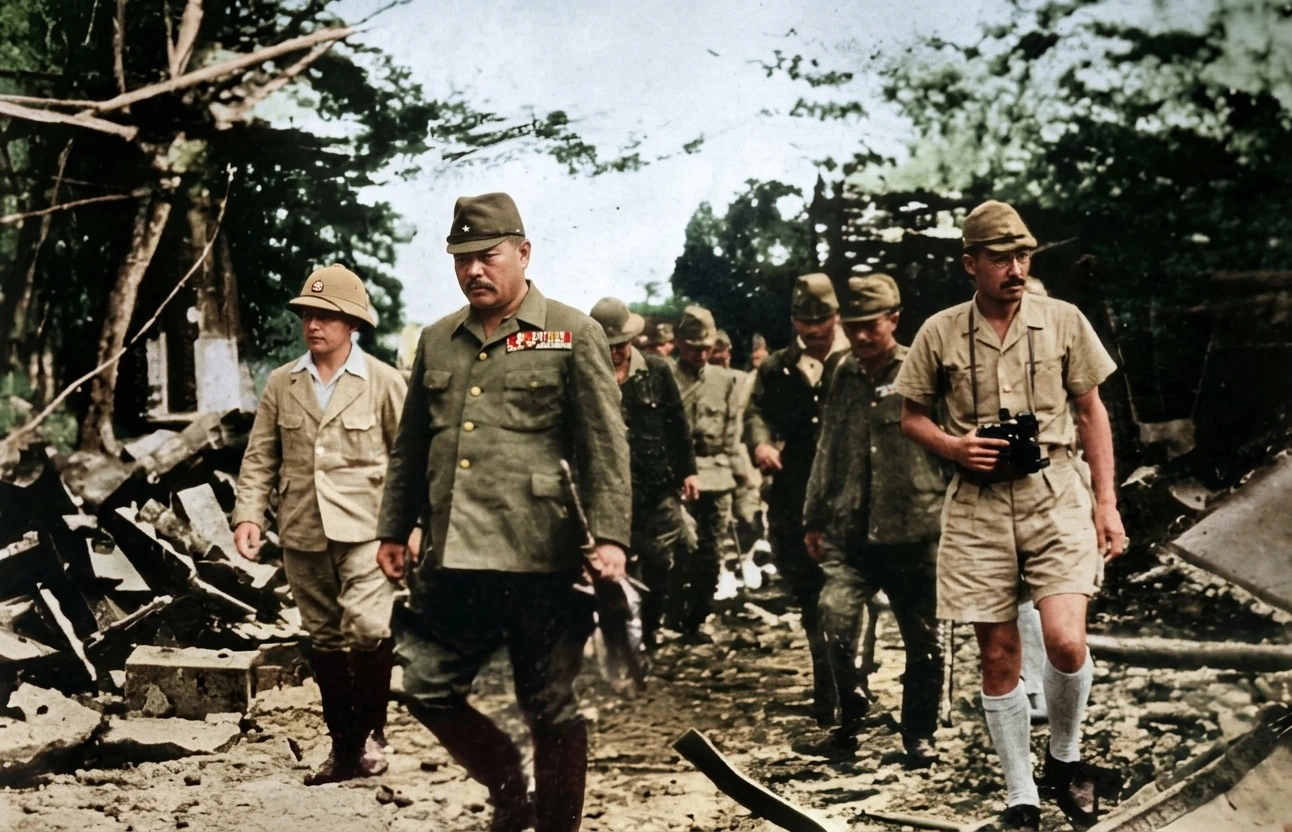
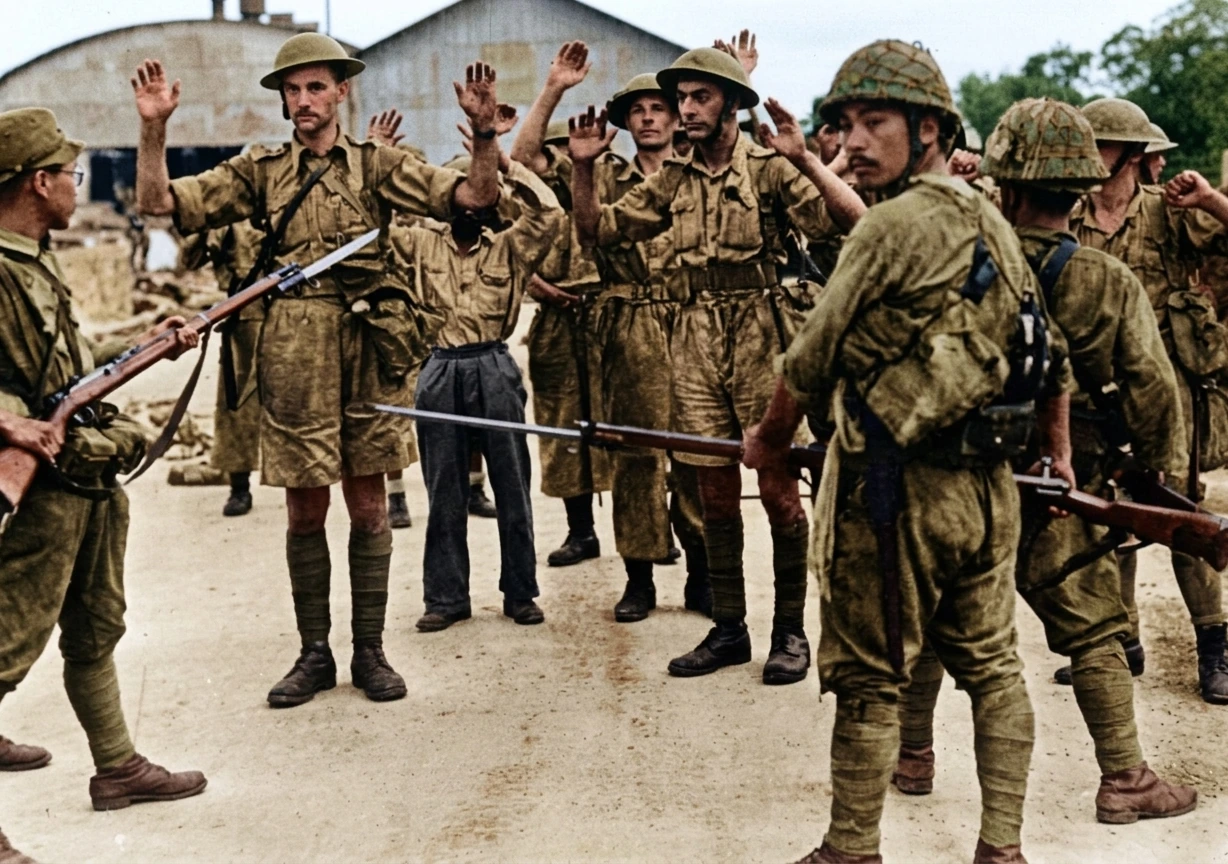
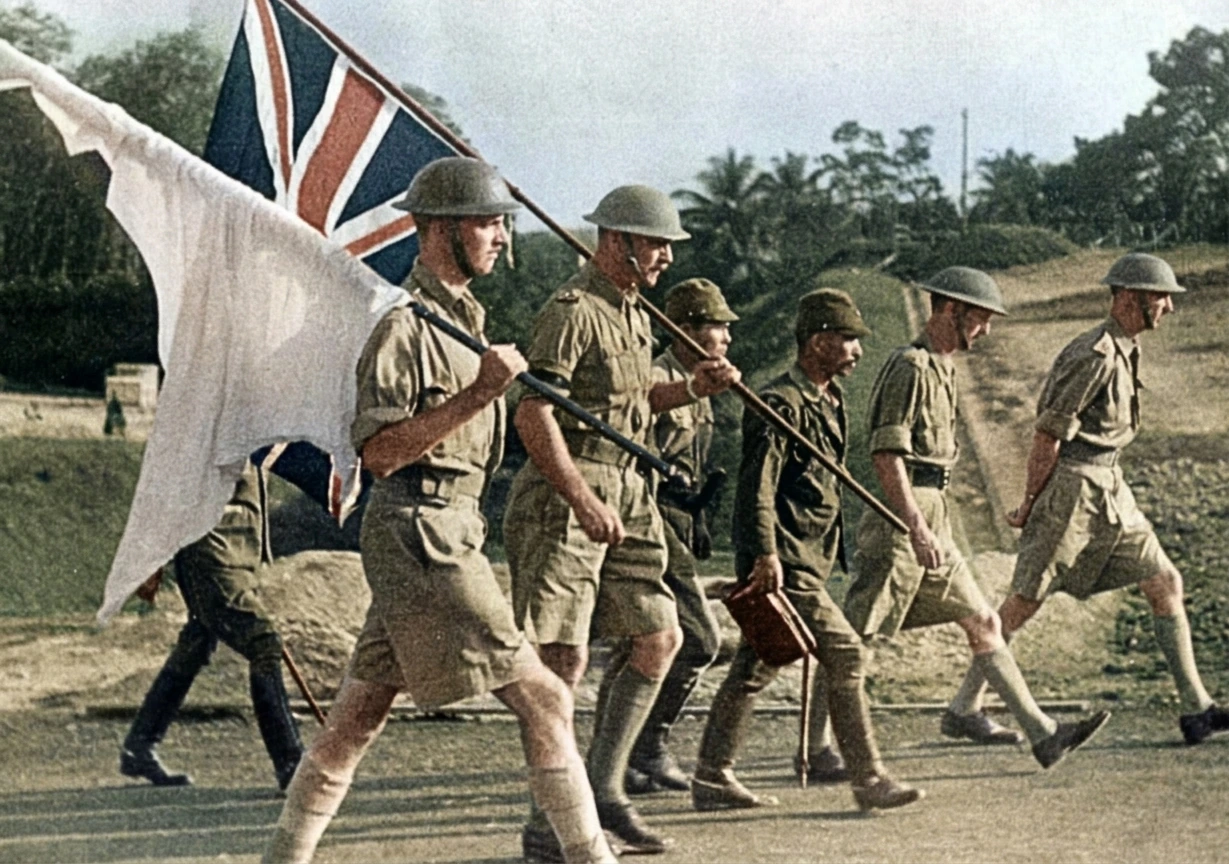
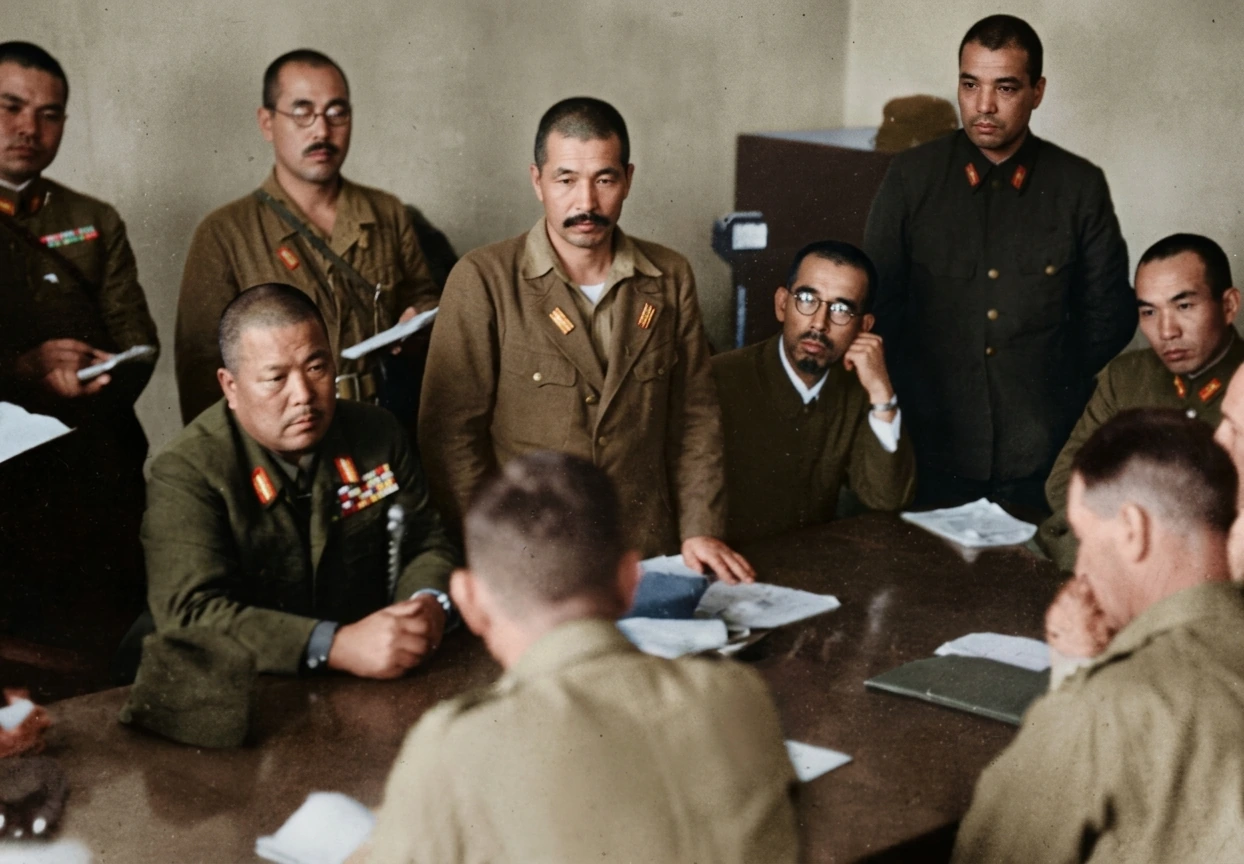
1942年2月15日,震惊全球的屈辱时刻降临。在新加坡武吉知马的福特汽车厂(Ford Motor Factory)那张昏暗的谈判桌前,英国马来亚总司令白思华中将(Lt. Gen. Arthur Percival)面容惨白,在山下奉文的厉声拍桌逼迫下,正式签署了无条件投降书。八万余名装备精良的英联邦官兵解除武装沦为战俘,创下大英帝国军事史上规模最大、最屈辱的一次军事投降。大英帝国的殖民统治机器在法西斯的铁蹄下顷刻化为齑粉,将整个马来亚千百万各族人民抛入了任由侵略者宰割的无底深渊。
In the pre-dawn darkness of December 8, 1941—fully seventy minutes before bombs rained upon Pearl Harbor—General Tomoyuki Yamashita's 25th Imperial Japanese Army stormed ashore at Kota Bharu, Kelantan. Roaring naval bombardments shattered the brittle coastal defenses manned by British and Commonwealth troops, igniting the Malayan Campaign and opening the Pacific War in ferocious bloodshed.
Merely forty-eight hours later, on December 10, the pride of the British Empire suffered a catastrophic death blow. The newly dispatched capital ships of the Eastern Fleet—the battleship HMS Prince of Wales and the battlecruiser HMS Repulse—were intercepted off the coast of Pahang by massed waves of Japanese torpedo bombers. Devoid of air cover, both dreadnoughts were sent to the ocean floor within hours. Over eight hundred sailors, including Admiral Sir Tom Phillips, perished, forever shattering British naval hegemony in Southeast Asia.
Stripped of naval protection and air superiority, Commonwealth ground forces crumbled in catastrophic retreat. Yamashita's motorized and bicycle infantry surged down the trunk roads with blitzkrieg speed. On January 11, 1942, Kuala Lumpur fell, and colonial authorities abandoned the capital. British forces were driven south into the bottleneck of Singapore.
On February 15, 1942, at the Ford Motor Factory in Bukit Timah, Singapore, Lieutenant General Arthur Percival bowed his head and signed an unconditional surrender. Over 80,000 Commonwealth soldiers were marched into Changi captivity, marking the largest military capitulation in British history. The colonial master had fled, abandoning millions of civilians to the unchecked terror of fascist conquest.
1941年12月8日凌晨,凄厉的海风撕裂了南中国海的夜空。甚至在日军偷袭夏威夷珍珠港前70分钟,大日本帝国第25军司令官山下奉文中将便已率领精锐登陆部队,在马来半岛东北部的吉兰丹哥打巴鲁强行抢滩。密集的舰炮轰鸣与刺刀冲锋瞬间撕碎了英澳驻军薄弱的滩头防线,正式揭开了马来亚战役乃至整个太平洋战争血腥暴烈的序幕。
仅仅两天之后的12月10日,大英帝国在远东自诩不可摧毁的军事图腾遭受了毁灭性的致命一击。英国皇家海军倾全国之力派往远东震慑日本的远东舰队主力:现代化战列舰“威尔士亲王号”(HMS Prince of Wales)与战列巡洋舰“反击号”(HMS Repulse),在没有空中战斗机掩护的绝境下,在彭亨州关丹以东海域遭遇日本帝国海军航空兵数十架鱼雷轰炸机的毁灭性围攻。短短两小时内,巨舰倾覆,海水沸腾,包括远东舰队司令菲利普斯海军上将在内的八百余名官兵葬身海底。这场海战彻底击碎了大英帝国在东南亚维系了一百多年的制海权与无敌神话。
In the pre-dawn darkness of December 8, 1941—fully seventy minutes before bombs rained upon Pearl Harbor—General Tomoyuki Yamashita's 25th Imperial Japanese Army stormed ashore at Kota Bharu, Kelantan. Roaring naval bombardments shattered the brittle coastal defenses manned by British and Commonwealth troops, igniting the Malayan Campaign and opening the Pacific War in ferocious bloodshed.
Merely forty-eight hours later, on December 10, the pride of the British Empire suffered a catastrophic death blow. The newly dispatched capital ships of the Eastern Fleet—the battleship HMS Prince of Wales and the battlecruiser HMS Repulse—were intercepted off the coast of Pahang by massed waves of Japanese torpedo bombers. Devoid of air cover, both dreadnoughts were sent to the ocean floor within hours. Over eight hundred sailors, including Admiral Sir Tom Phillips, perished, forever shattering British naval hegemony in Southeast Asia.
失去海上屏障与空中掩护的英联邦陆军兵败如山倒。山下奉文的装甲部队与自行车步兵闪击战一路沿半岛公路长驱直入,英军节节溃败,遗弃了数以万计的重炮、车辆与军需物资。1942年1月11日,吉隆坡陷落,马来联邦首府落入敌手。日军铁蹄势如破竹,将残存的十万英军逼退至孤岛新加坡。
1942年2月15日,震惊全球的屈辱时刻降临。在新加坡武吉知马的福特汽车厂(Ford Motor Factory)那张昏暗的谈判桌前,英国马来亚总司令白思华中将(Lt. Gen. Arthur Percival)面容惨白,在山下奉文的厉声拍桌逼迫下,正式签署了无条件投降书。八万余名装备精良的英联邦官兵解除武装沦为战俘,创下大英帝国军事史上规模最大、最屈辱的一次军事投降。大英帝国的殖民统治机器在法西斯的铁蹄下顷刻化为齑粉,将整个马来亚千百万各族人民抛入了任由侵略者宰割的无底深渊。
Stripped of naval protection and air superiority, Commonwealth ground forces crumbled in catastrophic retreat. Yamashita's motorized and bicycle infantry surged down the trunk roads with blitzkrieg speed. On January 11, 1942, Kuala Lumpur fell, and colonial authorities abandoned the capital. British forces were driven south into the bottleneck of Singapore.
On February 15, 1942, at the Ford Motor Factory in Bukit Timah, Singapore, Lieutenant General Arthur Percival bowed his head and signed an unconditional surrender. Over 80,000 Commonwealth soldiers were marched into Changi captivity, marking the largest military capitulation in British history. The colonial master had fled, abandoning millions of civilians to the unchecked terror of fascist conquest.
第二章:绝地誓言:马共第七次扩大会议与《流血时代》动员令
Chapter 2: The Covenant of Resistance: The 7th Enlarged Central Meeting and the Era of Bloodshed
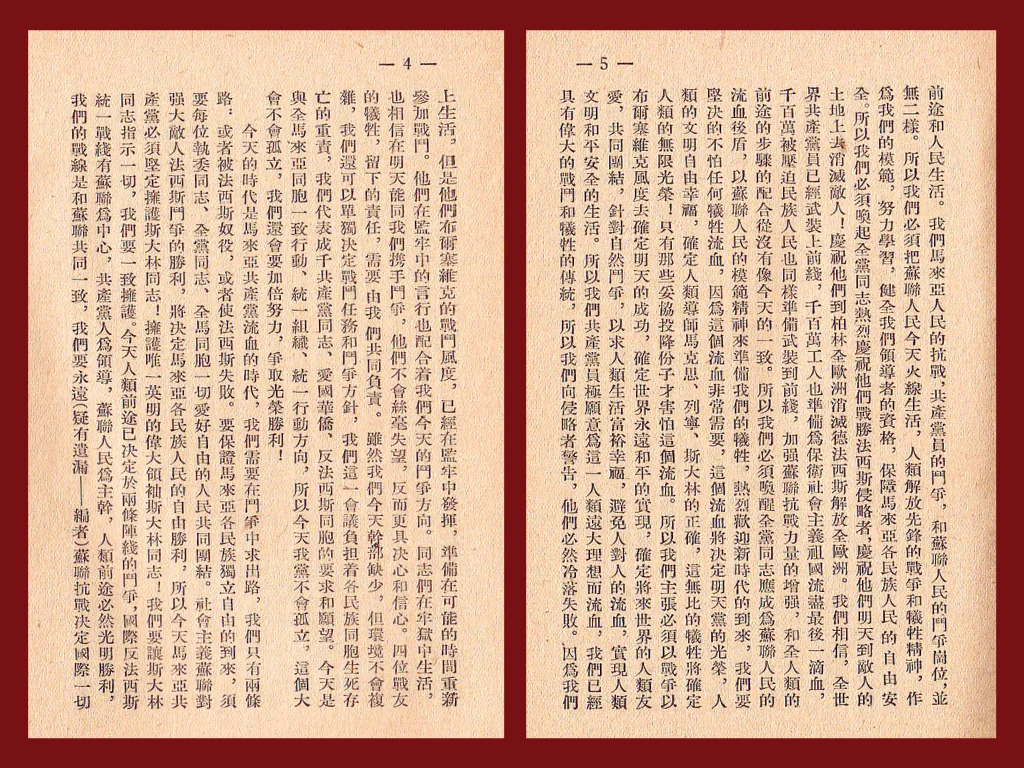
就在殖民总督与英国将军们仓皇投降、溃不成军的危急关头,唯有扎根于半岛底层的马来亚共产党挺身而出,接过了抵抗侵略的抗日战旗。1941年12月17日,在吉隆坡沦陷前夕的秘密防空洞中,马共中央紧急召开了第七次扩大会议第二次会议,发表了掷地有声的历史性动员决议:“今天的时代是马来亚共产党流血的时代,我们需要在斗争中求出路,我们只有两条路:或者被法西斯奴役,或者使法西斯失败。”
决议庄严向全马各族人民宣告:“我们要坚决的不怕任何牺牲流血,因为这个流血非常需要,这个流血将决定明天党的光荣,人类的无限光荣!”这份在民族危亡关头用鲜血写就的政治宣言,彻底吹响了全岛人民奋起自卫的战斗号角。
1942年1月1日,在雪兰莪的密林边缘,马来亚人民抗日军(MPAJA)第一支武装队伍正式宣告诞生。成千上万来自胶园的割胶工、锡矿的矿工、城镇的中学青年以及被殖民当局长期边缘化的马来、印度劳苦大众,毅然告别家人,告别平静的家园,义无反顾地踏入了危机四伏的原始热带雨林。
他们用从溃退英军遗弃阵地上收集来的残破枪械武装自己,用砍刀在藤蔓交错、蚊虫肆虐的原始丛林中开辟根据地。在马共中央与各州马共组织的坚强领导下,分散在各地的抗日武装迅速汇聚成军,从最初零散的自卫小组,发展为纪律严明、深得民心的正规化游击部队,开启了马来亚历史上最为悲壮激昂的丛林民族自卫战争。
As colonial generals capitulated in disgrace, only the Communist Party of Malaya stood in the breach to shoulder the defense of the homeland. On December 17, 1941, amidst relentless air raids, the CPM convened the Second Session of its Seventh Enlarged Central Meeting, issuing a clarion call that echoed through history: 'This is the Communist Party of Malaya's era of bloodshed. We must fight our way to liberation, for only two paths lie before us: enslavement by fascism or the decisive defeat of fascism.'
The resolution pledged unflinching defiance: 'We must fear no sacrifice or shedding of blood, for this very bloodshed shall forge tomorrow's glory: the honor of our Party and the boundless glory of humankind!' This blood-stained covenant mobilized the multiracial masses to wage protracted resistance against foreign conquest.
On January 1, 1942, in the dense jungles of Selangor, the Malayan People's Anti-Japanese Army (MPAJA) was formally proclaimed. Rubber tappers, tin miners, radical students, and impoverished Malay, Chinese, and Indian youths abandoned civilian life to take up arms beneath the rain canopy.
Scavenging weapons abandoned by retreating Commonwealth troops, they fashioned bases out of primeval swamps and limestone peaks. Guided by the CPM's underground cadres, local resistance cells coalesced into a disciplined, organized guerrilla army, inaugurating one of the most heroic chapters of jungle warfare in world history.
就在殖民总督与英国将军们仓皇投降、溃不成军的危急关头,唯有扎根于半岛底层的马来亚共产党挺身而出,接过了抵抗侵略的抗日战旗。1941年12月17日,在吉隆坡沦陷前夕的秘密防空洞中,马共中央紧急召开了第七次扩大会议第二次会议,发表了掷地有声的历史性动员决议:“今天的时代是马来亚共产党流血的时代,我们需要在斗争中求出路,我们只有两条路:或者被法西斯奴役,或者使法西斯失败。”
决议庄严向全马各族人民宣告:“我们要坚决的不怕任何牺牲流血,因为这个流血非常需要,这个流血将决定明天党的光荣,人类的无限光荣!”这份在民族危亡关头用鲜血写就的政治宣言,彻底吹响了全岛人民奋起自卫的战斗号角。
As colonial generals capitulated in disgrace, only the Communist Party of Malaya stood in the breach to shoulder the defense of the homeland. On December 17, 1941, amidst relentless air raids, the CPM convened the Second Session of its Seventh Enlarged Central Meeting, issuing a clarion call that echoed through history: 'This is the Communist Party of Malaya's era of bloodshed. We must fight our way to liberation, for only two paths lie before us: enslavement by fascism or the decisive defeat of fascism.'
The resolution pledged unflinching defiance: 'We must fear no sacrifice or shedding of blood, for this very bloodshed shall forge tomorrow's glory: the honor of our Party and the boundless glory of humankind!' This blood-stained covenant mobilized the multiracial masses to wage protracted resistance against foreign conquest.
今天的时代是马来亚共产党流血的时代,我们需要在斗争中求出路,我们只有两条路:或者被法西斯奴役,或者使法西斯失败。我们要坚决的不怕任何牺牲流血,因为这个流血非常需要,这个流血将决定明天党的光荣,人类的无限光荣!This is the Communist Party of Malaya's era of bloodshed. We must fight our way to liberation, for only two paths lie before us: enslavement by fascism or the decisive defeat of fascism. We must fear no sacrifice or shedding of blood, for this very bloodshed shall forge tomorrow's glory!— 《第七次扩大会议第二次会议决议》(1941年12月17日) | Resolution of the Second Session of the Seventh Enlarged Meeting (17 Dec 1941)
1942年1月1日,在雪兰莪的密林边缘,马来亚人民抗日军(MPAJA)第一支武装队伍正式宣告诞生。成千上万来自胶园的割胶工、锡矿的矿工、城镇的中学青年以及被殖民当局长期边缘化的马来、印度劳苦大众,毅然告别家人,告别平静的家园,义无反顾地踏入了危机四伏的原始热带雨林。
他们用从溃退英军遗弃阵地上收集来的残破枪械武装自己,用砍刀在藤蔓交错、蚊虫肆虐的原始丛林中开辟根据地。在马共中央与各州马共组织的坚强领导下,分散在各地的抗日武装迅速汇聚成军,从最初零散的自卫小组,发展为纪律严明、深得民心的正规化游击部队,开启了马来亚历史上最为悲壮激昂的丛林民族自卫战争。
On January 1, 1942, in the dense jungles of Selangor, the Malayan People's Anti-Japanese Army (MPAJA) was formally proclaimed. Rubber tappers, tin miners, radical students, and impoverished Malay, Chinese, and Indian youths abandoned civilian life to take up arms beneath the rain canopy.
Scavenging weapons abandoned by retreating Commonwealth troops, they fashioned bases out of primeval swamps and limestone peaks. Guided by the CPM's underground cadres, local resistance cells coalesced into a disciplined, organized guerrilla army, inaugurating one of the most heroic chapters of jungle warfare in world history.
第三章:铁血星火:从雪兰莪到全马丛林的八支独立队战略布局
Chapter 3: Flames Across the Wilderness: The Strategic Deployment of the Eight Independent Regiments
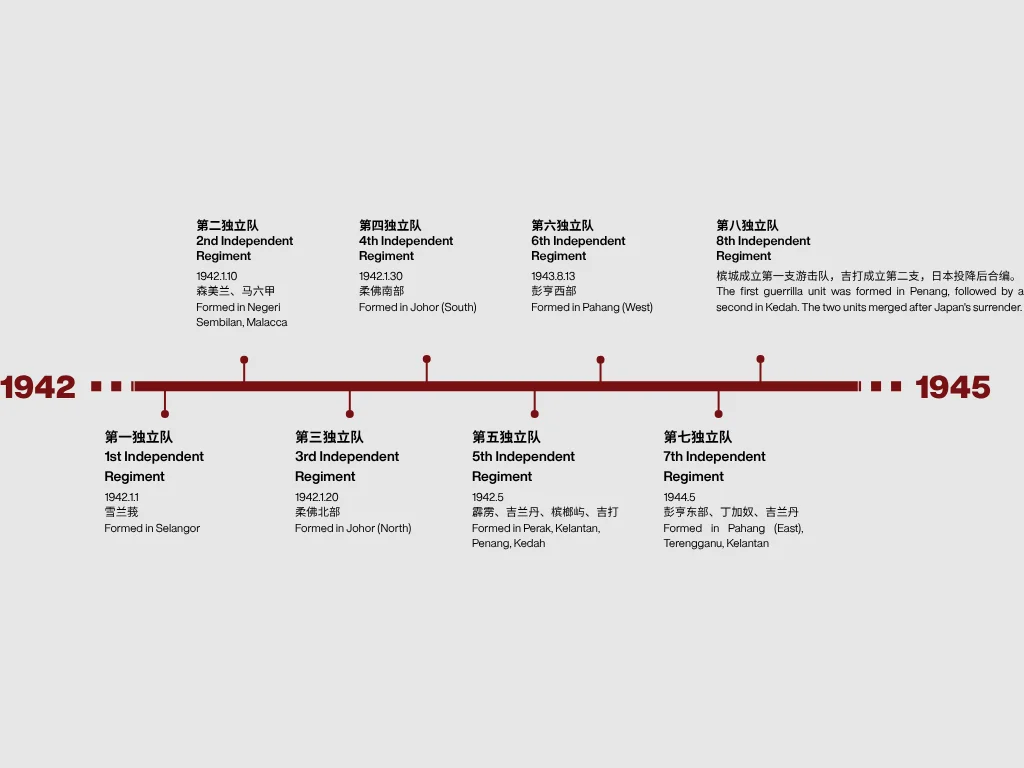
为了在广袤险峻的马来半岛实施全方位的游击战术,马共中央制定了依托山脉森林、划区作战的宏大战略。自1942年1月起,马来亚人民抗日军先后在全马各州组建了八支独立队,织就了一张让侵略者闻风丧胆的丛林天网。
1942年1月1日,抗日军第1独立队于雪兰莪率先成立,扼守西海岸经济动脉与吉隆坡咽喉;1月10日,第2独立队在森美兰与马六甲交界处竖起战旗;1月20日,第3独立队在柔佛北部宣告成军;1月30日,第4独立队挺进柔佛南部,牢牢锁死日军南下新加坡的铁路线。短短一个月内,四支主力独立队便如出鞘利剑,扎入了半岛南部核心地区。
战火继续向北蔓延。1942年5月,第5独立队在霹雳、吉兰丹、槟榔屿与吉打四州交界处汇聚成军,依托蒂迪旺沙山脉的崇山峻岭,成为兵力最雄厚、战绩最辉煌的主力王牌;1943年8月13日,第6独立队挺进彭亨西部原始丛林;1944年5月,第7独立队在彭亨东部、丁加奴与吉兰丹沿海林区完成集结;而在半岛最北端,槟城成立的第一支游击队与吉打成立的第二支游击队紧密协作,在抗战胜利后合编为功勋卓著的第8独立队。
八支独立队紧密依托各族同胞构建的“抗日同盟会”群众网络,实行官兵一致、军民鱼水的民主建军原则。在深山老林里,游击队员们以木皮为屋顶,以芭蕉叶为铺垫,忍受着疟疾、恶性贫血与断粮断盐的非人折磨。但只要出击号令一响,他们便如猛虎出山,神出鬼没地袭击日军运输补给车队,炸毁日伪军警据点与锡矿铁路,让妄图将马来亚作为“大东亚共荣圈”后方基地的侵略者惶惶不可终日。
To wage protracted asymmetric warfare across the mountainous spine of the peninsula, the CPM executed a brilliant military deployment. Beginning in January 1942, the MPAJA established eight distinct Independent Regiments, transforming the primeval rainforest into an impenetrable partisan fortress.
The 1st Independent Regiment was formed on January 1, 1942, in Selangor, commanding the western rail arteries. The 2nd Independent Regiment followed on January 10 across Negeri Sembilan and Malacca. On January 20, the 3rd Regiment mobilized in North Johor, and on January 30, the 4th Regiment secured South Johor, encircling the approaches to Singapore. Within thirty days, four strike regiments had materialized across the south.
The northern theaters expanded relentlessly. In May 1942, the 5th Independent Regiment assembled in Perak, Kelantan, Penang, and Kedah; anchored in the rugged Titiwangsa Mountains, it became the most formidable and battle-hardened formation. On August 13, 1943, the 6th Regiment penetrated West Pahang. In May 1944, the 7th Regiment unified East Pahang, Terengganu, and Kelantan. In the far north, partisan forces in Penang and Kedah coordinated extensive operations, eventually merging into the 8th Independent Regiment.
Supported by a vast civilian logistics web known as the Anti-Japanese Union, the eight regiments practiced egalitarian discipline and strict anti-colonial fraternity. Sheltered under bark roofs, plagued by malaria and dysentery, MPAJA fighters struck relentlessly: blowing bridges, derailing munitions trains, and assassinating fascist administrators, turning occupied Malaya into a living hell for the conquerors.
为了在广袤险峻的马来半岛实施全方位的游击战术,马共中央制定了依托山脉森林、划区作战的宏大战略。自1942年1月起,马来亚人民抗日军先后在全马各州组建了八支独立队,织就了一张让侵略者闻风丧胆的丛林天网。
1942年1月1日,抗日军第1独立队于雪兰莪率先成立,扼守西海岸经济动脉与吉隆坡咽喉;1月10日,第2独立队在森美兰与马六甲交界处竖起战旗;1月20日,第3独立队在柔佛北部宣告成军;1月30日,第4独立队挺进柔佛南部,牢牢锁死日军南下新加坡的铁路线。短短一个月内,四支主力独立队便如出鞘利剑,扎入了半岛南部核心地区。
To wage protracted asymmetric warfare across the mountainous spine of the peninsula, the CPM executed a brilliant military deployment. Beginning in January 1942, the MPAJA established eight distinct Independent Regiments, transforming the primeval rainforest into an impenetrable partisan fortress.
The 1st Independent Regiment was formed on January 1, 1942, in Selangor, commanding the western rail arteries. The 2nd Independent Regiment followed on January 10 across Negeri Sembilan and Malacca. On January 20, the 3rd Regiment mobilized in North Johor, and on January 30, the 4th Regiment secured South Johor, encircling the approaches to Singapore. Within thirty days, four strike regiments had materialized across the south.
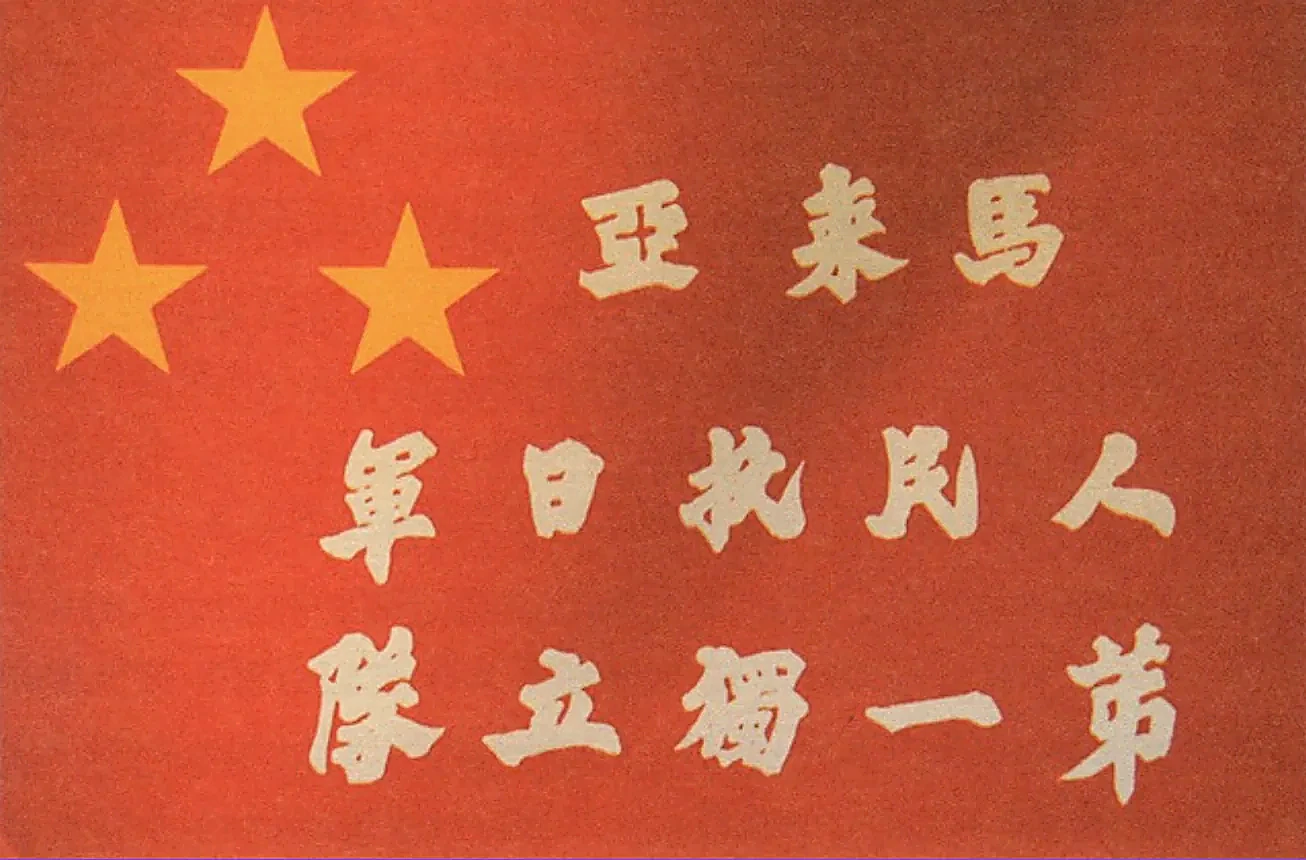
战火继续向北蔓延。1942年5月,第5独立队在霹雳、吉兰丹、槟榔屿与吉打四州交界处汇聚成军,依托蒂迪旺沙山脉的崇山峻岭,成为兵力最雄厚、战绩最辉煌的主力王牌;1943年8月13日,第6独立队挺进彭亨西部原始丛林;1944年5月,第7独立队在彭亨东部、丁加奴与吉兰丹沿海林区完成集结;而在半岛最北端,槟城成立的第一支游击队与吉打成立的第二支游击队紧密协作,在抗战胜利后合编为功勋卓著的第8独立队。
八支独立队紧密依托各族同胞构建的“抗日同盟会”群众网络,实行官兵一致、军民鱼水的民主建军原则。在深山老林里,游击队员们以木皮为屋顶,以芭蕉叶为铺垫,忍受着疟疾、恶性贫血与断粮断盐的非人折磨。但只要出击号令一响,他们便如猛虎出山,神出鬼没地袭击日军运输补给车队,炸毁日伪军警据点与锡矿铁路,让妄图将马来亚作为“大东亚共荣圈”后方基地的侵略者惶惶不可终日。
The northern theaters expanded relentlessly. In May 1942, the 5th Independent Regiment assembled in Perak, Kelantan, Penang, and Kedah; anchored in the rugged Titiwangsa Mountains, it became the most formidable and battle-hardened formation. On August 13, 1943, the 6th Regiment penetrated West Pahang. In May 1944, the 7th Regiment unified East Pahang, Terengganu, and Kelantan. In the far north, partisan forces in Penang and Kedah coordinated extensive operations, eventually merging into the 8th Independent Regiment.
Supported by a vast civilian logistics web known as the Anti-Japanese Union, the eight regiments practiced egalitarian discipline and strict anti-colonial fraternity. Sheltered under bark roofs, plagued by malaria and dysentery, MPAJA fighters struck relentlessly: blowing bridges, derailing munitions trains, and assassinating fascist administrators, turning occupied Malaya into a living hell for the conquerors.
第四章:焦土与屠刀:日军“肃清”大屠杀、战俘虐杀与平民浩劫
Chapter 4: Scorched Earth and Terror: Operation Sook Ching, POW Atrocities, and Civilian Suffering
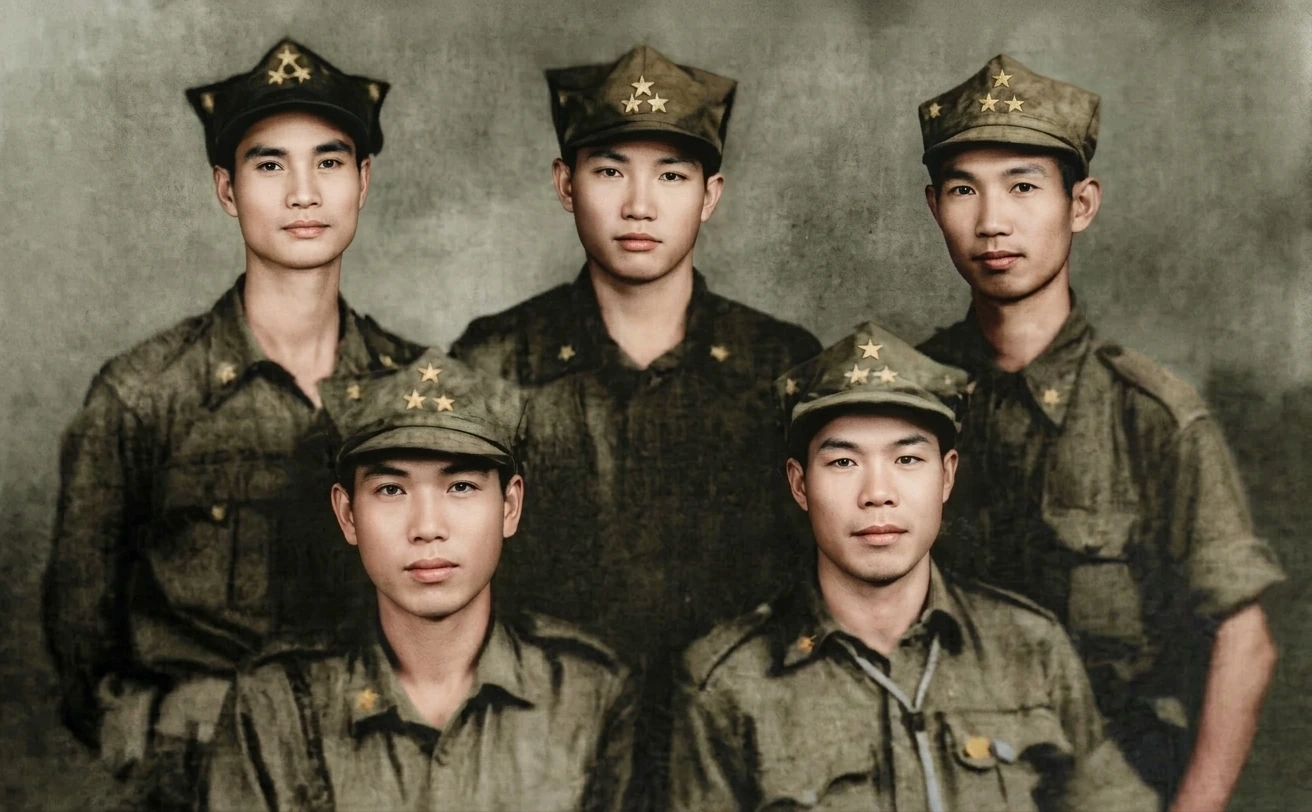
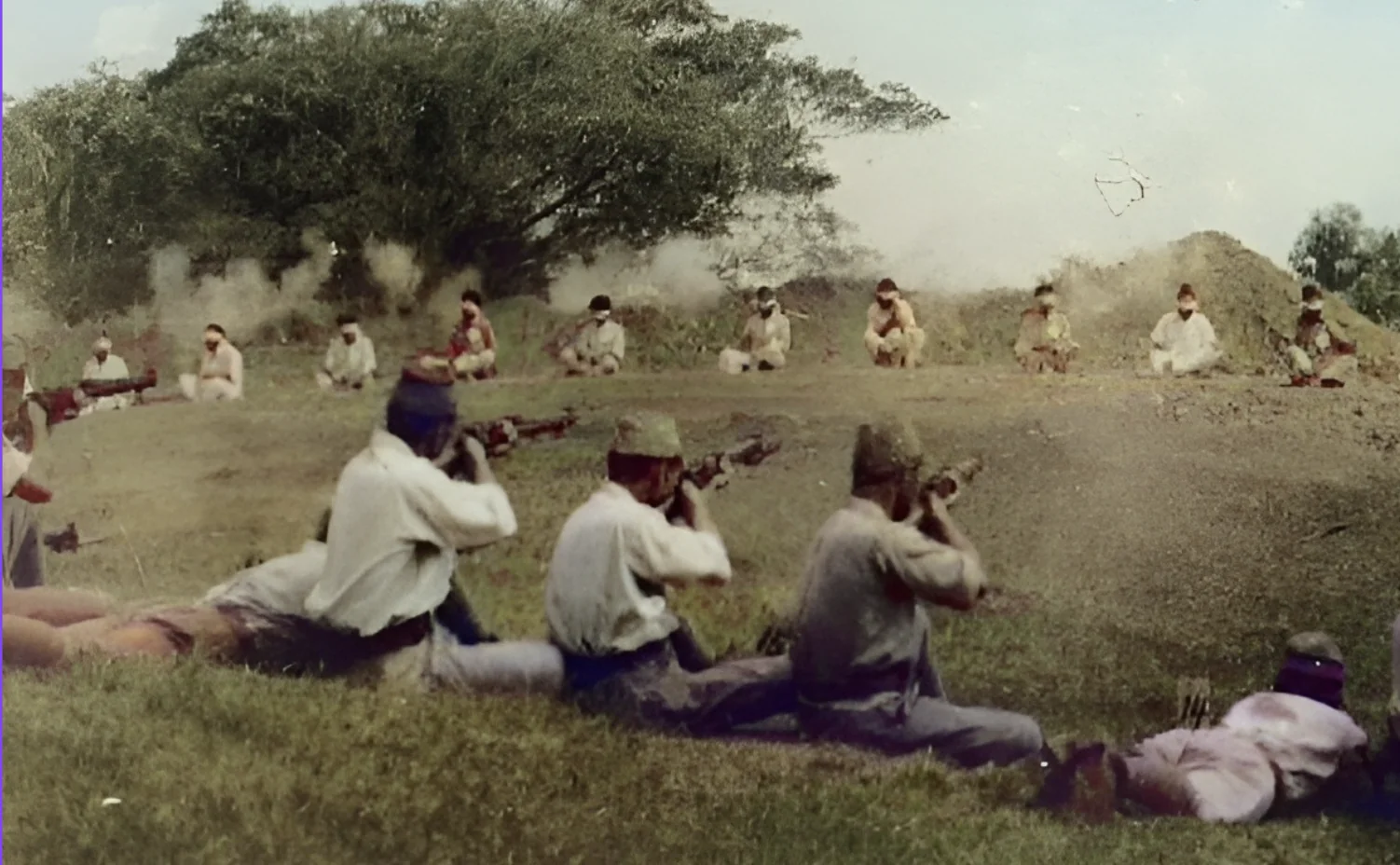
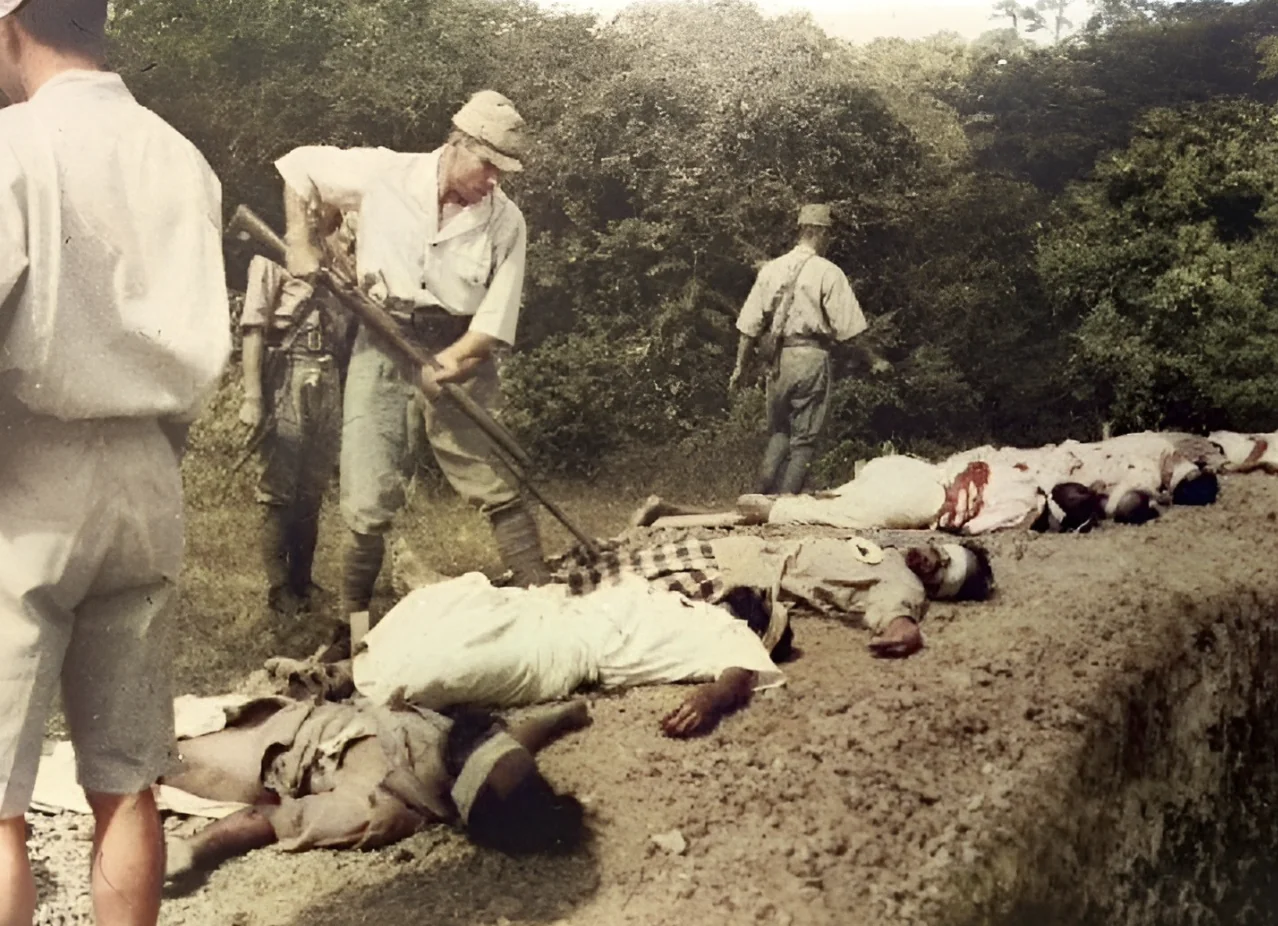
面对人民游击队打不垮、抓不着的殊死抵抗,日军第25军与臭名昭著的日本宪兵队(Kempeitai)在马来半岛和新加坡实施了人类历史上最为残暴的法西斯白色恐怖。在占领初期,日军便在新加坡与马来亚各大城镇发起惨绝人寰的“大肃清”(Operation Sook Ching),数以万计手无寸铁的华人平民被荷枪实弹驱赶至樟宜海滩与郊野沟壑,遭机枪成批扫射后推入乱葬坑。
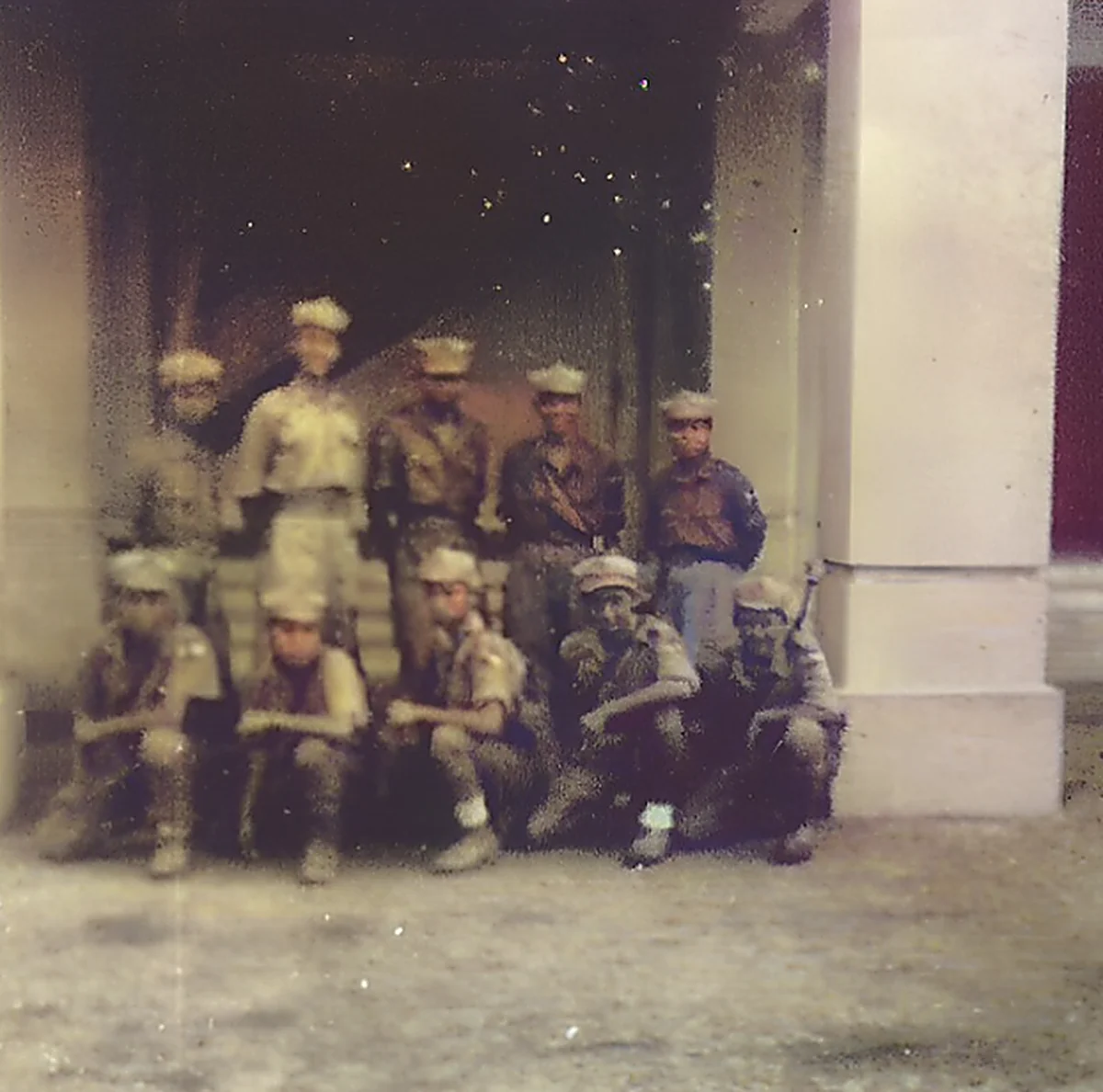
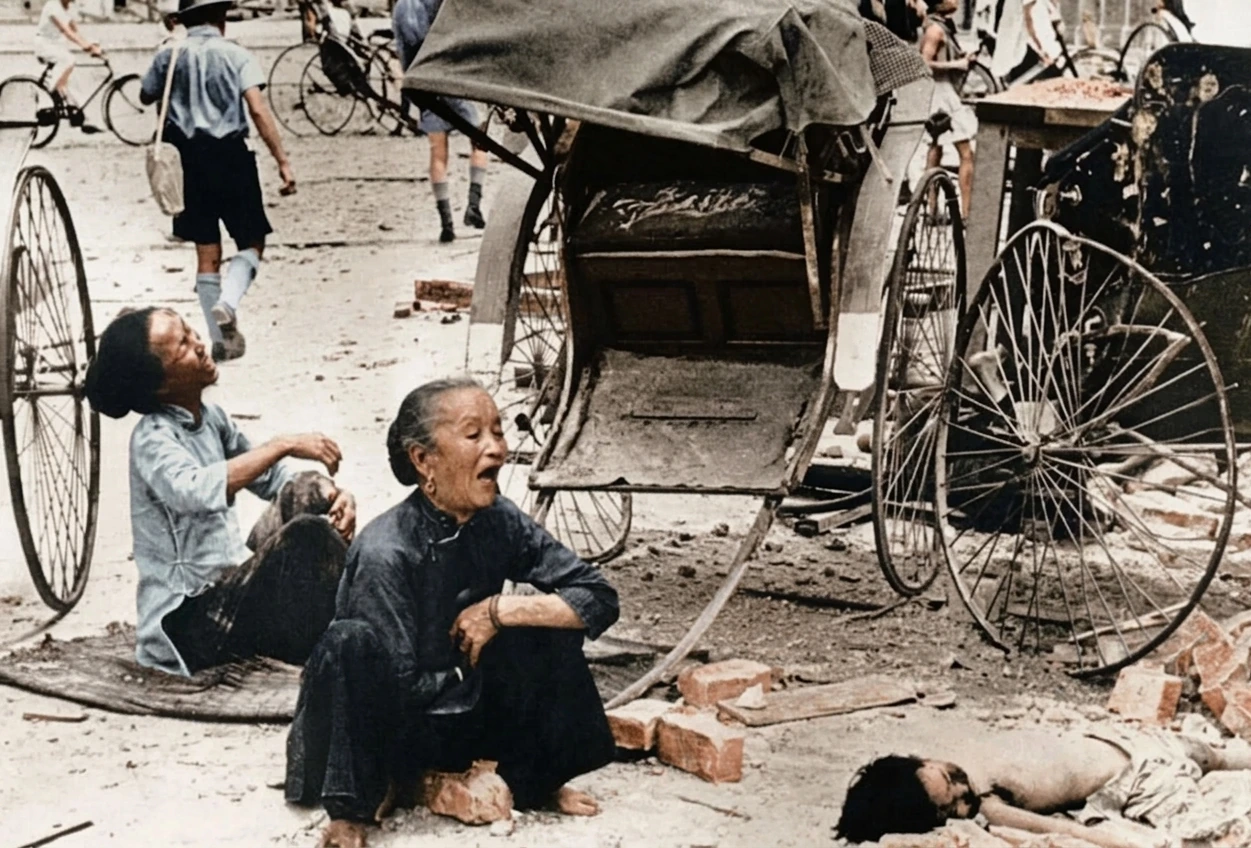
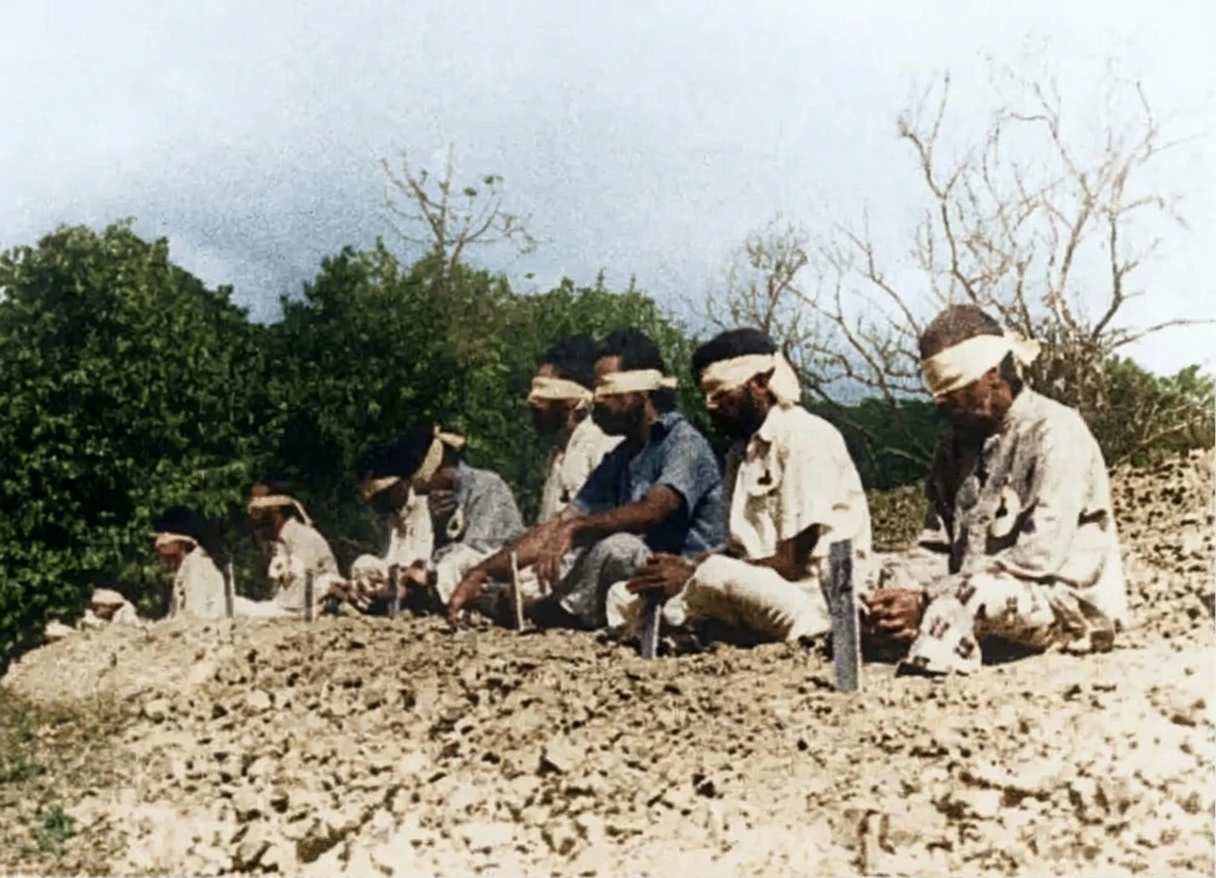
法西斯的屠刀甚至没有放过任何战俘与妇孺。被俘的英属印度军队锡克士兵因为坚决拒绝加入日伪“印度国民军”,在战俘营中遭到日军蒙眼捆绑、作为步靶残酷射击处决;在乡村与胶林,日军轰炸机滥施无差别轰炸,一位又一位马来亚母亲伏在炸毁的废墟瓦砾中哀恸痛哭。为了切断游击队的粮饷支援,日军对靠近森林的村庄实行灭绝人性的“烧光、杀光、抢光”三光政策,整座整座的村落化为焦土灰烬。
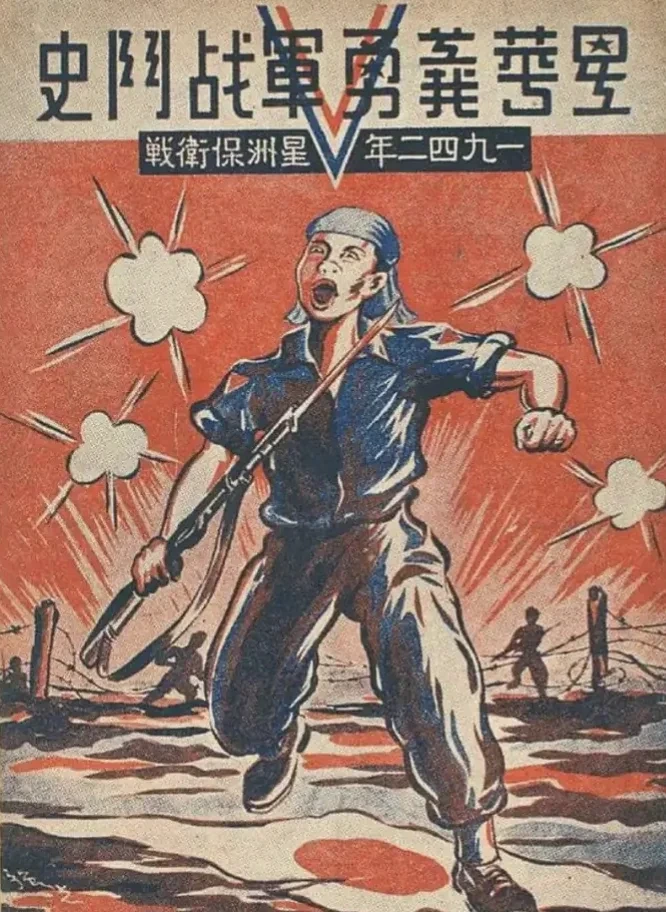
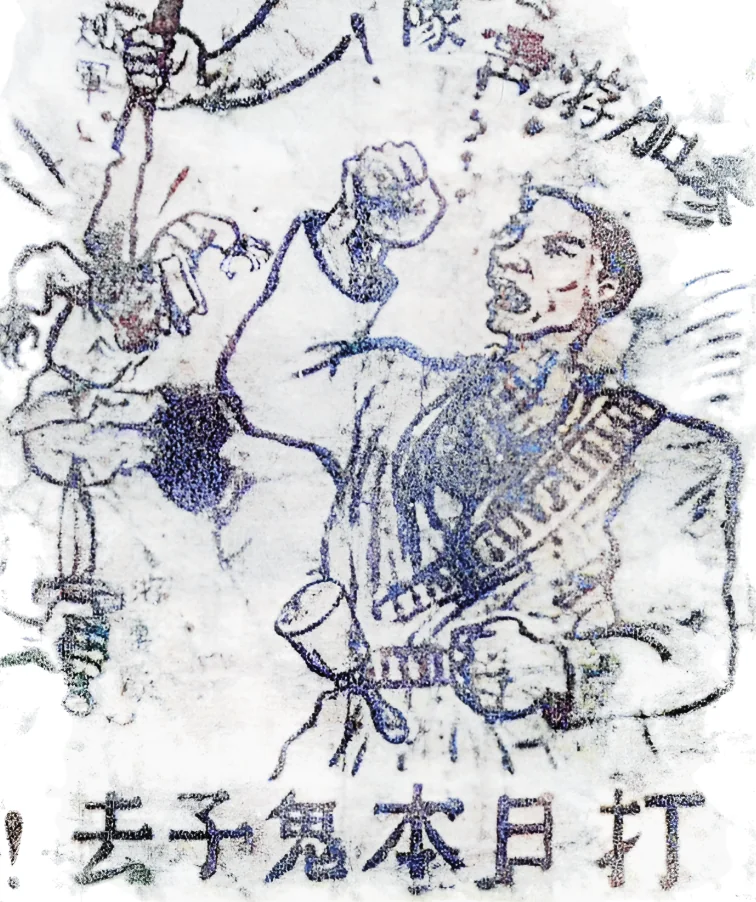
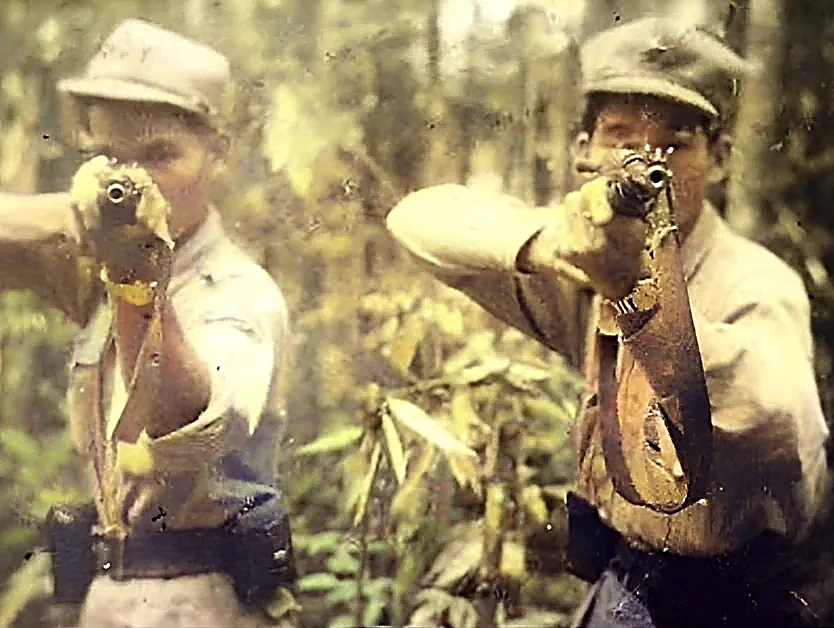
然而,法西斯的屠刀非但未能吓倒勇敢的马来亚人民,反而激起了更为炽烈的复仇火焰。无数亲历家破人亡的年轻儿女擦干眼泪,怀揣着父母弟妹的血海深仇奔赴丛林,将自己化作射向侵略者心脏的复仇子弹。正如当年抗日军海报上那紧握钢枪的铿锵誓词:“血债必须血偿,不赶走日本强盗,我们永不放下武器!”
Frustrated by an invisible enemy they could neither locate nor destroy, the 25th Army and the dreaded Kempeitai unleashed unspeakable terror. Across Singapore and Malaya, Japanese commanders launched Operation Sook Ching ('Purging through Cleansing'). Tens of thousands of young Chinese men and intellectuals were herded onto beaches, machine-gunned into trenches, and drowned in the straits.
Cruelty was applied without distinction. Captured Sikh soldiers of the British Indian Army who refused treason were blindfolded and shot execution-style as target practice. Village squares were bombed without warning, leaving mothers wailing over the shattered corpses of their children. Under brutal 'scorched-earth' directives, entire hamlets suspected of aiding partisans were put to the torch, their populations bayoneted and livestock butchered.
Yet terror bred an unyielding rage. Bereaved sons and daughters fled into the canopy, taking up the arms of their fallen kin. As commemorated on MPAJA propaganda posters: 'Blood debts must be repaid with blood; until the fascist beast is expelled, we shall never lay down our arms!'
面对人民游击队打不垮、抓不着的殊死抵抗,日军第25军与臭名昭著的日本宪兵队(Kempeitai)在马来半岛和新加坡实施了人类历史上最为残暴的法西斯白色恐怖。在占领初期,日军便在新加坡与马来亚各大城镇发起惨绝人寰的“大肃清”(Operation Sook Ching),数以万计手无寸铁的华人平民被荷枪实弹驱赶至樟宜海滩与郊野沟壑,遭机枪成批扫射后推入乱葬坑。
法西斯的屠刀甚至没有放过任何战俘与妇孺。被俘的英属印度军队锡克士兵因为坚决拒绝加入日伪“印度国民军”,在战俘营中遭到日军蒙眼捆绑、作为步靶残酷射击处决;在乡村与胶林,日军轰炸机滥施无差别轰炸,一位又一位马来亚母亲伏在炸毁的废墟瓦砾中哀恸痛哭。为了切断游击队的粮饷支援,日军对靠近森林的村庄实行灭绝人性的“烧光、杀光、抢光”三光政策,整座整座的村落化为焦土灰烬。
Frustrated by an invisible enemy they could neither locate nor destroy, the 25th Army and the dreaded Kempeitai unleashed unspeakable terror. Across Singapore and Malaya, Japanese commanders launched Operation Sook Ching ('Purging through Cleansing'). Tens of thousands of young Chinese men and intellectuals were herded onto beaches, machine-gunned into trenches, and drowned in the straits.
Cruelty was applied without distinction. Captured Sikh soldiers of the British Indian Army who refused treason were blindfolded and shot execution-style as target practice. Village squares were bombed without warning, leaving mothers wailing over the shattered corpses of their children. Under brutal 'scorched-earth' directives, entire hamlets suspected of aiding partisans were put to the torch, their populations bayoneted and livestock butchered.
然而,法西斯的屠刀非但未能吓倒勇敢的马来亚人民,反而激起了更为炽烈的复仇火焰。无数亲历家破人亡的年轻儿女擦干眼泪,怀揣着父母弟妹的血海深仇奔赴丛林,将自己化作射向侵略者心脏的复仇子弹。正如当年抗日军海报上那紧握钢枪的铿锵誓词:“血债必须血偿,不赶走日本强盗,我们永不放下武器!”
Yet terror bred an unyielding rage. Bereaved sons and daughters fled into the canopy, taking up the arms of their fallen kin. As commemorated on MPAJA propaganda posters: 'Blood debts must be repaid with blood; until the fascist beast is expelled, we shall never lay down our arms!'
第五章:政治航标与丛林会盟:1943年《抗日九大纲领》与英国136部队《美罗协议》(1943)
Chapter 5: Political Beacon and Jungle Alliance: The 1943 Nine-Point Program and the Bukit Bidor Agreement with Force 136 (1943)
1941年底英军在日寇铁蹄前仓皇溃降,将马来亚数百万各族同胞遗弃于血泊之中。唯有马来亚共产党挺身而出,率领各族觉醒儿女深入热带雨林,建立马来亚人民抗日军(MPAJA),在极其艰难残酷的环境下独立苦撑了整整两年的敌后游击战争。随着世界反法西斯战争进入战略反攻阶段,盟军在太平洋战场与缅甸战场展开全面反攻,深居敌后崇山峻岭腹地、牢牢控制半岛内陆命脉的人民抗日军,展现出了令盟军最高统帅部瞩目的战略价值。
面对国际反法西斯大局的深刻变化与民族危亡的历史关头,马共中央于1943年2月20日召开中央执委会第三次会议,深入总结了开战以来的武装斗争经验,正式通过了由蔡克明同志起草的《抗日九大纲领》宣言与决议。《抗日九大纲领》旗帜鲜明地确立了“驱逐日本法西斯出马来亚,建立马来亚民主共和国”及联合国际反法西斯盟军的总路线,从政治和思想上为全马抗日军民指明了前进航向,更为随后与同盟国展开平等战时军事合作奠定了最高政治基石。
1943年12月31日,马共代表总书记张红(莱特化名)以及作为马共谈判代表之一兼136部队联络官的陈平,同盟军东南亚最高司令部136部队(Force 136)指挥官戴维斯(John Davis)在霹雳美罗附近的抗日军第5独立队布兰丹营地(Blantan Camp,亦译不兰丹营地)正式达成了载入战史的《美罗协议》(Bidor Agreement,由张红代表马共正式签署,陈平全程参与会谈并在场见证)。协议明确规定:马来亚人民抗日军配合盟军对日作战并负责维护战后治安,盟军则向抗日军提供武器、弹药、资金与医疗援助。这一平等军事同盟的缔结,在国际法与军事事实上确立了马共领导的抗日武装作为世界反法西斯同盟军正式战略伙伴的历史地位。
In late 1941, British forces collapsed before the Japanese blitzkrieg, abandoning millions of Malayan citizens to fascist terror. Only the Communist Party of Malaya (CPM) rallied the oppressed masses into the Malayan People's Anti-Japanese Army (MPAJA), waging a heroic, solitary guerrilla campaign deep within the equatorial rainforest for two grueling years. As the tide of World War II shifted toward global Allied counter-offensives across Burma and the Pacific, the MPAJA—dominating the peninsula's mountainous spine—emerged as a strategic force indispensable to Allied command.
Grasping this historic turning point, the CPM Central Executive Committee convened its Third Plenary Session on 20 February 1943, officially adopting the landmark "Nine-Point Anti-Japanese Program" drafted by Comrade Cai Keming. This charter laid down the uncompromising political line of uniting all nationalities, driving out Japanese imperialism, establishing a Malayan Democratic Republic, and forging strategic cooperation with international anti-fascist allies. It stood as the sovereign ideological compass guiding the Malayan resistance and provided the bedrock for diplomatic parity in subsequent wartime negotiations.
On December 31, 1943, CPM representative Secretary-General Chang Hong (Lai Te's alias), together with Chin Peng as CPM negotiating representative and Force 136 liaison officer, concluded the historic Bidor Agreement with Allied Force 136 commander Major John Davis at the MPAJA 5th Independent Regiment's Blantan Camp near Bidor, Perak (formally signed by Chang Hong on behalf of the CPM, with Chin Peng participating throughout the talks). Under this accord, the MPAJA agreed to cooperate with Allied military operations against Japan and maintain postwar order, while the Allies pledged weapons, ammunition, funds, and medical supplies. This military alliance formally established the CPM-led resistance as a recognized strategic partner of the Allied powers in the global anti-fascist war.
第六章:空投密林与反攻总动员:公开队与秘密队的战略整编与军容壮大(1944–1945)
Chapter 6: Airdrops in the Canopy and Total Mobilisation: Structural Reorganisation and Military Ascendancy (1944–1945)
随着《美罗协议》的落实,皇家空军“解放者”(Liberator)重型轰炸机突破日军防空网,向深山密林空投了数以千计的斯登冲锋枪、布伦轻机枪、高能炸药与远程通信设备。抗日军设立了专门的军事技术训练班与密码通信组,原本赤足穿行于泥沼的矿工、胶工战士们,在极其艰苦的环境中展现出惊人的学习力,迅速掌握了现代步兵武器与丛林爆破战术。
1944年10月,基于对战局演进的战略前瞻,马共中央与独立队高层果断作出重大战略部署:在各州成立行动委员会实行统一指挥,将抗日军科学划分为随时准备出击的“公开主力队”与深扎群众血肉的“秘密潜伏队”,并将抗日地下群众网络重组为坚固的“马来亚民族解放同盟”,既厉兵秣马配合盟军总反攻,又高度警惕并防范帝国主义战后企图卷土重来的殖民复辟阴谋。
在整整三年零八个月的殊死搏杀中,马来亚人民抗日军从最初缺乏实战经验的民间义勇军,迅速百炼成钢,发展为令侵略者闻风丧胆的钢铁游击军团。全军纵横驰骋于半岛千里崇山峻岭,累计同日伪军进行大小战斗340余次,击毙击伤日寇及伪军警5,500余人,有力地钳制并消耗了日军主力。至1945年抗战胜利前夕,全党党员激增至近8,000人,抗日军八支独立队主力战员突破10,000人,受马共领导的群众自卫民兵更达数万之众,以马共与人民抗日军不可磨灭的铁血牺牲与卓越军威,真正确立了决定马来亚民族前途命运的主导力量地位。
As the Bukit Bidor Agreement took effect, RAF Consolidated B-24 Liberator heavy bombers penetrated enemy airspace to conduct extensive parachute drops across remote jungle drop-zones, delivering thousands of Sten submachine guns, Bren light machine guns, plastic explosives, and advanced field transceivers. Within rainforest encampments, technical military training classes were swiftly organized; estate tappers and tin miners rapidly mastered modern automatic weaponry, jungle demolition tactics, and long-range telegraphy.
In October 1944, with strategic foresight into the evolving war and postwar landscape, the CPM leadership and guerrilla high command enacted a decisive structural reorganisation: establishing unified State Action Committees, dividing combat forces into 'Open Regular Units' (deployed for mobile warfare) and 'Clandestine Reserve Units' (embedded within rural communities), and reforming mass underground bodies into the Malayan National Liberation League. This twin-track strategy maximized military preparedness for the Allied invasion while preserving a clandestine revolutionary vanguard to resist post-war colonial resurgence.
Through three years and eight months of continuous, bloody warfare, the MPAJA evolved from an inexperienced volunteer militia into a formidable, iron-disciplined guerrilla army. Traversing the peninsula's dense mountain ranges, the Partisans engaged Japanese imperial forces and collaborationist constabularies in over 340 pitched battles, inflicting more than 5,500 casualties and crippling Japanese exploitation of Malaya's vital natural resources. By the eve of victory in August 1945, CPM party membership approached 8,000, the MPAJA's eight independent combat regiments stood over 10,000 strong, and armed popular self-defense militias mobilized in the tens of thousands. Through immense sacrifice and tactical brilliance, the Partisan Army stood as the undisputed guardian of national dignity and the paramount political-military force shaping Malaya's destiny.
在日军占领马来亚最黑暗的三年零八个月里,马来亚人民抗日军在敌后共进行了340余次大小战斗,毙伤日伪军5,500余人。这支深植于各族民众之中的丛林武装,是马来半岛唯一自始至终坚持成建制武装抗日的反法西斯中流砥柱。Throughout the darkest three years and eight months of Japanese occupation, the Malayan People's Anti-Japanese Army fought more than 340 engagements behind enemy lines, inflicting over 5,500 casualties on Japanese and collaborationist forces, standing as the sole organized armed resistance force on the Malayan Peninsula.— 马来亚人民抗日军总司令部战绩公报及历史档案纪要(1945年) | MPAJA General Headquarters Combat Summary and Historical Record (1945)