第25集:庄严而罕见的和平:1989年《合艾和平协议》签署大典与历史定评
A Solemn and Rare Peace: The December 2, 1989 Haadyai Peace Accord Signing Ceremony and Historical Assessment
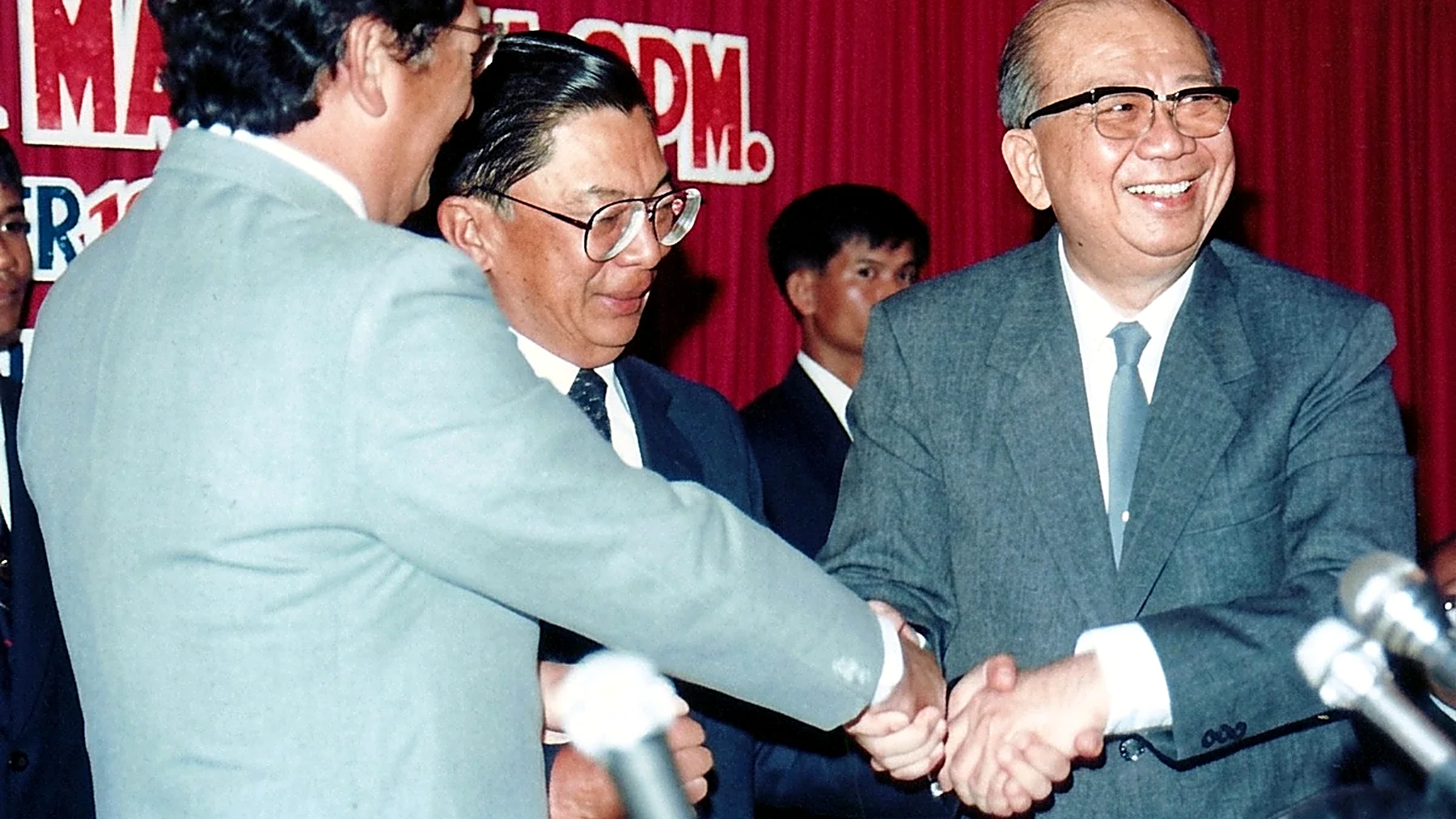
1989年11月25日,马来亚共产党第十一届中央委员会第十三次扩大全体会议在泰马边境根据地一致批准签署《合艾和平协议》。1989年12月2日,在泰南合艾市蠡园酒店,马共中央总书记陈平、中央主席阿都拉·西迪、中央委员拉昔·迈丁同马来西亚政府三位全权代表(拿督旺西迪、丹斯里哈欣·莫哈末·阿里上将、丹斯里莫哈末·哈尼夫·奥马)及泰王国政府四位全权代表(差瓦立·永猜裕上将、阿内·西提巴萨、沙旺·提拉沙瓦警察上将、育塔纳·央潘杜中将)共同签署《合艾和平协议》,正式结束了长达四十一年零五个月的武装冲突。这是一份拒绝任何投降字眼、不解散马共政党组织、由马共自行销毁武器并切实保障返马公民权利与留泰四个朱拉蓬公主发展村土地国籍的对等和平条约,在世界现代冲突解决史上树起了庄严丰碑。
On November 25, 1989, the 13th Enlarged Plenary Session of the 11th CPM Central Committee unanimously ratified the decision to sign the Haadyai Peace Accord. On December 2, 1989, at the Lee Gardens Hotel in Hat Yai, CPM General Secretary Chin Peng, Central Committee Chairman Abdullah C.D., and Central Committee Member Rashid Maidin joined three Malaysian plenipotentiaries (Dato' Wan Sidek, Gen. Tan Sri Hashim Mohd. Ali, and Tan Sri Mohd. Haniff Omar) and four Thai plenipotentiaries (Gen. Chavalit Yongchaiyudh, Anek Sitthiprasart, Pol. Gen. Sawaeng Thirasawat, and Lt. Gen. Yoodhana Yamphundu) in signing the Haadyai Peace Accord, formally ending forty-one years and five months of armed conflict. Rejecting any language of surrender, preserving the political existence of the CPM, providing for the self-destruction of weapons by the CPM and its armed units, and guaranteeing constitutional rights for returnees to Malaysia alongside land and eventual citizenship in four Chulabhorn Development Villages in southern Thailand, the accord stands as a landmark of peace with dignity.
第一章:硝烟淡去存浩气,党志昭彰励来人:十一届十三中全会与合艾协议的法理构建
Chapter 1: The Guns Fall Silent, The Flame Unquenched: The 13th Enlarged Plenum and Legal Architecture of the Haadyai Accord
1989年11月4日普吉岛第五轮三方会谈达成全面共识后,和平进程随即转入严密的法律定稿与党内最高宪制审议阶段。11月13日至21日,由马来西亚政府、泰王国政府与马来亚共产党三方代表及法律翻译专家组成的和平协议起草委员会,对全套和平文献进行了历时九天的逐字推敲与多语对勘。由于《合艾和平协议》不仅包含公开发表的三方《联合公报》与两份《和平协议》主件,还涵盖极具操作细节的两份《行政安排备忘录》(Memorandum of Understanding, MOU),且必须同时具备中文、英文、马来文与泰文四种正式文本并具同等法律效力,马共代表吴一石、黄胜等人对每一个核心法律概念均进行了严格把关。
在四语文本对勘中,马共起草代表成功确保了四个语种版本在政治定性上的完全一致:主协议英文版定名为《Agreement Between the Government of Malaysia and the Communist Party of Malaya to Terminate Hostilities》(《马来西亚政府和马来亚共产党关于终止敌对活动的协议》),通篇采用对等的国际条约体例;在武器处理上,严格使用自行销毁(destroy)而非缴械上交(surrender or hand over);在部队安置上,明确区分返回马来西亚定居与留居泰国定居两套平行的法律与生活保障机制。
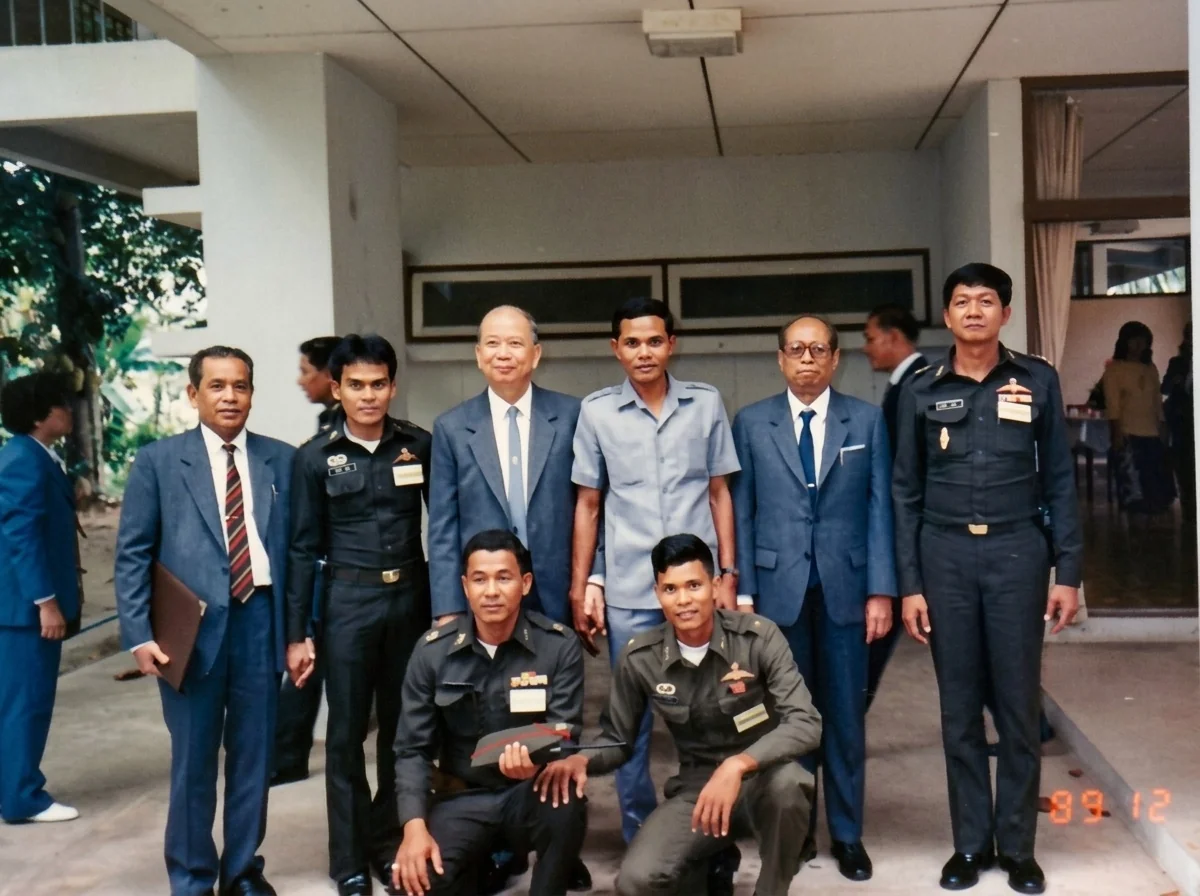
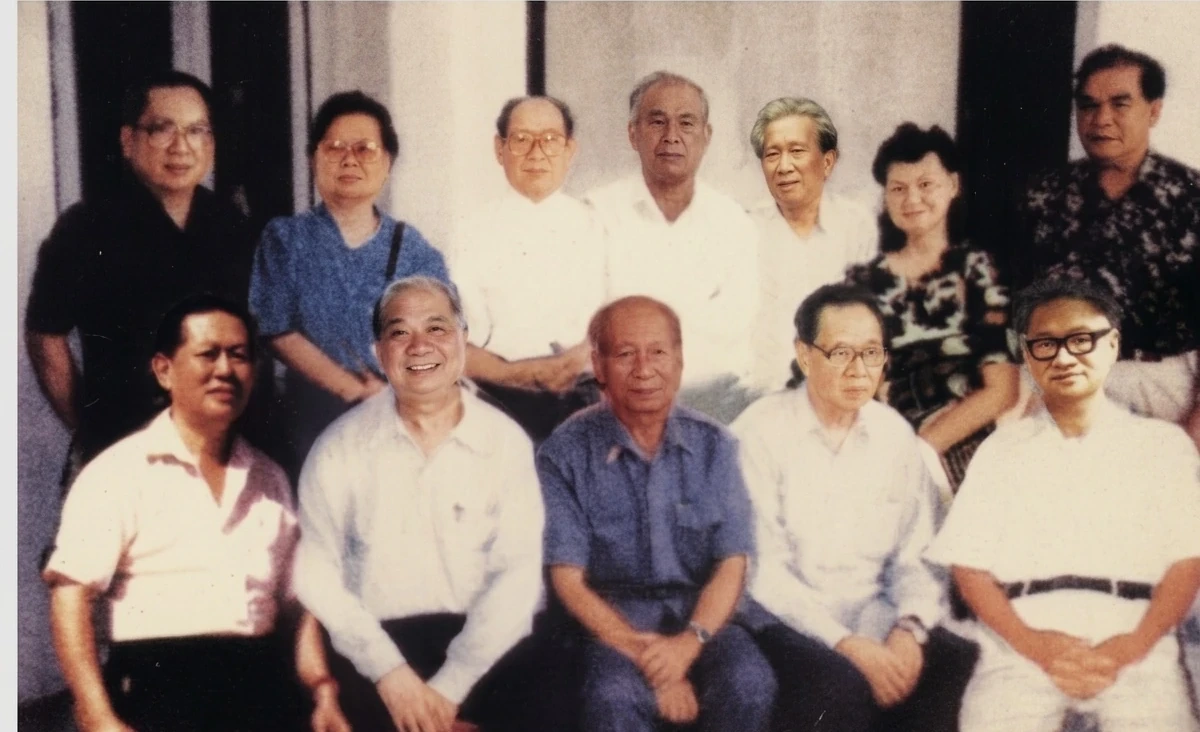
1989年11月23日,完成五轮普吉岛会谈与起草委员会工作的马共代表团团长吴一石(阿石)与顾问陈再润(伍瑞霭,代号阿焰)等搭乘泰军直升机飞返泰马边境中央营地,在“热烈欢迎敬爱的领导同志暨光荣的代表团(HGT. ALUKAN K. PIMPINAN YG TERCINTA DAN PERWAKILAN KAMI)”中马双语横幅下受到驻营领导与指战员夹道欢迎。随后,马来亚共产党第十一届中央委员会第十三次扩大全体会议(简称“十三扩”)在边境中心营地隆重召开,副总书记单汝洪(阿成)、中央政治局委员吴一石(阿石)、老谢(李安东,原名李长镇)以及陈再润(伍瑞霭)、陈立发(阿和)等在营中央领导人与各支队代表出席会议(注:陈平、阿都拉·西迪、拉昔·迈丁等当时留驻泰南城区筹备签约事宜,未出现在本片丛林营地画面中)。吴一石等在会上作了关于国内外形势演变与五轮普吉岛谈判经过的全面报告,逐条阐明了两份《和平协议》与《行政安排备忘录》的法理保障与安置细则。
根据协议与备忘录规定:凡选择返回马来西亚定居的马来西亚籍或原马来亚籍马共成员,马方承诺不援引《内安法令》(ISA)加以拘留审讯,保障其享有联邦宪法赋予公民的各项自由与参政权利,并由马来西亚政府发放总额8,000令吉的财政补助(含入境时先行发放的3,000令吉一次性安家补助,以及按月发放300令吉、为期三年的生活津贴)。十三中全会经过充分民主讨论,一致表决通过了批准签署《合艾和平协议》的历史性决议,完成了马共党内最高宪制授权程序。
Following the full consensus reached at the Fifth Round in Phuket on November 4, 1989, the peace process entered the critical stage of legal finalization and supreme party ratification. From November 13 to 21, 1989, the Tripartite Peace Agreement Drafting Committee - comprising delegates and legal-linguistic experts from Malaysia, Thailand, and the CPM - worked for nine days to verify the complete set of peace instruments word by word. Because the Haadyai Peace Accord encompassed the public Tripartite Joint Communiqué, two main Peace Agreements, and two detailed Administrative Memoranda of Understanding (MOU) - all prepared in Chinese, English, Malay, and Thai versions of equal authenticity - CPM representatives Wu Yi Shi and Huang Sheng scrutinized every legal term.
Across all four languages, the CPM drafting team ensured strict consistency in political and legal characterization. The main accord with Kuala Lumpur was titled the 'Agreement Between the Government of Malaysia and the Communist Party of Malaya to Terminate Hostilities,' drafted in the format of an equal bilateral treaty. On weaponry, the text strictly stipulated self-destruction ('destroy') rather than 'surrender' or 'hand over'; on personnel settlement, it codified parallel legal and livelihood frameworks for members returning to Malaysia and those remaining in Thailand.
On November 23, 1989, having completed the five rounds of Phuket talks and the Drafting Committee's work, CPM Delegation Head Wu Yi Shi (Ah Shi) and Advisor Chen Zairun (Wu Rui Ai / Ah Yan) flew by Royal Thai Army helicopter back to the Central Camp on the Thai-Malaysian border, where they were warmly welcomed beneath the bilingual banner 'Warmly Welcome Beloved Leading Comrades and Our Glorious Delegation (Hgt. Alukan K. Pimpinan Yg Tercinta dan Perwakilan Kami)'. The 13th Enlarged Plenary Session of the 11th CPM Central Committee subsequently convened at the central border camp, attended by Deputy General Secretary Shan Ruhong (Ah Cheng), Politburo Members Wu Yi Shi (Ah Shi) and Lao Xie (Lee An-tung, born Lee Chang Chun), Central Committee Members Chen Zairun (Wu Rui Ai) and Chen Lifa (Ah He), and regiment representatives (while Chin Peng, Abdullah C.D., and Rashid Maidin remained in Hat Yai/Phuket preparing for the signing ceremony and do not appear in the camp footage). Wu Yi Shi delivered a comprehensive report on the five rounds of Phuket negotiations, explaining each clause of the Peace Agreements and Administrative MOUs.
Under the Malaysia-CPM Administrative MOU, CPM members of Malaysian or Malayan origin choosing to return to Malaysia were guaranteed complete exemption from detention or interrogation under the Internal Security Act (ISA), full enjoyment of constitutional rights under the Federal Constitution, and a financial assistance package totaling RM 8,000 (including an initial lump-sum resettlement grant of RM 3,000 upon return and a monthly living allowance of RM 300 over a three-year period). Following democratic deliberation, the 13th Enlarged Plenum unanimously ratified the resolution to sign the Haadyai Peace Accord, completing the party's supreme constitutional authorization.
1989年11月4日普吉岛第五轮三方会谈达成全面共识后,和平进程随即转入严密的法律定稿与党内最高宪制审议阶段。11月13日至21日,由马来西亚政府、泰王国政府与马来亚共产党三方代表及法律翻译专家组成的和平协议起草委员会,对全套和平文献进行了历时九天的逐字推敲与多语对勘。由于《合艾和平协议》不仅包含公开发表的三方《联合公报》与两份《和平协议》主件,还涵盖极具操作细节的两份《行政安排备忘录》(Memorandum of Understanding, MOU),且必须同时具备中文、英文、马来文与泰文四种正式文本并具同等法律效力,马共代表吴一石、黄胜等人对每一个核心法律概念均进行了严格把关。
在四语文本对勘中,马共起草代表成功确保了四个语种版本在政治定性上的完全一致:主协议英文版定名为《Agreement Between the Government of Malaysia and the Communist Party of Malaya to Terminate Hostilities》(《马来西亚政府和马来亚共产党关于终止敌对活动的协议》),通篇采用对等的国际条约体例;在武器处理上,严格使用自行销毁(destroy)而非缴械上交(surrender or hand over);在部队安置上,明确区分返回马来西亚定居与留居泰国定居两套平行的法律与生活保障机制。
Following the full consensus reached at the Fifth Round in Phuket on November 4, 1989, the peace process entered the critical stage of legal finalization and supreme party ratification. From November 13 to 21, 1989, the Tripartite Peace Agreement Drafting Committee - comprising delegates and legal-linguistic experts from Malaysia, Thailand, and the CPM - worked for nine days to verify the complete set of peace instruments word by word. Because the Haadyai Peace Accord encompassed the public Tripartite Joint Communiqué, two main Peace Agreements, and two detailed Administrative Memoranda of Understanding (MOU) - all prepared in Chinese, English, Malay, and Thai versions of equal authenticity - CPM representatives Wu Yi Shi and Huang Sheng scrutinized every legal term.
Across all four languages, the CPM drafting team ensured strict consistency in political and legal characterization. The main accord with Kuala Lumpur was titled the 'Agreement Between the Government of Malaysia and the Communist Party of Malaya to Terminate Hostilities,' drafted in the format of an equal bilateral treaty. On weaponry, the text strictly stipulated self-destruction ('destroy') rather than 'surrender' or 'hand over'; on personnel settlement, it codified parallel legal and livelihood frameworks for members returning to Malaysia and those remaining in Thailand.
全体会议经过深入讨论,一致批准马共代表团在五轮三方会谈中达成的全部协议文本,决定由陈平、阿都拉·西迪、拉昔·迈丁代表马来亚共产党中央委员会正式签署《合艾和平协议》,实现光荣、体面、有尊严的和平。Following thorough deliberation, the Plenary Session unanimously ratifies all agreement texts reached by the CPM Delegation across the five rounds of tripartite talks, and resolves that Chin Peng, Abdullah C.D., and Rashid Maidin shall formally sign the Haadyai Peace Accord on behalf of the Central Committee of the Communist Party of Malaya, achieving an honorable, dignified, and just peace.— 马来亚共产党第十一届中央委员会第十三次扩大全体会议《关于停止武装斗争的决议》(1989年11月25日) | Resolution on the Cessation of Armed Struggle, 13th Enlarged Plenary Session of the 11th CPM Central Committee (November 25, 1989)
1989年11月23日,完成五轮普吉岛会谈与起草委员会工作的马共代表团团长吴一石(阿石)与顾问陈再润(伍瑞霭,代号阿焰)等搭乘泰军直升机飞返泰马边境中央营地,在“热烈欢迎敬爱的领导同志暨光荣的代表团(HGT. ALUKAN K. PIMPINAN YG TERCINTA DAN PERWAKILAN KAMI)”中马双语横幅下受到驻营领导与指战员夹道欢迎。随后,马来亚共产党第十一届中央委员会第十三次扩大全体会议(简称“十三扩”)在边境中心营地隆重召开,副总书记单汝洪(阿成)、中央政治局委员吴一石(阿石)、老谢(李安东,原名李长镇)以及陈再润(伍瑞霭)、陈立发(阿和)等在营中央领导人与各支队代表出席会议(注:陈平、阿都拉·西迪、拉昔·迈丁等当时留驻泰南城区筹备签约事宜,未出现在本片丛林营地画面中)。吴一石等在会上作了关于国内外形势演变与五轮普吉岛谈判经过的全面报告,逐条阐明了两份《和平协议》与《行政安排备忘录》的法理保障与安置细则。
根据协议与备忘录规定:凡选择返回马来西亚定居的马来西亚籍或原马来亚籍马共成员,马方承诺不援引《内安法令》(ISA)加以拘留审讯,保障其享有联邦宪法赋予公民的各项自由与参政权利,并由马来西亚政府发放总额8,000令吉的财政补助(含入境时先行发放的3,000令吉一次性安家补助,以及按月发放300令吉、为期三年的生活津贴)。十三中全会经过充分民主讨论,一致表决通过了批准签署《合艾和平协议》的历史性决议,完成了马共党内最高宪制授权程序。
On November 23, 1989, having completed the five rounds of Phuket talks and the Drafting Committee's work, CPM Delegation Head Wu Yi Shi (Ah Shi) and Advisor Chen Zairun (Wu Rui Ai / Ah Yan) flew by Royal Thai Army helicopter back to the Central Camp on the Thai-Malaysian border, where they were warmly welcomed beneath the bilingual banner 'Warmly Welcome Beloved Leading Comrades and Our Glorious Delegation (Hgt. Alukan K. Pimpinan Yg Tercinta dan Perwakilan Kami)'. The 13th Enlarged Plenary Session of the 11th CPM Central Committee subsequently convened at the central border camp, attended by Deputy General Secretary Shan Ruhong (Ah Cheng), Politburo Members Wu Yi Shi (Ah Shi) and Lao Xie (Lee An-tung, born Lee Chang Chun), Central Committee Members Chen Zairun (Wu Rui Ai) and Chen Lifa (Ah He), and regiment representatives (while Chin Peng, Abdullah C.D., and Rashid Maidin remained in Hat Yai/Phuket preparing for the signing ceremony and do not appear in the camp footage). Wu Yi Shi delivered a comprehensive report on the five rounds of Phuket negotiations, explaining each clause of the Peace Agreements and Administrative MOUs.
Under the Malaysia-CPM Administrative MOU, CPM members of Malaysian or Malayan origin choosing to return to Malaysia were guaranteed complete exemption from detention or interrogation under the Internal Security Act (ISA), full enjoyment of constitutional rights under the Federal Constitution, and a financial assistance package totaling RM 8,000 (including an initial lump-sum resettlement grant of RM 3,000 upon return and a monthly living allowance of RM 300 over a three-year period). Following democratic deliberation, the 13th Enlarged Plenum unanimously ratified the resolution to sign the Haadyai Peace Accord, completing the party's supreme constitutional authorization.
第二章:1989年12月2日合艾蠡园酒店签署大典:十位全权代表与陈平历史演说
Chapter 2: The December 2, 1989 Signing Ceremony at Lee Gardens Hotel: The Ten Signatories and Chin Peng's Address
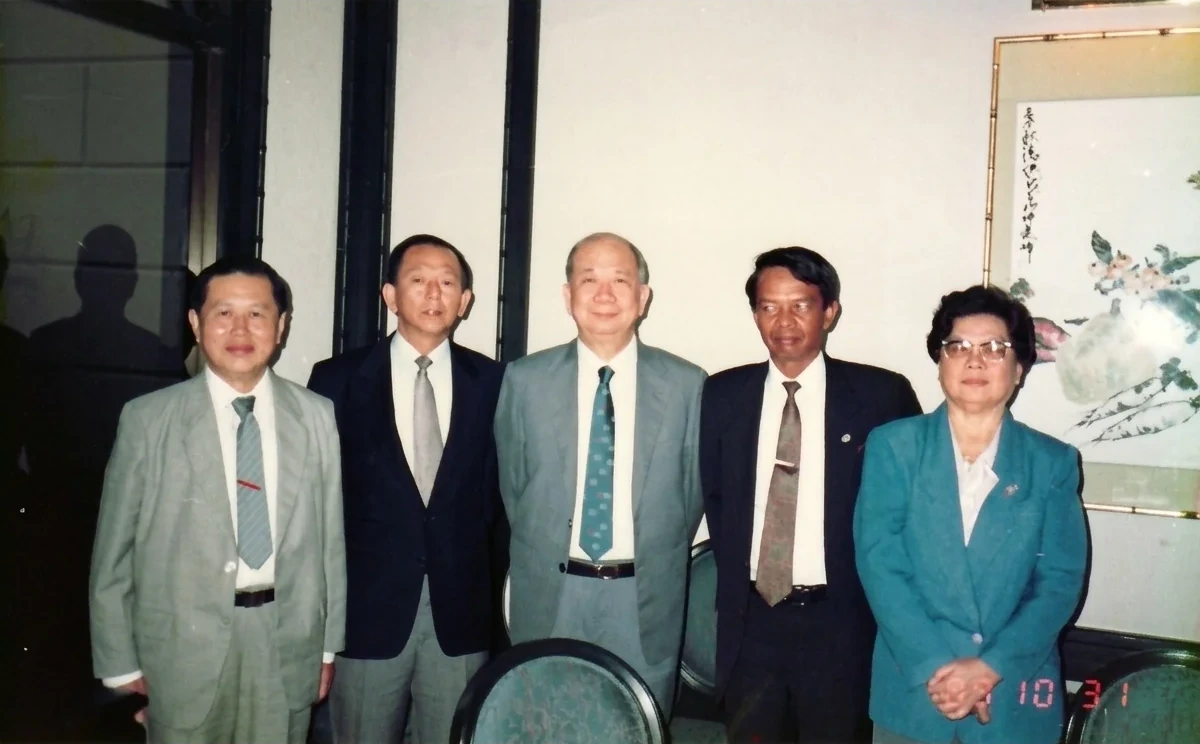
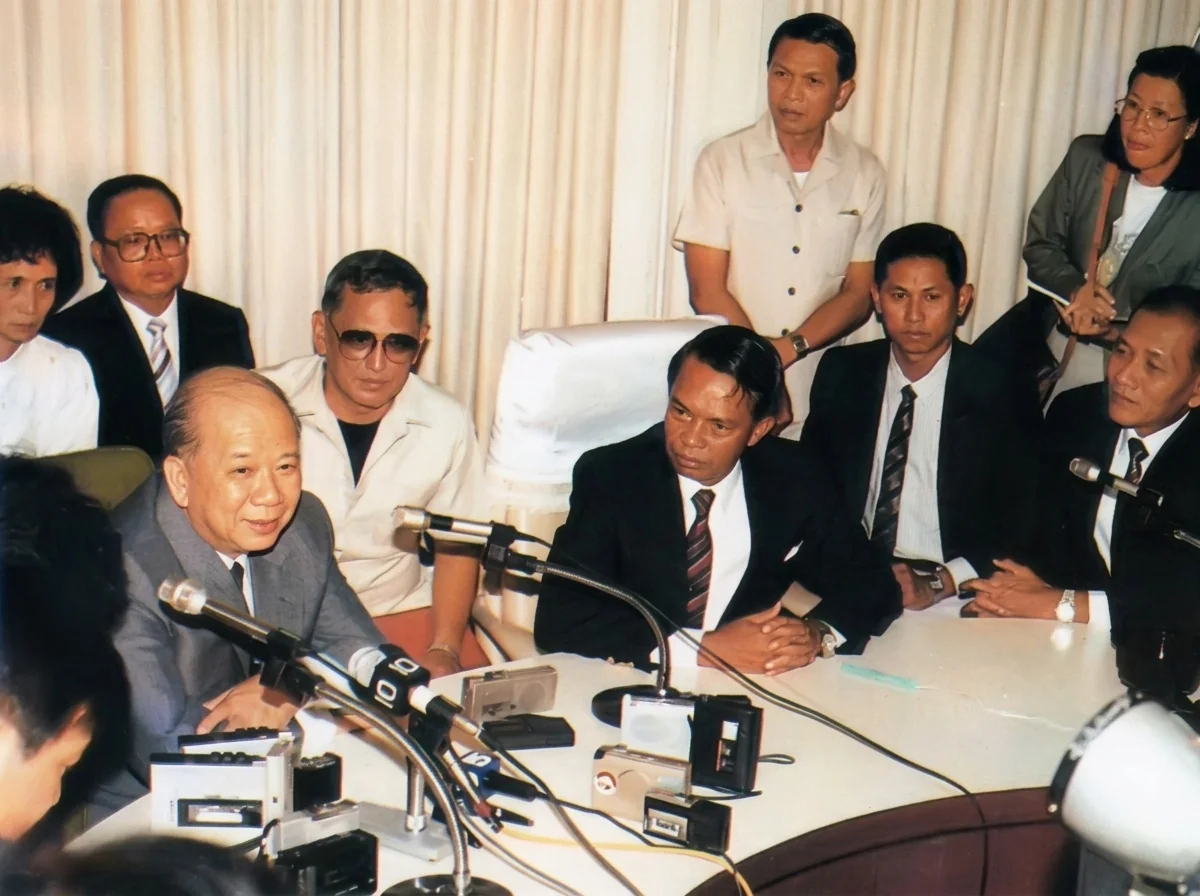
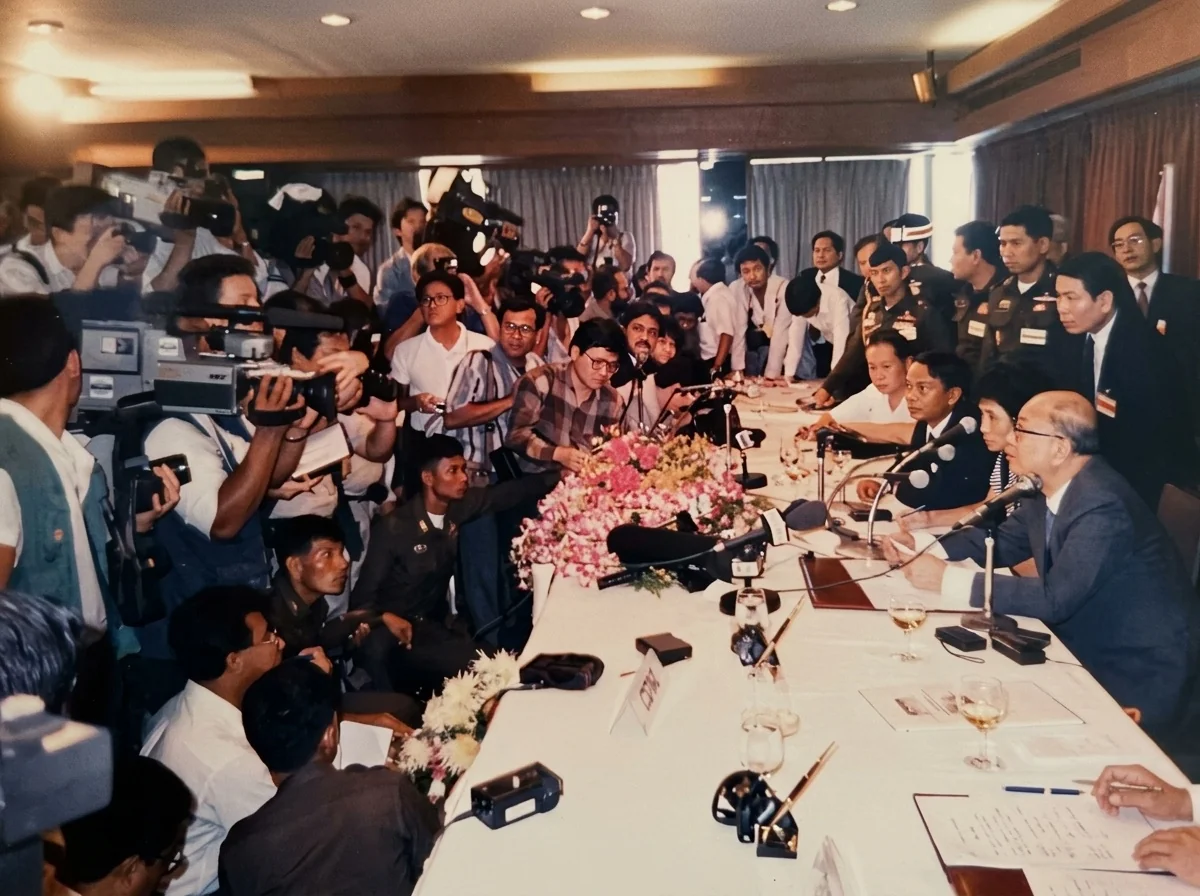
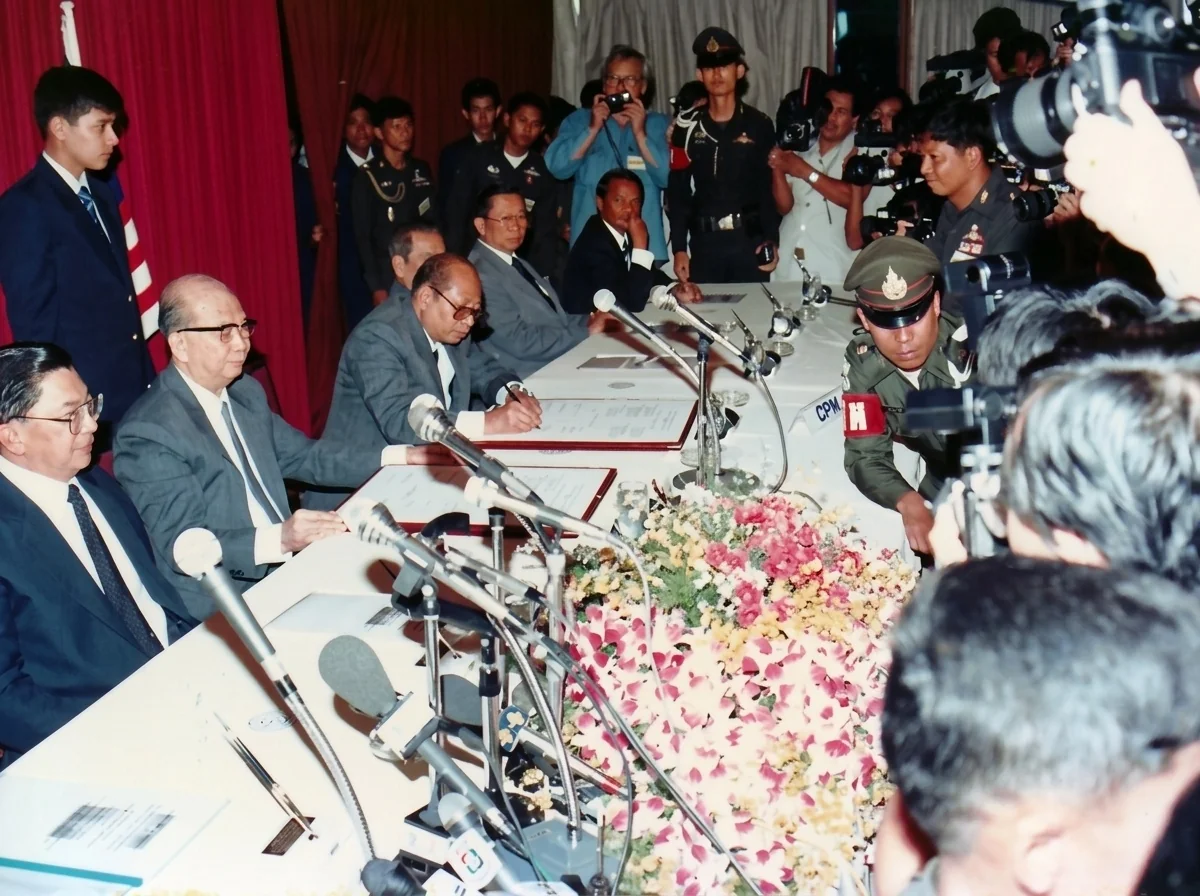
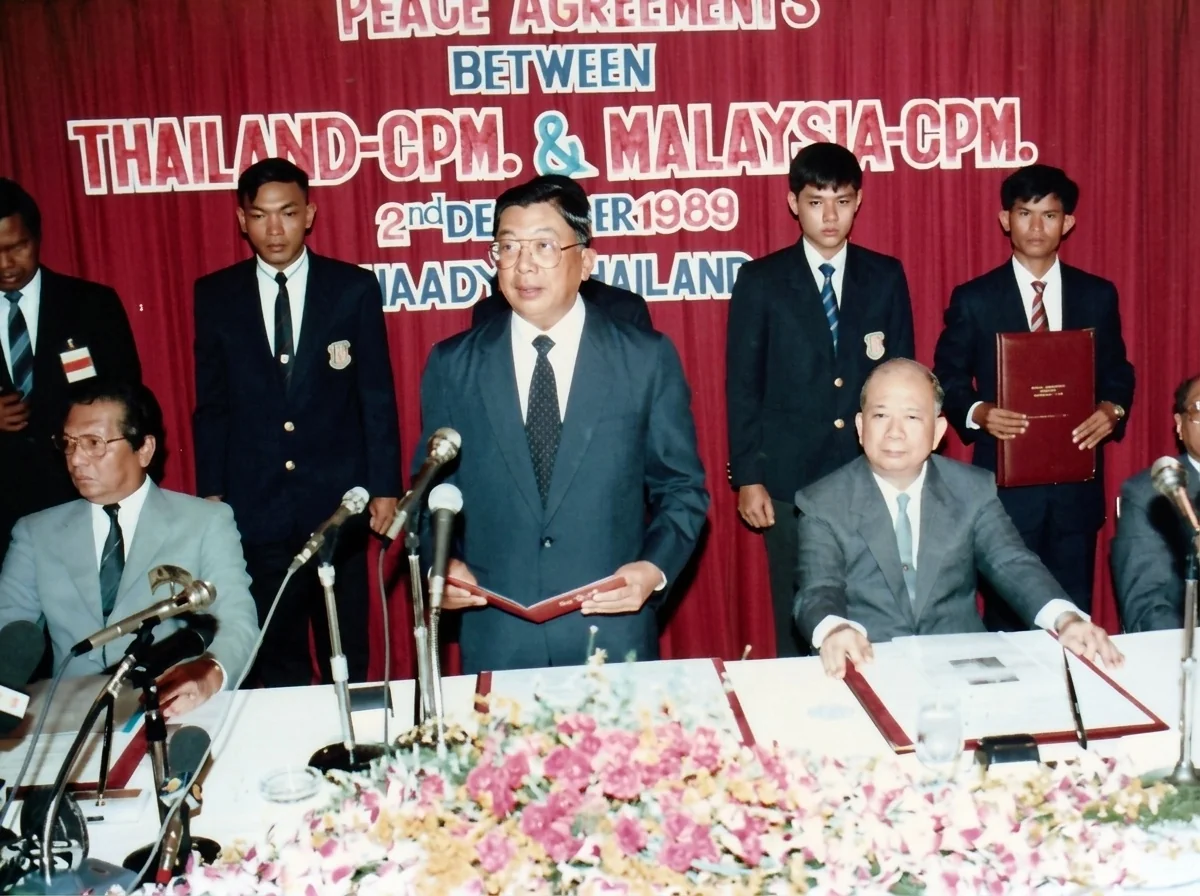
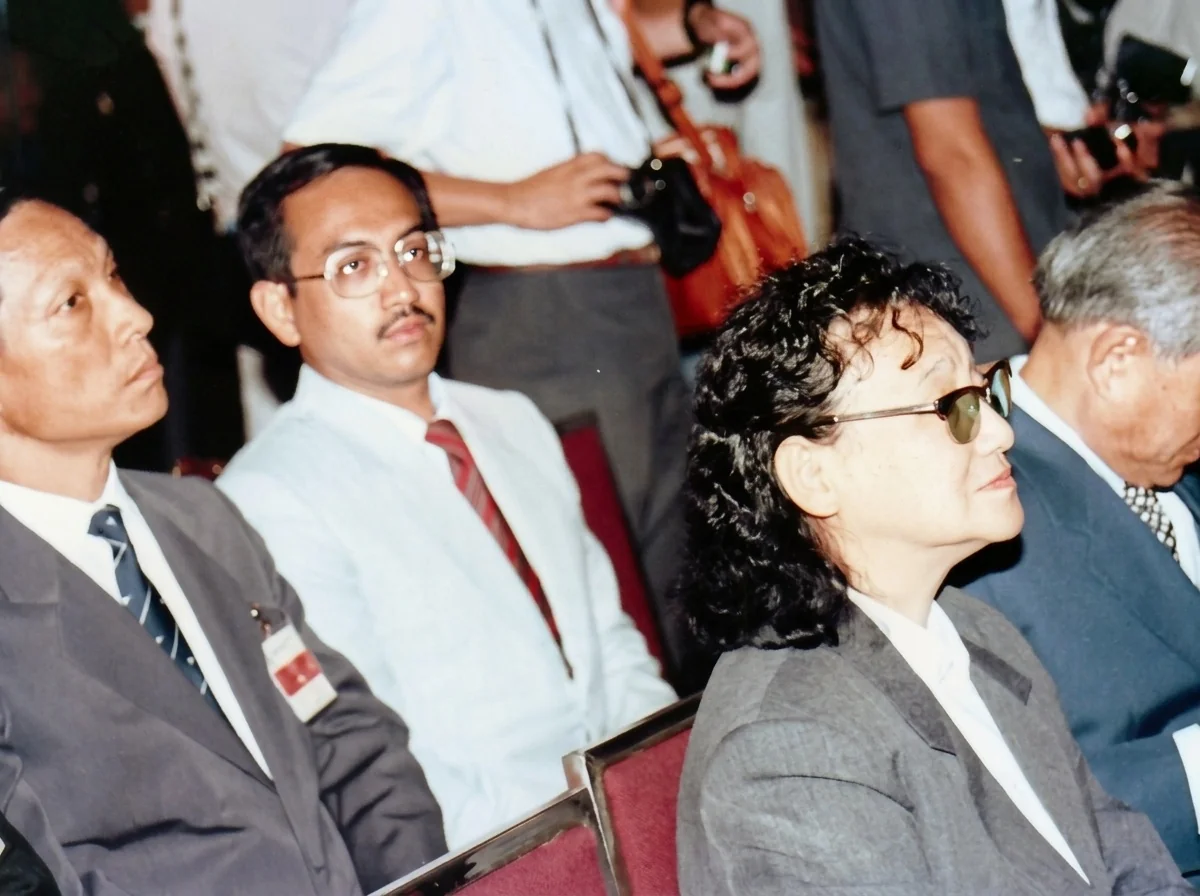
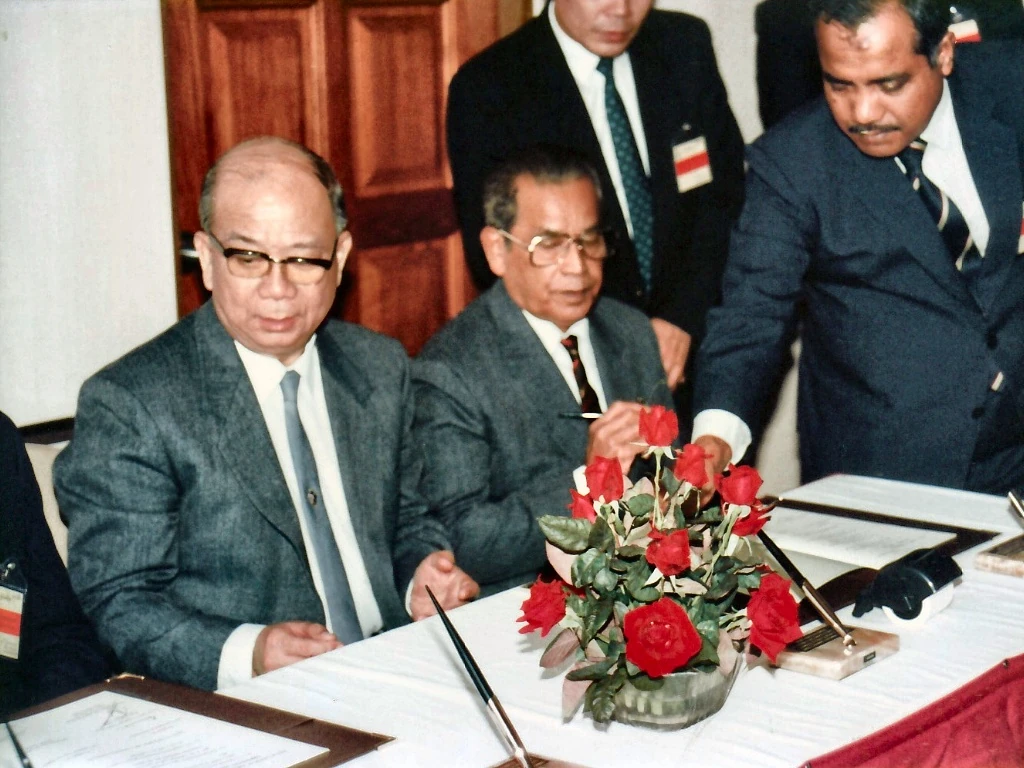
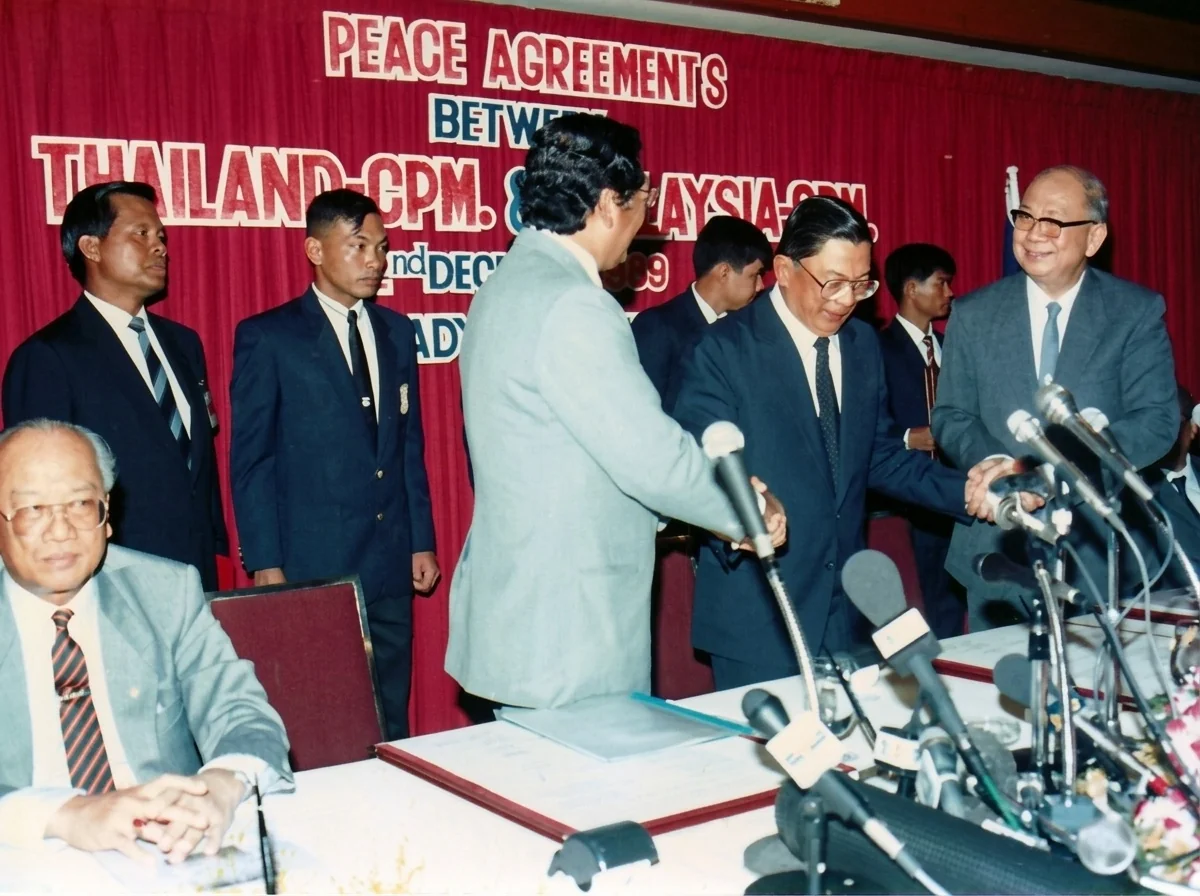
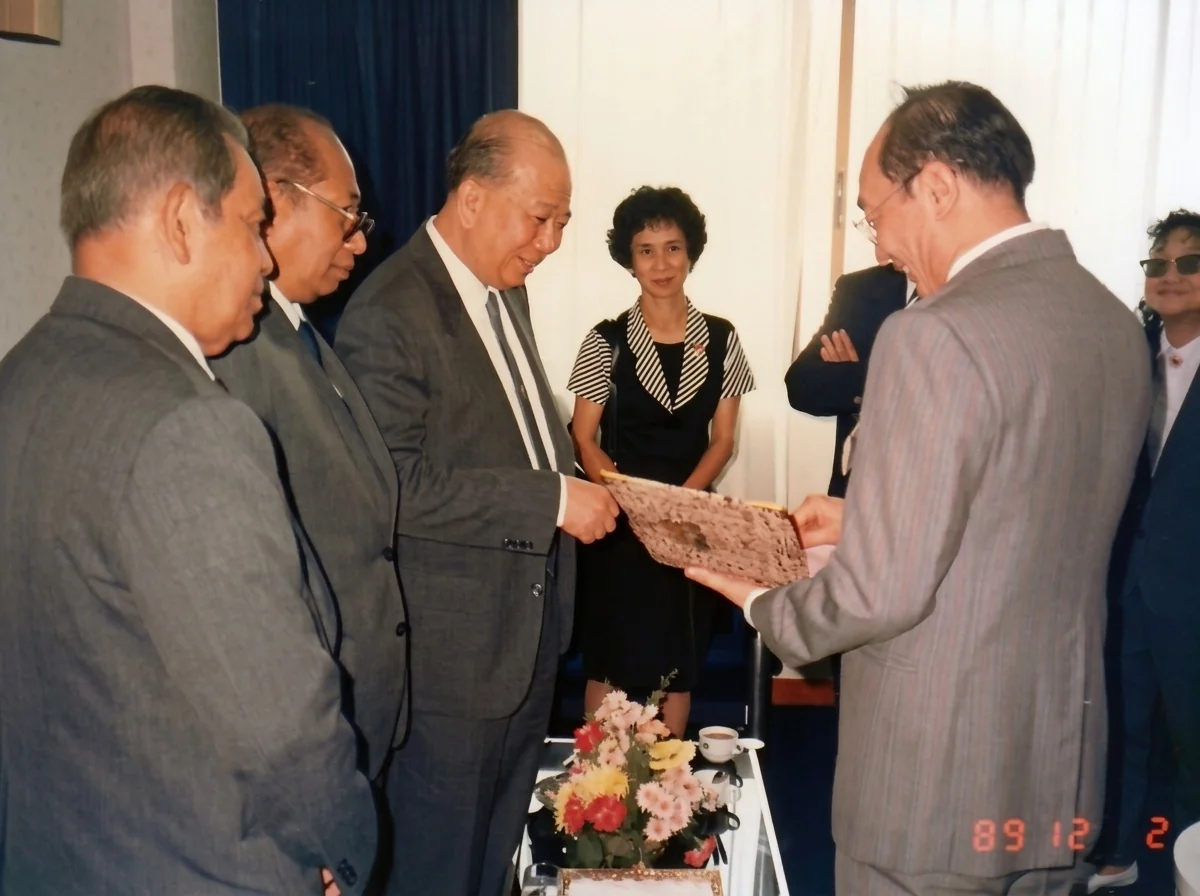
1989年12月2日上午,泰南宋卡府合艾市蠡园酒店(Lee Gardens Hotel)伦勃朗宴会厅(Rembrandt Room)内灯火辉煌,近两百名来自世界各地的通讯社、电视台与报刊记者架起长枪短炮,共同见证二十世纪东南亚现代史上最具标志性的和平盛典。上午10时45分,马来西亚政府代表团、泰王国政府代表团与马来亚共产党代表团依次步入会场,在铺设深绿色绒布的主签署台前对等落座。
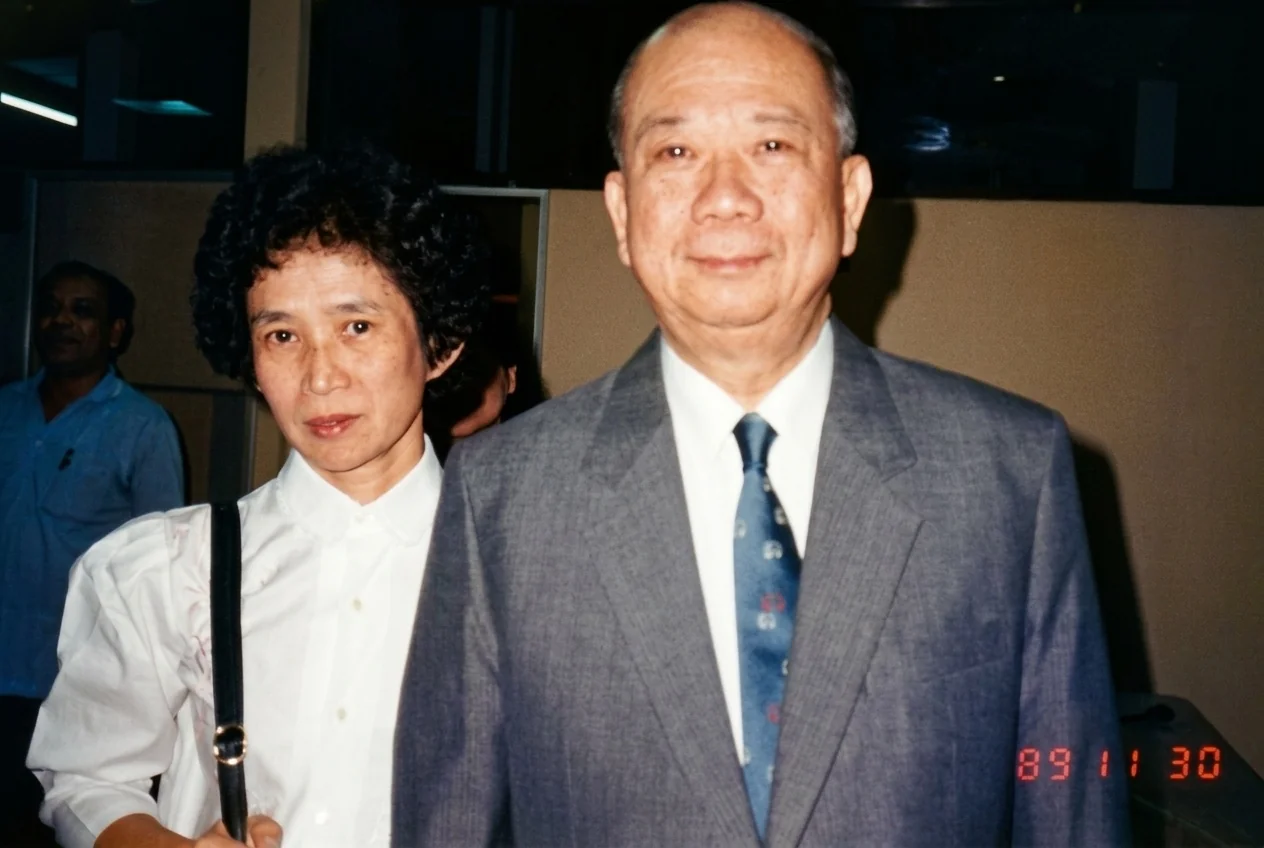
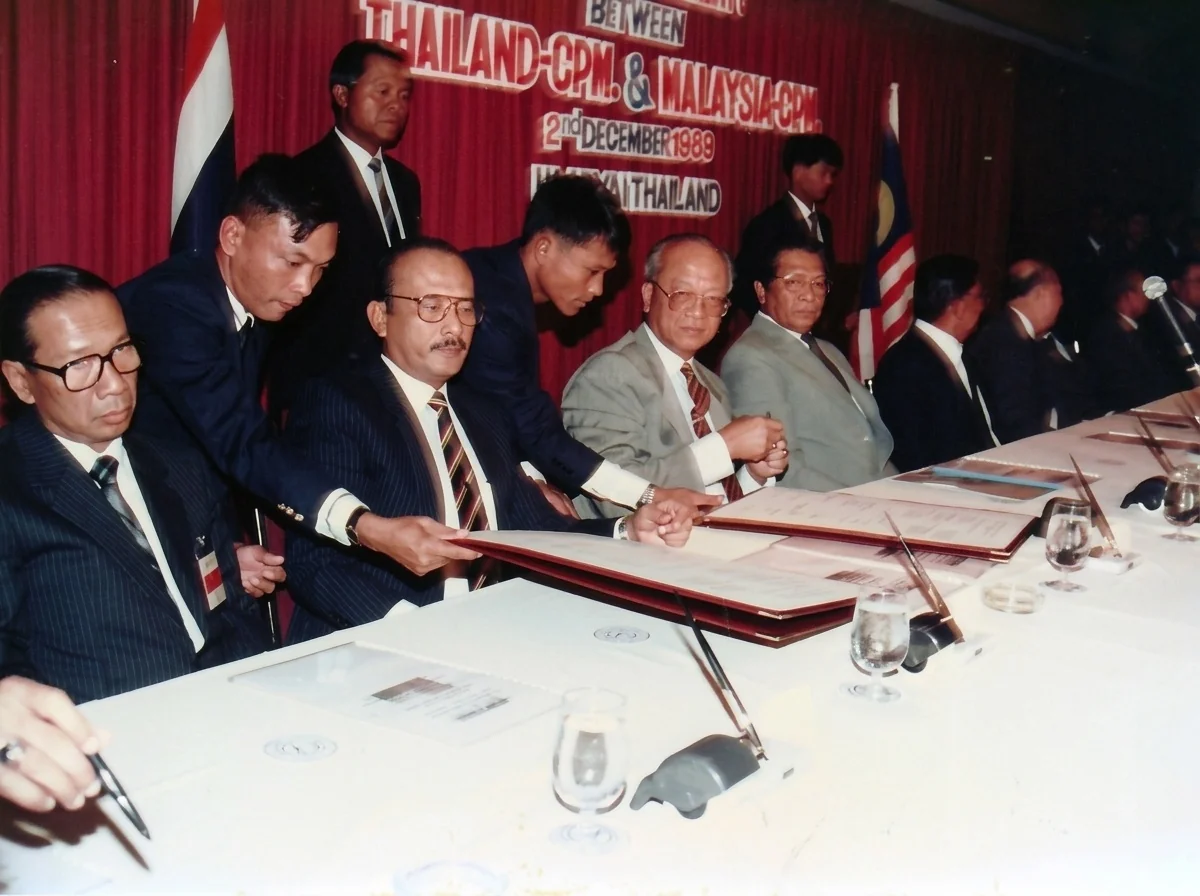
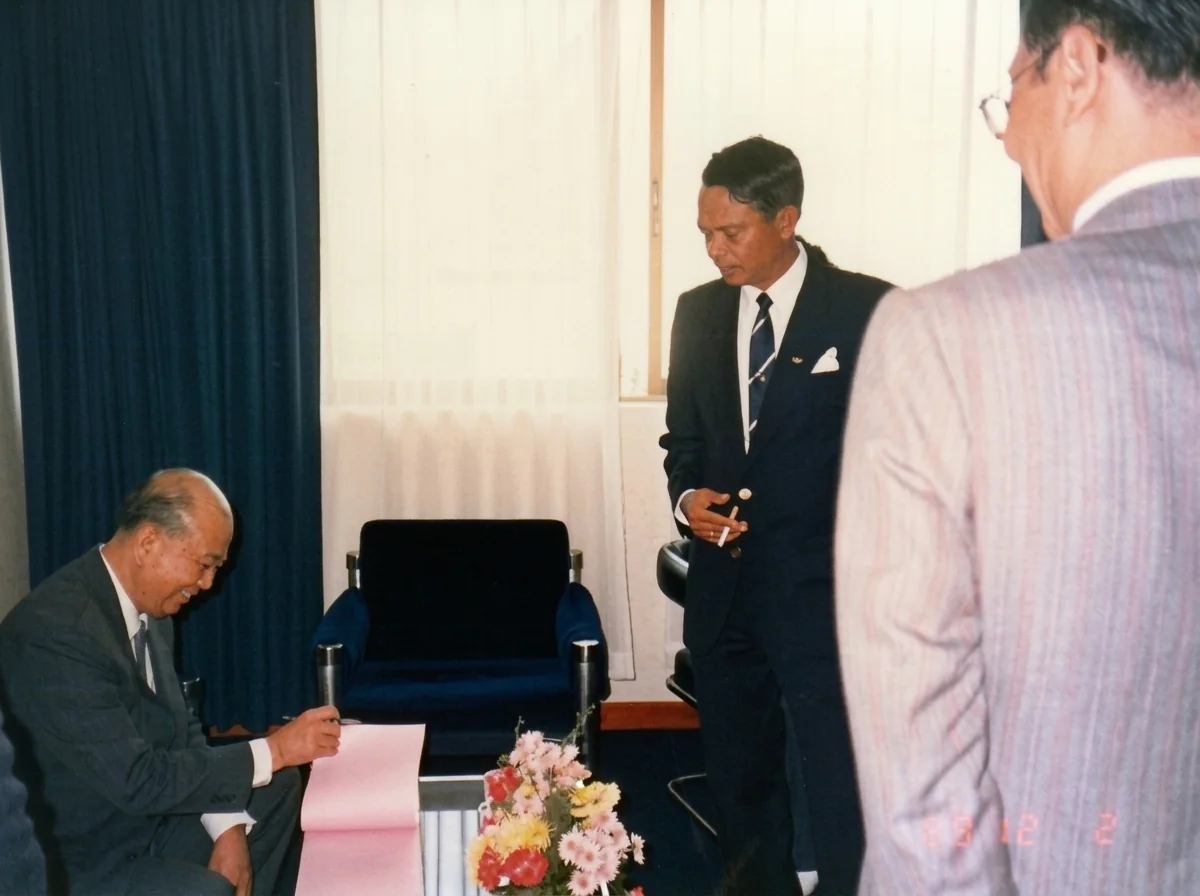
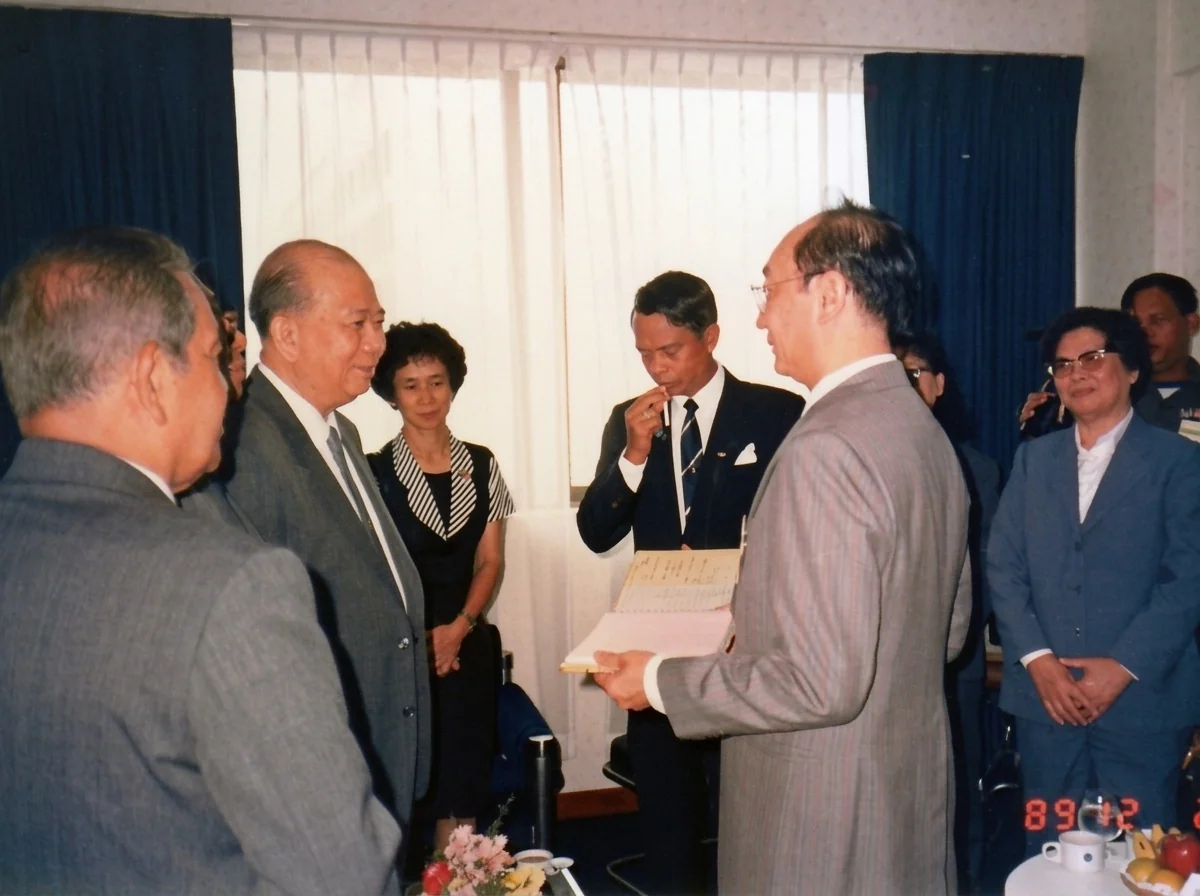
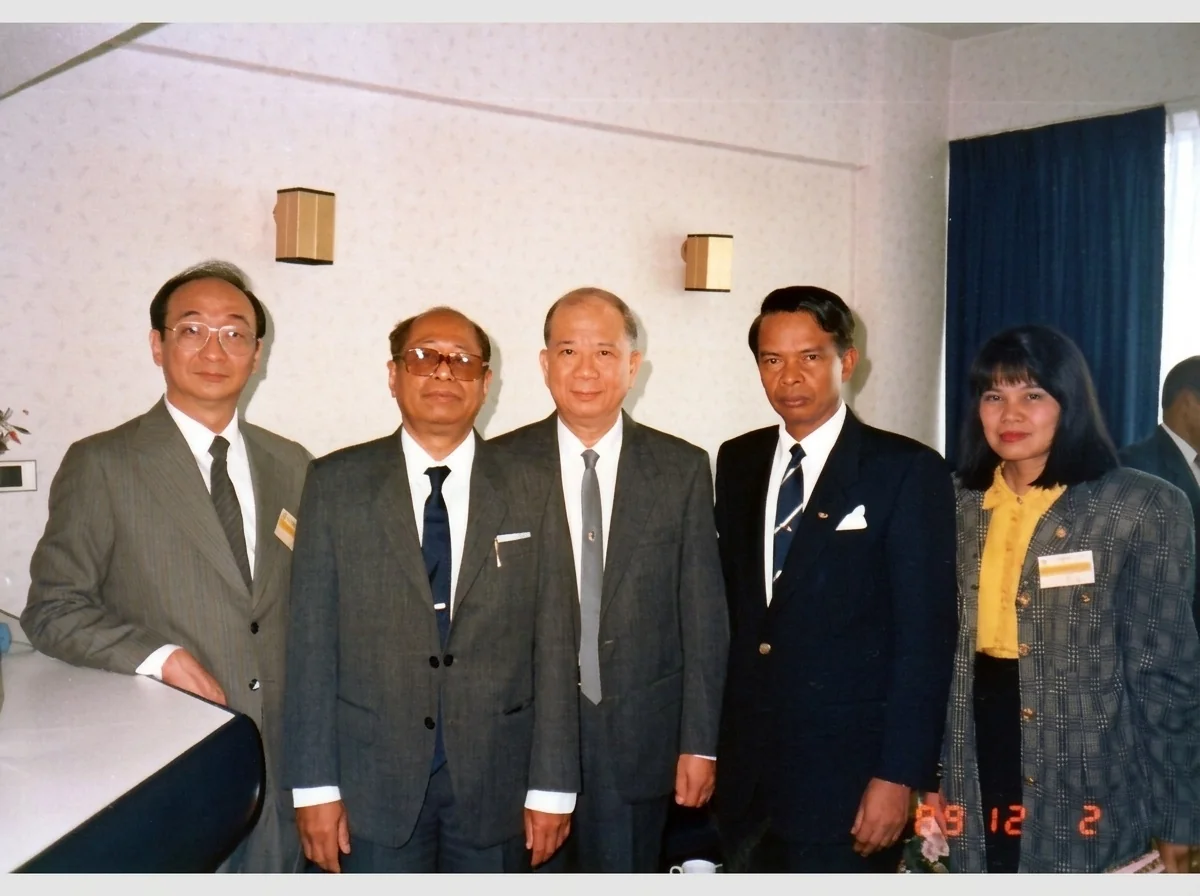
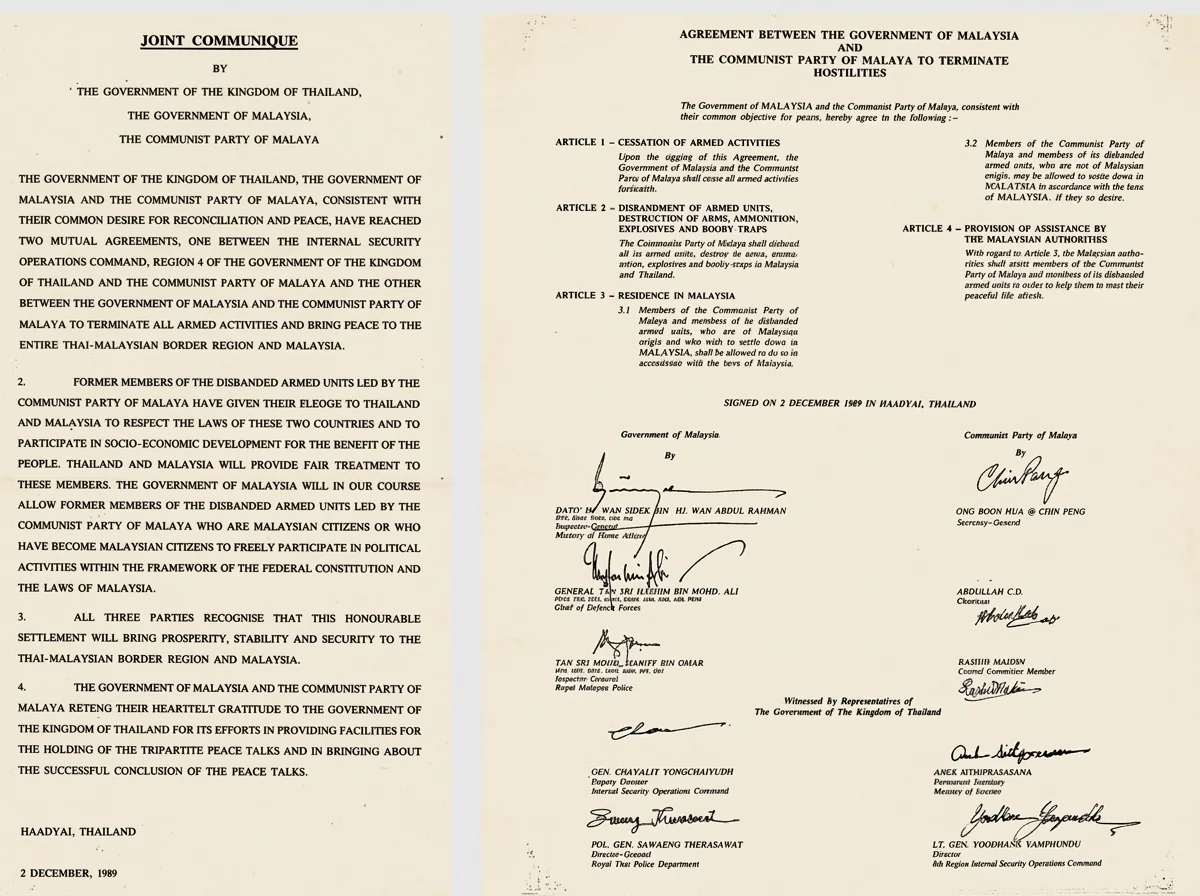
根据档案原件核实的正式签署名单,代表三方在《合艾和平协议》主文件上庄严签字的十位全权代表分别为:马来西亚政府代表团三位签署人,即内政部秘书长兼代表团团长拿督旺西迪(Dato' Hj. Wan Sidek bin Hj. Wan Abdul Rahman)、马来西亚武装部队总司令丹斯里哈欣·莫哈末·阿里上将(General Tan Sri Hashim bin Mohd. Ali)、马来西亚皇家警察总长丹斯里莫哈末·哈尼夫·奥马(Tan Sri Mohd. Haniff bin Omar,五轮谈判团长拿督拉欣诺亦在场观礼);泰王国政府代表团四位签署人,即泰国陆军总司令、代理武装部队最高统帅兼泰国内安行动指挥部副主任差瓦立·永猜裕上将(General Chavalit Yongchaiyudh,首席代表)、泰国内政部常务次长阿内·西提巴萨(Anek Sitthiprasart)、泰国皇家警察总监沙旺·提拉沙瓦警察上将(Pol. Gen. Sawaeng Thirasawat)、泰国陆军第四军区司令兼泰国内安行动指挥部第四区主任育塔纳·央潘杜中将(Lt. Gen. Yoodhana Yamphundu,五轮谈判团长吉迪将军在场见证);马来亚共产党代表团三位签署人,即马共中央委员会总书记陈平(王文华,Ong Boon Hua @ Chin Peng)、马共中央委员会主席阿都拉·西迪(Abdullah C.D.)、马共中央委员会委员拉昔·迈丁(Rashid Maidin)。与此同时,配套的《行政安排备忘录》(MOU)则由马方谈判团长拉欣诺、泰军联合特遣部队司令班贴·普瓦纳努叻少将与马共中央政治局委员兼第二任谈判团长吴一石、中央委员拉昔·迈丁分别代表各方共同签署。
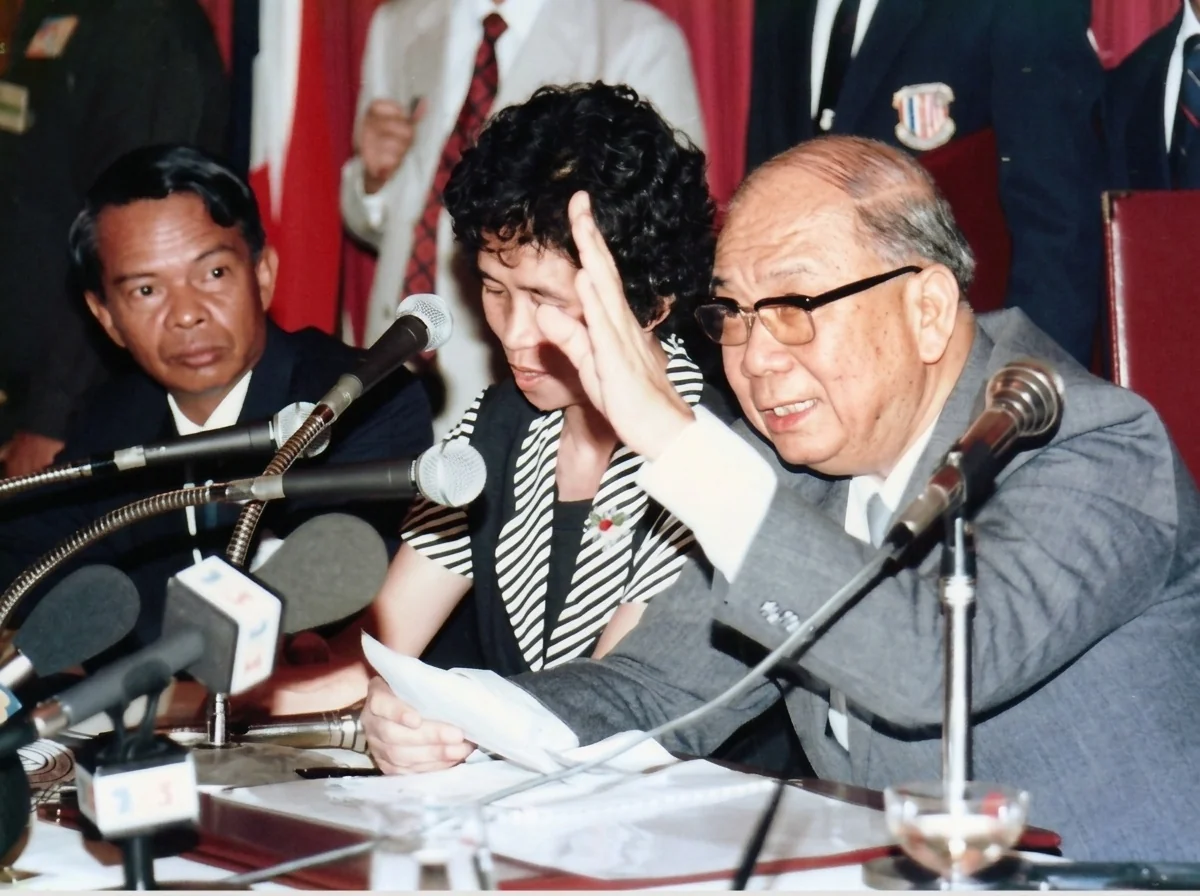
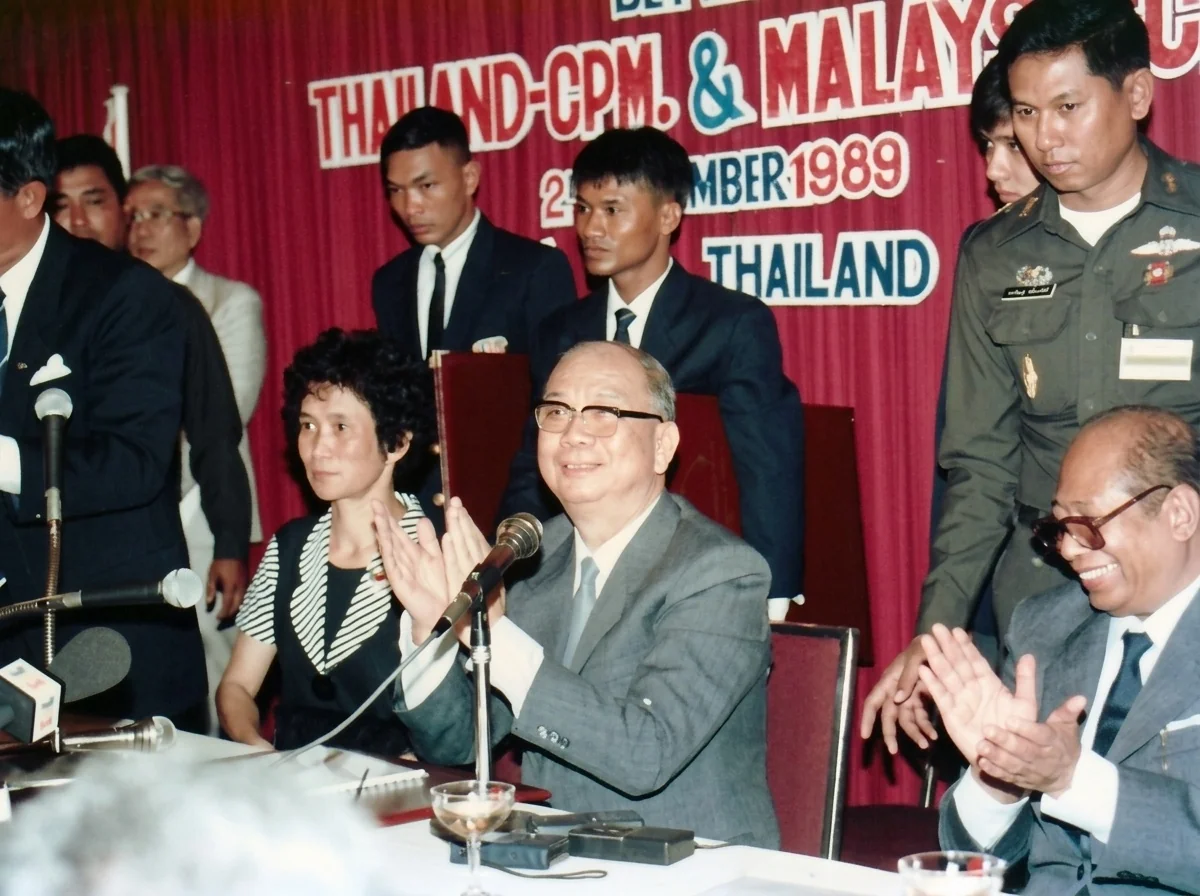
在十位全权代表依次用金笔签下姓名、互换装帧庄重的协议文本之后,拿督旺西迪、差瓦立·永猜裕上将与陈平总书记三位首席代表先后发表正式致辞。压轴登台致辞的陈平总书记以沉稳坚定的语调宣读了《马来亚共产党总书记陈平在和平协议签署仪式上的讲话》,明确指出:“刚刚签署的这些协议符合我们党争取实现和平的政策,符合当前世界人民要求和平与民主的历史潮流,同时也符合马来西亚和泰国两国人民的利益。我们认为,通过和谈达成的结束41年武装活动的上述协议是一项光荣的和解。毫无疑问,这种对各方都公平合理的和解是基于互谅互让的精神达成的。”与此同时,依据普吉会谈中达成的“效忠而不签自白”(Loyalty Without Confession,即返乡马共成员绝不签署任何形式的个人“悔过自白书”,改由在协议及公开讲话中作宪制性表态)之关键妥协,陈平在演说中庄重宣告:“作为马来西亚公民,我们保证效忠最高元首陛下、效忠祖国。作为协议的签署者之一,我们保证严格履行协议。我们将解散武装部队并销毁武器,以表示结束武装斗争的诚意。”
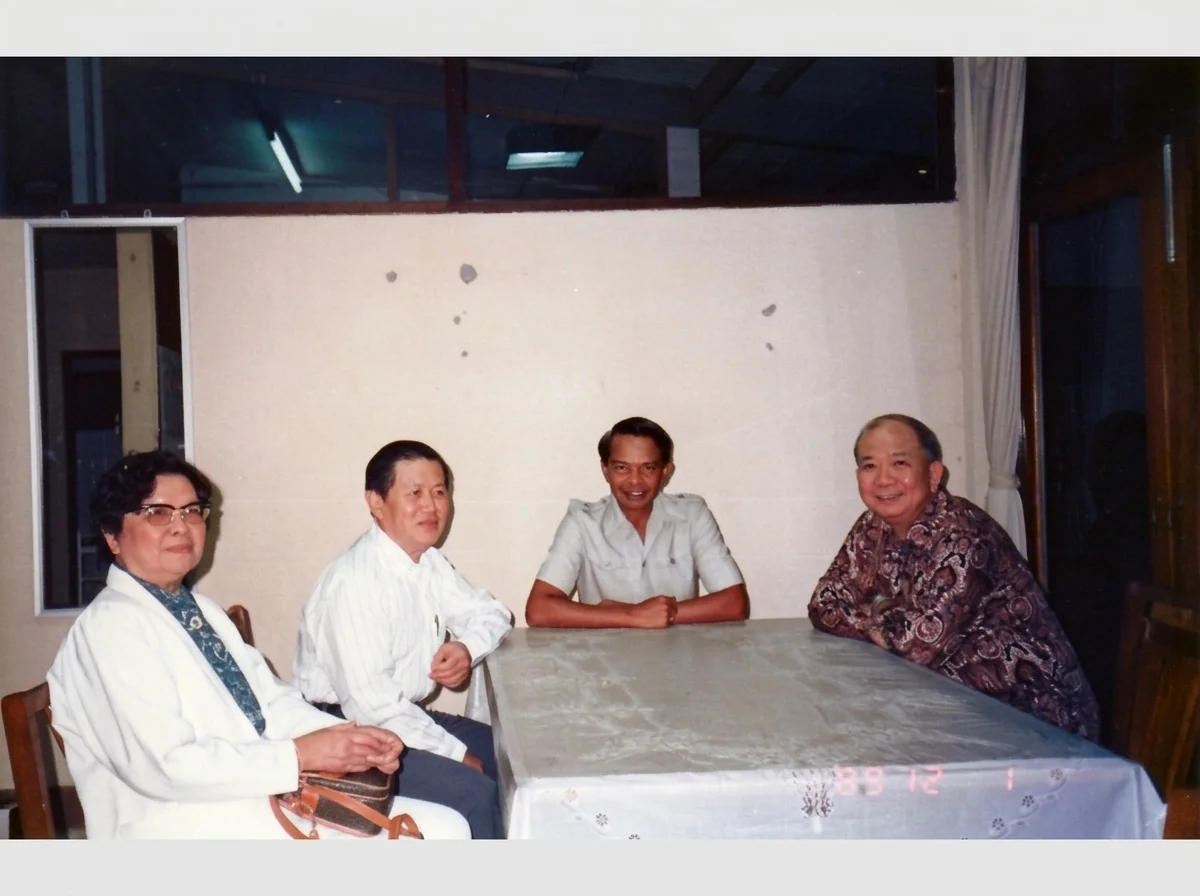
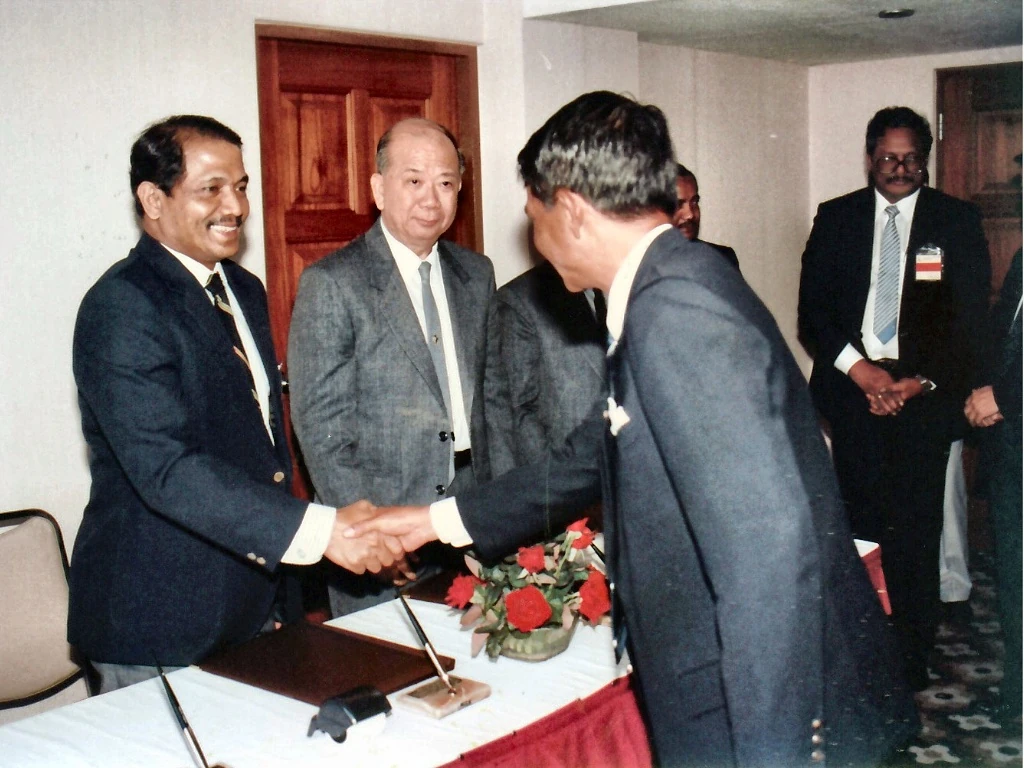
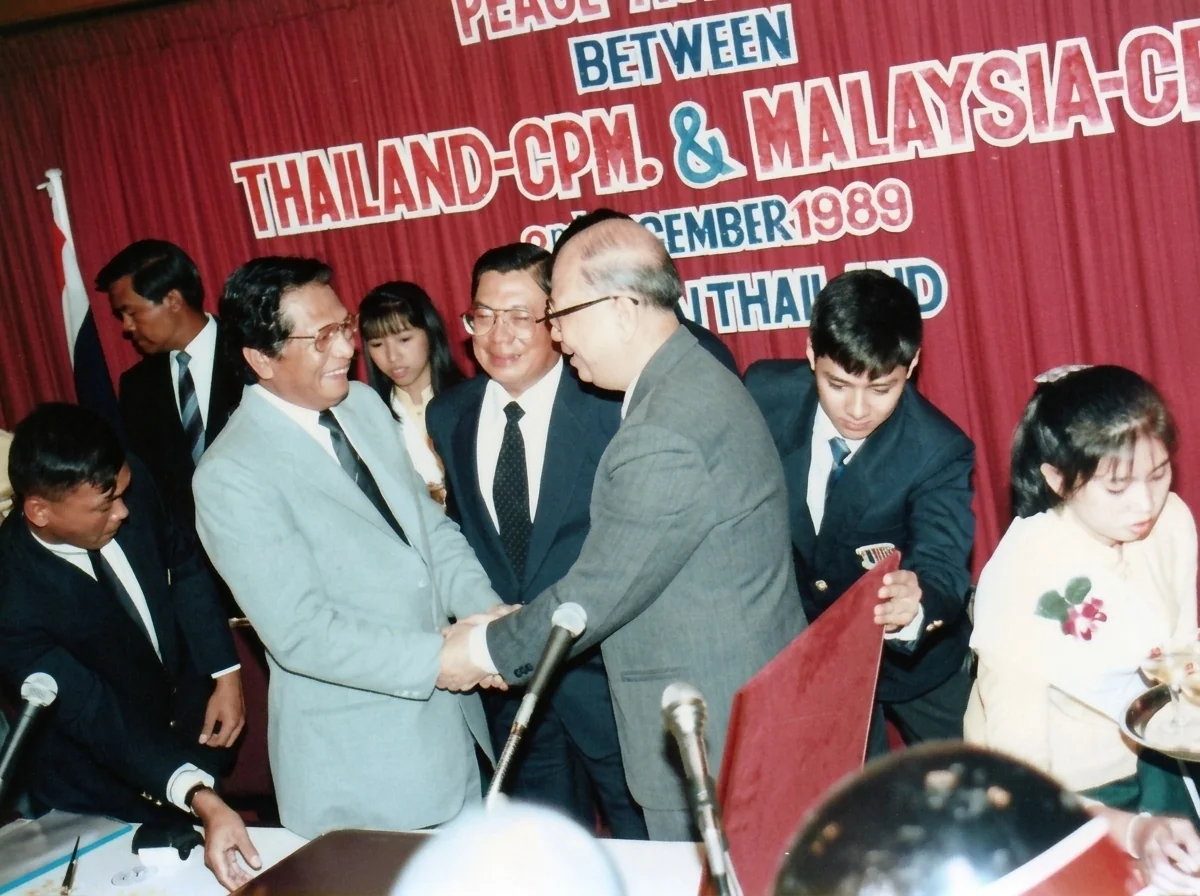
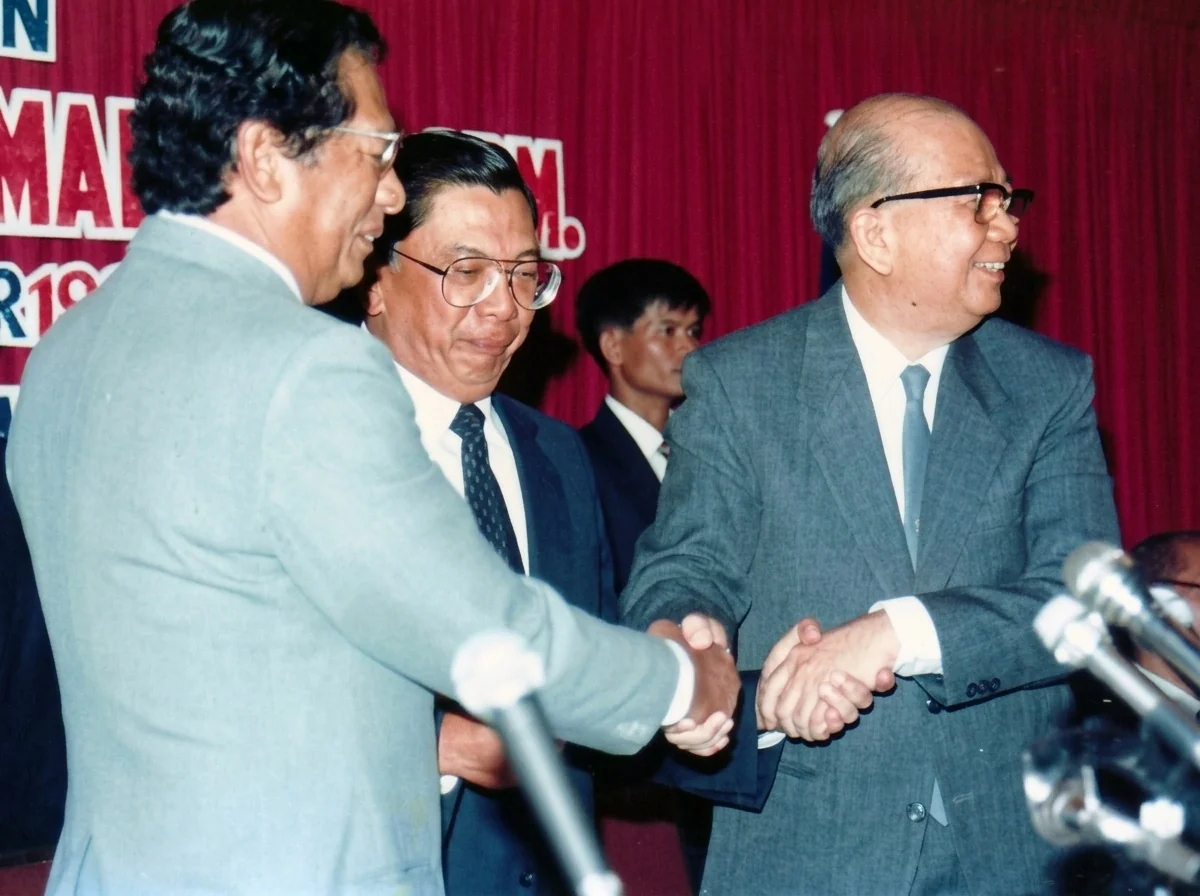
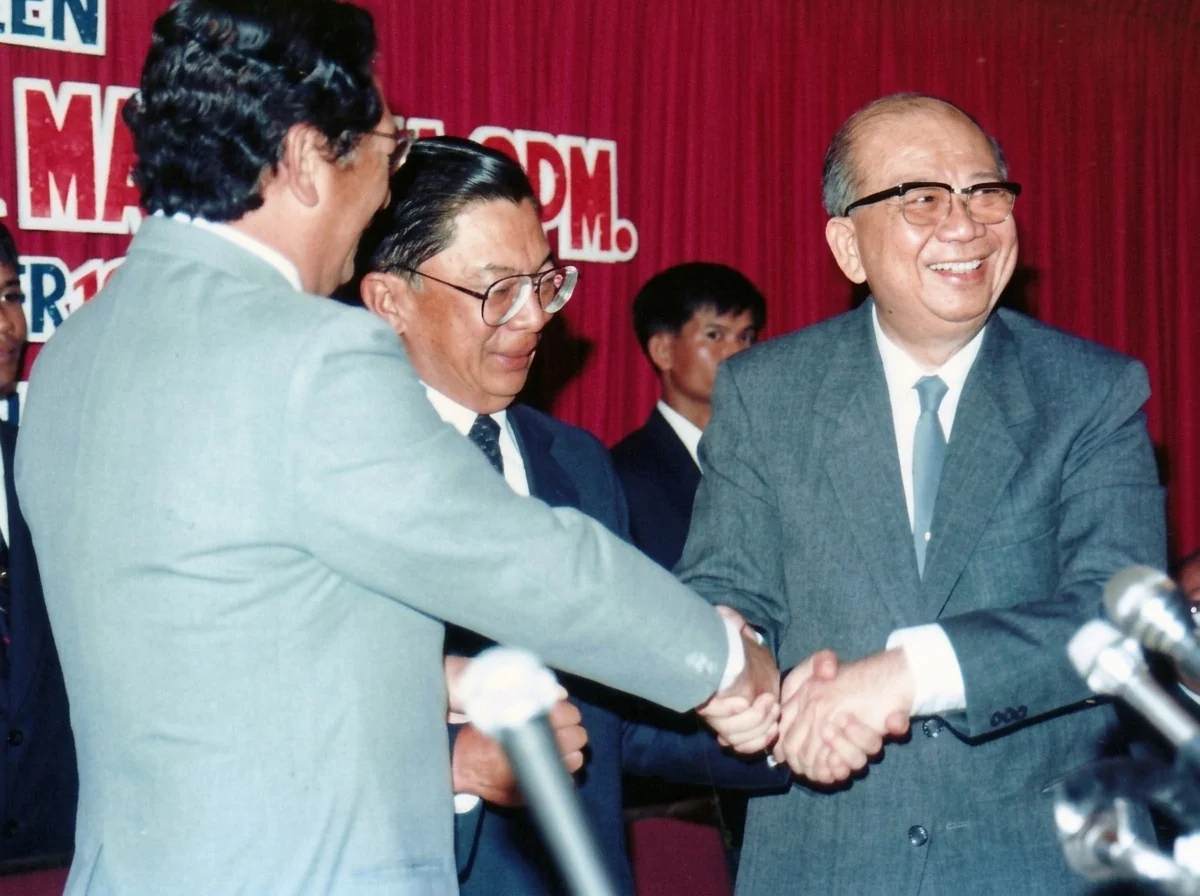
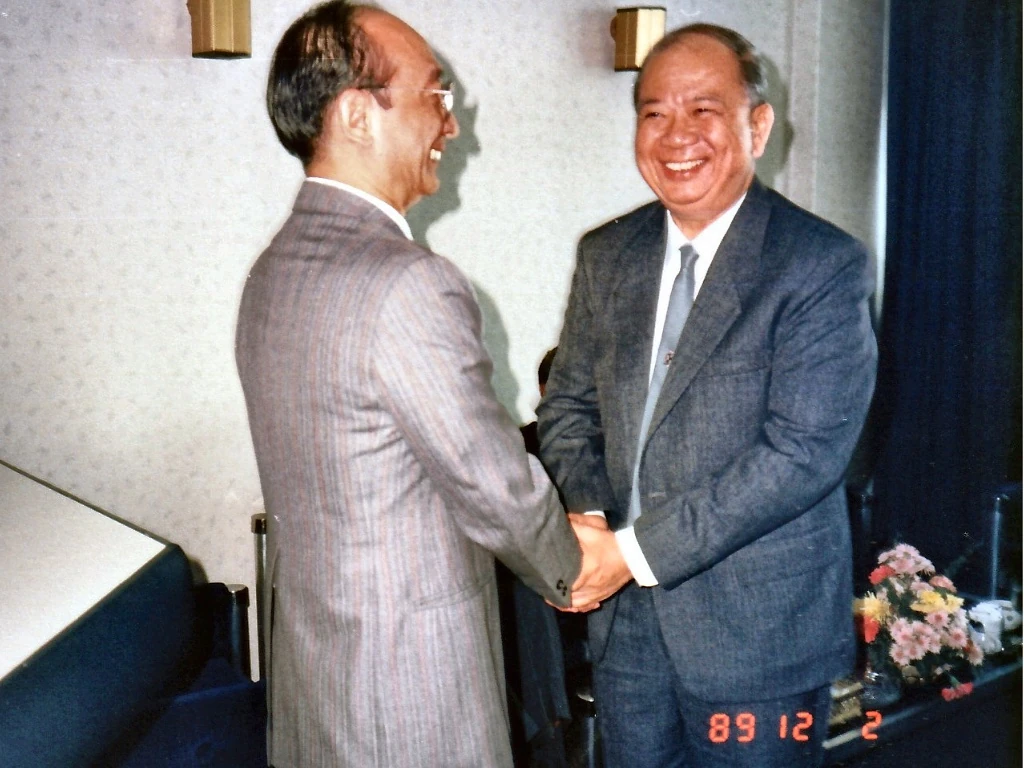
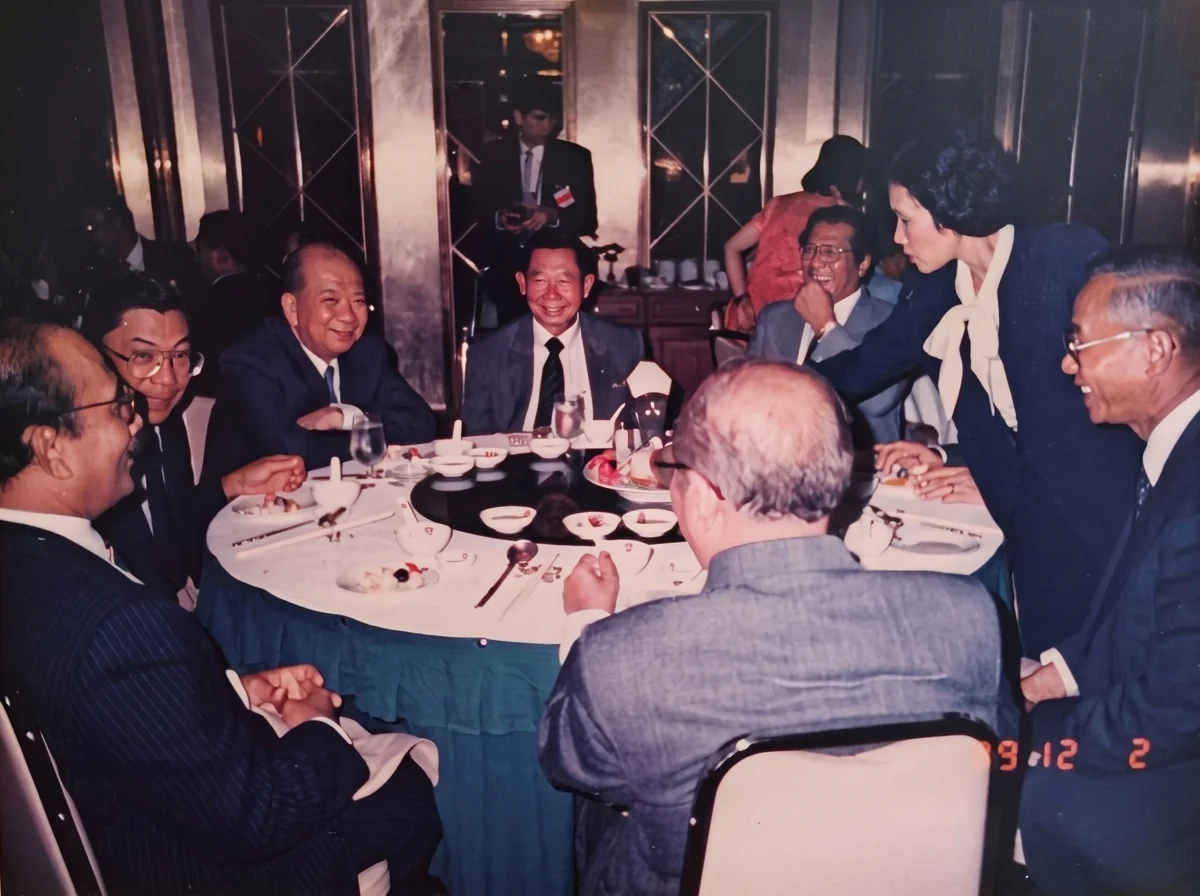
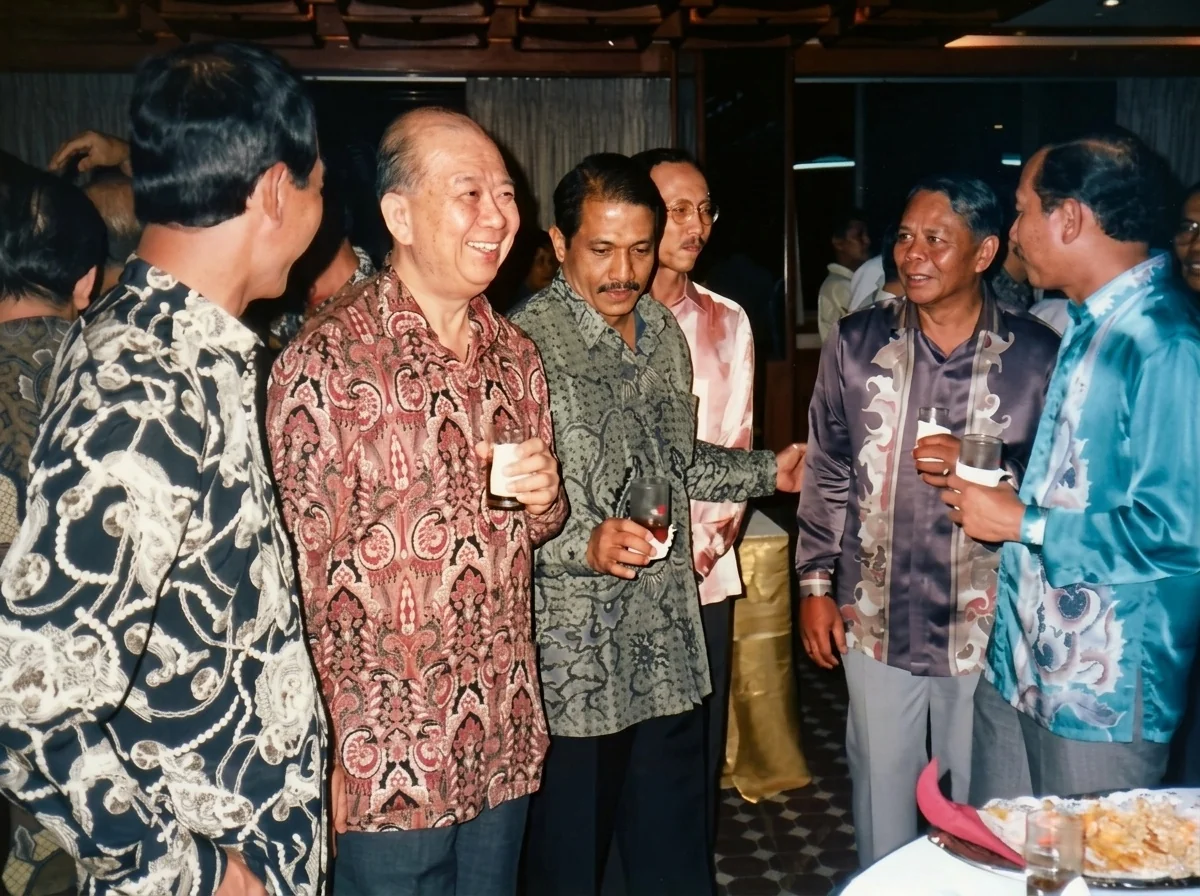
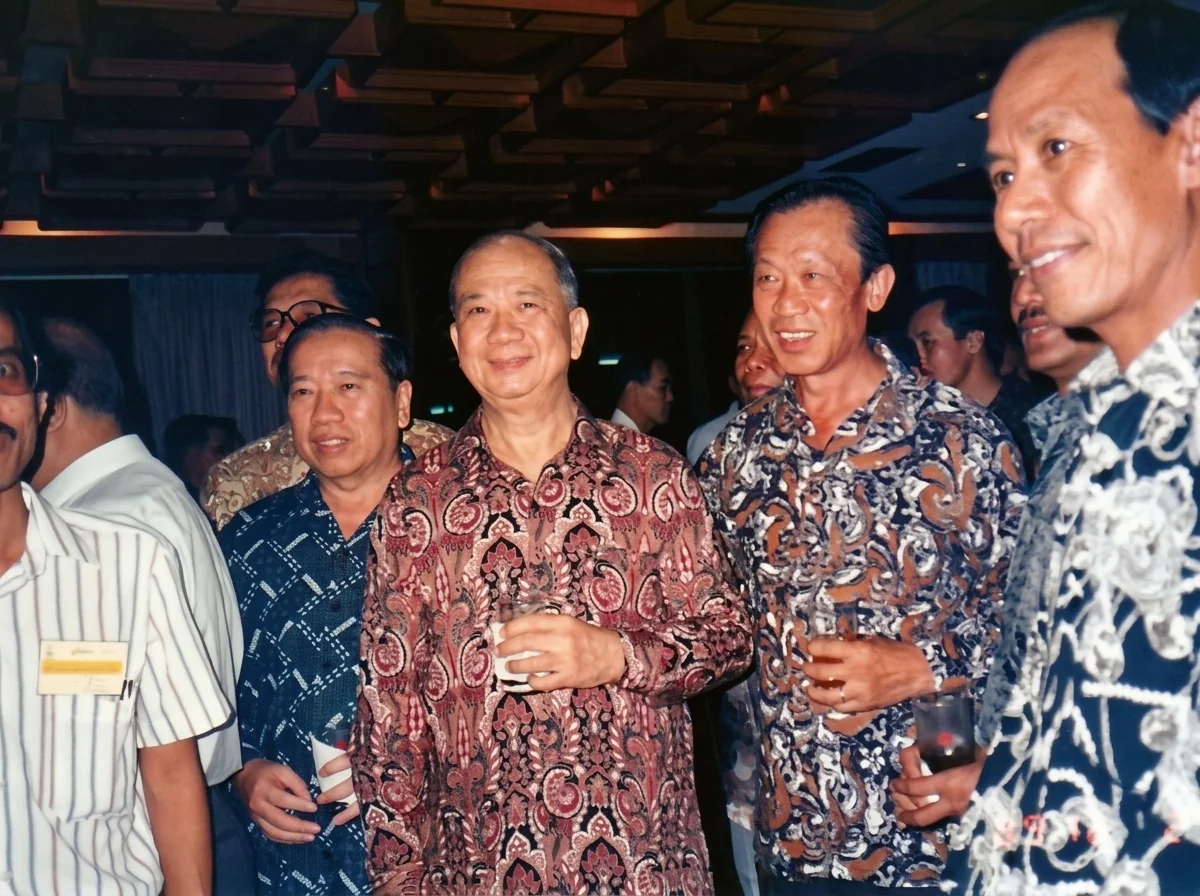
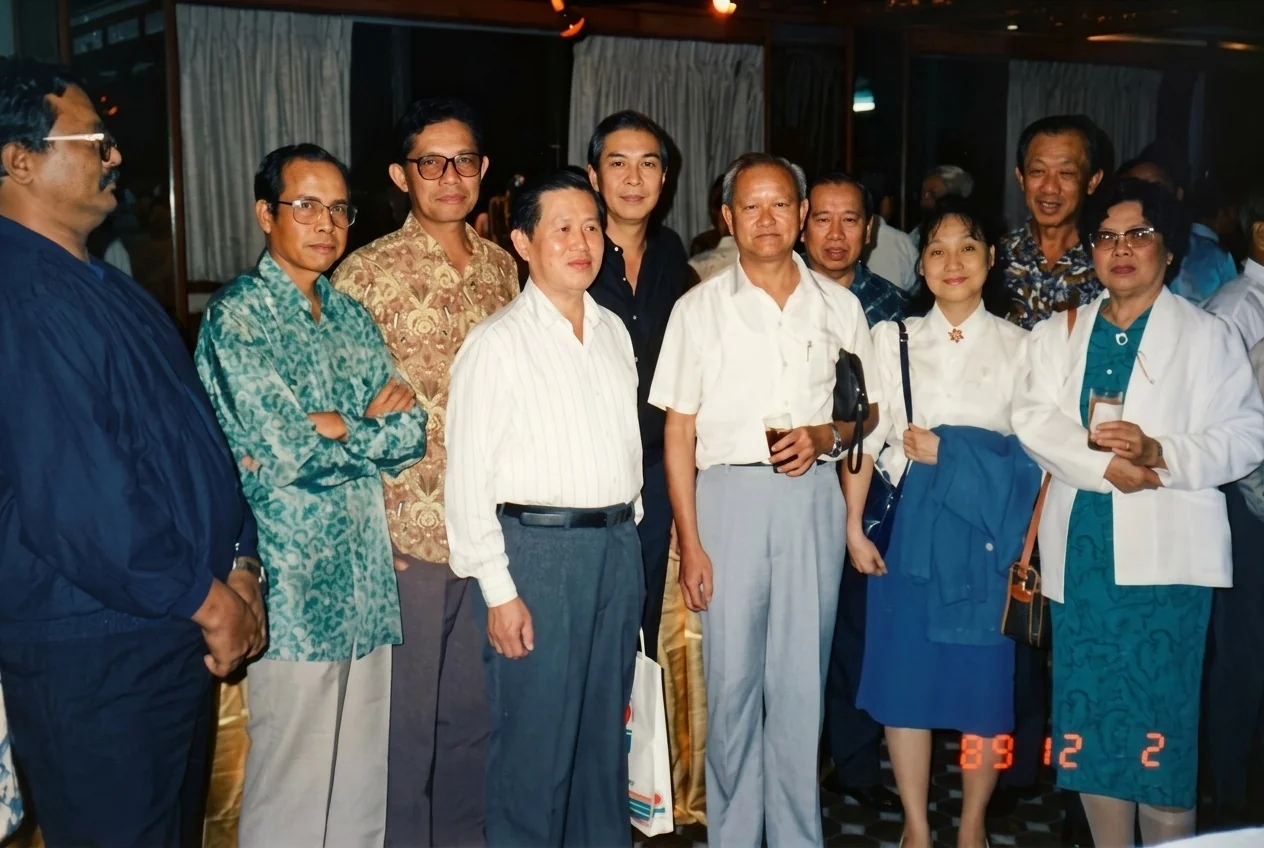
上午11时15分,旺西迪、差瓦立上将与陈平在主签署台前起立,将三人的双手紧紧握在一起并高高举起,全场爆发出经久不息的掌声与闪光灯浪潮。当天中午与晚间,三方代表团先后出席盛大庆祝午宴与身着南洋峇迪(Batik)衬衫的联欢晚宴,昔日在丛林战场兵戎相见的指挥官与谈判对手举杯互致问候,共同定格了这一化干戈为玉帛的历史时刻。
On the morning of December 2, 1989, the Rembrandt Room of the Lee Gardens Hotel in Hat Yai, Songkhla Province, southern Thailand was filled with nearly two hundred international print and broadcast journalists gathered to witness a landmark peace ceremony in modern Southeast Asian history. At 10:45 a.m., the delegations of the Government of Malaysia, the Royal Thai Government, and the Communist Party of Malaya entered the hall and took their seats on an equal footing at the green-draped signing table.
As verified directly from the signed treaty originals, the ten plenipotentiary signatories to the main Haadyai Peace Accord were: for the Government of Malaysia (3 signatories), Ministry of Home Affairs Secretary-General and Chief Delegate Dato' Hj. Wan Sidek bin Hj. Wan Abdul Rahman, Chief of Defence Forces General Tan Sri Hashim bin Mohd. Ali, and Inspector-General of Police Tan Sri Mohd. Haniff bin Omar (with Five-Round Chief Negotiator Datuk Abdul Rahim Mohd. Noor present); for the Royal Thai Government (4 signatories), Royal Thai Army Commander-in-Chief, Acting Supreme Commander, and Deputy Director of ISOC General Chavalit Yongchaiyudh (Chief Delegate), Permanent Secretary of the Ministry of Interior Anek Sitthiprasart (Sithiprasasana), Royal Thai Police Director-General Pol. Gen. Sawaeng Thirasawat (Therasawat), and 4th Army Region Commander and ISOC Region 4 Director Lt. Gen. Yoodhana Yamphundu (with Five-Round Chief Negotiator General Kitti Rattanachaya present); and for the Communist Party of Malaya (3 signatories), Central Committee General Secretary Ong Boon Hua @ Chin Peng, Central Committee Chairman Abdullah C.D., and Central Committee Member Rashid Maidin. Concurrently, the accompanying Administrative Memoranda of Understanding (MOU) were signed by Datuk Abdul Rahim Mohd. Noor for Malaysia, Combined Task Force Commander Maj. Gen. Panthep Phuwananurak for Thailand, and CPM Politburo Member and 2nd Negotiation Delegation Head Wu Yi Shi alongside Central Committee Member Rashid Maidin for the CPM.
After the ten plenipotentiaries signed the leather-bound treaty volumes and exchanged documents, Chief Delegates Dato' Wan Sidek, General Chavalit Yongchaiyudh, and General Secretary Chin Peng delivered their formal addresses. Speaking with calm resolve, General Secretary Chin Peng delivered his official address, declaring verbatim: 'The agreements just signed conform to our Party's policy of striving for peace, to the historical trend of the world's peoples demanding peace and democracy, and to the interests of the peoples of Malaysia and Thailand. We believe that the above-mentioned agreements reached through peace negotiations to end 41 years of armed activities constitute an honorable reconciliation. Without doubt, this reconciliation, which is fair and reasonable to all parties, was achieved in a spirit of mutual understanding and accommodation.' Simultaneously, reflecting the critical Phuket compromise of 'Loyalty Without Confession' (whereby returning CPM members would never be required to sign any personal confession or repentance document), Chin Peng stated: 'As Malaysian citizens, we pledge our loyalty to His Majesty the Yang di-Pertuan Agong and to the motherland. As one of the signatories to the agreements, we pledge to strictly fulfill the agreements. We shall disband our armed forces and destroy our weapons to demonstrate our sincerity in ending the armed struggle.'
At 11:15 a.m., Dato' Wan Sidek, General Chavalit Yongchaiyudh, and Chin Peng stood before the main table and raised their joined hands in a historic three-way handshake amid thunderous applause and flashing cameras. At the celebratory luncheon and the evening reception, where delegates from all three sides wore traditional Southeast Asian batik shirts, former battlefield adversaries toasted reconciliation, sealing a landmark peace in modern Southeast Asian history.
1989年12月2日上午,泰南宋卡府合艾市蠡园酒店(Lee Gardens Hotel)伦勃朗宴会厅(Rembrandt Room)内灯火辉煌,近两百名来自世界各地的通讯社、电视台与报刊记者架起长枪短炮,共同见证二十世纪东南亚现代史上最具标志性的和平盛典。上午10时45分,马来西亚政府代表团、泰王国政府代表团与马来亚共产党代表团依次步入会场,在铺设深绿色绒布的主签署台前对等落座。
根据档案原件核实的正式签署名单,代表三方在《合艾和平协议》主文件上庄严签字的十位全权代表分别为:马来西亚政府代表团三位签署人,即内政部秘书长兼代表团团长拿督旺西迪(Dato' Hj. Wan Sidek bin Hj. Wan Abdul Rahman)、马来西亚武装部队总司令丹斯里哈欣·莫哈末·阿里上将(General Tan Sri Hashim bin Mohd. Ali)、马来西亚皇家警察总长丹斯里莫哈末·哈尼夫·奥马(Tan Sri Mohd. Haniff bin Omar,五轮谈判团长拿督拉欣诺亦在场观礼);泰王国政府代表团四位签署人,即泰国陆军总司令、代理武装部队最高统帅兼泰国内安行动指挥部副主任差瓦立·永猜裕上将(General Chavalit Yongchaiyudh,首席代表)、泰国内政部常务次长阿内·西提巴萨(Anek Sitthiprasart)、泰国皇家警察总监沙旺·提拉沙瓦警察上将(Pol. Gen. Sawaeng Thirasawat)、泰国陆军第四军区司令兼泰国内安行动指挥部第四区主任育塔纳·央潘杜中将(Lt. Gen. Yoodhana Yamphundu,五轮谈判团长吉迪将军在场见证);马来亚共产党代表团三位签署人,即马共中央委员会总书记陈平(王文华,Ong Boon Hua @ Chin Peng)、马共中央委员会主席阿都拉·西迪(Abdullah C.D.)、马共中央委员会委员拉昔·迈丁(Rashid Maidin)。与此同时,配套的《行政安排备忘录》(MOU)则由马方谈判团长拉欣诺、泰军联合特遣部队司令班贴·普瓦纳努叻少将与马共中央政治局委员兼第二任谈判团长吴一石、中央委员拉昔·迈丁分别代表各方共同签署。
On the morning of December 2, 1989, the Rembrandt Room of the Lee Gardens Hotel in Hat Yai, Songkhla Province, southern Thailand was filled with nearly two hundred international print and broadcast journalists gathered to witness a landmark peace ceremony in modern Southeast Asian history. At 10:45 a.m., the delegations of the Government of Malaysia, the Royal Thai Government, and the Communist Party of Malaya entered the hall and took their seats on an equal footing at the green-draped signing table.
As verified directly from the signed treaty originals, the ten plenipotentiary signatories to the main Haadyai Peace Accord were: for the Government of Malaysia (3 signatories), Ministry of Home Affairs Secretary-General and Chief Delegate Dato' Hj. Wan Sidek bin Hj. Wan Abdul Rahman, Chief of Defence Forces General Tan Sri Hashim bin Mohd. Ali, and Inspector-General of Police Tan Sri Mohd. Haniff bin Omar (with Five-Round Chief Negotiator Datuk Abdul Rahim Mohd. Noor present); for the Royal Thai Government (4 signatories), Royal Thai Army Commander-in-Chief, Acting Supreme Commander, and Deputy Director of ISOC General Chavalit Yongchaiyudh (Chief Delegate), Permanent Secretary of the Ministry of Interior Anek Sitthiprasart (Sithiprasasana), Royal Thai Police Director-General Pol. Gen. Sawaeng Thirasawat (Therasawat), and 4th Army Region Commander and ISOC Region 4 Director Lt. Gen. Yoodhana Yamphundu (with Five-Round Chief Negotiator General Kitti Rattanachaya present); and for the Communist Party of Malaya (3 signatories), Central Committee General Secretary Ong Boon Hua @ Chin Peng, Central Committee Chairman Abdullah C.D., and Central Committee Member Rashid Maidin. Concurrently, the accompanying Administrative Memoranda of Understanding (MOU) were signed by Datuk Abdul Rahim Mohd. Noor for Malaysia, Combined Task Force Commander Maj. Gen. Panthep Phuwananurak for Thailand, and CPM Politburo Member and 2nd Negotiation Delegation Head Wu Yi Shi alongside Central Committee Member Rashid Maidin for the CPM.
1989 年的和平协议能达致是因为马来西亚政府、泰国政府和马共都真正盼望化解彼此之间的敌对状态。各方都为大处着想,为和平和繁荣而努力。因此,马共为其斗争找到了一个合理的结局,尊严下的和平。我们不能赢得革命,我们也没有因投降而蒙羞。这是我的同志们能接受的那种和平,我也可以因此有所安慰。The 1989 peace accord was achieved because the Government of Malaysia, the Government of Thailand, and the Communist Party of Malaya all genuinely wished to resolve their mutual hostilities. Each party kept the bigger picture in mind and strove for peace and prosperity. Thus, the CPM found a reasonable conclusion to its struggle, a peace with dignity. We could not win the revolution, yet we did not suffer the humiliation of surrender. This is the kind of peace my comrades can accept, and it brings me some consolation.— 1989.12.02 陈平 | Chin Peng(《我的同志们能够接受的和平》) | 1989.12.02 Chin Peng (CPM General Secretary, "A Peace My Comrades Can Accept")
我们认为,通过和谈达成的结束41年武装活动的上述协议是一项光荣的和解,毫无疑问,这项协议对各方都是公平合理的,是基于互谅互让的精神达成的。We believe that the agreement reached through the peace talks to end 41 years of armed struggle is an honorable reconciliation. There is no doubt that it is fair and reasonable to all parties, and was achieved in the spirit of mutual understanding and compromise.— 马来亚共产党中央委员会总书记陈平在《合艾和平协议》签署仪式上的正式讲话原话(1989年12月2日于合艾蠡园酒店) | Verbatim Address by CPM General Secretary Chin Peng at the Haadyai Peace Accord Signing Ceremony (December 2, 1989, Lee Gardens Hotel, Hat Yai)
在十位全权代表依次用金笔签下姓名、互换装帧庄重的协议文本之后,拿督旺西迪、差瓦立·永猜裕上将与陈平总书记三位首席代表先后发表正式致辞。压轴登台致辞的陈平总书记以沉稳坚定的语调宣读了《马来亚共产党总书记陈平在和平协议签署仪式上的讲话》,明确指出:“刚刚签署的这些协议符合我们党争取实现和平的政策,符合当前世界人民要求和平与民主的历史潮流,同时也符合马来西亚和泰国两国人民的利益。我们认为,通过和谈达成的结束41年武装活动的上述协议是一项光荣的和解。毫无疑问,这种对各方都公平合理的和解是基于互谅互让的精神达成的。”与此同时,依据普吉会谈中达成的“效忠而不签自白”(Loyalty Without Confession,即返乡马共成员绝不签署任何形式的个人“悔过自白书”,改由在协议及公开讲话中作宪制性表态)之关键妥协,陈平在演说中庄重宣告:“作为马来西亚公民,我们保证效忠最高元首陛下、效忠祖国。作为协议的签署者之一,我们保证严格履行协议。我们将解散武装部队并销毁武器,以表示结束武装斗争的诚意。”
上午11时15分,旺西迪、差瓦立上将与陈平在主签署台前起立,将三人的双手紧紧握在一起并高高举起,全场爆发出经久不息的掌声与闪光灯浪潮。当天中午与晚间,三方代表团先后出席盛大庆祝午宴与身着南洋峇迪(Batik)衬衫的联欢晚宴,昔日在丛林战场兵戎相见的指挥官与谈判对手举杯互致问候,共同定格了这一化干戈为玉帛的历史时刻。
After the ten plenipotentiaries signed the leather-bound treaty volumes and exchanged documents, Chief Delegates Dato' Wan Sidek, General Chavalit Yongchaiyudh, and General Secretary Chin Peng delivered their formal addresses. Speaking with calm resolve, General Secretary Chin Peng delivered his official address, declaring verbatim: 'The agreements just signed conform to our Party's policy of striving for peace, to the historical trend of the world's peoples demanding peace and democracy, and to the interests of the peoples of Malaysia and Thailand. We believe that the above-mentioned agreements reached through peace negotiations to end 41 years of armed activities constitute an honorable reconciliation. Without doubt, this reconciliation, which is fair and reasonable to all parties, was achieved in a spirit of mutual understanding and accommodation.' Simultaneously, reflecting the critical Phuket compromise of 'Loyalty Without Confession' (whereby returning CPM members would never be required to sign any personal confession or repentance document), Chin Peng stated: 'As Malaysian citizens, we pledge our loyalty to His Majesty the Yang di-Pertuan Agong and to the motherland. As one of the signatories to the agreements, we pledge to strictly fulfill the agreements. We shall disband our armed forces and destroy our weapons to demonstrate our sincerity in ending the armed struggle.'
At 11:15 a.m., Dato' Wan Sidek, General Chavalit Yongchaiyudh, and Chin Peng stood before the main table and raised their joined hands in a historic three-way handshake amid thunderous applause and flashing cameras. At the celebratory luncheon and the evening reception, where delegates from all three sides wore traditional Southeast Asian batik shirts, former battlefield adversaries toasted reconciliation, sealing a landmark peace in modern Southeast Asian history.
第三章:三方联合公报与双边协议原件考据:对手眼中的庄严承诺
Chapter 3: Archival Verification of the Joint Communiqué and Bilateral Agreements: A Solemn Commitment in the Eyes of Adversaries
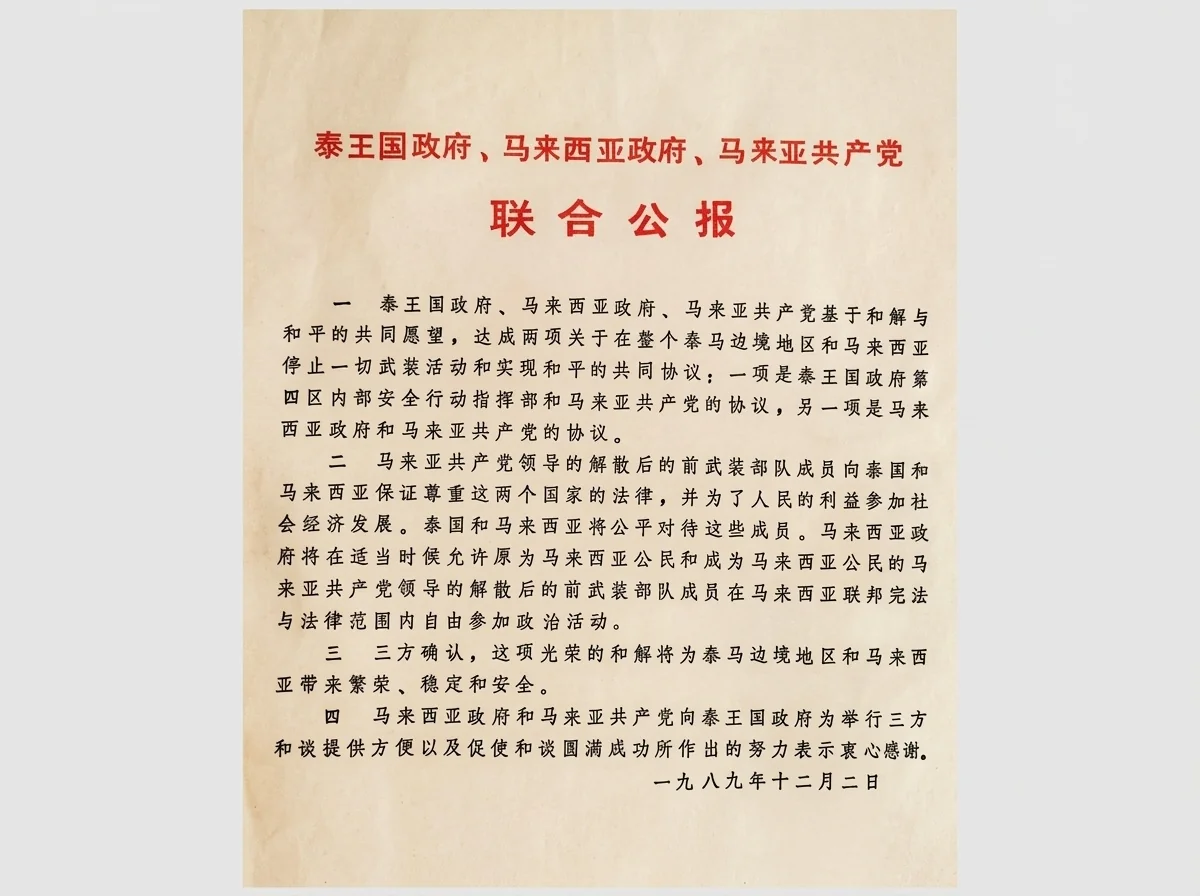
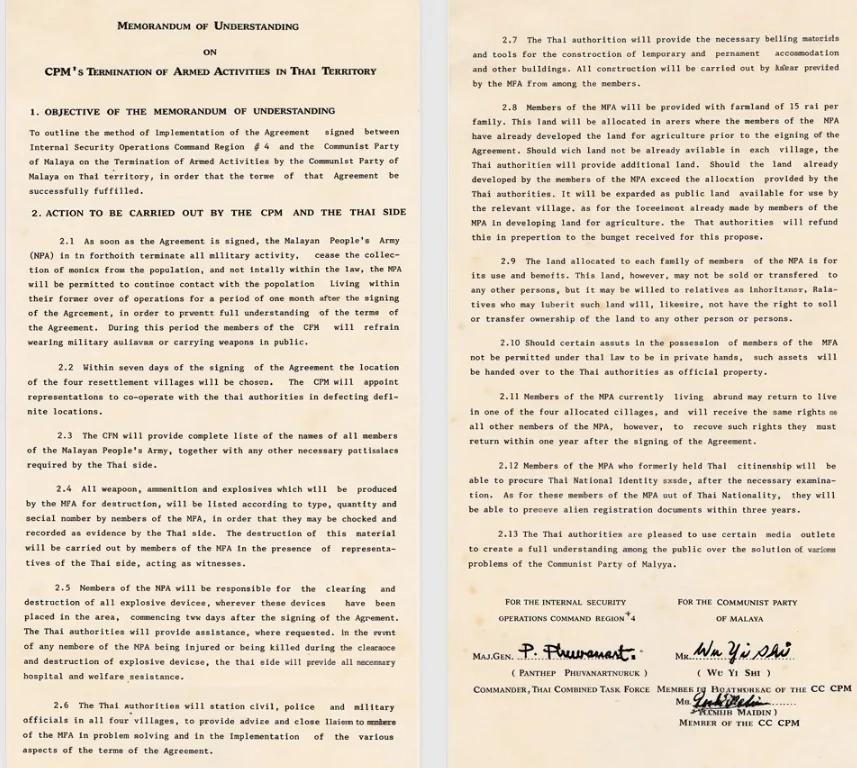
1989年12月2日缔结的《合艾和平协议》由三大部分共计五份核心法律文件构成:第一部分为马来西亚政府、泰王国政府与马来亚共产党三方共同发表的《联合公报》(Joint Communiqué);第二部分为两份主协议,即《马来西亚政府和马来亚共产党关于终止敌对活动的协议》与《泰国内安行动指挥部第四区和马来亚共产党关于结束在泰马边境森林区的武装活动的协议》;第三部分为分别对应上述两份主协议的两份《行政安排备忘录》(MOU)。这套严密的文件体系共同构成了合艾和平的国际法与国内法依据。
《联合公报》与《马来西亚政府和马来亚共产党关于终止敌对活动的协议》的四项核心条款简洁而严谨:第一条规定自本协议签署之日起,马来西亚政府与马来亚共产党一致同意停止一切武装活动;第二条规定马来亚共产党解散其领导下的武装部队(马来亚人民军),并在泰国或马来西亚销毁其武器、弹药、爆炸物与地雷;第三条明确规定原马共及其解散后的武装部队中属于马来西亚籍或原马来亚籍的成员,可自由返回马来西亚定居,并可按照马来西亚联邦宪法和法律自由参加政治活动;第四条承诺马来西亚政府将在初期阶段向返乡成员提供适当的物质与财政协助,以帮助他们重返社会开展和平生活。
对于《合艾和平协议》的真实历史性质,最具有说服力的旁证莫过于当年坐在谈判桌对面的马泰双方主谈代表。无论是泰方谈判代表团团长吉迪·拉达纳猜也将军在其回忆录《终结马共:合艾和平协议》中的详实记载,还是马方谈判代表团团长、后出任马来西亚皇家警察总长的丹斯里阿都·拉欣·莫哈末·诺在2014年协议签署二十五周年及2019年三十周年纪念活动上的多次公开证言,均以当事人的权威身份郑重澄清:《合艾和平协议》绝非一方吃掉另一方的招安受降,而是三方在相互妥协与尊重基础上达成的庄严契约。
然而,历史也记录了协议签署后的一段曲折遗憾:尽管《合艾和平协议》第三条与《行政安排备忘录》白纸黑字地保障原马来亚籍马共成员有权返回马来西亚定居,且300余名马共干部与战士在九十年代初顺利返马定居(其中包括马共中央副总书记单汝洪、中央政治局委员老谢(李安东,原名李长镇)、中央委员陈再润即伍瑞霭等高级领导人),但当马共中央总书记陈平于2000年代初依法申请返回故乡霹雳州实兆远定居及祭拜父母墓园时,马来西亚当局与法院却以陈平无法出示1940年代战乱中遗失的出生纸与公民证件等技术性理由,拒绝其入境申请,直至陈平于2013年9月16日(马来西亚日)在曼谷逝世,其骨灰方于2019年9月回归故土霹雳州红土坎大海与蒂蒂旺沙山脉。拉欣诺晚年亦多次公开批评当局阻挠陈平回国之举违背了当年普吉岛谈判的诚信精神。
From the standpoint of archival diplomatics, the Haadyai Peace Accord concluded on December 2, 1989 comprises five core legal instruments across three tiers: first, the Tripartite Joint Communiqué issued jointly by the Government of Malaysia, the Royal Thai Government, and the Communist Party of Malaya; second, the two main Peace Agreements - the 'Agreement Between the Government of Malaysia and the Communist Party of Malaya to Terminate Hostilities' and the 'Agreement Between the Internal Security Operations Command Region 4 and the Communist Party of Malaya on the Termination of Armed Activities in the Thai-Malaysian Border Jungle Area'; and third, the two corresponding Administrative Memoranda of Understanding (MOU). Together, these five documents form an interlocking legal architecture.
The four articles of the Agreement Between the Government of Malaysia and the Communist Party of Malaya are concise and unambiguous: Article 1 stipulates that upon signature, the Government of Malaysia and the CPM shall cease all armed activities; Article 2 provides that the CPM shall disband its armed forces (the Malayan People's Army) and destroy its weapons, ammunition, explosives, and booby traps in Thailand or Malaysia; Article 3 guarantees that members of the CPM and its disbanded armed forces who are of Malaysian or Malayan origin may freely return to settle in Malaysia and freely participate in political activities within the framework of the Federal Constitution and laws; and Article 4 commits the Government of Malaysia to provide fair treatment and financial assistance to returning members to facilitate their reintegration into society.
The most compelling corroboration of the true legal nature of the Haadyai Peace Accord comes from the chief negotiators who sat across the table from the CPM. Both Thai Delegation Head General Kitti Rattanachaya in his memoirs on the Haadyai peace process and Malaysian Delegation Head Tan Sri Abdul Rahim Mohd. Noor (who later served as Malaysia's Inspector-General of Police) in his public addresses marking the 25th anniversary in 2014 and the 30th anniversary in 2019 unequivocally testified that the Haadyai Peace Accord was not a capitulation, but a solemn treaty concluded among equal partners.
At the same time, history records a poignant postscript to the accord's implementation: although Article 3 of the Peace Agreement and the Administrative MOU explicitly guaranteed members of Malayan origin the right to return and settle in Malaysia - under which over 300 CPM cadres and combatants, including Deputy General Secretary Shan Ruhong, Politburo Member Lao Xie (Lee An-tung, born Lee Chang Chun), and Central Committee Member Chen Zairun (Wu Rui Ai), successfully returned to Malaysia in the early 1990s - when General Secretary Chin Peng applied in the 2000s to return to his hometown of Sitiawan, Perak to spend his final years and visit his parents' graves, Malaysian authorities and courts rejected his application on the technicality that he could not produce pre-1948 birth and citizenship certificates lost during wartime. Chin Peng passed away in Bangkok on September 16, 2013 (Malaysia Day), and his ashes were finally brought home in September 2019 to be scattered into the sea off Lumut and across the Titiwangsa Range in Perak - an obstruction that Tan Sri Rahim Noor publicly criticized as contrary to the spirit of good faith pledged at Phuket.
1989年12月2日缔结的《合艾和平协议》由三大部分共计五份核心法律文件构成:第一部分为马来西亚政府、泰王国政府与马来亚共产党三方共同发表的《联合公报》(Joint Communiqué);第二部分为两份主协议,即《马来西亚政府和马来亚共产党关于终止敌对活动的协议》与《泰国内安行动指挥部第四区和马来亚共产党关于结束在泰马边境森林区的武装活动的协议》;第三部分为分别对应上述两份主协议的两份《行政安排备忘录》(MOU)。这套严密的文件体系共同构成了合艾和平的国际法与国内法依据。
《联合公报》与《马来西亚政府和马来亚共产党关于终止敌对活动的协议》的四项核心条款简洁而严谨:第一条规定自本协议签署之日起,马来西亚政府与马来亚共产党一致同意停止一切武装活动;第二条规定马来亚共产党解散其领导下的武装部队(马来亚人民军),并在泰国或马来西亚销毁其武器、弹药、爆炸物与地雷;第三条明确规定原马共及其解散后的武装部队中属于马来西亚籍或原马来亚籍的成员,可自由返回马来西亚定居,并可按照马来西亚联邦宪法和法律自由参加政治活动;第四条承诺马来西亚政府将在初期阶段向返乡成员提供适当的物质与财政协助,以帮助他们重返社会开展和平生活。
From the standpoint of archival diplomatics, the Haadyai Peace Accord concluded on December 2, 1989 comprises five core legal instruments across three tiers: first, the Tripartite Joint Communiqué issued jointly by the Government of Malaysia, the Royal Thai Government, and the Communist Party of Malaya; second, the two main Peace Agreements - the 'Agreement Between the Government of Malaysia and the Communist Party of Malaya to Terminate Hostilities' and the 'Agreement Between the Internal Security Operations Command Region 4 and the Communist Party of Malaya on the Termination of Armed Activities in the Thai-Malaysian Border Jungle Area'; and third, the two corresponding Administrative Memoranda of Understanding (MOU). Together, these five documents form an interlocking legal architecture.
The four articles of the Agreement Between the Government of Malaysia and the Communist Party of Malaya are concise and unambiguous: Article 1 stipulates that upon signature, the Government of Malaysia and the CPM shall cease all armed activities; Article 2 provides that the CPM shall disband its armed forces (the Malayan People's Army) and destroy its weapons, ammunition, explosives, and booby traps in Thailand or Malaysia; Article 3 guarantees that members of the CPM and its disbanded armed forces who are of Malaysian or Malayan origin may freely return to settle in Malaysia and freely participate in political activities within the framework of the Federal Constitution and laws; and Article 4 commits the Government of Malaysia to provide fair treatment and financial assistance to returning members to facilitate their reintegration into society.
三方都认识到,这项体面的和解将为泰马边境地区以及整个马来西亚带来繁荣、稳定与安全。All three parties recognize that this honourable settlement will bring prosperity, stability and security to the Thai-Malaysian border region and Malaysia.— 泰国陆军总司令兼代理武装部队最高统帅差瓦立·永猜裕上将(1989年12月2日合艾和平协议签署仪式致辞) | General Chavalit Yongchaiyudh (Royal Thai Army Commander-in-Chief and Acting Supreme Commander, Address at the Haadyai Peace Accord Signing Ceremony, December 2, 1989)
对马来西亚人民来说,这份成就是全民共同意志的结晶,更归功于为国家付出牺牲的军警。For Malaysians, this achievement is the fruit of our shared resolve and, above all, the sacrifice of those who guarded us, the soldiers and the police.— 马来西亚首相马哈迪(1989年12月31日新年献词,马来西亚国家档案馆档号:ANM USM/PM/1989/12/31) | Prime Minister of Malaysia Mahathir Mohamad (New Year Address, December 31, 1989, National Archives of Malaysia Ref: ANM USM/PM/1989/12/31)
《合艾和平协议》绝不是马来亚共产党的投降,而是一项庄严而罕见的和平协议。在长达十个月的五轮谈判中,马共代表团展现了高度的政治原则性与组织纪律性,三方是以完全平等的伙伴身份共同缔结了这项协议。The Haadyai Peace Accord was by no means a surrender by the Communist Party of Malaya, but a solemn and rare peace agreement. Throughout ten months and five rounds of negotiations, the CPM delegation demonstrated a high degree of political principle and organizational discipline, and all three parties concluded this accord as equal partners.— 前马来西亚皇家警察总长、合艾和谈马方代表团团长丹斯里阿都·拉欣·莫哈末·诺在《合艾和平协议》签署二十五周年研讨会上的公开证言(2014年12月) | Public Testimony by Tan Sri Abdul Rahim Mohd. Noor (Former Inspector-General of Police and Head of the Malaysian Negotiation Delegation) at the 25th Anniversary Symposium of the Haadyai Peace Accord (December 2014)
对于《合艾和平协议》的真实历史性质,最具有说服力的旁证莫过于当年坐在谈判桌对面的马泰双方主谈代表。无论是泰方谈判代表团团长吉迪·拉达纳猜也将军在其回忆录《终结马共:合艾和平协议》中的详实记载,还是马方谈判代表团团长、后出任马来西亚皇家警察总长的丹斯里阿都·拉欣·莫哈末·诺在2014年协议签署二十五周年及2019年三十周年纪念活动上的多次公开证言,均以当事人的权威身份郑重澄清:《合艾和平协议》绝非一方吃掉另一方的招安受降,而是三方在相互妥协与尊重基础上达成的庄严契约。
然而,历史也记录了协议签署后的一段曲折遗憾:尽管《合艾和平协议》第三条与《行政安排备忘录》白纸黑字地保障原马来亚籍马共成员有权返回马来西亚定居,且300余名马共干部与战士在九十年代初顺利返马定居(其中包括马共中央副总书记单汝洪、中央政治局委员老谢(李安东,原名李长镇)、中央委员陈再润即伍瑞霭等高级领导人),但当马共中央总书记陈平于2000年代初依法申请返回故乡霹雳州实兆远定居及祭拜父母墓园时,马来西亚当局与法院却以陈平无法出示1940年代战乱中遗失的出生纸与公民证件等技术性理由,拒绝其入境申请,直至陈平于2013年9月16日(马来西亚日)在曼谷逝世,其骨灰方于2019年9月回归故土霹雳州红土坎大海与蒂蒂旺沙山脉。拉欣诺晚年亦多次公开批评当局阻挠陈平回国之举违背了当年普吉岛谈判的诚信精神。
The most compelling corroboration of the true legal nature of the Haadyai Peace Accord comes from the chief negotiators who sat across the table from the CPM. Both Thai Delegation Head General Kitti Rattanachaya in his memoirs on the Haadyai peace process and Malaysian Delegation Head Tan Sri Abdul Rahim Mohd. Noor (who later served as Malaysia's Inspector-General of Police) in his public addresses marking the 25th anniversary in 2014 and the 30th anniversary in 2019 unequivocally testified that the Haadyai Peace Accord was not a capitulation, but a solemn treaty concluded among equal partners.
At the same time, history records a poignant postscript to the accord's implementation: although Article 3 of the Peace Agreement and the Administrative MOU explicitly guaranteed members of Malayan origin the right to return and settle in Malaysia - under which over 300 CPM cadres and combatants, including Deputy General Secretary Shan Ruhong, Politburo Member Lao Xie (Lee An-tung, born Lee Chang Chun), and Central Committee Member Chen Zairun (Wu Rui Ai), successfully returned to Malaysia in the early 1990s - when General Secretary Chin Peng applied in the 2000s to return to his hometown of Sitiawan, Perak to spend his final years and visit his parents' graves, Malaysian authorities and courts rejected his application on the technicality that he could not produce pre-1948 birth and citizenship certificates lost during wartime. Chin Peng passed away in Bangkok on September 16, 2013 (Malaysia Day), and his ashes were finally brought home in September 2019 to be scattered into the sea off Lumut and across the Titiwangsa Range in Perak - an obstruction that Tan Sri Rahim Noor publicly criticized as contrary to the spirit of good faith pledged at Phuket.
第四章:结束战争,却不结束政党:政党主体性与自行销毁武器
Chapter 4: Ending the War Without Ending the Party: Political Agency and Self-Destruction of Weapons
审视1989年《合艾和平协议》的法律文本与执行全过程,最核心的法理特征即在于<strong class="text-[#771113] font-bold">“结束战争,却不结束政党。”(Ending the War Without Ending the Party.)</strong>这一历史性定位,严格界定了“结束武装行动、解散马共领导的武装部队(马来亚人民军)”与“保留马来亚共产党政党历史主体性”之间的界限。目睹了马共在抗英时期所展现的组织能力,以及其能够维持规模数千人的武装力量和地下组织达五十年之久,马来西亚政府决心在《和平协议》之后让这个党不再存在。从一开始,这就是谈判的核心争议点:马共寻求合法化,而马方则坚持要求其正式解散。陈平和他的谈判团队巧妙地将这一议题从谈判桌上移开;双方都明白,一旦继续纠缠下去,谈判将会破裂。对马共而言,“解散”是不能接受的,这意味着否定自己的斗争事业、历史和尊严,是彻底的投降。最终签署的主协议与《联合公报》中,没有任何一处条款宣布解散马来亚共产党,协议所终止的仅仅是持续四十一年的武装行动,所解散的仅仅是马共领导下的武装部队建制(即马来亚人民军,MPA)。
1989年11月30日,即正式签署大典前两天,自1955年华玲和谈以来隐身幕后三十四年的马共中央总书记陈平,在泰方谈判团长吉迪将军与联合特遣部队司令班贴少将陪同下,首次在合艾公开举行记者招待会。面对云集合艾的国际媒体,陈平重申了马共自1955年华玲谈判以来一贯坚守的原则底线:如果和平意味着必须屈辱投降或否定自身为马来亚独立所作的历史贡献,马共宁可战斗到底;唯有当对手承认马共的对等政治地位,有尊严的和平才得以实现。
1989年12月10日,出席合艾签署大典的马共中央委员与代表团成员返回泰南边境森林大本营,受到全营指战员的热烈迎接,随即向全军传达协议精神并启动复员与武器销毁工作。按照《合艾和平协议》第二条及配套《备忘录》规定,马共无需向马、泰两国当局上缴武器,绝不举行任何缴械投降的仪式,而是自协议签署之日起七十五天内,在原泰马边境的四个防区营地内,由马共领导的武装部队(马来亚人民军)指战员亲手使用炸药与焊枪将武器弹药集中炸毁、熔毁,马泰双方仅派出核查代表在场见证并签署销毁清单。
在武器销毁完毕、降下马来亚人民军一星军旗的庄严告别集会之后,泰国陆军第四军区司令部专门派出军乐队与仪仗队,以隆重的军人礼仪欢迎走下山林的人民军指战员步入和平村新生活。从拒绝一字一句的投降措辞,到由战士亲手销毁伴随自己半生的枪支,马共在终结四十一年武装斗争的最后一刻,依然完整捍卫了革命政党与人民武装的军人尊严。
A defining legal feature of the 1989 Haadyai Peace Accord is encapsulated in the principle of <strong class="text-[#771113] font-bold">"Ending the War Without Ending the Party." (结束战争,却不结束政党。)</strong> Having witnessed the Communist Party's organizational capabilities during the anti-British struggle - and its ability to sustain armed forces and underground networks numbering in the thousands for five decades - the Malaysian government was resolved to ensure the Party would cease to exist following the Peace Agreement. From the outset, this was the core point of contention: the CPM sought legal recognition, while the Malaysian government demanded its formal dissolution. Chin Peng and his negotiating team skilfully steered the issue off the table; both sides understood that pressing it would have collapsed the Talks. For the CPM, dissolution was unacceptable. It would have meant renouncing its cause, its history, and its dignity - a total surrender. Consequently, neither the Joint Communiqué nor the Peace Agreements contained any provision dissolving the CPM; the accords terminated armed activities and disbanded only the CPM-led military formation - the Malayan People's Army.
On November 30, 1989, two days before the signing ceremony, CPM General Secretary Chin Peng - appearing in public for the first time in thirty-four years since the 1955 Baling Talks, accompanied by General Kitti Rattanachaya and Maj. Gen. Panthep Phuwananurak - held a press conference in Hat Yai. Addressing the international media, Chin Peng reaffirmed the principle he had upheld since Baling in 1955: if peace required humiliating capitulation or the repudiation of the party's struggle for Malayan independence, the CPM would never sign; an honorable peace became possible only when all parties negotiated on the basis of equality and mutual respect.
On December 10, 1989, the CPM Central Committee and delegation members returned from the Hat Yai signing ceremony to the central border jungle camp, where they were warmly welcomed by the officers and fighters of the CPM-led Malayan People's Army and initiated the demobilization and weapons decommissioning process. Under Article 2 of the Haadyai Peace Accord and the accompanying Memoranda of Understanding, the CPM was not required to hand over its arms to the Malaysian or Thai authorities and held no ceremony of weapon surrender or capitulation. Instead, within seventy-five days of the signing, combatants of the CPM-led armed units (the Malayan People's Army) themselves used explosives and cutting torches inside their four border camp zones to blow up and melt down their weaponry and ammunition, while Thai and Malaysian verification representatives merely witnessed the destruction and co-signed the inventory.
Following the completion of weapons destruction and the final ceremonial lowering of the MPA One-Star Army Flag, the Royal Thai 4th Army Region Command dispatched military bands and honor guards to welcome the demobilized combatants into civilian life in the Peace Villages with full military courtesy. From rejecting every syllable of surrender at the negotiating table to destroying their own arms with their own hands, the CPM upheld its institutional and military dignity to the very end of its forty-one-year armed struggle.
审视1989年《合艾和平协议》的法律文本与执行全过程,最核心的法理特征即在于<strong class="text-[#771113] font-bold">“结束战争,却不结束政党。”(Ending the War Without Ending the Party.)</strong>这一历史性定位,严格界定了“结束武装行动、解散马共领导的武装部队(马来亚人民军)”与“保留马来亚共产党政党历史主体性”之间的界限。目睹了马共在抗英时期所展现的组织能力,以及其能够维持规模数千人的武装力量和地下组织达五十年之久,马来西亚政府决心在《和平协议》之后让这个党不再存在。从一开始,这就是谈判的核心争议点:马共寻求合法化,而马方则坚持要求其正式解散。陈平和他的谈判团队巧妙地将这一议题从谈判桌上移开;双方都明白,一旦继续纠缠下去,谈判将会破裂。对马共而言,“解散”是不能接受的,这意味着否定自己的斗争事业、历史和尊严,是彻底的投降。最终签署的主协议与《联合公报》中,没有任何一处条款宣布解散马来亚共产党,协议所终止的仅仅是持续四十一年的武装行动,所解散的仅仅是马共领导下的武装部队建制(即马来亚人民军,MPA)。
1989年11月30日,即正式签署大典前两天,自1955年华玲和谈以来隐身幕后三十四年的马共中央总书记陈平,在泰方谈判团长吉迪将军与联合特遣部队司令班贴少将陪同下,首次在合艾公开举行记者招待会。面对云集合艾的国际媒体,陈平重申了马共自1955年华玲谈判以来一贯坚守的原则底线:如果和平意味着必须屈辱投降或否定自身为马来亚独立所作的历史贡献,马共宁可战斗到底;唯有当对手承认马共的对等政治地位,有尊严的和平才得以实现。
A defining legal feature of the 1989 Haadyai Peace Accord is encapsulated in the principle of <strong class="text-[#771113] font-bold">"Ending the War Without Ending the Party." (结束战争,却不结束政党。)</strong> Having witnessed the Communist Party's organizational capabilities during the anti-British struggle - and its ability to sustain armed forces and underground networks numbering in the thousands for five decades - the Malaysian government was resolved to ensure the Party would cease to exist following the Peace Agreement. From the outset, this was the core point of contention: the CPM sought legal recognition, while the Malaysian government demanded its formal dissolution. Chin Peng and his negotiating team skilfully steered the issue off the table; both sides understood that pressing it would have collapsed the Talks. For the CPM, dissolution was unacceptable. It would have meant renouncing its cause, its history, and its dignity - a total surrender. Consequently, neither the Joint Communiqué nor the Peace Agreements contained any provision dissolving the CPM; the accords terminated armed activities and disbanded only the CPM-led military formation - the Malayan People's Army.
On November 30, 1989, two days before the signing ceremony, CPM General Secretary Chin Peng - appearing in public for the first time in thirty-four years since the 1955 Baling Talks, accompanied by General Kitti Rattanachaya and Maj. Gen. Panthep Phuwananurak - held a press conference in Hat Yai. Addressing the international media, Chin Peng reaffirmed the principle he had upheld since Baling in 1955: if peace required humiliating capitulation or the repudiation of the party's struggle for Malayan independence, the CPM would never sign; an honorable peace became possible only when all parties negotiated on the basis of equality and mutual respect.
要和平,但必须是有尊严的和平;要和解,但必须是光荣的和解。不接受以投降为前提的和平;不讨论解散马共;不进行象征投降的举动,如交枪或卖枪;不允许以内部安全法处理回国成员。We want peace, but it must be a peace with dignity; we want reconciliation, but it must be an honorable reconciliation. Non-acceptance of any peace premised on surrender; non-acceptance of any discussion regarding the dissolution of the CPM; non-acceptance of any symbolic acts of capitulation, such as the handing over or selling of weapons; non-acceptance of the application of the Internal Security Act upon returning members.— 马共中央总书记陈平为普吉三方和谈划下的四条不可逾越底线(1988年10月) | Four Unbreakable Negotiation Red Lines Set by CPM General Secretary Chin Peng for the Phuket Tripartite Peace Talks (October 1988)
1989年12月10日,出席合艾签署大典的马共中央委员与代表团成员返回泰南边境森林大本营,受到全营指战员的热烈迎接,随即向全军传达协议精神并启动复员与武器销毁工作。按照《合艾和平协议》第二条及配套《备忘录》规定,马共无需向马、泰两国当局上缴武器,绝不举行任何缴械投降的仪式,而是自协议签署之日起七十五天内,在原泰马边境的四个防区营地内,由马共领导的武装部队(马来亚人民军)指战员亲手使用炸药与焊枪将武器弹药集中炸毁、熔毁,马泰双方仅派出核查代表在场见证并签署销毁清单。
在武器销毁完毕、降下马来亚人民军一星军旗的庄严告别集会之后,泰国陆军第四军区司令部专门派出军乐队与仪仗队,以隆重的军人礼仪欢迎走下山林的人民军指战员步入和平村新生活。从拒绝一字一句的投降措辞,到由战士亲手销毁伴随自己半生的枪支,马共在终结四十一年武装斗争的最后一刻,依然完整捍卫了革命政党与人民武装的军人尊严。
On December 10, 1989, the CPM Central Committee and delegation members returned from the Hat Yai signing ceremony to the central border jungle camp, where they were warmly welcomed by the officers and fighters of the CPM-led Malayan People's Army and initiated the demobilization and weapons decommissioning process. Under Article 2 of the Haadyai Peace Accord and the accompanying Memoranda of Understanding, the CPM was not required to hand over its arms to the Malaysian or Thai authorities and held no ceremony of weapon surrender or capitulation. Instead, within seventy-five days of the signing, combatants of the CPM-led armed units (the Malayan People's Army) themselves used explosives and cutting torches inside their four border camp zones to blow up and melt down their weaponry and ammunition, while Thai and Malaysian verification representatives merely witnessed the destruction and co-signed the inventory.
Following the completion of weapons destruction and the final ceremonial lowering of the MPA One-Star Army Flag, the Royal Thai 4th Army Region Command dispatched military bands and honor guards to welcome the demobilized combatants into civilian life in the Peace Villages with full military courtesy. From rejecting every syllable of surrender at the negotiating table to destroying their own arms with their own hands, the CPM upheld its institutional and military dignity to the very end of its forty-one-year armed struggle.
第五章:泰南四个朱拉蓬公主发展村:留泰指战员的土地与国籍保障
Chapter 5: The Four Chulabhorn Development Villages: Land and Citizenship Guarantees in Southern Thailand
在《合艾和平协议》的谈判与执行体系中,如何妥善安置决定留在泰国定居的近千名马来亚人民军指战员及其家属,是检验这场和平是否真正具备尊严与人道保障的试金石。由于马来亚人民军中有相当一部分指战员系在泰南出生或长期在泰马边境作战成家,马共代表团在1989年5月至6月与泰国内安行动指挥部第四区(ISOC Region 4)的双边谈判中,专门制定了详尽的留泰安置方案,并正式写入12月2日签署的《泰国内安行动指挥部第四区与马来亚共产党关于结束在泰马边境森林区的武装活动的备忘录》。
依据该备忘录规定,泰国政府与陆军第四军区将原马来亚人民军驻扎的四个主要根据地(第十二支队勿洞防区、第八支队亚哈防区、第十二支队邦朗防区、第十支队素基琳防区)就地改建为四个和平村,并纳入由泰王拉玛九世普密蓬·阿杜德的小女儿朱拉蓬公主殿下(Princess Chulabhorn Walailak)赞助的皇家发展计划,正式命名为第九、第十、第十一、第十二朱拉蓬公主发展村(Chulabhorn Development Villages No. 9-12,分别位于也拉府勿洞县、也拉府亚哈县、也拉府邦朗县及陶公府素基琳县)。
这一备忘录所落实的经济与法律保障,在世界现代游击战和平复员史上堪称罕见的典范:泰方不仅为每一户定居家庭无偿划拨15莱(约合2.4公顷或36华亩)的农业耕地与四分之一莱的住宅用地,还向每户发放26,000泰铢的建房材料补助,并按每人每天22泰铢的标准连续发放三年的日常生活津贴;泰军工程部队更协助各和平村铺设柏油公路、架设电网、兴建学校、诊所与清真寺,最后为全体和平村居民及其子女正式办理泰国公民身份证与户籍登记。
在随后的岁月里,这批历经战火淬炼的前马来亚人民军指战员发扬高度的组织纪律性与自力更生精神,在昔日布满地雷与战壕的荒山野岭上垦殖橡胶园、榴莲果园,并依托冷战丛林地道遗迹、万花园与百草园发展生态文化旅游,将四个和平村建设成为泰南边境经济富足、社区和谐的模范村落,完整保留了这一代革命者的集体记忆与历史尊严。
A cornerstone of the Haadyai Peace Accord was the dignified resettlement of the nearly one thousand Malayan People's Army combatants and dependents who chose to remain in southern Thailand. Because many MPA fighters had been born in southern Thailand or had formed families in the border region over decades of struggle, the CPM delegation negotiated a comprehensive settlement program with Thailand's Internal Security Operations Command Region 4 (ISOC Region 4) in May-June 1989, codifying it in the December 2, 1989 Administrative Memorandum of Understanding.
Under this MOU, the Royal Thai Government and the 4th Army Region converted the four principal base areas of the Malayan People's Army (the 12th Regiment zones in Betong and Bannang Sata, the 8th Regiment zone in Yaha, and the 10th Detachment zone in Sukhirin) into four Peace Villages. Integrated into the Royal Development Project patronized by Her Royal Highness Princess Chulabhorn Walailak, youngest daughter of King Bhumibol Adulyadej (Rama IX), they were officially designated as Chulabhorn Development Villages No. 9, 10, 11, and 12 in Betong, Yaha, and Bannang Sata districts of Yala Province and Sukhirin district of Narathiwat Province.
The economic and legal guarantees implemented under this MOU set a benchmark in the modern history of guerrilla demobilization: each household received 15 rai (approximately 2.4 hectares) of agricultural land, 1/4 rai of residential land, and 26,000 baht in housing construction materials, along with a daily subsistence allowance of 22 baht per person for three years. Royal Thai Army engineering units assisted the Peace Villages in building paved roads, power grids, schools, clinics, and mosques, culminating in the granting of full Thai citizenship and household registration to all residents and their children.
In the decades that followed, former Malayan People's Army combatants drew upon their organizational discipline and self-reliance to transform erstwhile minefields and mountain redoubts into thriving rubber plantations, durian orchards, and eco-historical tourism sites featuring the preserved jungle tunnels and botanical gardens - turning the four Peace Villages into prosperous, self-governing communities that safeguarded their collective memory and dignity.
在《合艾和平协议》的谈判与执行体系中,如何妥善安置决定留在泰国定居的近千名马来亚人民军指战员及其家属,是检验这场和平是否真正具备尊严与人道保障的试金石。由于马来亚人民军中有相当一部分指战员系在泰南出生或长期在泰马边境作战成家,马共代表团在1989年5月至6月与泰国内安行动指挥部第四区(ISOC Region 4)的双边谈判中,专门制定了详尽的留泰安置方案,并正式写入12月2日签署的《泰国内安行动指挥部第四区与马来亚共产党关于结束在泰马边境森林区的武装活动的备忘录》。
依据该备忘录规定,泰国政府与陆军第四军区将原马来亚人民军驻扎的四个主要根据地(第十二支队勿洞防区、第八支队亚哈防区、第十二支队邦朗防区、第十支队素基琳防区)就地改建为四个和平村,并纳入由泰王拉玛九世普密蓬·阿杜德的小女儿朱拉蓬公主殿下(Princess Chulabhorn Walailak)赞助的皇家发展计划,正式命名为第九、第十、第十一、第十二朱拉蓬公主发展村(Chulabhorn Development Villages No. 9-12,分别位于也拉府勿洞县、也拉府亚哈县、也拉府邦朗县及陶公府素基琳县)。
A cornerstone of the Haadyai Peace Accord was the dignified resettlement of the nearly one thousand Malayan People's Army combatants and dependents who chose to remain in southern Thailand. Because many MPA fighters had been born in southern Thailand or had formed families in the border region over decades of struggle, the CPM delegation negotiated a comprehensive settlement program with Thailand's Internal Security Operations Command Region 4 (ISOC Region 4) in May-June 1989, codifying it in the December 2, 1989 Administrative Memorandum of Understanding.
Under this MOU, the Royal Thai Government and the 4th Army Region converted the four principal base areas of the Malayan People's Army (the 12th Regiment zones in Betong and Bannang Sata, the 8th Regiment zone in Yaha, and the 10th Detachment zone in Sukhirin) into four Peace Villages. Integrated into the Royal Development Project patronized by Her Royal Highness Princess Chulabhorn Walailak, youngest daughter of King Bhumibol Adulyadej (Rama IX), they were officially designated as Chulabhorn Development Villages No. 9, 10, 11, and 12 in Betong, Yaha, and Bannang Sata districts of Yala Province and Sukhirin district of Narathiwat Province.
泰国内安行动指挥部第四区将为留在泰国定居的原马来亚共产党及其武装部队成员提供住房建筑材料、每户十五莱农业用地与四分之一莱宅基地,并按每人每天二十二泰铢的标准发放为期三年的生活津贴,最终协助全体定居者依法取得泰国国籍。ISOC Region 4 shall provide former members of the Communist Party of Malaya and its armed forces settling in Thailand with housing construction materials, 15 rai of agricultural land and 1/4 rai of residential land per household, and a daily subsistence allowance of 22 baht per person for a period of three years, ultimately facilitating the acquisition of Thai citizenship in accordance with the law.— 《泰国内安行动指挥部第四区与马来亚共产党备忘录》核心安置条款(1989年12月2日) | Core Resettlement Provisions of the ISOC Region 4 - CPM Memorandum of Understanding (December 2, 1989)
这一备忘录所落实的经济与法律保障,在世界现代游击战和平复员史上堪称罕见的典范:泰方不仅为每一户定居家庭无偿划拨15莱(约合2.4公顷或36华亩)的农业耕地与四分之一莱的住宅用地,还向每户发放26,000泰铢的建房材料补助,并按每人每天22泰铢的标准连续发放三年的日常生活津贴;泰军工程部队更协助各和平村铺设柏油公路、架设电网、兴建学校、诊所与清真寺,最后为全体和平村居民及其子女正式办理泰国公民身份证与户籍登记。
在随后的岁月里,这批历经战火淬炼的前马来亚人民军指战员发扬高度的组织纪律性与自力更生精神,在昔日布满地雷与战壕的荒山野岭上垦殖橡胶园、榴莲果园,并依托冷战丛林地道遗迹、万花园与百草园发展生态文化旅游,将四个和平村建设成为泰南边境经济富足、社区和谐的模范村落,完整保留了这一代革命者的集体记忆与历史尊严。
The economic and legal guarantees implemented under this MOU set a benchmark in the modern history of guerrilla demobilization: each household received 15 rai (approximately 2.4 hectares) of agricultural land, 1/4 rai of residential land, and 26,000 baht in housing construction materials, along with a daily subsistence allowance of 22 baht per person for three years. Royal Thai Army engineering units assisted the Peace Villages in building paved roads, power grids, schools, clinics, and mosques, culminating in the granting of full Thai citizenship and household registration to all residents and their children.
In the decades that followed, former Malayan People's Army combatants drew upon their organizational discipline and self-reliance to transform erstwhile minefields and mountain redoubts into thriving rubber plantations, durian orchards, and eco-historical tourism sites featuring the preserved jungle tunnels and botanical gardens - turning the four Peace Villages into prosperous, self-governing communities that safeguarded their collective memory and dignity.
第六章:信念不屈:为何共产党人仍留在丛林
Chapter 6: Undefeated: Why the Communists Remained in the Jungle
1948年,英殖民政府发动了一场不敢直呼其名的殖民战争。为了安抚伦敦的保险商,官方把战争称为“紧急状态”,实则是英国殖民统治当局与马共领导的民族解放力量之间的全面较量。丛林枪声回荡多年,而独立后这场战争又延续了三十年,原因不在战场,而在一次失败的和谈。
将马来亚共产党自1930年建党、1941年至1945年领导马来亚人民抗日军(MPAJA)浴血抗日、1945年至1948年开展战后和平宪制运动、直至1948年至1989年坚持四十一年零五个月武装斗争的完整历史轨迹串联起来,1989年12月2日签署的《合艾和平协议》绝非孤立的终点,而是这场跨越半个世纪的反殖民族解放与社会改造运动的历史闭环。在二战后全球反殖民浪潮与冷战武装冲突史上,能够面对大英帝国倾尽全力的紧急状态镇压及独立后泰马两国长达数十年的联合围剿,始终保持中央指挥体系不散、军队建制不乱、并在最后以完整组织形态走上国际谈判桌签署对等和平条约的革命政党,实属凤毛麟角。
在国际和平学与冲突解决研究(Conflict Resolution Studies)领域,合艾和平模式与同一时期其他东南亚及拉美游击队的结局形成了鲜明对照:它既不同于1950年代希腊内战或菲律宾虎克军(Hukbalahap)在军事溃败下的无条件瓦解,也不同于泰国共产党在分化招安政策下的个别出降,而是由东道国军方居间调停、交战双方政府与革命政党通过五轮结构化秘密谈判、将停火复员与宪制权利及土地民生保障捆绑落实的制度化和平范式。正如国际危机组织(ICG)研究报告与《曼谷邮报》所指出的,<strong class="text-[#771113] font-bold">冷战时期大部分武装斗争多因军事清剿而结束,而合艾模式则属于少数依靠谈判彻底化解冲突的范例</strong>;<strong class="text-[#771113] font-bold">协议生效三十余年来泰马边境未见大规模复燃或武装分裂,与菲律宾、缅甸等长期反复冲突地区形成鲜明对比,被公认为东南亚罕见的彻底终结冲突典范</strong>。
马共及其领导的抗日军、民族解放军与人民军两万余名先烈的流血牺牲,早已深深熔铸进马来亚与新加坡摆脱殖民统治、迈向民族独立的历史基座之中。1948年英殖民当局之所以在发动殖民战争围剿马共三年后不得不改变无限期维持殖民统治的初衷,转而扶植本土精英加速推进自治与1957年默迪卡(Merdeka)独立进程,正是为了在政治上釜底抽薪、争夺马共高举的反殖独立旗帜。从这一结构性因果关系而言,马共的武装抗争客观上充当了催生马来亚民族独立的历史助产士。
1989年12月2日合艾蠡园酒店的落笔签字,标志着马共完成了从武装抗争者向和平缔造者的历史转型。三百余名返乡定居马来西亚的同志与近千名扎根泰南四个朱拉蓬公主发展村的指战员,以和平公民的身份继续守护着这段横跨半个世纪的革命记忆。那份由三方十位全权代表共同签署的《合艾和平协议》,作为马来亚共产党不屈尊严与历史功绩的法理见证,永远镌刻在东南亚现代史册之上。
In 1948, the British colonial government declared a war it dared not name. Officially an "Emergency" to placate London's insurers, this conflict pitted the state against the CPM. The jungle echoed with gunfire for years, yet the war persisted for three decades after independence. The reason lies not in the fighting, but in a failed peace talk.
When the complete historical trajectory of the Communist Party of Malaya is examined - from its founding in 1930, its leadership of the Malayan People's Anti-Japanese Army (MPAJA) from 1941 to 1945, and its postwar constitutional movement from 1945 to 1948, through forty-one years and five months of armed struggle from 1948 to 1989 - the Haadyai Peace Accord of December 2, 1989 stands as the historical culmination of a half-century anti-colonial and social emancipation movement. In the history of post-World War II anti-colonial struggles and Cold War conflicts, very few revolutionary parties withstood the full weight of British Imperial counter-insurgency during the Malayan Emergency and decades of joint Thai-Malaysian military campaigns while keeping their central command and military organization intact to negotiate an equal peace treaty.
Within international peace and conflict resolution studies, the Haadyai Peace Model contrasts sharply with the fate of other guerrilla movements in Southeast Asia and Latin America: unlike the military collapse of the Hukbalahap in the Philippines in the 1950s or the fragmented individual defections of the Communist Party of Thailand in the 1980s, the Haadyai settlement was an institutionalized peace paradigm mediated by a host military, negotiated through five structured confidential rounds between sovereign governments and a revolutionary party, and anchored in binding constitutional rights, land allocation, and livelihood guarantees. As highlighted by the International Crisis Group (ICG) and the Bangkok Post, <strong class="text-[#771113] font-bold">during the Cold War most armed struggles ended through military suppression, whereas the Haadyai model is one of the few cases where a conflict was fully resolved through negotiations</strong>; <strong class="text-[#771113] font-bold">for more than thirty years after the agreement took effect, no large-scale armed resurgence or splintering occurred along the Thai-Malaysian border, making it a rare example of complete conflict closure in Southeast Asia</strong>.
The sacrifices of more than twenty thousand martyrs of the CPM, the MPAJA, the MNLA, and the MPA are inseparably woven into the historical foundation of Malayan and Singaporean independence from British colonial rule. It was the intensity of the CPM-led anti-colonial uprising after 1948 that compelled Whitehall to abandon plans for prolonged colonial rule and accelerate the transfer of power to local elites culminating in Merdeka in 1957 in order to undercut the CPM's anti-colonial banner. In this structural sense, the CPM's armed struggle served as a vital catalyst for Malayan independence.
The signatures affixed at the Lee Gardens Hotel in Hat Yai on December 2, 1989 marked the CPM's historical transition from armed combatants to peacemakers. More than three hundred comrades who returned to Malaysia and nearly one thousand combatants who built the four Chulabhorn Development Villages in southern Thailand carried forward this half-century legacy as peaceful citizens. Signed by ten plenipotentiaries of three parties, the Haadyai Peace Accord endures in modern Southeast Asian history as the legal monument to the unbroken dignity and historical contribution of the Communist Party of Malaya.
1948年,英殖民政府发动了一场不敢直呼其名的殖民战争。为了安抚伦敦的保险商,官方把战争称为“紧急状态”,实则是英国殖民统治当局与马共领导的民族解放力量之间的全面较量。丛林枪声回荡多年,而独立后这场战争又延续了三十年,原因不在战场,而在一次失败的和谈。
In 1948, the British colonial government declared a war it dared not name. Officially an "Emergency" to placate London's insurers, this conflict pitted the state against the CPM. The jungle echoed with gunfire for years, yet the war persisted for three decades after independence. The reason lies not in the fighting, but in a failed peace talk.
<strong class="text-[#771113] font-bold">华玲谈判:投降的要约,而非和平的方案</strong>
1955年,在马共寻求政治解决之际,时任马来亚联合邦首席部长的东姑阿都拉曼提出了严厉的二选一:无条件投降,或者继续被孤立。他开出的条件是,所有马共成员必须放下武器,并根据《维护公共安全条例》(PPSO)接受拘留,却不给予任何获释的承诺。<strong class="text-[#771113] font-bold">The Baling Talks: An Offer of Surrender, Not Peace</strong>— 信念不屈:为何共产党人仍留在丛林(一) | Undefeated: Why the Communists Remained in the Jungle (I)
In 1955, with the CPM seeking a political path, Chief Minister Tunku Abdul Rahman presented a stark choice: unconditional surrender or continued isolation. His terms demanded that all CPM members lay down their arms and submit to detention under the Preservation of Public Security Ordinance (PPSO), with no promise of freedom.
<strong class="text-[#771113] font-bold">一场缺乏诚意的谈判?</strong>
解密资料显示,政府的诚意值得怀疑。许多历史学者认为,这场会谈更像一场政治戏剧,目的在于公开展示马共“不让步”,以便为持续动武提供正当性。<strong class="text-[#771113] font-bold">A Negotiation in Bad Faith?</strong>— 信念不屈:为何共产党人仍留在丛林(二) | Undefeated: Why the Communists Remained in the Jungle (II)
Declassified documents now suggest the government's sincerity was questionable. Many historians argue the talks were political theatre, designed to publicly demonstrate the CPM's intransigence and justify continued military force.
<strong class="text-[#771113] font-bold">一个无解之选</strong>
对于尚未在战场上被击败的马共而言,这样的条件根本无法接受。投降不仅意味着放弃自己的事业,还等同于把战友交给一个有案可查的无限期拘禁制度,其中包括虐待、心理折磨以及用以摧毁意志的药物。<strong class="text-[#771113] font-bold">An Impossible Choice</strong>— 信念不屈:为何共产党人仍留在丛林(三) | Undefeated: Why the Communists Remained in the Jungle (III)
For the undefeated CPM members, the terms were untenable. Surrender meant not only renouncing their cause but consigning comrades to a documented regime of indefinite detention, involving abuse, psychological torment, and mind-altering drugs designed to break the human spirit.
<strong class="text-[#771113] font-bold">失落的三十四年</strong>
华玲会谈的破裂,使这场武装冲突又延续了三十四年之久。面对新老殖民主义的军事围剿,马共在极其严酷的丛林环境中坚守政治尊严与组织建制,形成了长达数十年的战略相持。<strong class="text-[#771113] font-bold">Thirty-Four Lost Years</strong>— 信念不屈:为何共产党人仍留在丛林(四) | Undefeated: Why the Communists Remained in the Jungle (IV)
The collapse of trust at Baling condemned the nation to thirty-four more years of low-intensity warfare. The anti-colonial struggle had lost its purpose, devolving into a costly and bloody stalemate.
<strong class="text-[#771113] font-bold">最终达成的体面和平</strong>
直到1989年,《合艾和平协议》才完成了华玲所未能达成的目标。这份协议超越“胜者与败者”的简单对立,以相互尊重为基础达成和解。正是务实的谈判精神,而非无条件投降,最终为这场冲突画上正式句号。<strong class="text-[#771113] font-bold">A Dignified Peace, At Last</strong>— 信念不屈:为何共产党人仍留在丛林(五) | Undefeated: Why the Communists Remained in the Jungle (V)
It was only in 1989 that the Haadyai Peace Agreement achieved what Baling could not. This accord transcended the logic of victor and vanquished, establishing a settlement grounded in mutual respect. It was this spirit of mature negotiation - not the demand for unconditional surrender - that finally brought a formal end to the conflict.
将马来亚共产党自1930年建党、1941年至1945年领导马来亚人民抗日军(MPAJA)浴血抗日、1945年至1948年开展战后和平宪制运动、直至1948年至1989年坚持四十一年零五个月武装斗争的完整历史轨迹串联起来,1989年12月2日签署的《合艾和平协议》绝非孤立的终点,而是这场跨越半个世纪的反殖民族解放与社会改造运动的历史闭环。在二战后全球反殖民浪潮与冷战武装冲突史上,能够面对大英帝国倾尽全力的紧急状态镇压及独立后泰马两国长达数十年的联合围剿,始终保持中央指挥体系不散、军队建制不乱、并在最后以完整组织形态走上国际谈判桌签署对等和平条约的革命政党,实属凤毛麟角。
在国际和平学与冲突解决研究(Conflict Resolution Studies)领域,合艾和平模式与同一时期其他东南亚及拉美游击队的结局形成了鲜明对照:它既不同于1950年代希腊内战或菲律宾虎克军(Hukbalahap)在军事溃败下的无条件瓦解,也不同于泰国共产党在分化招安政策下的个别出降,而是由东道国军方居间调停、交战双方政府与革命政党通过五轮结构化秘密谈判、将停火复员与宪制权利及土地民生保障捆绑落实的制度化和平范式。正如国际危机组织(ICG)研究报告与《曼谷邮报》所指出的,<strong class="text-[#771113] font-bold">冷战时期大部分武装斗争多因军事清剿而结束,而合艾模式则属于少数依靠谈判彻底化解冲突的范例</strong>;<strong class="text-[#771113] font-bold">协议生效三十余年来泰马边境未见大规模复燃或武装分裂,与菲律宾、缅甸等长期反复冲突地区形成鲜明对比,被公认为东南亚罕见的彻底终结冲突典范</strong>。
When the complete historical trajectory of the Communist Party of Malaya is examined - from its founding in 1930, its leadership of the Malayan People's Anti-Japanese Army (MPAJA) from 1941 to 1945, and its postwar constitutional movement from 1945 to 1948, through forty-one years and five months of armed struggle from 1948 to 1989 - the Haadyai Peace Accord of December 2, 1989 stands as the historical culmination of a half-century anti-colonial and social emancipation movement. In the history of post-World War II anti-colonial struggles and Cold War conflicts, very few revolutionary parties withstood the full weight of British Imperial counter-insurgency during the Malayan Emergency and decades of joint Thai-Malaysian military campaigns while keeping their central command and military organization intact to negotiate an equal peace treaty.
Within international peace and conflict resolution studies, the Haadyai Peace Model contrasts sharply with the fate of other guerrilla movements in Southeast Asia and Latin America: unlike the military collapse of the Hukbalahap in the Philippines in the 1950s or the fragmented individual defections of the Communist Party of Thailand in the 1980s, the Haadyai settlement was an institutionalized peace paradigm mediated by a host military, negotiated through five structured confidential rounds between sovereign governments and a revolutionary party, and anchored in binding constitutional rights, land allocation, and livelihood guarantees. As highlighted by the International Crisis Group (ICG) and the Bangkok Post, <strong class="text-[#771113] font-bold">during the Cold War most armed struggles ended through military suppression, whereas the Haadyai model is one of the few cases where a conflict was fully resolved through negotiations</strong>; <strong class="text-[#771113] font-bold">for more than thirty years after the agreement took effect, no large-scale armed resurgence or splintering occurred along the Thai-Malaysian border, making it a rare example of complete conflict closure in Southeast Asia</strong>.
冷战时期,大部分武装斗争多因军事清剿而结束;而合艾模式则属于少数依靠谈判彻底化解冲突的范例。During the Cold War, most armed struggles ended through military suppression; the Haadyai model is one of the few cases where a conflict was fully resolved through negotiations.— 国际危机组织研究报告 | International Crisis Group (ICG) - Asia Report(2020.1.21) | International Crisis Group (ICG) - Asia Report (2020.1.21)
三十余年未见大规模复燃或武装分裂,与菲律宾、缅甸等长期反复冲突地区形成对比;前战斗员如今还在纪念25周年和平日。For more than thirty years after the agreement took effect, no large-scale armed resurgence occurred along the Thai-Malaysian border, and it is widely recognized as a rare example of a complete closure in Southeast Asia.— 曼谷邮报 | Bangkok Post - 泰国主流英文日报 | Award-winning media covering South and Southeast Asia(2019.12.2) | Bangkok Post - Award-winning media covering South and Southeast Asia (2019.12.2)
马共及其领导的抗日军、民族解放军与人民军两万余名先烈的流血牺牲,早已深深熔铸进马来亚与新加坡摆脱殖民统治、迈向民族独立的历史基座之中。1948年英殖民当局之所以在发动殖民战争围剿马共三年后不得不改变无限期维持殖民统治的初衷,转而扶植本土精英加速推进自治与1957年默迪卡(Merdeka)独立进程,正是为了在政治上釜底抽薪、争夺马共高举的反殖独立旗帜。从这一结构性因果关系而言,马共的武装抗争客观上充当了催生马来亚民族独立的历史助产士。
1989年12月2日合艾蠡园酒店的落笔签字,标志着马共完成了从武装抗争者向和平缔造者的历史转型。三百余名返乡定居马来西亚的同志与近千名扎根泰南四个朱拉蓬公主发展村的指战员,以和平公民的身份继续守护着这段横跨半个世纪的革命记忆。那份由三方十位全权代表共同签署的《合艾和平协议》,作为马来亚共产党不屈尊严与历史功绩的法理见证,永远镌刻在东南亚现代史册之上。
The sacrifices of more than twenty thousand martyrs of the CPM, the MPAJA, the MNLA, and the MPA are inseparably woven into the historical foundation of Malayan and Singaporean independence from British colonial rule. It was the intensity of the CPM-led anti-colonial uprising after 1948 that compelled Whitehall to abandon plans for prolonged colonial rule and accelerate the transfer of power to local elites culminating in Merdeka in 1957 in order to undercut the CPM's anti-colonial banner. In this structural sense, the CPM's armed struggle served as a vital catalyst for Malayan independence.
The signatures affixed at the Lee Gardens Hotel in Hat Yai on December 2, 1989 marked the CPM's historical transition from armed combatants to peacemakers. More than three hundred comrades who returned to Malaysia and nearly one thousand combatants who built the four Chulabhorn Development Villages in southern Thailand carried forward this half-century legacy as peaceful citizens. Signed by ten plenipotentiaries of three parties, the Haadyai Peace Accord endures in modern Southeast Asian history as the legal monument to the unbroken dignity and historical contribution of the Communist Party of Malaya.
每一代人都有自己的梦想。如果你渴望有所作为,你就必须回应时代的呼声。我们那一代人的梦想,是要结束英国在马来亚的殖民统治。对此,我深感自豪。但梦想总要付出代价,而我们确实为此付出了代价。Every generation shapes its dreams. If you yearn to make a difference you become obligated to the clamour of your time. My generation dreamed of doing away with British colonialism in Malaya. I am proud of this fact. But you pay for your dreams. We certainly paid for ours.— 陈平《我方的历史》| Alias Chin Peng: My Side of History | Chin Peng, Alias Chin Peng: My Side of History