建制总纲第1卷:马共武装力量的历程总览(1930–1989):从抗日卫马先锋、民族解放军到人民军的半世纪建军史诗
Armed Forces Monograph Vol. 1: Master Overview of the Evolution of the CPM Armed Forces (1930–1989): Half a Century from MPAJA to MNLA and MPA
【全军历史演进六大阶段总纲】1930年马来亚共产党成立(政治组织阶段) ➔ 1941–1945年马来亚人民抗日军(MPAJA,八大独立队抗日游击战) ➔ 1948–1968年紧急状态、马来亚民族解放军(MNLA)形成与泰马边境战略转移重组 ➔ 1968–1982年武装冲突重启与南下战略突击(泰马边境时期) ➔ 1982–1988年马来亚人民军(MPA)时期:坚持、调整与和平谈判 ➔ 1989年12月2日签署《合艾和平协议》,实现体面和平并定居泰国南部勿洞、邦朗、也哈、素基林四个和平村。本卷全面统摄马共人民武装半个世纪的建军沿革、番号演变、主力支队序列与历史定位。
[Master Six-Stage Chronology of the CPM Armed Forces] 1930 Founding of the Communist Party of Malaya (Political Organization) ➔ 1941–1945 Malayan People's Anti-Japanese Army (MPAJA, 8 Independent Regiments) ➔ 1948–1968 The Emergency, Formation of the Malayan National Liberation Army (MNLA) & Border Reorganization ➔ 1968–1982 Renewed Armed Insurgency: The Thai-Malaysian Frontier Period ➔ 1982–1988 The Malayan People's Army (MPA): Endurance, Adjustment & Peace Negotiations ➔ 2 December 1989 Haadyai Peace Accord & Resettlement across Four Peace Villages (Betong, Bang Lang, Yaha, Sukhirin).
第一章:全军历史演进总览(1930–1989):从政治建党到三大建军时代的跨越
Chapter 1: Master Panorama of the Armed Forces (1930–1989): From Political Founding to Three Military Eras
在东南亚现代反法西斯与反殖民民族解放运动史上,马来亚共产党(CPM)领导的人民武装力量走过了一段横跨半个世纪、艰苦卓绝而又波澜壮阔的铁血征程。从1930年4月30日在森美兰瓜拉庇劳正式建党,到1989年12月2日在泰南合艾签署三方和平协议,马共武装力量不仅经历了从无到有、从弱到强的军事建制演进,更深刻改写了马来亚半岛的现代政治格局。
纵观马共武装力量半个世纪的历史轨迹,其演进脉络清晰地划分为六大紧密衔接的历史阶段:1930年的政治组织草创期、1941至1945年的马来亚人民抗日军(MPAJA)时期、1948至1968年的紧急状态与马来亚民族解放军(MNLA)形成及边境重组期、1968至1982年的泰马边境武装冲突重启期、1982至1988年的马来亚人民军(MPA)坚持调整与和谈期,以及1989年化剑为犁的和平转型期。每一个阶段的番号更迭与战略调整,皆顺应着反法西斯救亡与反殖民民族独立的时代大潮。
In the modern history of anti-fascist and anti-colonial national liberation movements in Southeast Asia, the people's armed forces led by the Communist Party of Malaya (CPM) traversed an extraordinary half-century journey. From the Party's founding in Kuala Pilah, Negeri Sembilan on 30 April 1930 to the signing of the tripartite Haadyai Peace Agreement in southern Thailand on 2 December 1989, the CPM armed forces evolved through distinct institutional stages that profoundly reshaped the modern political landscape of the Malayan Peninsula.
Across this fifty-year trajectory, the evolution of the CPM's military forces unfolded in six interconnected historical stages: the 1930 political founding stage, the Malayan People's Anti-Japanese Army (MPAJA, 1941–1945), the Emergency and formation/border reorganization of the Malayan National Liberation Army (MNLA, 1948–1968), the renewed armed insurgency along the Thai-Malaysian frontier (1968–1982), the Malayan People's Army (MPA) era of endurance, adjustment, and peace talks (1982–1988), and the 1989 peaceful transition.
【1930 · 马来亚共产党成立】
马共成立时是一个政治组织,尚未拥有正式武装部队。
【1941 - 1945 · 马来亚人民抗日军 (MPAJA)】
日据时期,马共组织抗日武装,在森林与乡区开展游击行动。这一阶段建立了早期的军事训练、区域组织与作战经验。[1930 · Communist Party of Malaya Established]— 录自《马共武装力量的历程(1930–1989)》总纲文献(第一、二阶段) | Verbatim Transcription from 'The Evolution of the CPM Armed Forces (1930–1989)' Master Chronicle (Stages 1 & 2)
The CPM began as a political organisation, without a formal armed force.
[1941 - 1945 · Malayan People's Anti-Japanese Army (MPAJA)]
During the Japanese Occupation, the CPM organised an anti-Japanese force that operated in jungle and rural areas. This period established early military training, regional organisation and combat experience.
第二章:从抗日铁军到民族解放军(1941–1982):丛林游击战体系与泰马边境战略支点
Chapter 2: From Anti-Japanese Iron Force to National Liberation Army (1941–1982): Jungle Guerrilla Warfare and the Border Strategic Pivot
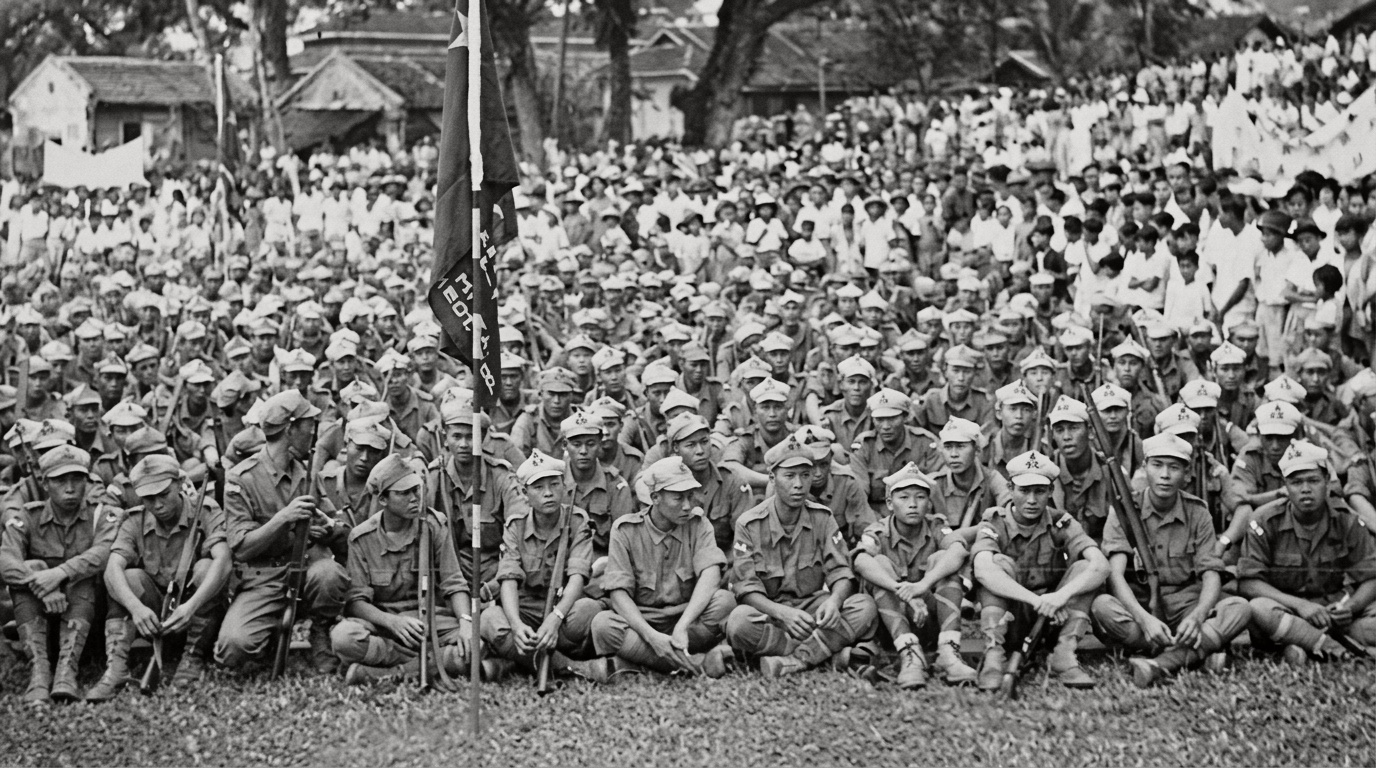
1941年12月8日日本法西斯悍然入侵马来亚,使马共完成了从地下政治政党向抗日民族解放先锋武装的历史性蜕变。在三年零八个月的日据时期,马共组建的马来亚人民抗日军(MPAJA)先后在雪兰莪、森美兰、柔佛北、柔佛南、霹雳、彭亨西、彭亨东及吉打创建八个独立队。他们在极度严酷的热带雨林与乡村腹地坚持敌后游击战,不仅锤炼出成熟的森林战术、区域指挥与后勤联络体系,更在1945年8月日本投降前夕发展为逾万人的正规游击武装,赢得各族人民与盟军的崇高敬意。
战后英国殖民当局重返马来亚,于1948年6月宣布全马进入“紧急状态”,全面取缔马共与进步工会。面对殖民当局的武力镇压,马共指战员重返森林,于1949年2月1日正式将全军统一整编为“马来亚民族解放军”(MNLA),在全马各州建立十二个支队及严密的地下“民运”支持网络。1960年第一次紧急状态结束后,面对英军与联邦军队的重兵封锁,马共中央率主力部队有计划地向泰国南部边境崇山峻岭实施战略转移与整训重组,保存了完整的指挥中枢、无线电通讯、军医与干部培训体系。1968年6月,民族解放军从泰马边境再度吹响南下号角,派遣多支精锐突击队深入霹雳、吉打、吉兰丹与彭亨腹地,开辟了长达十四年的第二轮武装斗争。
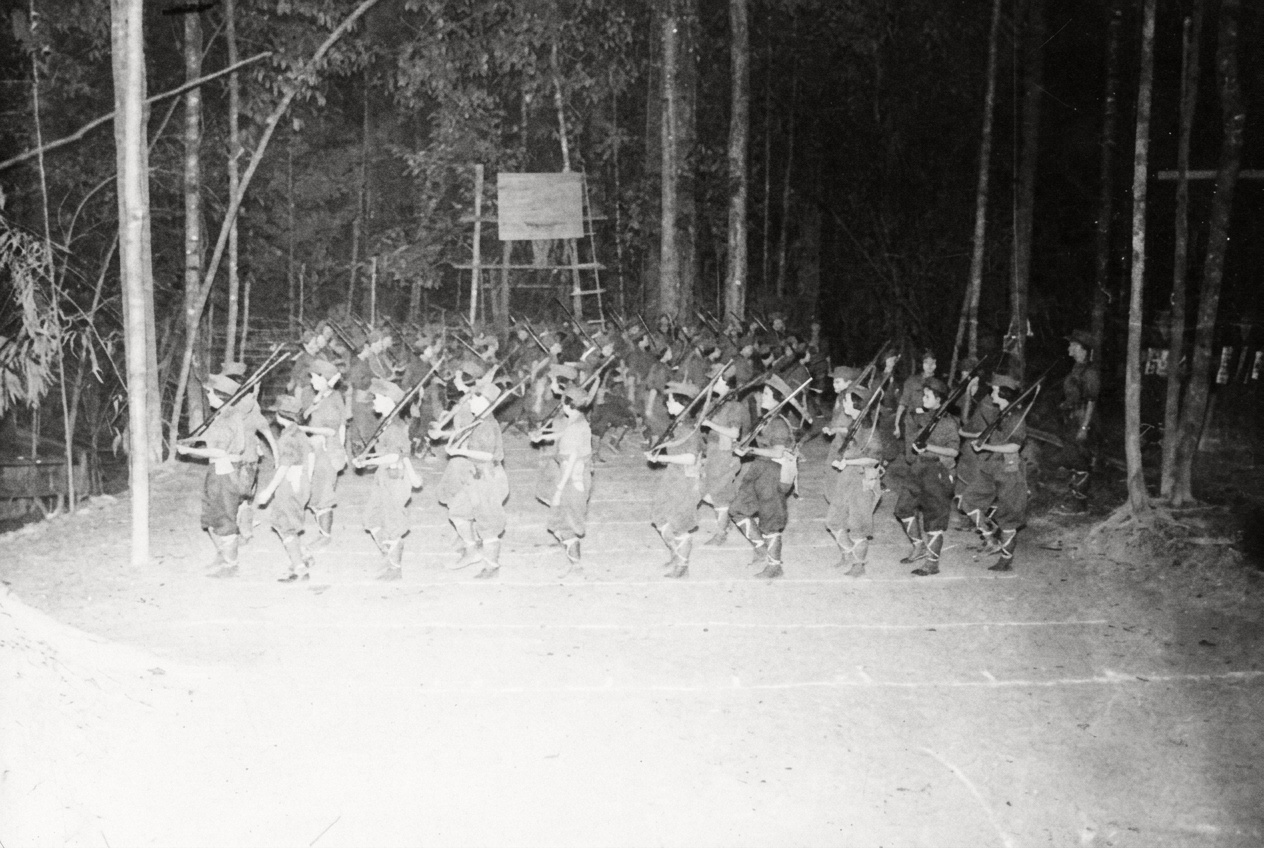
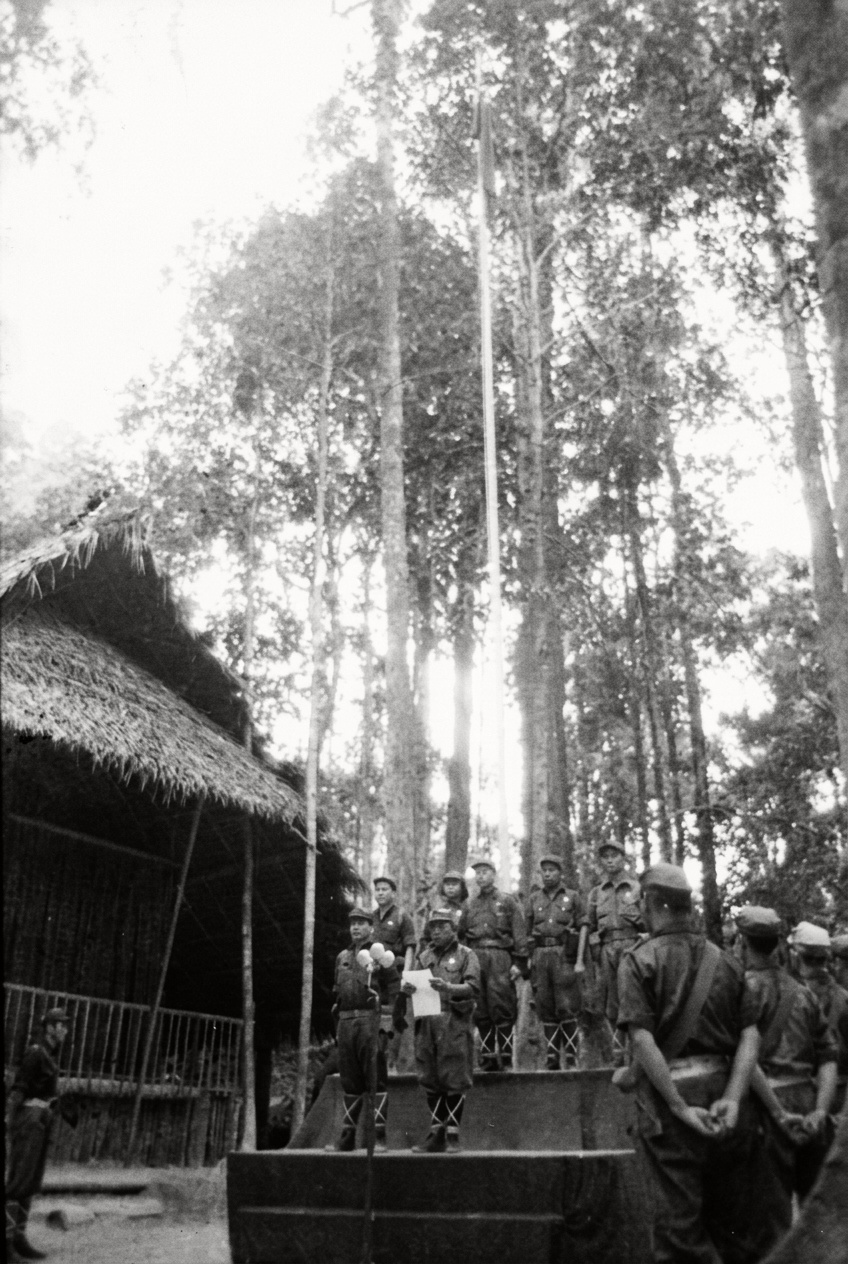
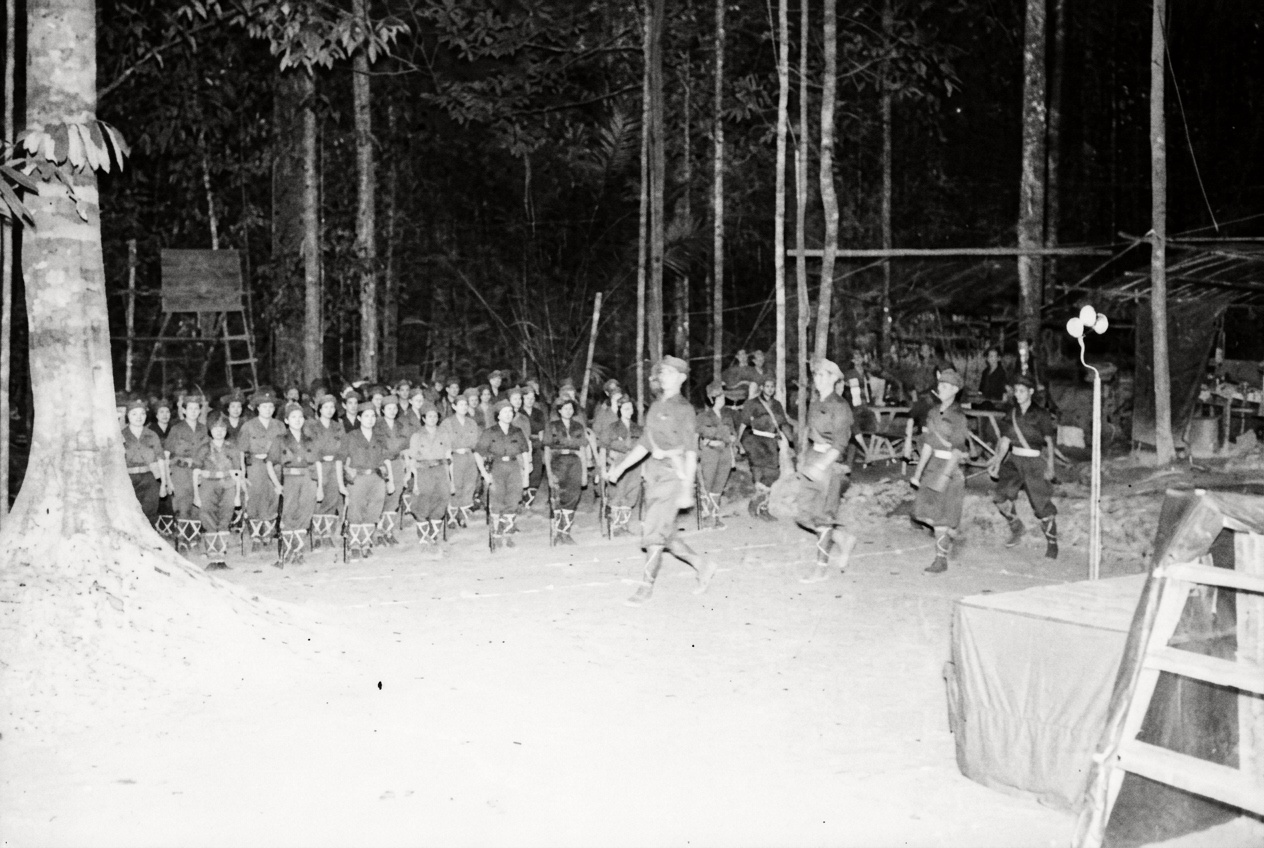
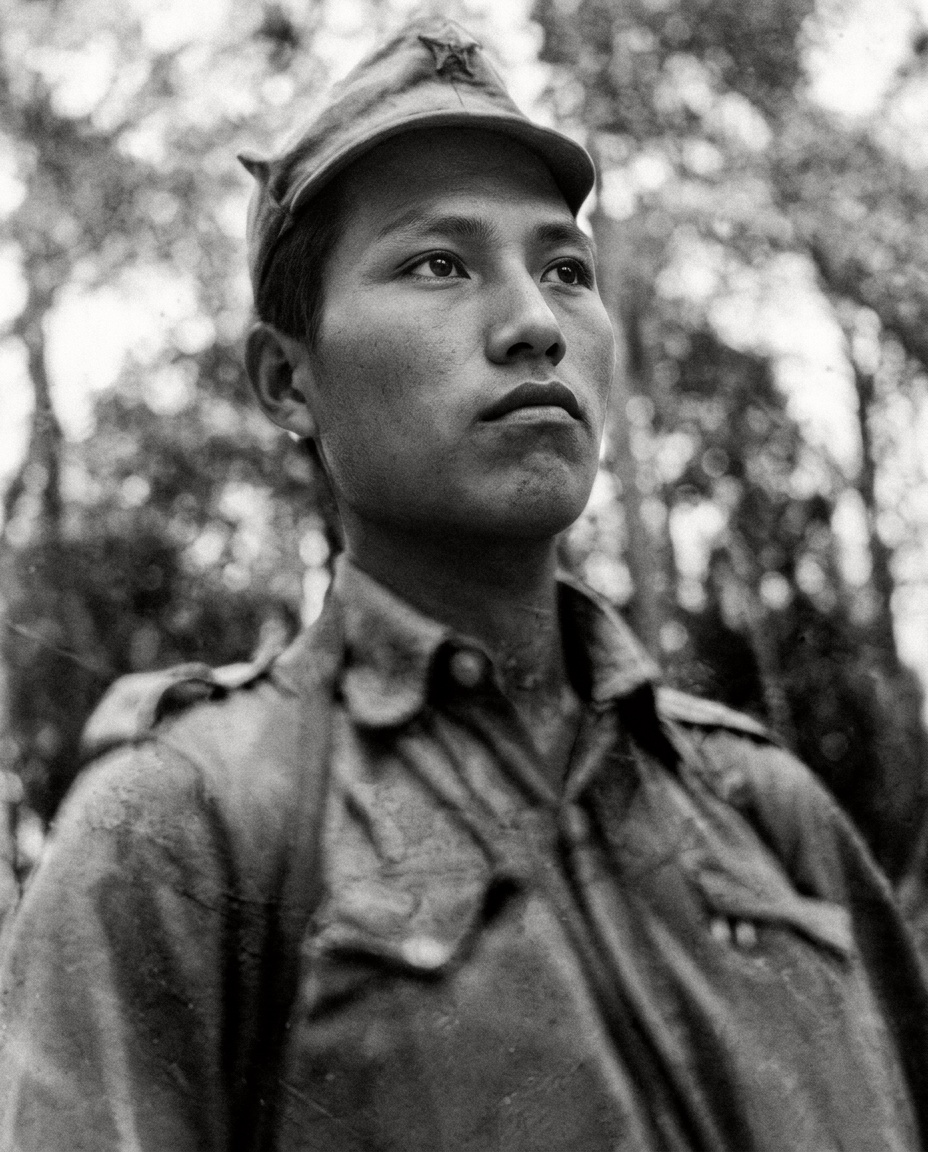
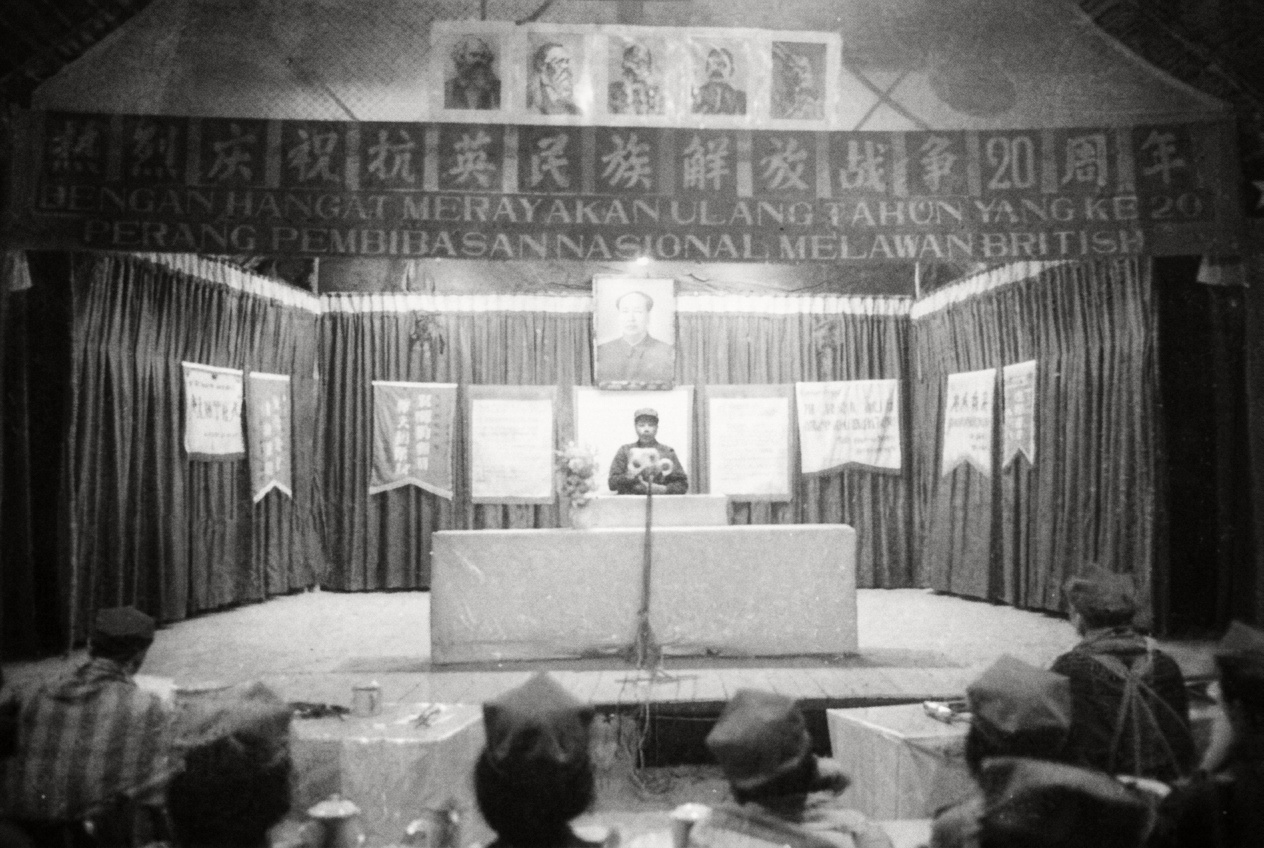
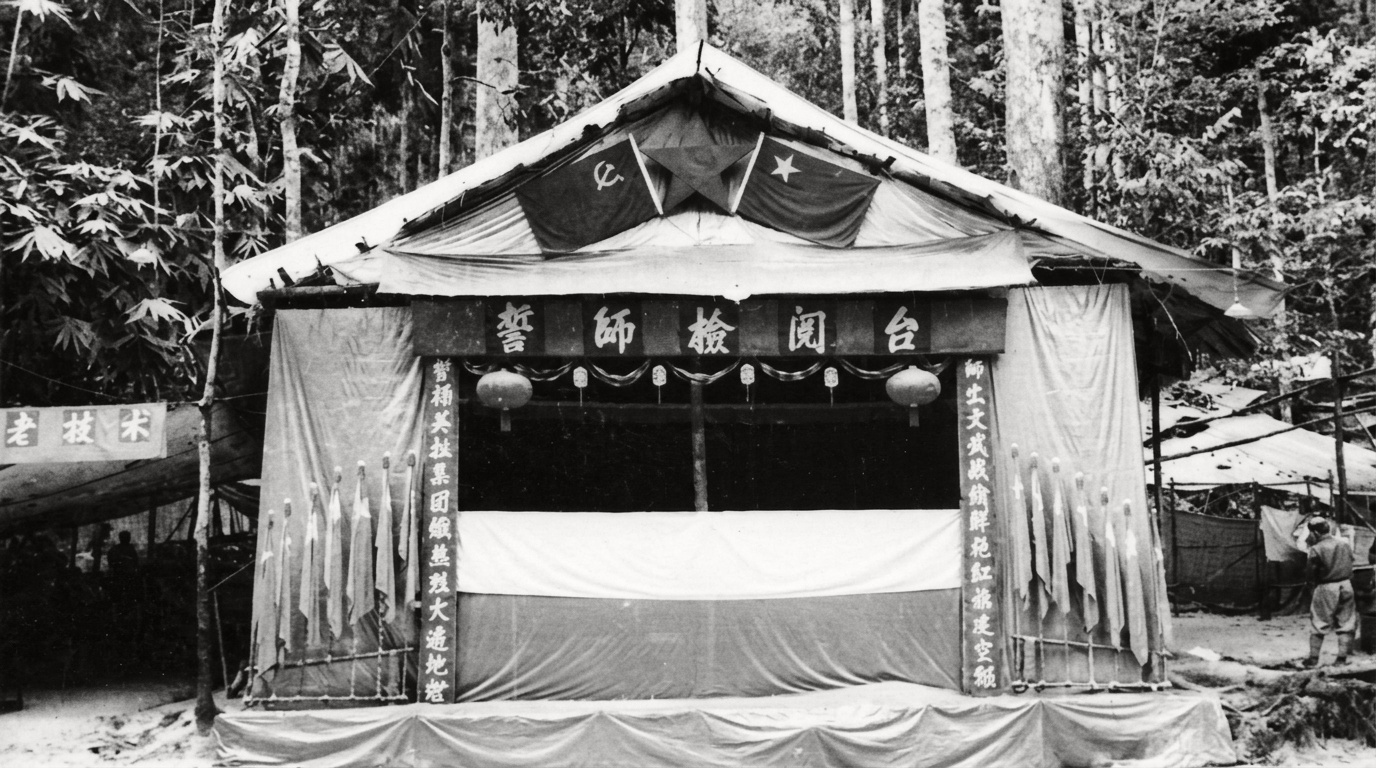
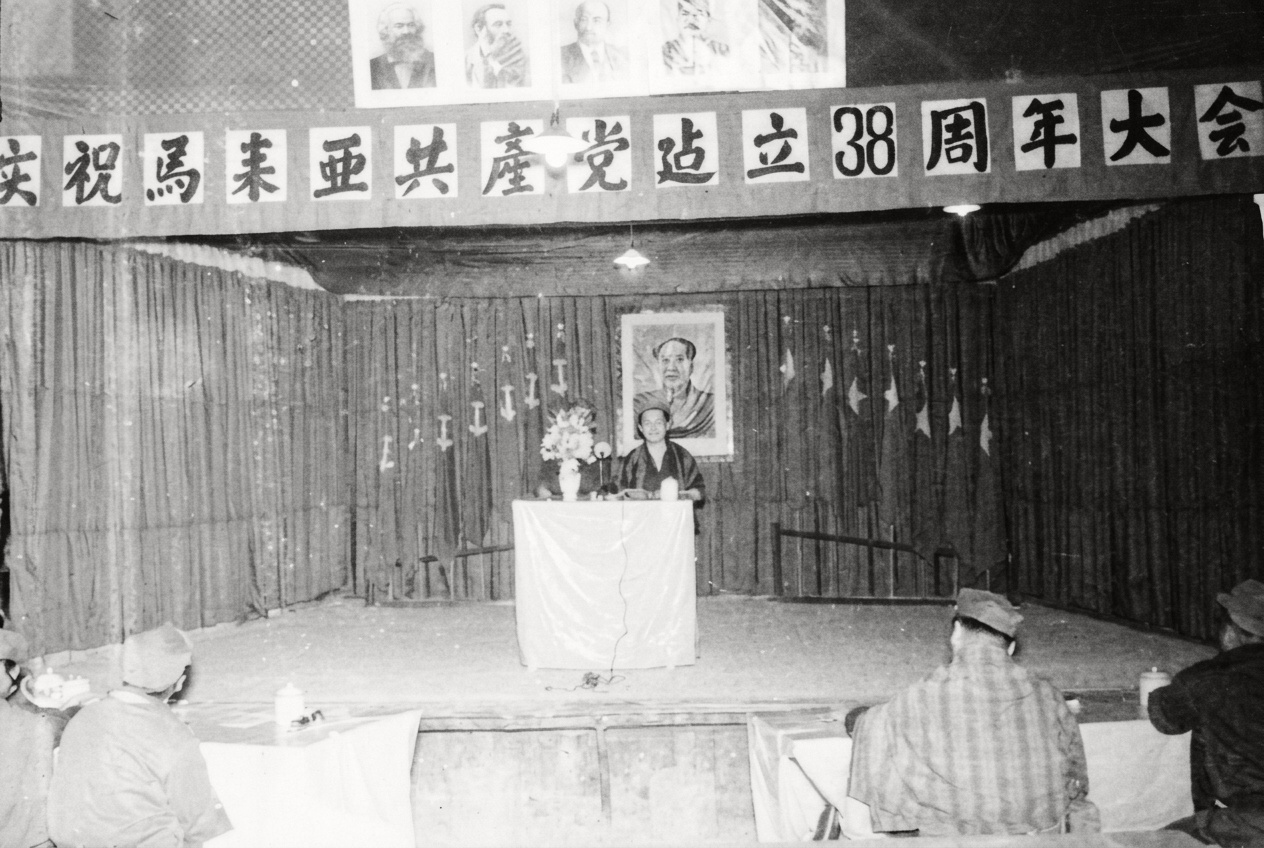
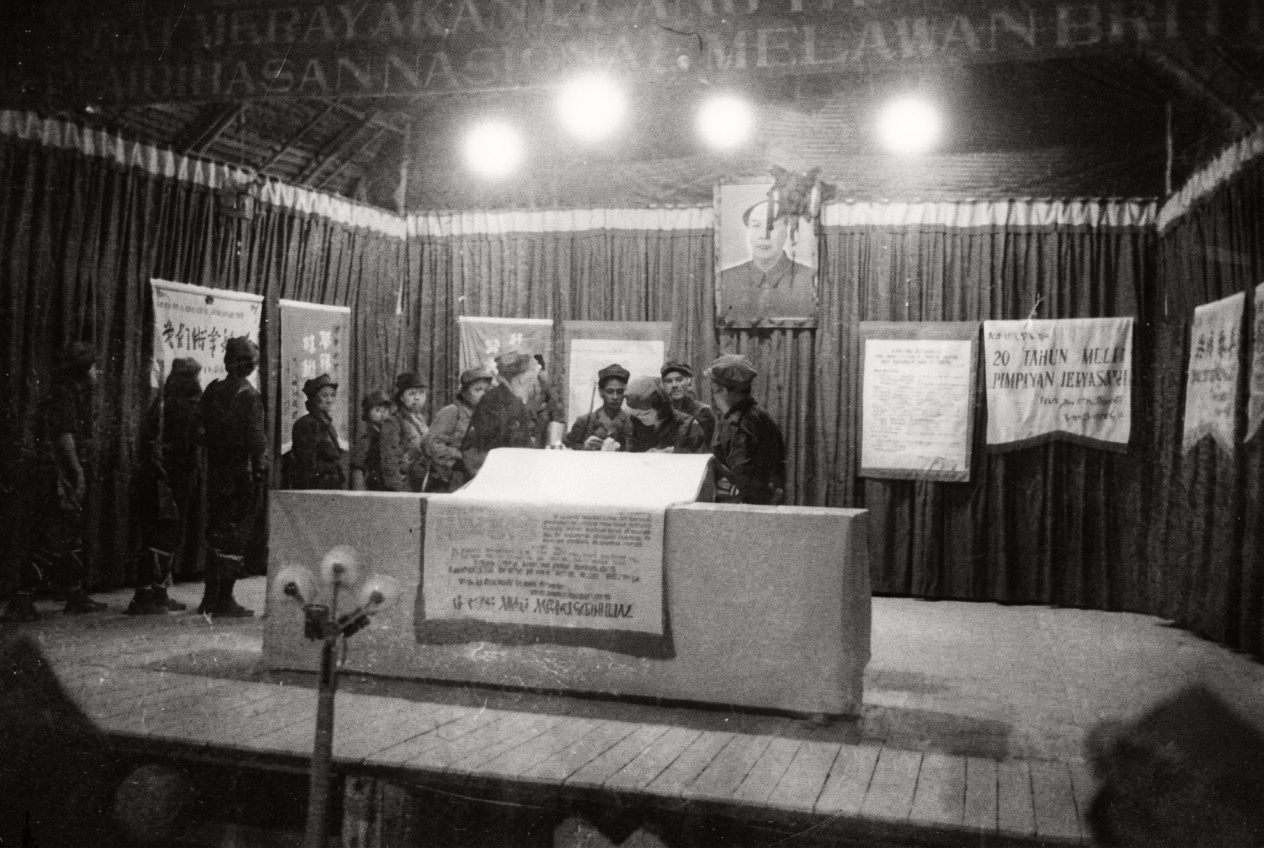
在宏大的军事番号与战略地图背后,真正支撑这支军队在遮天蔽日的赤道原始雨林中坚守数十年的,是充满生机、乐观与纪律的丛林营地日常生活。正如馆藏内部纪录片《江山如此多娇》(No. 78)的深情解说词所言:“江山如此多娇,就在这胶原村野、密林深处,回荡过多少胜利的歌声,留下了多少顽强的脚印。”指战员们背负数十斤重的行军背囊穿行于云雾缭绕的中央山脉,涉过湍急的林间溪流;每到一处驻地,便亲手砍竹搭起整洁的吊脚营房、野战厨房与森林礼堂,在艰苦卓绝的游击岁月中开辟出一座座井然有序、歌声缭绕的绿色家园。
The Japanese fascist invasion of Malaya on 8 December 1941 catalyzed the CPM's historic transformation from an underground political party into an anti-fascist vanguard army. Over three years and eight months of occupation, the Malayan People's Anti-Japanese Army (MPAJA) established eight Independent Regiments across Selangor, Negeri Sembilan, Northern Johor, Southern Johor, Perak, Western Pahang, Eastern Pahang, and Kedah, expanding to over 10,000 fighters by August 1945.
When the returning British colonial administration declared the 'Malayan Emergency' in June 1948 and banned the Party, CPM cadres returned to the jungle and formally established the Malayan National Liberation Army (MNLA) on 1 February 1949, organizing twelve regional regiments backed by the underground Min Yuen network. After the First Emergency ended in 1960, main units strategically shifted to the southern Thai border region, preserving their command, radio communications, medical, and training apparatus. In June 1968, the MNLA resumed armed operations from the Thai-Malaysian frontier, dispatching elite shock brigades southward into Perak, Kedah, Kelantan, and Pahang.
Behind the grand military designations and strategic maps, what sustained this army for decades beneath the equatorial canopy was a vibrant, disciplined, and remarkably optimistic camp life. As the narration of the internal archival documentary 'So Rich in Beauty Is Our Land' (No. 78) recalls: 'Deep in these rubber estates, rural villages, and dense forests, how many songs of victory have echoed, and how many resilient footprints have been left behind.' Trekking across mist-shrouded mountain ranges and fording swift jungle streams with heavy rucksacks, the fighters built tidy bamboo barracks, field kitchens, and forest auditoriums at every base, turning the untamed rainforest into a disciplined, song-filled home.
1941年12月8日日本法西斯悍然入侵马来亚,使马共完成了从地下政治政党向抗日民族解放先锋武装的历史性蜕变。在三年零八个月的日据时期,马共组建的马来亚人民抗日军(MPAJA)先后在雪兰莪、森美兰、柔佛北、柔佛南、霹雳、彭亨西、彭亨东及吉打创建八个独立队。他们在极度严酷的热带雨林与乡村腹地坚持敌后游击战,不仅锤炼出成熟的森林战术、区域指挥与后勤联络体系,更在1945年8月日本投降前夕发展为逾万人的正规游击武装,赢得各族人民与盟军的崇高敬意。
战后英国殖民当局重返马来亚,于1948年6月宣布全马进入“紧急状态”,全面取缔马共与进步工会。面对殖民当局的武力镇压,马共指战员重返森林,于1949年2月1日正式将全军统一整编为“马来亚民族解放军”(MNLA),在全马各州建立十二个支队及严密的地下“民运”支持网络。1960年第一次紧急状态结束后,面对英军与联邦军队的重兵封锁,马共中央率主力部队有计划地向泰国南部边境崇山峻岭实施战略转移与整训重组,保存了完整的指挥中枢、无线电通讯、军医与干部培训体系。1968年6月,民族解放军从泰马边境再度吹响南下号角,派遣多支精锐突击队深入霹雳、吉打、吉兰丹与彭亨腹地,开辟了长达十四年的第二轮武装斗争。
The Japanese fascist invasion of Malaya on 8 December 1941 catalyzed the CPM's historic transformation from an underground political party into an anti-fascist vanguard army. Over three years and eight months of occupation, the Malayan People's Anti-Japanese Army (MPAJA) established eight Independent Regiments across Selangor, Negeri Sembilan, Northern Johor, Southern Johor, Perak, Western Pahang, Eastern Pahang, and Kedah, expanding to over 10,000 fighters by August 1945.
When the returning British colonial administration declared the 'Malayan Emergency' in June 1948 and banned the Party, CPM cadres returned to the jungle and formally established the Malayan National Liberation Army (MNLA) on 1 February 1949, organizing twelve regional regiments backed by the underground Min Yuen network. After the First Emergency ended in 1960, main units strategically shifted to the southern Thai border region, preserving their command, radio communications, medical, and training apparatus. In June 1968, the MNLA resumed armed operations from the Thai-Malaysian frontier, dispatching elite shock brigades southward into Perak, Kedah, Kelantan, and Pahang.
【1948 - 1968 · 紧急状态,民族解放军的形成与边境重组】
1948年马来亚进入紧急状态后,马共被取缔,许多成员转入地下及森林地区活动。1949年,武装力量正式命名为马来亚民族解放军 (MNLA),逐步建立地区支队、指挥体系及长期游击斗争的组织基础。
1960年第一次紧急状态结束后,部分部队并未完全消失,而是逐步转移至泰国南部边境地区,维持训练、通讯、后勤与组织网络,为后来的武装行动重启作准备。
【1968 - 1982 · 武装冲突重启:泰马边境时期】
马共从泰国南部边境地区重新展开武装行动,袭击保安部队,并以森林据点维持游击活动。此后,泰马边境成为后期冲突的重要活动区域。[1948 - 1968 · The Emergency & Formation of the Malayan National Liberation Army (MNLA) & Border Reorganization]— 录自《马共武装力量的历程(1930–1989)》总纲文献(第三、四阶段) | Verbatim Transcription from 'The Evolution of the CPM Armed Forces (1930–1989)' Master Chronicle (Stages 3 & 4)
Following the declaration of the Malayan Emergency in 1948, the CPM was banned and many members moved underground into jungle areas. In 1949, its armed force was formally named the Malayan National Liberation Army (MNLA), developing regional units, command structures and the basis for prolonged guerrilla warfare.
After the First Emergency ended in 1960, some units did not disappear completely. They gradually shifted to southern Thailand, maintaining training, communications, logistics and organisational networks in preparation for later renewed operations.
[1968 - 1982 · Renewed Armed Insurgency: The Thai-Malaysian Frontier Period]
The CPM resumed armed operations from the southern Thai border region, targeting security forces and sustaining guerrilla activity from jungle bases. The Thailand–Malaysia frontier subsequently became a key area of the later conflict.
在宏大的军事番号与战略地图背后,真正支撑这支军队在遮天蔽日的赤道原始雨林中坚守数十年的,是充满生机、乐观与纪律的丛林营地日常生活。正如馆藏内部纪录片《江山如此多娇》(No. 78)的深情解说词所言:“江山如此多娇,就在这胶原村野、密林深处,回荡过多少胜利的歌声,留下了多少顽强的脚印。”指战员们背负数十斤重的行军背囊穿行于云雾缭绕的中央山脉,涉过湍急的林间溪流;每到一处驻地,便亲手砍竹搭起整洁的吊脚营房、野战厨房与森林礼堂,在艰苦卓绝的游击岁月中开辟出一座座井然有序、歌声缭绕的绿色家园。
Behind the grand military designations and strategic maps, what sustained this army for decades beneath the equatorial canopy was a vibrant, disciplined, and remarkably optimistic camp life. As the narration of the internal archival documentary 'So Rich in Beauty Is Our Land' (No. 78) recalls: 'Deep in these rubber estates, rural villages, and dense forests, how many songs of victory have echoed, and how many resilient footprints have been left behind.' Trekking across mist-shrouded mountain ranges and fording swift jungle streams with heavy rucksacks, the fighters built tidy bamboo barracks, field kitchens, and forest auditoriums at every base, turning the untamed rainforest into a disciplined, song-filled home.
第三章:马来亚人民军(MPA)与合艾体面和平(1982–1989):全军建制大观与和平新篇
Chapter 3: The Malayan People's Army (MPA) and Peace with Dignity at Haadyai (1982–1989): Full Order of Battle and Peaceful Transition
1982年6月20日,为顺应国内外形势变化并进一步巩固最广泛的反殖爱国统一战线,马共中央正式将“马来亚民族解放军”改称为“马来亚人民军”(Malayan People's Army,简称 MPA)。在这一时期,人民军在泰马边境形成了严密而完整的六大防区与建制体系:驻守昔罗(Sadao)方向的第八支队、活动于纳榻威(Na Thawi)与沙巴育(Saba Yoi)的特区部队、拱卫中央指挥中枢的北马局机关队、驻扎陶公府素基林(Sukhirin)的马来族第十支队,以及扼守勿洞(Betong)要冲的第十二支队一区与二区。与之相配套的,还有南下突击队、跨越五国培养的战地军医队、无线电通信组、四语种宣传广播队、地下“民运”后勤网、中央警卫队以及自力更生的雨林兵工厂。
进入1980年代后期,随着冷战格局演变与地区和平呼声高涨,马共中央高瞻远瞩地于1987年主动发出和平倡议,并在1988年与泰国军方及马来西亚政府展开五轮正式高级别会谈。1989年12月2日,马共代表团(陈平、阿都拉·西迪、拉昔·迈丁)与马来西亚政府、泰国政府在泰南合艾蠡园酒店隆重签署《合艾和平协议》,正式结束长达四十余年的武装冲突。人民军全体指战员在赢得“体面和平”与尊严安置的前提下销毁武器、走出丛林,定居于泰国南部的勿洞、邦朗、也哈及素基林四个和平村,完成了从革命军人向和平建设者的历史性转型。
On 20 June 1982, to adapt to changing regional realities and broaden its united front appeal, the CPM Central Committee formally renamed the Malayan National Liberation Army the Malayan People's Army (MPA). Along the Thai-Malaysian frontier, the MPA maintained six major operational commands: the 8th Regiment (Sadao sector), the Special Zone (Na Thawi / Saba Yoi), the Northern Bureau Headquarters Unit, the Malay-majority 10th Regiment (Sukhirin / Waeng), and the 12th Regiment Area 1 and Area 2 in the Betong salient—supported by southward Shock Brigades, the Military Medical Team, Radio Communications Group, Propaganda Broadcasting Group, Min Yuen logistics network, Guard Unit, and jungle Arsenals.
From 1987 onward, the CPM leadership initiated steps toward a negotiated settlement, holding five rounds of formal tripartite talks in 1988–1989. On 2 December 1989, the CPM delegation led by Chin Peng, Abdullah C.D., and Rashid Maidin signed the historic Hat Yai Peace Agreement with the Malaysian and Thai governments at the Lee Gardens Hotel, bringing decades of armed conflict to an honorable close. Former MPA combatants subsequently settled across four Peace Villages in southern Thailand—Betong, Bang Lang, Yaha, and Sukhirin—embarking on new civilian lives.
【1982 - 1988 · 马来亚人民军时期:坚持、调整与和平谈判】
马来亚民族解放军改称马来亚人民军。部队主要驻扎于泰国南部边境地区,维持营地、训练、通讯、后勤及有限的游击行动。随着军事压力加强、内部矛盾加深及外部支援减少,部队的活动逐步减弱。1987年后,马共开始寻求和平解决;1988年展开正式谈判,并于1989年签署合艾和平协议。
【1989 · 和平转型】
长期武装冲突及泰马边境岁月,马共武装力量走过数十年的历史。1989年12月2日,马共与马来西亚及泰国政府签署合艾和平协议,结束武装冲突;成员放下武器,随后定居于泰国南部四个和平村:勿洞、邦朗、也哈及素基林,展开新的平民生活。
您如今所在的勿洞和平村,正是这四个和平村之一。[1982 - 1988 · The Malayan People's Army: Endurance, Adjustment & Peace Negotiations]— 录自《马共武装力量的历程(1930–1989)》总纲文献(第五、六阶段) | Verbatim Transcription from 'The Evolution of the CPM Armed Forces (1930–1989)' Master Chronicle (Stages 5 & 6)
The Malayan National Liberation Army was renamed the Malayan People's Army. Operating mainly from southern Thailand, its units maintained camps, training, communications, logistics and limited guerrilla activity. As military pressure increased, internal divisions deepened and external support declined, the movement's activities gradually weakened. From 1987, the CPM began seeking a peaceful settlement; formal negotiations followed in 1988, leading to the Hat Yai Peace Agreement in 1989.
[1989 · Peaceful Transition]
Through decades of armed conflict and life along the Thai–Malaysian frontier, the CPM's armed force underwent a long historical journey. On 2 December 1989, the CPM signed the Hat Yai Peace Agreement with the Malaysian and Thai governments, bringing the armed conflict to an end. Former members later settled in four Peace Villages in southern Thailand: Betong, Bang Lang, Yaha and Sukhirin, beginning new civilian lives.
Betong Peace Village, where you are standing today, is one of these four villages.