战役专篇第8集:千里南下与全面开花:1973年57次战斗大捷、《南下突击路线图》与怡保机场渗透战
Campaign Feature 8: The Great Southward Push: 57 Combat Actions in 1973, the 'Route of the Southward Push' Map, and the Ipoh Airfield Infiltration
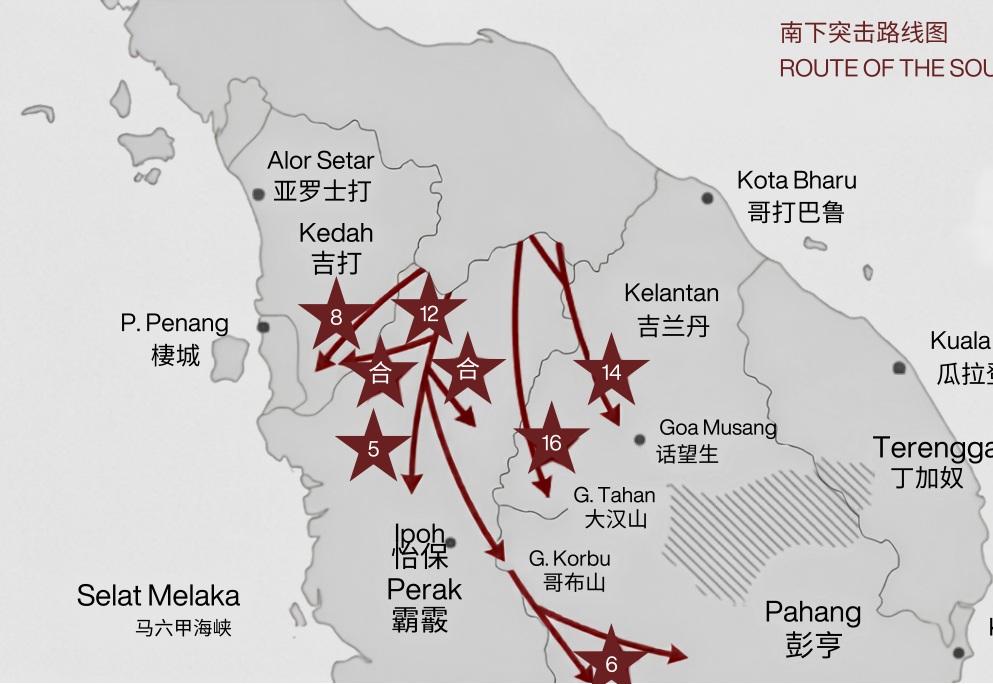
1973年是马来亚民族解放军冲破边境封锁、向半岛腹地胜利挺进的巅峰之年。马共麾下第5、第6、第8、第12、第14、第16各突击单位沿着蒂迪旺沙主干山脉向吉打、霹雳、吉兰丹与彭亨纵深全面开花,全年共进行57次战斗,歼灭敌军200余名!其中吉打姆达河与巴冬得拉地雷战(3–4月)、西岭与和丰袭警锄奸战(7月及10月)、吉兰丹瓜拉吉赖伏击战(9月)以及震动全马的特遣小组深夜潜入霹雳中部(怡保)军用机场埋设地雷战(10月),彻底震撼了吉隆坡最高军事指挥部。本篇完整呈现高清《南下突击路线图》与《马来亚革命之声》1974年第二期(总第505期)广播原件全卷。
The year 1973 marked the zenith of the Malayan National Liberation Army's southward strategic offensive. Breaking through border cordons, MNLA assault units 5, 6, 8, 12, 14, and 16 advanced along the Titiwangsa mountain spine into Kedah, Perak, Kelantan, and Pahang, fighting 57 engagements and neutralizing over 200 government troops across the year. Highlighted by the Kedah minefields (Mar–Apr), the Serdang and Sungai Siput police and counter-intelligence raids (Jul & Oct), the Kuala Krai ambush (Sep), and the audacious commando infiltration of the Ipoh military airfield (Oct), these operations stunned the Malaysian high command. This feature presents the full 'Route of the Southward Push' map and the complete 1974 Voice of the Malayan Revolution Issue No. 505 broadcast manuscript.
第一章:六路铁军挺进主干山脉:《南下突击路线图》战略解析
Chapter 1: Six Assault Columns Along the Mountain Spine: Strategic Analysis of the 'Route of the Southward Push'
为彻底打破马来西亚政府军在马泰边境构筑的封锁线,恢复抗英战争时期在霹雳、彭亨、吉兰丹与吉打腹地的老游击区,马共中央军委制定了宏大的“南下突击”战略部署。从下方珍贵的《南下突击路线图(ROUTE OF THE SOUTHWARD PUSH)》可见,马来亚民族解放军共派出六支精干的南下突击部队(图中标示单位5、6、8、12、14、16),分东、中、西三路向南挺进:
在西路,第8单位与第14单位深入吉打州(亚罗士打以东山区)及槟城外围;在中路,第12单位与第5单位沿着霹雳州主干山脉越过哥布山(G. Korbu)直插怡保、和丰与金马仑高原腹地,第6单位更从霹雳南部继续向彭亨西部挺进;在东路,第16单位与第12单位东翼穿过吉兰丹州话望生(毛生),跨越半岛最高峰大汉山(G. Tahan)进入彭亨州腹地,并在哥布山与大汉山战略要点形成多路会师(图中标示“合”字会合点)。
这一波澜壮阔的千里南下长征,使民族解放军的战斗足迹重新遍布北马与中马各州,促成了1973年“南下突击与全面开花”的军事高潮。
To shatter the Malaysian military's border containment cordon and re-establish revolutionary base areas in the peninsular interior, the CPM Central Military Committee formulated the strategic 'Southward Push'. As shown in the archival military map 'Route of the Southward Push' below, six MNLA assault units (designated Units 5, 6, 8, 12, 14, and 16) advanced southward along three primary corridors:
On the western flank, Units 8 and 14 penetrated deep into Kedah; along the central spine, Units 12 and 5 marched down the Perak mountain range past Mount Korbu (G. Korbu) into the Ipoh and Sungai Siput heartland, with Unit 6 pushing further south into western Pahang; on the eastern flank, Unit 16 and eastern detachments advanced through Gua Musang in Kelantan, crossing Mount Tahan (G. Tahan) into central Pahang, linking up at strategic mountain junctions.
This audacious strategic march carried the armed struggle back into the heart of the peninsula, culminating in the widespread combat victories of 1973.
【1973年千里南下与全年57战大捷 · 战略影响定评】
★ 核心战略影响:1973年马共麾下六支南下突击队沿蒂迪旺沙主干山脉向吉打、霹雳、吉兰丹与彭亨纵深全面挺进,全年作战57次、歼敌200余名,并成功渗透至戒备森严的怡保军用机场周边。这一战略南下彻底粉碎了敌方企图将马共武装长期封死在泰马边境一线“困死深山”的战略围堵,在马来亚半岛腹地重新激活了广阔的游击战区,迫使当局在全国范围恢复高强度军事戒备。[1973 Southward Thrust & 57 Battles · Strategic Impact]— 《马来亚共产党武装斗争历史战役全纪实》千里南下战略影响定评 | Southward Thrust Strategic Impact Assessment, CPM Armed Struggle Historical Campaigns Archive
★ Core Strategic Impact: In 1973, six MNLA assault units pushed southward along the Titiwangsa Range into Kedah, Perak, Kelantan, and Pahang, fighting 57 engagements and neutralizing over 200 enemy troops. This strategic offensive shattered the government's containment strategy along the Thai-Malaysian border and reopened guerrilla zones deep inside the peninsula.
为彻底打破马来西亚政府军在马泰边境构筑的封锁线,恢复抗英战争时期在霹雳、彭亨、吉兰丹与吉打腹地的老游击区,马共中央军委制定了宏大的“南下突击”战略部署。从下方珍贵的《南下突击路线图(ROUTE OF THE SOUTHWARD PUSH)》可见,马来亚民族解放军共派出六支精干的南下突击部队(图中标示单位5、6、8、12、14、16),分东、中、西三路向南挺进:
在西路,第8单位与第14单位深入吉打州(亚罗士打以东山区)及槟城外围;在中路,第12单位与第5单位沿着霹雳州主干山脉越过哥布山(G. Korbu)直插怡保、和丰与金马仑高原腹地,第6单位更从霹雳南部继续向彭亨西部挺进;在东路,第16单位与第12单位东翼穿过吉兰丹州话望生(毛生),跨越半岛最高峰大汉山(G. Tahan)进入彭亨州腹地,并在哥布山与大汉山战略要点形成多路会师(图中标示“合”字会合点)。
这一波澜壮阔的千里南下长征,使民族解放军的战斗足迹重新遍布北马与中马各州,促成了1973年“南下突击与全面开花”的军事高潮。
To shatter the Malaysian military's border containment cordon and re-establish revolutionary base areas in the peninsular interior, the CPM Central Military Committee formulated the strategic 'Southward Push'. As shown in the archival military map 'Route of the Southward Push' below, six MNLA assault units (designated Units 5, 6, 8, 12, 14, and 16) advanced southward along three primary corridors:
On the western flank, Units 8 and 14 penetrated deep into Kedah; along the central spine, Units 12 and 5 marched down the Perak mountain range past Mount Korbu (G. Korbu) into the Ipoh and Sungai Siput heartland, with Unit 6 pushing further south into western Pahang; on the eastern flank, Unit 16 and eastern detachments advanced through Gua Musang in Kelantan, crossing Mount Tahan (G. Tahan) into central Pahang, linking up at strategic mountain junctions.
This audacious strategic march carried the armed struggle back into the heart of the peninsula, culminating in the widespread combat victories of 1973.
第二章:全年57战歼敌200余人:1973年四大代表性特种破袭与伏击战役
Chapter 2: 57 Battles and Over 200 Enemy Troops Neutralized: Four Representative Operations of 1973
根据1974年1月5日至7日《马来亚革命之声》广播电台播发的《报道:我军在一九七三年取得新的战果(一九七四年第二期,总第五〇五期)》权威统计,1973年全年,马来亚民族解放军在南下突击与边境反围剿战线上共进行57次战斗,毙伤敌军200余名,缴获大批武器弹药。其中四次极具代表性的重大军事行动尤为震撼:
第一,吉打地雷战(1973年3月至4月):我军在吉打州姆达河(Muda River)上游森林和巴冬得拉县(Padang Terap)交通要道广设自制地雷阵,连续阻击并重创前来搜剿的政府军与工兵排;第二,西岭与和丰袭警与锄奸战(1973年7月及10月):我军特遣武工队化装潜入吉打南部西岭(Serdang)与霹雳重镇和丰(Sungai Siput),在闹市与胶园奇袭警察局哨所,精准铲除为殖民政治部效劳的暗探与情报网头目;第三,吉兰丹瓜拉吉赖伏击战(1973年9月):我军在吉兰丹瓜拉吉赖(Kuala Krai)设伏一举击溃政府军巡逻队,并在撤退沿线巧妙埋设触发地雷,将尾随追击的敌增援部队炸得人仰马翻。
第四,最为惊心动魄的是1973年10月的“霹雳中部机场地雷渗透战”:我军一支短小精干的特遣小组,在当地革命群众的掩护下,于深夜穿过重兵把守的警戒线,成功潜入霹雳中部(怡保)军用机场内部跑道与停机坪周边埋设高爆地雷,次日剧烈的爆炸当场炸死炸伤多名敌空军与地勤官兵!潜入州首府军用机场腹地布雷的惊人壮举,彻底打破了政府军的封锁神话,展现了马共南下部队高超的特种渗透能力与深厚的群众基础。
According to the official broadcast manuscript of the Voice of the Malayan Revolution (Issue No. 505, January 5–7, 1974) titled 'Report: Our Army Achieves New Combat Victories in 1973', the MNLA fought 57 engagements and neutralized over 200 government soldiers and police throughout 1973. Four major representative operations stood out:
First, the Kedah Minefields (March–April 1973): laying extensive landmine networks along the upper Muda River and in Padang Terap district to ambush government sweeps; second, the Serdang and Sungai Siput Raids (July & October 1973): infiltrating Serdang in Kedah and Sungai Siput in Perak to raid police posts and eliminate Special Branch intelligence operatives; third, the Kuala Krai Ambush (September 1973): routing a government patrol in Kuala Krai, Kelantan, and luring pursuing reinforcements into a deadly minefield.
Fourth, and most audacious of all, was the Central Perak (Ipoh) Airfield Infiltration in October 1973: under cover of darkness and assisted by local supporters, an MNLA commando team slipped through tight security cordons into the military airfield at Ipoh, planting landmines inside the base that detonated and inflicted multiple casualties. These bold operations marked the peak of the MNLA's southward push.
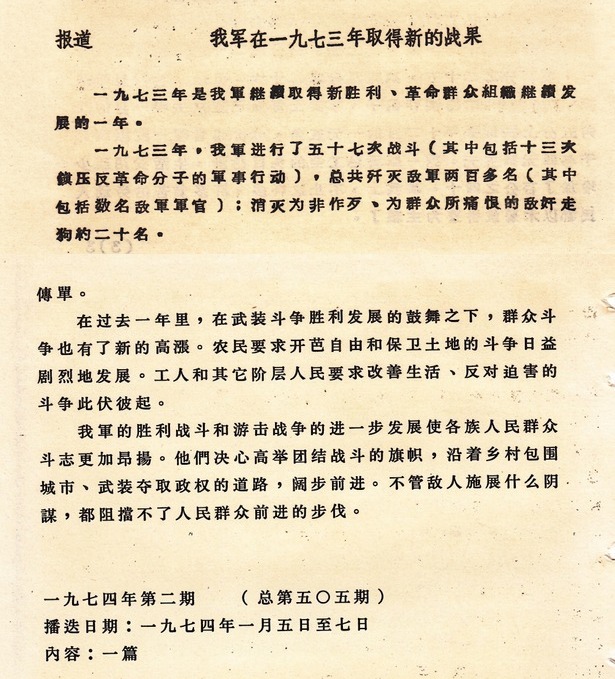
南下突击与全面开花(1973):马共突击队向南胜利挺进,开辟新游击区,全年共进行57次战斗,歼敌200余名。其中包含四次代表性重大军事行动:
1. 吉打地雷战 (3–4月):在吉打姆达河上游和巴冬得拉县广设地雷阻击政府军;
2. 西岭与和丰袭警与锄奸战 (7月及10月):潜入吉打西岭和霹雳和丰,袭击警察局并铲除情报网成员;
3. 吉兰丹瓜拉吉赖伏击战 (9月):设伏击溃政府军巡逻队,随后埋设地雷击伤追兵;
4. 霹雳中部机场地雷渗透战 (10月):特遣小组深夜成功潜入霹雳中部(怡保)机场埋设地雷,炸死炸伤多名敌军。
历史定评:1973年马共的连串胜利打破了政府军的边境封锁,标志着其南下挺进达到高潮。潜入机场与袭击警局等特种行动震撼了指挥部,展现出其高超的渗透力与强大的群众基础。Southward Advance & Widespread Operations (1973): CPM assault units pushed southwards to open new guerrilla zones, engaging in 57 combat actions and neutralizing over 200 government troops throughout the year. Four major representative operations stood out:— 《马来亚革命之声》1974年第二期(总第505期,1974年1月5日至7日)原始广播稿 | Voice of the Malayan Revolution Broadcast Manuscript, Issue No. 505 (January 5–7, 1974)
1. Kedah Minefields (Mar–Apr): Laying extensive mines in the upper Muda River and Padang Terap;
2. Serdang & Sungai Siput Raids (Jul & Oct): Infiltrating Serdang (Kedah) and Sungai Siput (Perak) to target police stations and neutralize intelligence operatives;
3. Kuala Krai Ambush (Sep): Routing government forces in Kuala Krai (Kelantan) followed by mine laying;
4. Central Perak Airfield Infiltration (Oct): A commando unit successfully infiltrated the military airfield in Central Perak (Ipoh) to lay landmines, causing casualties.
Historical Assessment: The CPM's 1973 victories broke the government's border blockade, marking the peak of their southward push. Bold raids on an airfield and police stations showcased their advanced penetration capabilities and strong local support.