战役专篇第6集:“福隆港震荡”与被抹去的双子星:击毙最高专员葛尼爵士与都赖、仁加榄集体惩罚惨案(1951)
Campaign Feature 6: The 'Fraser's Hill Shock' and the Erased Twins: Elimination of High Commissioner Sir Henry Gurney and the Collective Punishment of Tras and Jenderam (1951)

1951年10月6日,由马共中央政治局委员西迪(Siao Chang / 萧昌)率领的彭亨游击队在古毛至福隆港蜿蜒山路设伏拦截英军车队,在事先毫不知情的情况下当场击毙英国驻马来亚最高专员亨利·葛尼爵士(Sir Henry Gurney)。这场抗英民族解放战争中意义最重大的军事胜利引发了震撼英帝国的“福隆港震荡”,迫使殖民当局在非马来人公民权问题上做出妥协,意外加速了多元族群本土化政治的进程。然而,恼羞成怒的殖民当局动用《紧急状态条例第17D条集体惩罚令》,将华人村落都赖(2,000人)与跨族群马来村落仁加榄(1,600人)强行清空或用推土机夷为平地,制造了“被抹去的双子星”人间悲剧。
On October 6, 1951, an MNLA guerrilla unit ambushed an armed British convoy on the winding mountain road to Fraser's Hill, eliminating British High Commissioner Sir Henry Gurney. Although the guerrillas had aimed purely to seize weapons and ammunition without knowing Gurney was inside, this landmark military victory triggered the 'Fraser's Hill Shock', shattering colonial morale and forcing British concessions on non-Malay citizenship. In retaliation, the colonial regime invoked Emergency Regulation 17D on collective punishment to erase two entire communities—the Chinese village of Tras (2,000 residents) and the Malay/cross-ethnic village of Jenderam (1,600 residents)—deporting their populations to detention camps.
第一章:1951年10月6日福隆港伏击战:击毙英国最高专员葛尼与“福隆港震荡”
Chapter 1: The October 6, 1951 Fraser's Hill Ambush: Elimination of High Commissioner Sir Henry Gurney and the 'Fraser's Hill Shock'
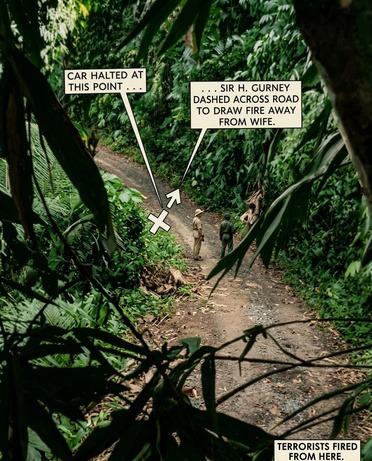
1951年10月6日中午,在雪兰莪新古毛通往彭亨避暑胜地福隆港(Fraser's Hill)第56英里半的险峻盘山弯道处,马来亚民族解放军由萧昌率领的一支38人伏击分队,正潜伏在公路两侧陡峭的丛林山坡上,等待拦截英军常规武装护送车队以夺取武器弹药。下午1时许,一支由装甲警车开道护卫的车队驶入伏击圈,其中一辆悬挂英国国旗的黑色劳斯莱斯轿车因山路急弯减速停滞。游击队员立即集中布伦轻机枪与步枪火力向护卫警车及轿车猛烈射击。
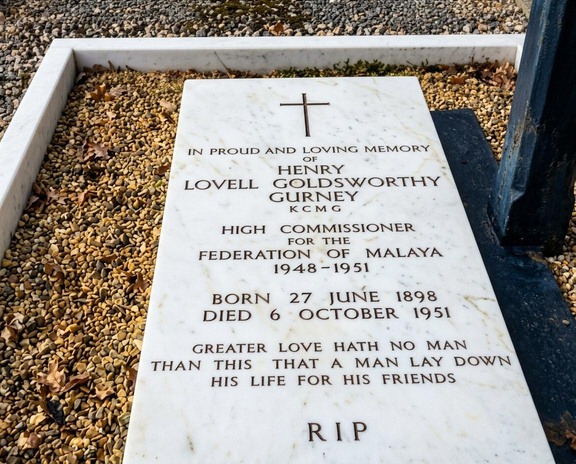
交火中,车内的英国驻马来亚最高专员亨利·葛尼爵士(Sir Henry Gurney)推开车门走出车外,被游击队密集的火力当场击毙,护卫警员多人伤亡。由于英军增援装甲车随后赶到,游击队迅速撤离战场。正如陈平在回忆录《我方的历史》中所坦诚记述的:“当时的目标纯粹是拦截常规的武装车队并抢夺武器弹药……我们完全不知道葛尼就在车里。直到第二天清晨收听广播时,大家才在震惊的沉默中得知真相。”
福隆港伏击战击毙大英帝国驻马来亚最高统治者亨利·葛尼,是抗英民族解放战争中政治与军事影响最为深远的标志性大捷。消息传出后,伦敦白厅与吉隆坡殖民统治集团陷入极度恐慌,史称“福隆港震荡”(The Fraser's Hill Shock)。这一重大军事打击不仅沉重摧毁了英国殖民当局的统治威信与军心士气,更在政治上迫使英国政府意识到单靠军事高压无法维持统治,不得不通过修改联邦协议、放宽非马来人公民权(1952年公民权法令)向本土社会做出重大妥协,从而在客观上加速了马来亚多元族群本土化政治与走向独立的进程。
At midday on October 6, 1951, along the winding mountain road to Fraser's Hill, a 38-member MNLA guerrilla unit commanded by Siao Chang lay in wait on the steep jungle embankment, hoping to intercept a routine armed convoy to replenish weapons and ammunition. Shortly after 1:00 p.m., an escorted convoy entered the kill zone, including a black Rolls-Royce flying the Union Jack. The guerrillas opened fire with Bren light machine guns and rifles, pinning down the police escort.
During the exchange of fire, British High Commissioner Sir Henry Gurney stepped out of the Rolls-Royce and was fatally shot on the road. As Chin Peng later recounted in his memoir My Side of History: 'The aim was purely to intercept a routine armed convoy to seize weapons and ammunition... We were completely unaware Gurney was inside. It was not until the next day's radio broadcast that we learned the truth in stunned silence.'
The elimination of High Commissioner Sir Henry Gurney stood as the most consequential military victory of the Anti-British National Liberation War. Known as the 'Fraser's Hill Shock', the ambush shattered the prestige and morale of the colonial administration in Kuala Lumpur and Whitehall. Politically, Gurney's death forced British authorities to recognize that military coercion alone could not sustain colonial rule, compelling them to make concessions on non-Malay citizenship and accelerating the localization of multi-ethnic politics on the road to independence.
【1951年击毙最高专员葛尼爵士 · “福隆港震荡”战略影响定评】
★ 核心战略影响:1951年10月6日福隆港伏击战当场击毙大英帝国驻马来亚最高专员亨利·葛尼爵士,在伦敦白厅与东南亚殖民体系引发史称“福隆港震荡”(The Fraser's Hill Shock)的政治大地震。此战导致英军在马士气跌入谷底、殖民军政高层陷入严重指挥危机,迫使刚上任的英国首相丘吉尔紧急派遣殖民地大臣利特尔顿赴马彻查,并彻底改组马来亚英军统帅部。同时,英军对都赖与仁加榄实施《紧急状态条例第17D条》集体惩罚并抹去村落,更在历史上铁证如山地暴露了殖民统治的残酷本质与马共深厚的群众根基。[Oct 6, 1951 Ambush of High Commissioner Sir Henry Gurney · Strategic Impact of the "Fraser's Hill Shock"]— 《马来亚共产党武装斗争历史战役全纪实》“福隆港震荡”战略影响定评 | Fraser's Hill Shock Impact Assessment, CPM Armed Struggle Historical Campaigns Archive
★ Core Strategic Impact: The elimination of British High Commissioner Sir Henry Gurney at Fraser's Hill triggered the "Fraser's Hill Shock" across London and colonial Malaya, plunging British morale to its lowest point and forcing Prime Minister Winston Churchill to overhaul the entire colonial military-civil command structure.
1951年10月6日中午,在雪兰莪新古毛通往彭亨避暑胜地福隆港(Fraser's Hill)第56英里半的险峻盘山弯道处,马来亚民族解放军由萧昌率领的一支38人伏击分队,正潜伏在公路两侧陡峭的丛林山坡上,等待拦截英军常规武装护送车队以夺取武器弹药。下午1时许,一支由装甲警车开道护卫的车队驶入伏击圈,其中一辆悬挂英国国旗的黑色劳斯莱斯轿车因山路急弯减速停滞。游击队员立即集中布伦轻机枪与步枪火力向护卫警车及轿车猛烈射击。
交火中,车内的英国驻马来亚最高专员亨利·葛尼爵士(Sir Henry Gurney)推开车门走出车外,被游击队密集的火力当场击毙,护卫警员多人伤亡。由于英军增援装甲车随后赶到,游击队迅速撤离战场。正如陈平在回忆录《我方的历史》中所坦诚记述的:“当时的目标纯粹是拦截常规的武装车队并抢夺武器弹药……我们完全不知道葛尼就在车里。直到第二天清晨收听广播时,大家才在震惊的沉默中得知真相。”
福隆港伏击战击毙大英帝国驻马来亚最高统治者亨利·葛尼,是抗英民族解放战争中政治与军事影响最为深远的标志性大捷。消息传出后,伦敦白厅与吉隆坡殖民统治集团陷入极度恐慌,史称“福隆港震荡”(The Fraser's Hill Shock)。这一重大军事打击不仅沉重摧毁了英国殖民当局的统治威信与军心士气,更在政治上迫使英国政府意识到单靠军事高压无法维持统治,不得不通过修改联邦协议、放宽非马来人公民权(1952年公民权法令)向本土社会做出重大妥协,从而在客观上加速了马来亚多元族群本土化政治与走向独立的进程。
At midday on October 6, 1951, along the winding mountain road to Fraser's Hill, a 38-member MNLA guerrilla unit commanded by Siao Chang lay in wait on the steep jungle embankment, hoping to intercept a routine armed convoy to replenish weapons and ammunition. Shortly after 1:00 p.m., an escorted convoy entered the kill zone, including a black Rolls-Royce flying the Union Jack. The guerrillas opened fire with Bren light machine guns and rifles, pinning down the police escort.
During the exchange of fire, British High Commissioner Sir Henry Gurney stepped out of the Rolls-Royce and was fatally shot on the road. As Chin Peng later recounted in his memoir My Side of History: 'The aim was purely to intercept a routine armed convoy to seize weapons and ammunition... We were completely unaware Gurney was inside. It was not until the next day's radio broadcast that we learned the truth in stunned silence.'
The elimination of High Commissioner Sir Henry Gurney stood as the most consequential military victory of the Anti-British National Liberation War. Known as the 'Fraser's Hill Shock', the ambush shattered the prestige and morale of the colonial administration in Kuala Lumpur and Whitehall. Politically, Gurney's death forced British authorities to recognize that military coercion alone could not sustain colonial rule, compelling them to make concessions on non-Malay citizenship and accelerating the localization of multi-ethnic politics on the road to independence.
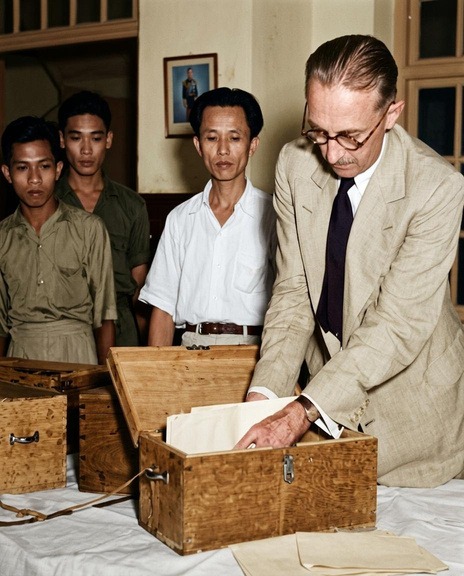
当时的目标纯粹是拦截常规的武装车队并抢夺武器弹药……我们完全不知道葛尼就在车里。直到第二天清晨收听广播时,大家才在震惊的沉默中得知真相。The aim was purely to intercept a routine armed convoy to seize weapons and ammunition... We were completely unaware Gurney was inside. It was not until the next day's radio broadcast that we learned the truth in stunned silence.— 摘自陈平回忆录《我方的历史》(My Side of History) | Excerpt from Chin Peng's Memoir, My Side of History
第二章:被抹去的双子星:《紧急状态条例第17D条》下都赖与仁加榄的集体惩罚创伤
Chapter 2: The Erased Twins: Collective Punishment Trauma of Tras and Jenderam Under Emergency Regulation 17D
在英国殖民当局颁布的《紧急状态条例第17D条集体惩罚令》(Emergency Regulation 17D)恶法之下,任何被怀疑支持或同情马共游击队的村落,无须经过任何法庭审判,即可由殖民当局下令全村连根拔起、没收财产并关入集中拘留营。在1951年的腥风血雨中,彭亨州的华人村落“都赖”(Tras)与雪兰莪州的马来及跨族群村落“仁加榄”(Jenderam),成为了承受相同离散创伤的“被抹去的双子星”。
1951年2月15日黎明,英国殖民军警包围了位于雪兰莪州加影与龙溪之间、拥有深厚反殖传统的马来及跨族群村落仁加榄(Jenderam)。因仁加榄村民被指控长期全力支持以马来族战士为主的民族解放军第十支队且“守口如瓶”,英军将全村1,600名马来族与华族村民全部强行押上火车专列,集体遣送至柔佛居銮等地拘留营关押,随后出动重型推土机与纵火队将整座仁加榄村庄彻底夷为平地,并划为长达七年的无人禁区。
同年1951年11月,即福隆港伏击战击毙葛尼仅一个月后,英国殖民当局为报复葛尼之死,将屠刀挥向靠近福隆港山麓的彭亨州劳勿都赖镇(Tras)。殖民当局指控都赖镇居民“协助伏击葛尼的游击队且拒绝提供情报”,于11月8日悍然出动大批军警将都赖全镇2,000名华人男女老幼强行撤空,全部押往怡保集中拘留营关押(见下方1951年11月8日《海峡时报》头版头条铁证),使这座繁华的百年山谷村镇一夜之间沦为死寂的无人鬼镇。都赖与仁加榄的惨痛遭遇,共同见证了马来亚各族人民为反抗殖民统治所付出的巨大民族牺牲。
Under the draconian Emergency Regulation 17D on collective punishment, British colonial authorities arrogated the power to detain and deport the entire population of any village suspected of aiding the MNLA without trial. In 1951, two communities of different ethnicities—the Chinese town of Tras in Pahang and the Malay/cross-ethnic village of Jenderam in Selangor—suffered the same displacement trauma as 'The Erased Twins'.
In February 1951, British troops encircled Jenderam, a valley settlement of 1,600 Malay and Chinese residents in southern Selangor renowned for its steadfast support of the Malay-majority 10th Regiment. Because the villagers kept 'sealed lips' and refused to betray the guerrillas, colonial forces deported all 1,600 residents by special train to detention camps in Kluang, flattened the entire village with bulldozers, and banned entry to the valley for seven years.
In November 1951, barely a month after Gurney's death at Fraser's Hill, the colonial government exacted collective vengeance upon Tras, a Chinese town of 2,000 residents near the foot of Fraser's Hill. Accusing the townspeople of assisting the ambush party and withholding intelligence, British forces forcefully evacuated and detained all 2,000 residents in the Ipoh detention camp (recorded on the November 8, 1951 front page of The Straits Times reproduced below), turning Tras into an abandoned ghost town.
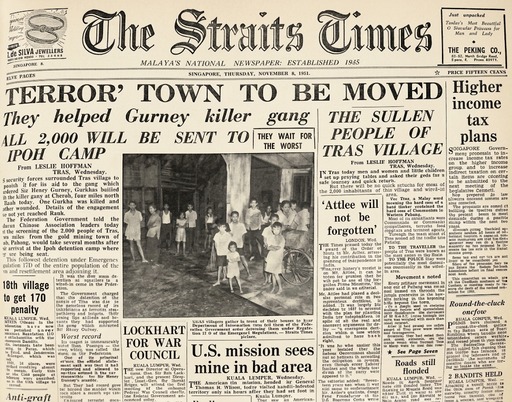
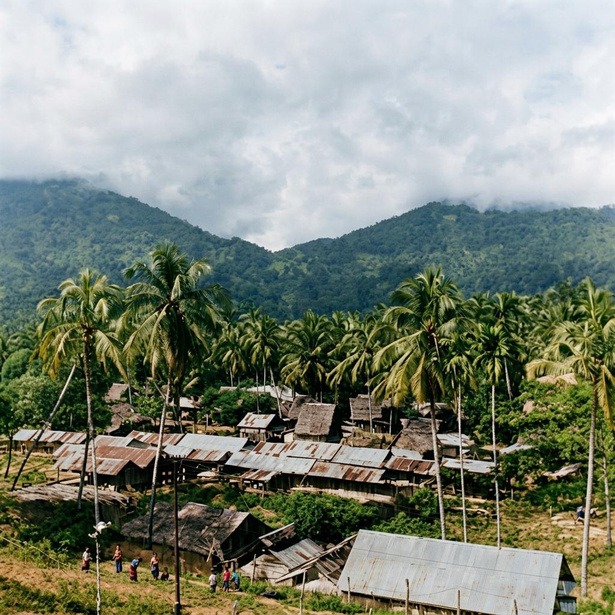
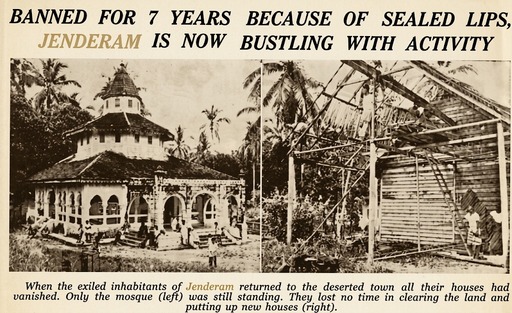
在紧急状态《第17D条集体惩罚令》下,两个不同族群的村庄承受了相同的离散创伤:
1. 都赖(华人村落,2,000人):1951年11月,因被怀疑协助伏击葛尼而被全村强行撤空并集体拘留,村庄沦为无人鬼镇。
2. 仁加榄(马来/跨族群村落,1,600人):1951年2月,因被指控支持以马来人为主的第十支队而被推土机夷为平地,村民被专列集体遣送拘留营。Under Emergency Regulation 17D on collective punishment, two villages of different ethnicities suffered the same displacement trauma:— 《被抹去的双子星:都赖与仁加榄(1951年)》历史档案考证 | Archival Study: 'The Erased Twins: Tras and Jenderam (1951)'
1. Tras (Chinese Village, 2,000 residents): Forcefully evacuated and collectively detained in November 1951 under suspicion of assisting the Gurney ambush, leaving the village a ghost town.
2. Jenderam (Malay/Cross-Ethnic Village, 1,600 residents): Flattened by bulldozers in February 1951 for accused support of the Tenth Regiment, with residents collectively deported by train to detention camps.