建制专卷第7卷:南下先锋与特种专业兵种:马共突击队、跨五国战地军医队、无线电通信组、宣传广播队、地下民运与中央警卫队
Armed Forces Monograph Vol. 7: Southward Vanguard & Specialist Branches: Shock Brigades, Five-Nation Medical Team, Radio Comms, Broadcasting, Min Yuen & Guard Unit
【六大特种建制与支持网络总览】马共突击队(第五、第六、第八突击队及阿布·沙玛领导的第十四突击队、拉昔·迈丁领导的第十五突击队,与“地下流动队”协同南下霹雳、吉打、吉兰丹与彭亨中央山脉) ➔ 军医队(1960年代秘密选派年轻女队员穿越泰老两国奔赴北越战地医院学医,缔造中、越、老、泰、马五地协作奇迹) ➔ 无线电通信组(秘密电码传递者) ➔ 宣传广播队(1969年湖南益阳四方山“马来亚革命之声”与1981年泰南丛林“马来亚民主之声”四语种广播) ➔ 民运(自行车空心钢管与衣物夹层输送保命物资的后勤大动脉) ➔ 警卫队(独创“空罐头报警器”拱卫马共中央与陈平总书记的无形盾牌)。
[Six Specialist Branches & Support Networks Overview] CPM Shock Brigades (5th, 6th, 8th Assault Teams and Malay 14th & 15th Assault Teams led by Abu Samah and Rashid Maidin, alongside Underground Mobile Teams) ➔ Military Medical Team (1960s secret dispatch of young female members across Thailand and Laos to North Vietnam field hospitals) ➔ Radio Communications Group ➔ Propaganda Broadcasting Group (1969 'Voice of the Malayan Revolution' in Yiyang, Hunan, China and 1981 'Voice of Malayan Democracy' in southern Thailand) ➔ Min Yuen (The Masses Movement) ➔ Guard Unit ('The Invisible Shield' protecting the Central Committee and Chin Peng with the 'empty-tin warning system').
第一章:马共突击队(CPM Shock Brigades,南下先锋)与跨五国“战地野战医疗”奇迹的军医队
Chapter 1: CPM Shock Brigades (Vanguard of the Southward Advance) and the Five-Nation Military Medical Team Miracle
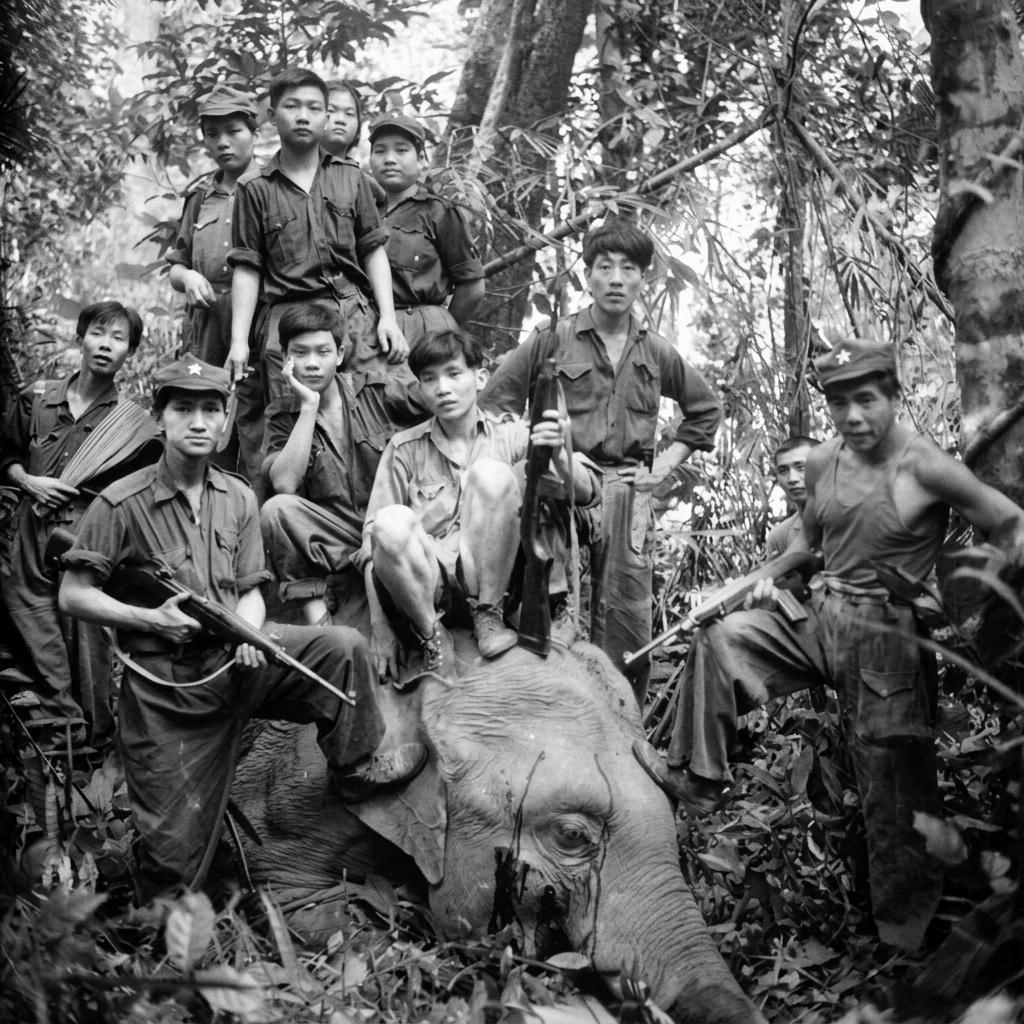
1960年代末至1980年代,为打破敌军封锁、重返马来亚半岛腹地重建革命根据地,马共中央从泰马边境主力支队中抽调精兵强将,组建了多支战略机动部队,“马共突击队”(CPM Shock Brigades,誉为“南下先锋”)。在建制分工上,马共严格区分了侧重于潜伏乡村、开展群众宣传与组织联络的“地下流动队”(Underground Mobile Teams),以及专司长途穿插、伏击敌军与开辟新战区的武装“突击队”(Assault Teams)。
南下突击队主要活跃于霹雳、吉打、吉兰丹及彭亨州等地,其中最具代表性的有第五突击队、深入彭亨中央山脉(蒂蒂旺沙山脉)腹地的第六突击队、以及战斗在吉打与槟威外围的第八突击队;同时,马共还组建了以马来族战士为主体的第十四突击队(由马共中央委员阿布·沙玛 Abu Samah 率领)与第十五突击队(由拉昔·迈丁 Rashid Maidin 率领),向南推进深入马来乡村,与华族突击队形成南北呼应之势。
伴随南下铁流一同创造了历史奇迹的,是马共“军医队”(Military Medical Team)。1960年代,面对密林中重伤员与热带恶性疟疾急需现代外科救治的燃眉之急,马共中央作出一项极具魄力的跨国战略决策:从部队中遴选一批聪颖坚毅的年轻女战士,化装秘密穿越泰国与老挝国境,远赴正在抗美救国战争烽火中的北越战地医院,接受系统的现代外科手术、麻醉、药理与战地急救培训。这批女战士学成后再次冒死翻山越岭潜返泰马边境雨林,在中、越、老、泰、马五地国际主义地下网络的协作下,用简陋的器械在竹棚与地道中完成了无数例开腹、截肢与取弹片大手术,被全体指战员深情誉为“森林里的守护天使”。
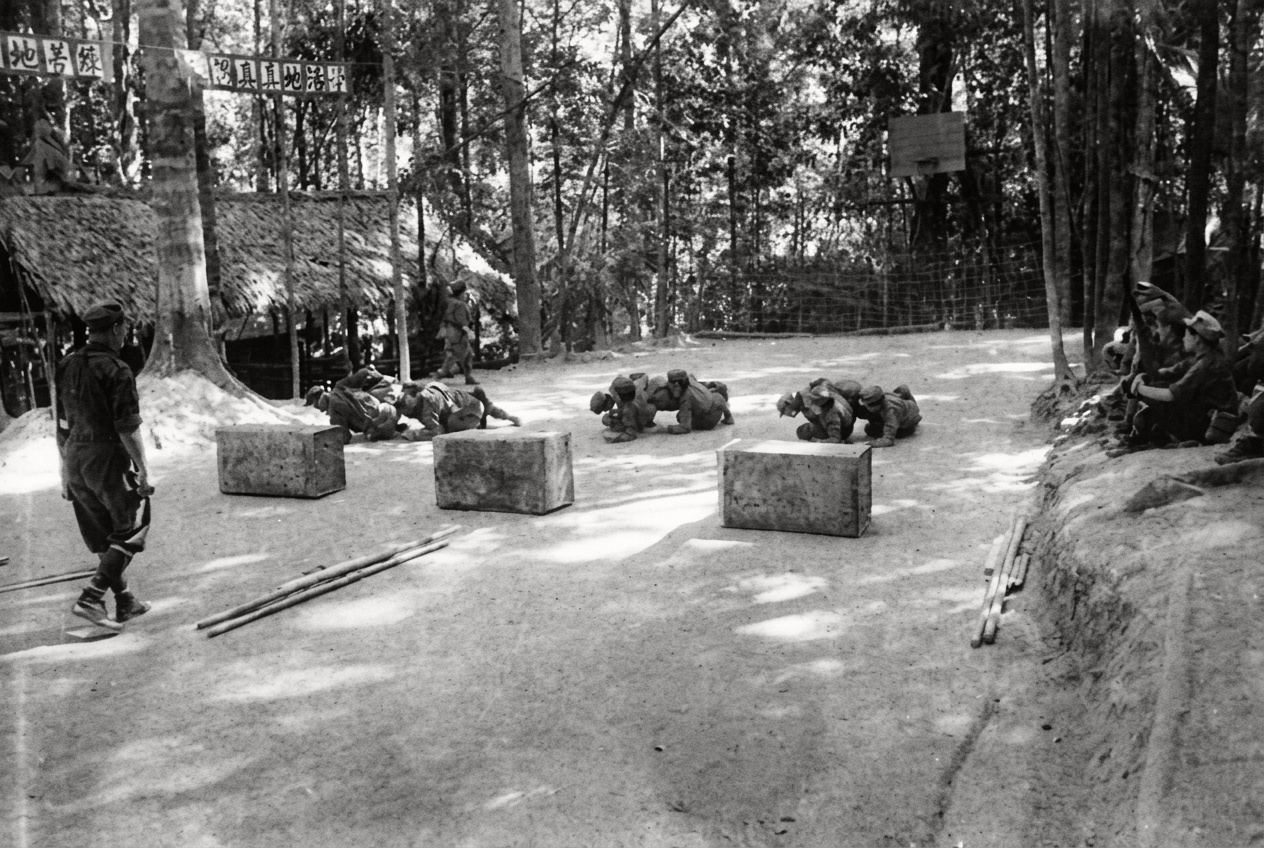
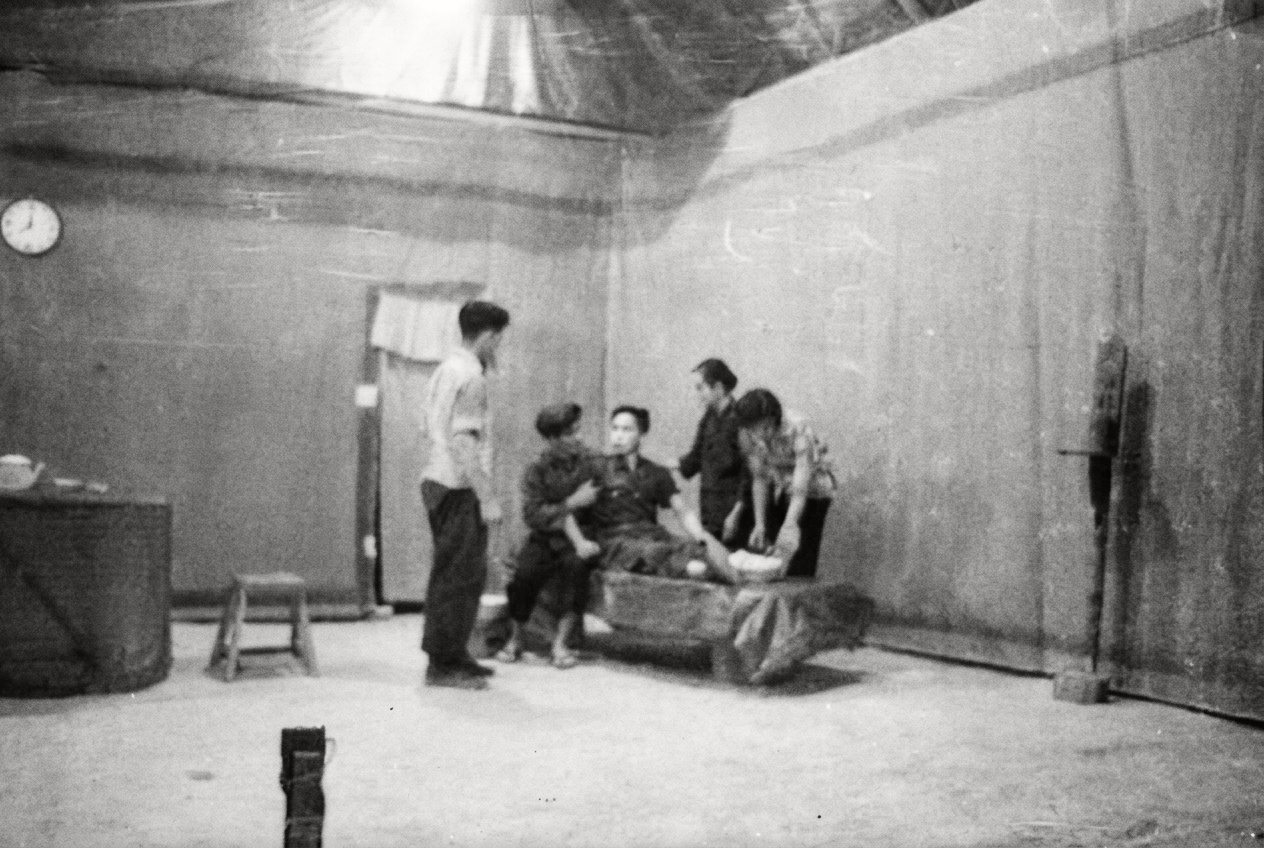
在馆藏动态影像中,南下突击队与战地女军医的日常身影被赋予了更为真切的温度。《南下突击队穿行于霹雳与吉兰丹中央山脉》(No. 79-01b)忠实记录了突击队员们背负沉重给养,在绵延于霹雳州与吉兰丹州交界处的蒂蒂旺沙中央山脉(Banjaran Besar di antara Perak dan Kelantan)云雾密林中披荆斩棘、开辟南下通道的壮阔行军实况;而《三八妇女节集锦(Bunga Rampai 8 Mac)》则将镜头对准了撑起丛林“半边天”的巾帼群体,展现女军医、女卫生员、女突击队员在竹棚手术台前救死扶伤、在林间溪畔浣衣欢笑、在节日舞台上自信放歌的动人风采。
From the late 1960s through the 1980s, to break through border blockades and re-establish revolutionary bases in the Malayan heartland, the CPM organized elite southward mobile formations known as the 'CPM Shock Brigades' (马共突击队, Vanguard of the Southward Advance). Organizationally, the Party distinguished between 'Underground Mobile Teams'—which focused on clandestine propaganda and grassroots mobilization—and combat 'Assault Teams' tasked with deep penetration and tactical strikes.
Operating across Perak, Kedah, Kelantan, and Pahang were the renowned 5th Assault Team, the 6th Assault Team (which penetrated deep into the Pahang Central Mountain Range), and the 8th Assault Team, alongside the Malay-majority 14th Assault Team (led by Abu Samah) and 15th Assault Team (led by Rashid Maidin).
Supporting these frontline fighters was the 'Military Medical Team' (军医队), which achieved a miracle of transnational field medicine. In the 1960s, the CPM secretly dispatched a cohort of young female combatants disguised as civilians across Thailand and Laos into wartime North Vietnam, where they received formal surgical and clinical training at Vietnamese field hospitals. Returning through perilous jungle trails to the Thai-Malaysian frontier via a five-nation underground network (China, Vietnam, Laos, Thailand, and Malaya), these female military doctors saved countless lives under the rainforest canopy, earning the title 'guardian angels within the forest.'
In the museum's moving image archives, the daily lives of the southward Shock Brigades and female military doctors come alive with extraordinary immediacy. Archival Reel No. 79-01b follows a Shock Brigade column trekking with heavy packs along the mist-shrouded Titiwangsa Main Range between Perak and Kelantan ('banjaran besar di antara Perak dan Kelantan'); meanwhile, the special documentary 'Bunga Rampai 8 Mac' ('March 8th International Women's Day Anthology') celebrates the women who held up 'half the sky' in the rainforest—from Vietnam-trained female surgeons operating in bamboo clinics to female nurses and fighters sharing laughter by mountain streams.
1960年代末至1980年代,为打破敌军封锁、重返马来亚半岛腹地重建革命根据地,马共中央从泰马边境主力支队中抽调精兵强将,组建了多支战略机动部队,“马共突击队”(CPM Shock Brigades,誉为“南下先锋”)。在建制分工上,马共严格区分了侧重于潜伏乡村、开展群众宣传与组织联络的“地下流动队”(Underground Mobile Teams),以及专司长途穿插、伏击敌军与开辟新战区的武装“突击队”(Assault Teams)。
南下突击队主要活跃于霹雳、吉打、吉兰丹及彭亨州等地,其中最具代表性的有第五突击队、深入彭亨中央山脉(蒂蒂旺沙山脉)腹地的第六突击队、以及战斗在吉打与槟威外围的第八突击队;同时,马共还组建了以马来族战士为主体的第十四突击队(由马共中央委员阿布·沙玛 Abu Samah 率领)与第十五突击队(由拉昔·迈丁 Rashid Maidin 率领),向南推进深入马来乡村,与华族突击队形成南北呼应之势。
伴随南下铁流一同创造了历史奇迹的,是马共“军医队”(Military Medical Team)。1960年代,面对密林中重伤员与热带恶性疟疾急需现代外科救治的燃眉之急,马共中央作出一项极具魄力的跨国战略决策:从部队中遴选一批聪颖坚毅的年轻女战士,化装秘密穿越泰国与老挝国境,远赴正在抗美救国战争烽火中的北越战地医院,接受系统的现代外科手术、麻醉、药理与战地急救培训。这批女战士学成后再次冒死翻山越岭潜返泰马边境雨林,在中、越、老、泰、马五地国际主义地下网络的协作下,用简陋的器械在竹棚与地道中完成了无数例开腹、截肢与取弹片大手术,被全体指战员深情誉为“森林里的守护天使”。
From the late 1960s through the 1980s, to break through border blockades and re-establish revolutionary bases in the Malayan heartland, the CPM organized elite southward mobile formations known as the 'CPM Shock Brigades' (马共突击队, Vanguard of the Southward Advance). Organizationally, the Party distinguished between 'Underground Mobile Teams'—which focused on clandestine propaganda and grassroots mobilization—and combat 'Assault Teams' tasked with deep penetration and tactical strikes.
Operating across Perak, Kedah, Kelantan, and Pahang were the renowned 5th Assault Team, the 6th Assault Team (which penetrated deep into the Pahang Central Mountain Range), and the 8th Assault Team, alongside the Malay-majority 14th Assault Team (led by Abu Samah) and 15th Assault Team (led by Rashid Maidin).
Supporting these frontline fighters was the 'Military Medical Team' (军医队), which achieved a miracle of transnational field medicine. In the 1960s, the CPM secretly dispatched a cohort of young female combatants disguised as civilians across Thailand and Laos into wartime North Vietnam, where they received formal surgical and clinical training at Vietnamese field hospitals. Returning through perilous jungle trails to the Thai-Malaysian frontier via a five-nation underground network (China, Vietnam, Laos, Thailand, and Malaya), these female military doctors saved countless lives under the rainforest canopy, earning the title 'guardian angels within the forest.'
【马共突击队|南下先锋】
1960年代末至1980年代,马共从泰马边境向马来亚腹地派遣多支机动部队,统称为“突击队”,旨在重建根据地、恢复地下联系并开展游击行动。当时内部亦区分侧重宣传与组织工作的“地下流动队”,以及以军事行动为主的“突击队”。
部队主要活动于霹雳、吉打、吉兰丹及彭亨等地,包括第五、第六(彭亨中央山脉)和第八突击队;另有以马来族为主的第十四突击队(阿布·沙玛领导)与第十五突击队(拉昔·迈丁领导),负责向南推进并与华族部队协同行动。
【军医队|跨越五国的“战地野战医疗”奇迹】
在物资极度匮乏的原始雨林中,马共建立了一套高效的战地医疗体系。其中最具传奇色彩的,是1960年代马共做出的一项战略决策:秘密选派一批年轻女队员,穿越泰国与老挝,前往战火中的北越战地医院接受系统的现代医学与外科手术培训。
她们学成后冒着生命危险潜返泰马边境,在简陋的竹棚内用有限的器械完成无数次高难度手术,并将医术传授给新一代卫生员。这批跨越中、越、老、泰、马五地协作培养出的女军医,成为了游击队名副其实的“森林里的守护天使”。[CPM Shock Brigades | Vanguard of the Southward Advance]— 录自《马共突击队》与《军医队》原始文献(第一、二节) | Verbatim Transcription from 'CPM Shock Brigades' and 'Military Medical Team' Primary Chronicles (Sections 1 & 2)
From the late 1960s to the 1980s, the CPM dispatched mobile units from the Thai–Malaysian border into the Malayan heartland, collectively known as the 'Shock Brigades', to rebuild bases, restore underground links and conduct guerrilla operations. Internally, a distinction was made between 'Underground Mobile Teams', which focused on propaganda and organisation, and 'Assault Teams', which prioritised military action.
Operating mainly in Perak, Kedah, Kelantan and Pahang, these included the 5th, 6th (Pahang Central Mountain Range) and 8th Assault Teams, as well as the predominantly Malay 14th Assault Team (led by Abu Samah) and 15th Assault Team (led by Rashid Maidin), which advanced southward in coordination with Chinese units.
[Military Medical Team | The Five-Nation Field Medical Miracle]
Amid extreme scarcity in the rainforest, the CPM built an effective field medical system. Most remarkably, in the 1960s the Party secretly dispatched a group of young female members across Thailand and Laos to field hospitals in wartime North Vietnam for systematic training in modern medicine and surgery.
Risking their lives to return to the Thai-Malaysian border, they performed complex surgeries in bamboo huts with limited instruments and trained a new generation of medics. Cultivated through a five-territory underground network spanning China, Vietnam, Laos, Thailand, and Malaya, these female military doctors became true 'guardian angels within the forest'.
在馆藏动态影像中,南下突击队与战地女军医的日常身影被赋予了更为真切的温度。《南下突击队穿行于霹雳与吉兰丹中央山脉》(No. 79-01b)忠实记录了突击队员们背负沉重给养,在绵延于霹雳州与吉兰丹州交界处的蒂蒂旺沙中央山脉(Banjaran Besar di antara Perak dan Kelantan)云雾密林中披荆斩棘、开辟南下通道的壮阔行军实况;而《三八妇女节集锦(Bunga Rampai 8 Mac)》则将镜头对准了撑起丛林“半边天”的巾帼群体,展现女军医、女卫生员、女突击队员在竹棚手术台前救死扶伤、在林间溪畔浣衣欢笑、在节日舞台上自信放歌的动人风采。
In the museum's moving image archives, the daily lives of the southward Shock Brigades and female military doctors come alive with extraordinary immediacy. Archival Reel No. 79-01b follows a Shock Brigade column trekking with heavy packs along the mist-shrouded Titiwangsa Main Range between Perak and Kelantan ('banjaran besar di antara Perak dan Kelantan'); meanwhile, the special documentary 'Bunga Rampai 8 Mac' ('March 8th International Women's Day Anthology') celebrates the women who held up 'half the sky' in the rainforest—from Vietnam-trained female surgeons operating in bamboo clinics to female nurses and fighters sharing laughter by mountain streams.
第二章:无线电通信组(秘密电码传递者)与宣传广播队(从湖南益阳“马来亚革命之声”到泰南丛林“马来亚民主之声”)
Chapter 2: Radio Communications Group and Propaganda Broadcasting Group (From Hunan's 'Voice of the Malayan Revolution' to the Jungle's 'Voice of Malayan Democracy')
在崇山峻岭阻隔、敌军侦察机盘旋的丛林游击战中,“无线电通信组”(Radio Communications Group)与“译电处”是维系马共中央、北马局与各支队、南下突击队之间指挥畅通的“秘密电码传递者”。报务员与译电员们背负沉重的收发报机与手摇发电机,在极端潮湿的热带雨林中架设隐蔽天线,凭着娴熟的莫尔斯电码技艺与频繁变换波长、定时定点的反无线电测向战术,在敌军电子监听网的缝隙中准确无误地传递每一份作战指令与战报。
与秘密电波相呼应的,是响彻赤道夜空的公开号角,“宣传广播队”(Propaganda Broadcasting Group)。为了打破殖民与执政当局的舆论封锁,马共建立起涵盖华语、马来语、淡米尔语和英语四大语种的革命广播体系。1969年11月15日,在国际主义支援下,马共在中国湖南益阳四方山正式建成开播“马来亚革命之声”广播电台(Voice of the Malayan Revolution,代号691),强劲的短波信号覆盖整个马来亚半岛与东南亚;1981年7月,随着国际形势演变,宣传广播队指战员携发射设备毅然迁回泰国南部原始森林,接力开播“马来亚民主之声”(Voice of Malayan Democracy),在密林深处坚持多语种播音并配合手摇油印机出版《人民前锋报》与《十年》,直至《合艾和平协议》达成后于1990年1月2日正式停播,圆满完成历史使命。
密林深处的广播电台不仅是传播政论的号角,更是流淌着歌声与热泪的艺术熔炉。在馆藏第60号历史影像中,马来亚民主之声广播电台的马来族女音乐人阿燕(原名再农 Zainon)面对镜头动情地倾诉道:“亲爱的听众、亲爱的同胞:我是在民主之声广播电台的音乐工作者阿燕,原名叫做再农。我从小就非常喜爱音乐,音乐是我的另一个生命……”在简陋的森林录音棚里,各族播音员与乐手们用吉他、手风琴、笛子与盘式录音机录制了一首首充满乡愁与斗志的华巫印歌曲,让赤道雨林中的理想之声乘着短波飞向千家万户。
Across rugged mountain ranges patrolled by enemy reconnaissance aircraft, the 'Radio Communications Group' (无线电通信组) and Cipher Department served as the 'transmitters of secret codes' linking the CPM Central Committee and Northern Bureau with outlying regiments and southward shock brigades. Carrying heavy transceivers and hand-cranked generators through humid rainforests, operators employed strict encryption and anti-direction-finding protocols to keep the command network alive.
Complementing encrypted military signals was the 'Propaganda Broadcasting Group' (宣传广播队)—the 'loudspeaker of revolutionary ideals' broadcasting in Mandarin, Malay, Tamil, and English. In November 1969, the CPM established the 'Voice of the Malayan Revolution' radio station at Sifang Mountain, Yiyang, Hunan, China, beaming daily multilingual broadcasts across Malaya. In July 1981, the broadcasting team relocated into the deep rainforests of southern Thailand to launch the 'Voice of Malayan Democracy,' operating alongside jungle mimeograph presses until the signing of the Haadyai Peace Accord.
Deep in the rainforest, the clandestine radio station was not merely a transmitter of political commentary, but a vibrant sanctuary of music and artistic devotion. In Archival Series No. 60, Zainon (known by her camp name 'Ah Yan'), a Malay musician at the Voice of Malayan Democracy radio station, speaks warmly into the camera: 'Dear listeners and fellow countrymen: I am Ah Yan, a music worker at the Voice of Malayan Democracy radio station, originally named Zainon. I have loved music since childhood—music is my second life...' Inside their bamboo studio, multi-ethnic announcers and musicians recorded songs on reel-to-reel tape decks, sending melodies of hope across the airwaves.
在崇山峻岭阻隔、敌军侦察机盘旋的丛林游击战中,“无线电通信组”(Radio Communications Group)与“译电处”是维系马共中央、北马局与各支队、南下突击队之间指挥畅通的“秘密电码传递者”。报务员与译电员们背负沉重的收发报机与手摇发电机,在极端潮湿的热带雨林中架设隐蔽天线,凭着娴熟的莫尔斯电码技艺与频繁变换波长、定时定点的反无线电测向战术,在敌军电子监听网的缝隙中准确无误地传递每一份作战指令与战报。
与秘密电波相呼应的,是响彻赤道夜空的公开号角,“宣传广播队”(Propaganda Broadcasting Group)。为了打破殖民与执政当局的舆论封锁,马共建立起涵盖华语、马来语、淡米尔语和英语四大语种的革命广播体系。1969年11月15日,在国际主义支援下,马共在中国湖南益阳四方山正式建成开播“马来亚革命之声”广播电台(Voice of the Malayan Revolution,代号691),强劲的短波信号覆盖整个马来亚半岛与东南亚;1981年7月,随着国际形势演变,宣传广播队指战员携发射设备毅然迁回泰国南部原始森林,接力开播“马来亚民主之声”(Voice of Malayan Democracy),在密林深处坚持多语种播音并配合手摇油印机出版《人民前锋报》与《十年》,直至《合艾和平协议》达成后于1990年1月2日正式停播,圆满完成历史使命。
Across rugged mountain ranges patrolled by enemy reconnaissance aircraft, the 'Radio Communications Group' (无线电通信组) and Cipher Department served as the 'transmitters of secret codes' linking the CPM Central Committee and Northern Bureau with outlying regiments and southward shock brigades. Carrying heavy transceivers and hand-cranked generators through humid rainforests, operators employed strict encryption and anti-direction-finding protocols to keep the command network alive.
Complementing encrypted military signals was the 'Propaganda Broadcasting Group' (宣传广播队)—the 'loudspeaker of revolutionary ideals' broadcasting in Mandarin, Malay, Tamil, and English. In November 1969, the CPM established the 'Voice of the Malayan Revolution' radio station at Sifang Mountain, Yiyang, Hunan, China, beaming daily multilingual broadcasts across Malaya. In July 1981, the broadcasting team relocated into the deep rainforests of southern Thailand to launch the 'Voice of Malayan Democracy,' operating alongside jungle mimeograph presses until the signing of the Haadyai Peace Accord.
【无线电通信组|“秘密电码”的传递者】
在崇山峻岭的阻隔下,无线电通信组是维系马共中央与各支队、南下突击队之间联系的唯一生命线。报务员们在潮湿的密林中架设天线,依靠手摇发电机与莫尔斯电码,在躲避军方无线电测向追踪的同时,准确无误地传递着每一道加密指令与战报。
【宣传广播队|革命理想的扩音器】
为了打破当局的信息封锁,宣传广播队承担起向全马各族人民传播马共政治主张的重任。他们组建了涵盖华、巫、印、英四语种的播音与编辑团队。
1969年,马共在中国湖南益阳四方山建立“马来亚革命之声”广播电台;1981年,电台迁回泰南丛林,改称“马来亚民主之声”继续播音,直至1990年停播。在密林深处,广播队与宣传人员还利用简陋的手摇油印机印制《人民前锋报》与《十年》等刊物,让理想的声音穿透雨林。[Radio Communications Group | Transmitters of the 'Secret Code']— 录自《无线电通信组》与《宣传广播队》原始文献(第三、四节) | Verbatim Transcription from 'Radio Communications Group' and 'Propaganda Broadcasting Group' Primary Chronicles (Sections 3 & 4)
Separated by rugged mountain ranges, the Radio Communications Group was the sole lifeline connecting the CPM Central Committee with its regiments and southward shock brigades. Setting up antennas in damp forests and relying on hand-cranked generators and Morse code, operators transmitted every encrypted directive and battle report while evading enemy radio direction-finding.
[Propaganda Broadcasting Group | The Loudspeaker of Revolutionary Ideals]
To break through official information blockades, the Propaganda Broadcasting Group shouldered the mission of broadcasting the CPM's political platform to all ethnic communities across Malaya, assembling announcing and editorial teams in Mandarin, Malay, Tamil, and English.
In 1969, the CPM established the 'Voice of the Malayan Revolution' radio station at Sifang Mountain in Yiyang, Hunan, China; in 1981, the station relocated to the southern Thai jungle as the 'Voice of Malayan Democracy', broadcasting until 1990. Deep in the forest, propaganda teams also used hand-operated mimeograph machines to print periodicals such as 'People's Vanguard' and 'Ten Years'.
密林深处的广播电台不仅是传播政论的号角,更是流淌着歌声与热泪的艺术熔炉。在馆藏第60号历史影像中,马来亚民主之声广播电台的马来族女音乐人阿燕(原名再农 Zainon)面对镜头动情地倾诉道:“亲爱的听众、亲爱的同胞:我是在民主之声广播电台的音乐工作者阿燕,原名叫做再农。我从小就非常喜爱音乐,音乐是我的另一个生命……”在简陋的森林录音棚里,各族播音员与乐手们用吉他、手风琴、笛子与盘式录音机录制了一首首充满乡愁与斗志的华巫印歌曲,让赤道雨林中的理想之声乘着短波飞向千家万户。
Deep in the rainforest, the clandestine radio station was not merely a transmitter of political commentary, but a vibrant sanctuary of music and artistic devotion. In Archival Series No. 60, Zainon (known by her camp name 'Ah Yan'), a Malay musician at the Voice of Malayan Democracy radio station, speaks warmly into the camera: 'Dear listeners and fellow countrymen: I am Ah Yan, a music worker at the Voice of Malayan Democracy radio station, originally named Zainon. I have loved music since childhood—music is my second life...' Inside their bamboo studio, multi-ethnic announcers and musicians recorded songs on reel-to-reel tape decks, sending melodies of hope across the airwaves.
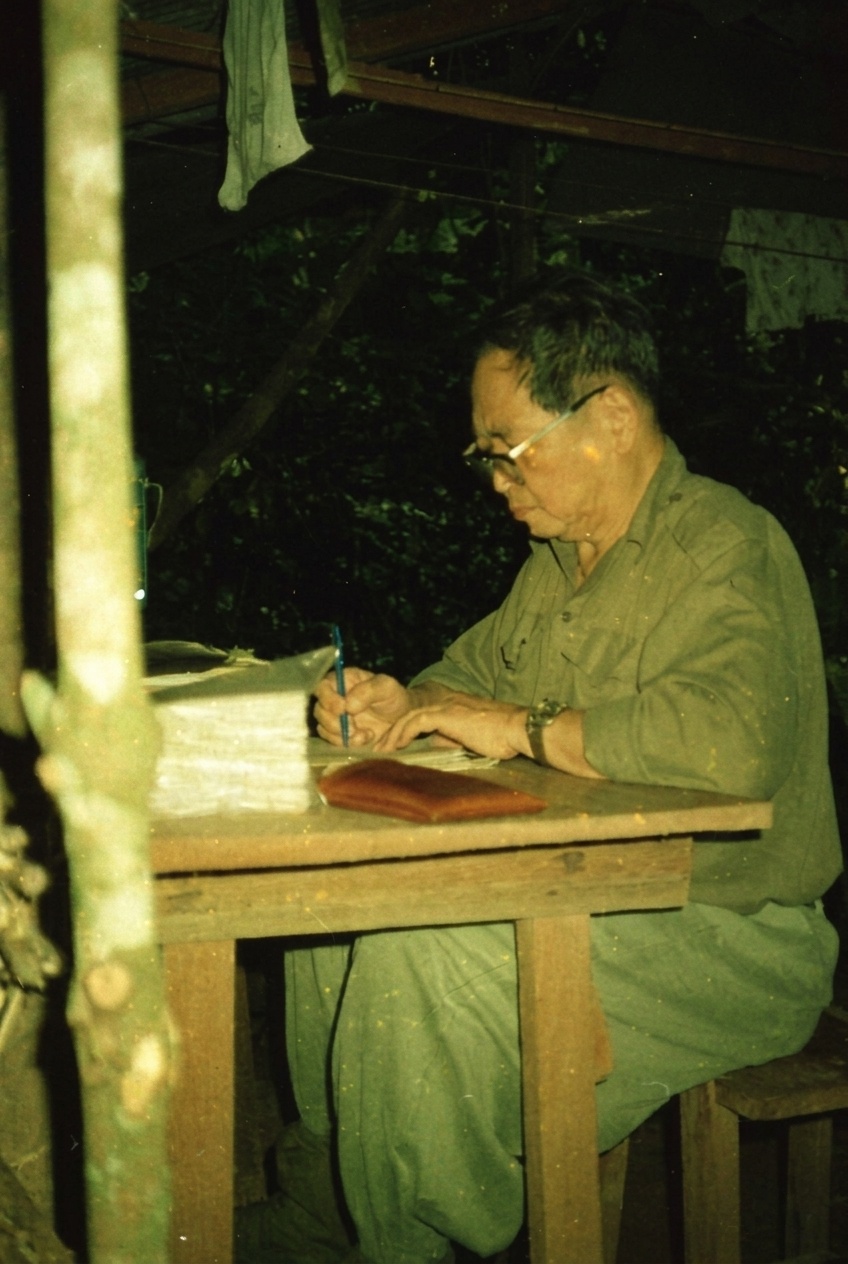
第三章:民运(Min Yuen,森林深处的后勤大动脉)与警卫队(Guard Unit,拱卫中央的无形盾牌)
Chapter 3: Min Yuen (The Logistical Artery of the Jungle) and the Guard Unit (The Invisible Shield Protecting the Command Core)
在长达数十年的丛林游击战中,马共武装力量之所以能够生存并与数倍于己的强敌周旋,其真正的力量根基不仅在森林深处,更在于遍布橡胶园、锡矿场及边缘乡村的庞大地下群众网络,“民运”(Min Yuen,源自“民众运动”)。民运成员在白昼的日常生活中是普通的割胶工、矿工、农民和家庭主妇,而在夜幕下则是游击队不可或缺的后勤大动脉、情报网与新血输送带。在殖民政府与当局极严苛的粮食管制与搜身封锁下,民运成员展现出非凡的民间智慧,通过将生米、食盐、消炎药品、电台干电池及密写情报藏入自行车空心钢管与特制衣物夹层,源源不断地送入深山密林,生动诠释了鱼水相依的人民战争伟力。
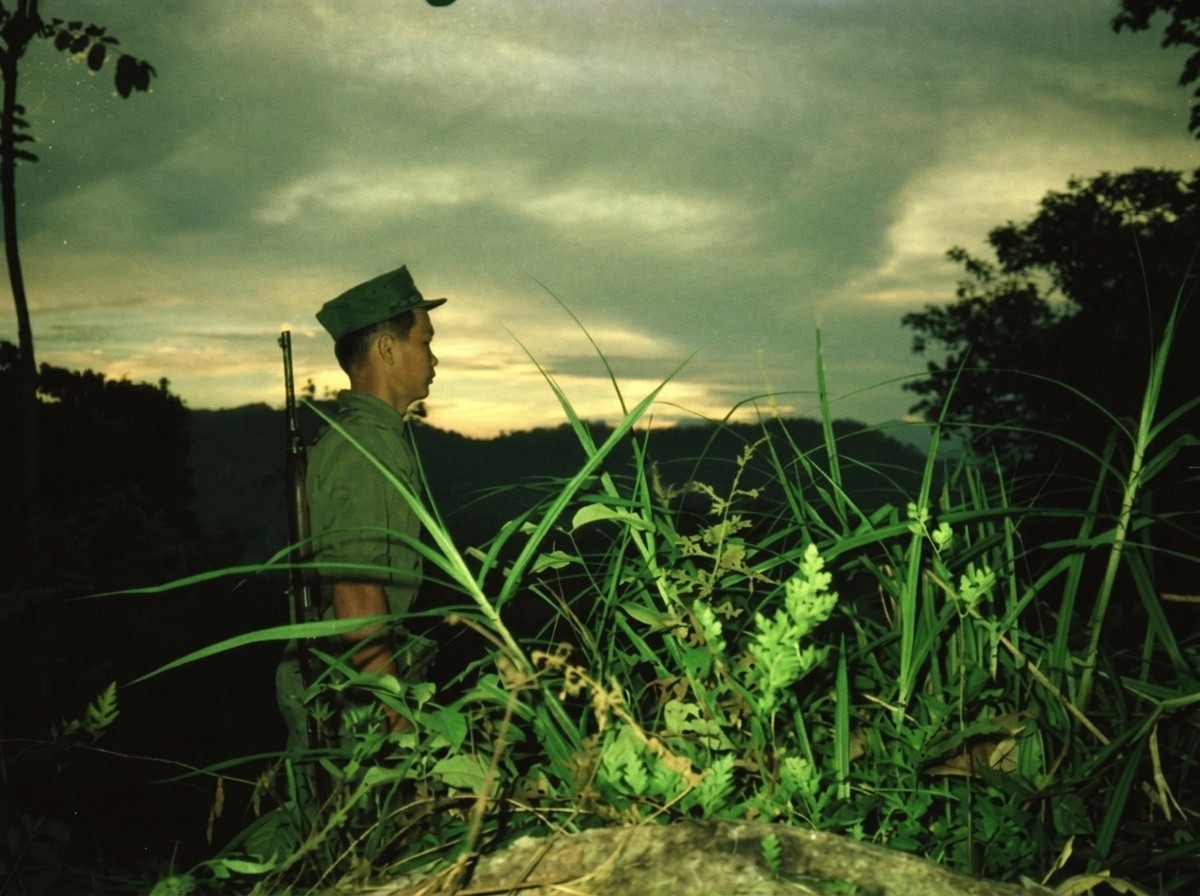
而在赤道雨林最核心的马共中央大本营外围,则驻守着全军百里挑一的铁血精锐,“警卫队”(Guard Unit,下辖第一至第八警卫队)。警卫队常年处于最高戒备状态,直接承担着保卫马共中央委员会及总书记陈平等核心领导人生命安全的神圣使命。为了防范敌军特种部队(如马来西亚皇家警察 VAT 69 特警突击队)与政治部探员的夜间摸哨或突袭,警卫队在缺乏现代电子探测设备的深山绝境中,发明了极为灵敏可靠的“空罐头报警器”(empty-tin warning system):在营地外围必经野径与密林灌木丛中拉起无数条隐蔽细绳,挂上装满碎石的空罐头盒。任何悄然逼近的异动都会触发清脆的碰撞声,在寂静的林海中瞬间拉响生命警报。警卫队数十年如一日的无声坚守,构成了马共中央坚不可摧的“无形盾牌”,直到1989年《合艾和平协议》落笔,方才体面而光荣地完成了终身卫戍使命。
Throughout decades of jungle warfare, the core strength that allowed the CPM guerrillas to survive and contend with a formidable adversary resided in the vast underground civilian network scattered across rubber estates, tin mines, and rural fringes: the 'Min Yuen' (The Masses Movement). By day, Min Yuen members lived ordinary lives as rubber tappers, miners, farmers, and housewives; by night, they served as the indispensable logistical artery, intelligence network, and recruitment conduit for the armed forces. Under draconian resource blockades, Min Yuen operatives smuggled vital supplies—raw rice, salt, medicine, radio batteries, and intelligence—inside hollow bicycle frames and concealed clothing layers into the deep forests.
Deep within the heavily patrolled rainforests, the elite 'Guard Unit' (警卫队, comprising the 1st through 8th Guard Units) bore the critical mission of securing the CPM Central Committee and key leaders, including Secretary-General Chin Peng. Operating under perpetual high alert around the outer perimeters of the headquarters, sentry posts, and air-defense tunnels, the guards devised ingenious jungle survival tactics to thwart nighttime ambushes by government commandos (such as Malaysia's VAT 69) or Special Branch operatives. Most famous was their 'empty-tin warning system'—stretching concealed tripwires attached to gravel-filled tin cans across jungle pathways so that any stealthy intrusion triggered an instant rattling alarm. Through decades of silent vigilance, the Guard Unit preserved the security of the command core until the 1989 Hat Yai Peace Accord.
【民运|森林深处的后勤大动脉】
在长达数十年的丛林游击战中,马共战士能够生存并与强大的对手周旋,其核心力量并不在森林深处,而在于遍布胶林,矿场以及边缘乡村的庞大地下群众网络,即“民运”,其源自民众运动。
民运成员在日常生活中是普通的割胶工,矿工,农民和家庭主妇,但他们是马共不可或缺的后勤大动脉,情报网以及新血输送带。在殖民政府极严苛的物资管制下,民运成员通过自行车空心钢管,衣物夹层等各种智慧方式,将生米,食盐,药品,电池等保命物资和关键情报源源不断送入深山,并为游击队动员青年新血。
民运的历史,是马共群众路线与人民战争的终极体现,它证明了游击战的胜负取决于与人民群众血肉相连的生命纽带。
【警卫队|无形盾牌】
在危机四伏、重兵围剿的赤道雨林深处,警卫队承担着保卫马共中央委员会及总书记陈平等核心领导人群体安全的极高使命。他们是整支武装力量中甄选而出的铁血精锐,常年处于高度戒备状态,驻扎在大本营、哨位和地道的外围,构成了大本营最坚固的最后一道安全防线。
为了防范敌军特种部队(如大马VAT 69特警)与政治部探员的夜间摸哨或突袭,警卫队在没有现代探测设备的林海绝境中,展现了惊人的丛林生存智慧。他们发明了最原始却极其有效的“空罐头报警器”,在营地外围的必经野径和密林灌木丛中,拉起无数条隐蔽的细绳,挂上装满碎石的空罐头盒。任何悄然逼近的异动都会碰响细绳、触发清脆的碰撞声,在寂静的林海中拉响生命警报。警卫队数十年如一日的无声坚守与哨位防线,默默守护着中央决策核心的安全,直到1989年《合艾和平协议》落笔,他们才体面地完成了终身卫戍的历史使命。[Min Yuen (The Masses Movement) | The Logistical Artery of the Jungle]— 录自《民运》与《警卫队》原始文献(第五、六节) | Verbatim Transcription from 'Min Yuen' and 'Guard Unit' Primary Chronicles (Sections 5 & 6)
Throughout decades of jungle warfare, the core strength that allowed the CPM guerrillas to survive and contend with a formidable adversary did not reside in the depths of the forest, but in the vast underground civilian network scattered across rubber estates, tin mines and rural fringes, the 'Min Yuen', which represents the Masses Movement.
By day, Min Yuen members lived ordinary lives as rubber tappers, miners, farmers and housewives, but by night, they served as the indispensable logistical artery, intelligence network and recruitment conduit for the armed forces. Under the colonial government's draconian resource blockades, Min Yuen members deployed extraordinary ingenuity, smuggling vital supplies such as raw rice, salt, medicine, batteries and crucial intelligence inside hollow bicycle frames and concealed clothing layers into the deep forests, while constantly mobilizing idealistic youth to replenish the guerrilla ranks.
The legacy of the Min Yuen remains the ultimate embodiment of the CPM's 'Mass Line' and 'People's War', proving that the survival of any guerrilla movement is irrevocably tied to its lifelines within the community.
[Guard Unit | The Invisible Shield]
Deep within the perilous and heavily patrolled equatorial rainforests, the Guard Unit bore the critical mission of securing the CPM Central Committee and key leaders, including Secretary-General Chin Peng. Handpicked as the elite of the armed forces, these guards operated under a perpetual state of high alert, patrolling the outer perimeters of the headquarters, sentry posts, and air-defense tunnels to form an impenetrable final line of defense.
To thwart nighttime ambushes by elite government commandos (such as Malaysia's VAT 69) or Special Branch operatives, and lacking modern surveillance technology in the deep jungle, the guards deployed ingenious survival tactics. They created the legendary 'empty-tin warning system,' stretching concealed tripwires attached to gravel-filled empty tin cans across jungle pathways. Any stealthy intrusion would trigger a distinct rattling sound, instantly alerting the camp in the silent forest. Through decades of quiet vigilance and tactical sentry defenses, the Guard Unit steadfastly preserved the security of the command core until the 1989 Hat Yai Peace Accord, gracefully completing their historic guarding mission.