在交互式典藏阅读器中打开 (Interactive Reader) →
AF_10 战时抵抗到和平转型终章 (Final Chapter: From Wartime Resistance to Peaceful Transition) · 1990.01 – 2005.09 · 约 17 分钟阅读

建制终章第10卷:绿色的新生(1990–2005):吉滴将军丛林访问、朱拉蓬公主发展村与四大和平村建立

Armed Forces Monograph Vol. 10: A Green Rebirth (1990–2005): General Kitti's Jungle Visits, the Chulabhorn Development Villages, and the Four Peace Villages
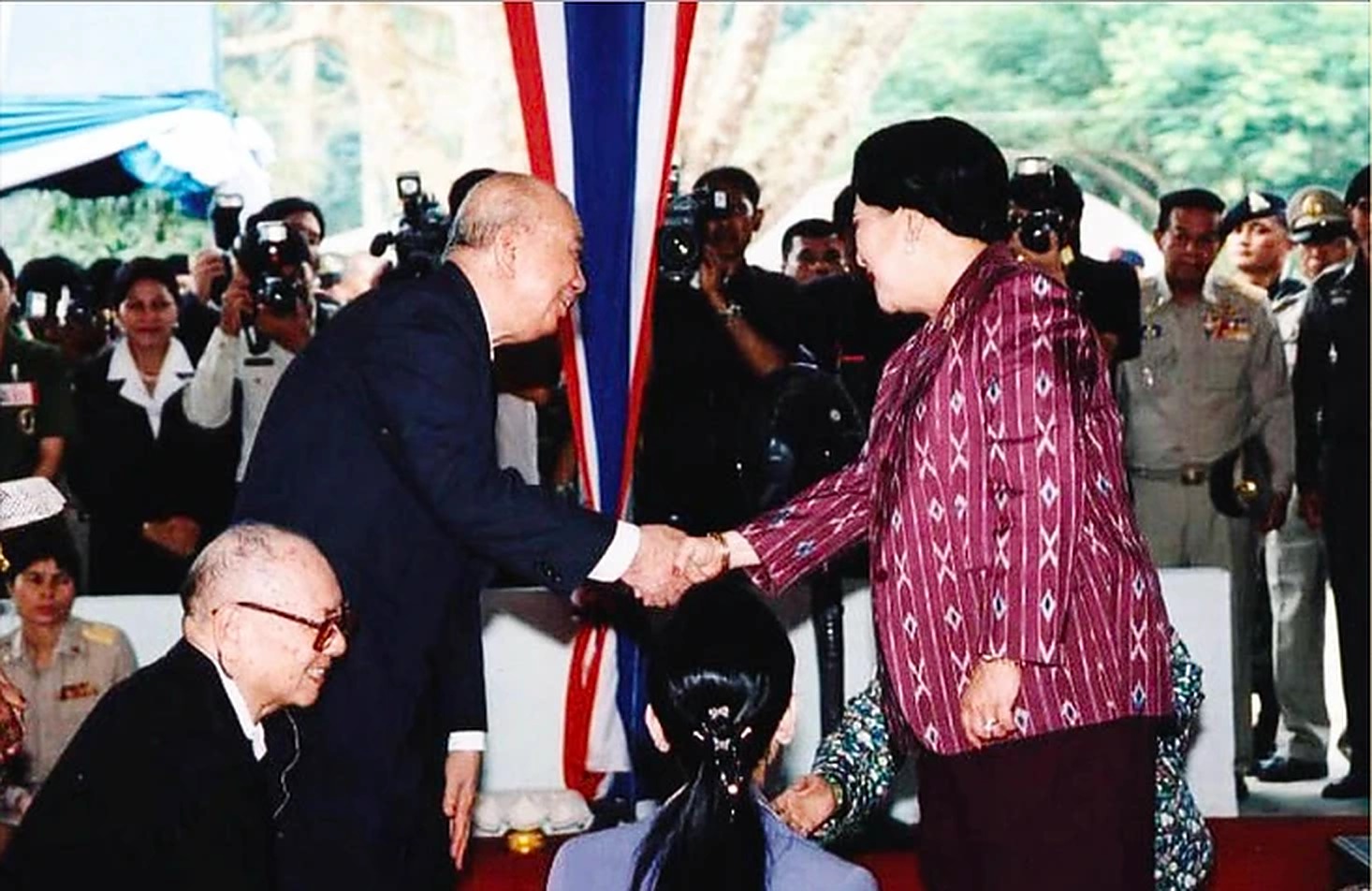
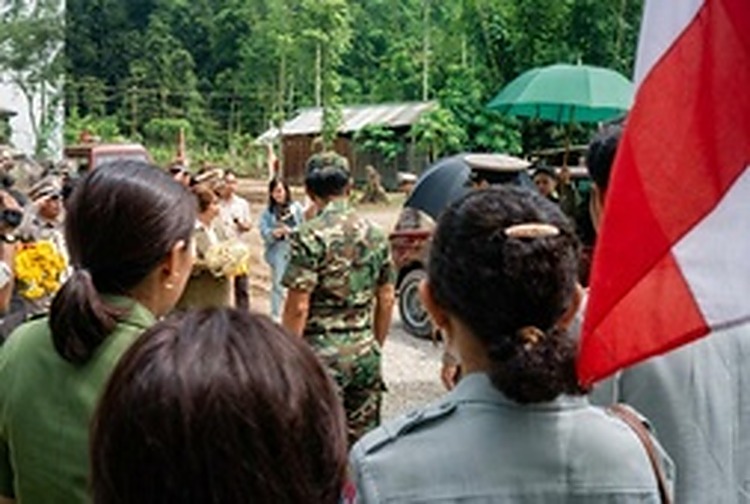
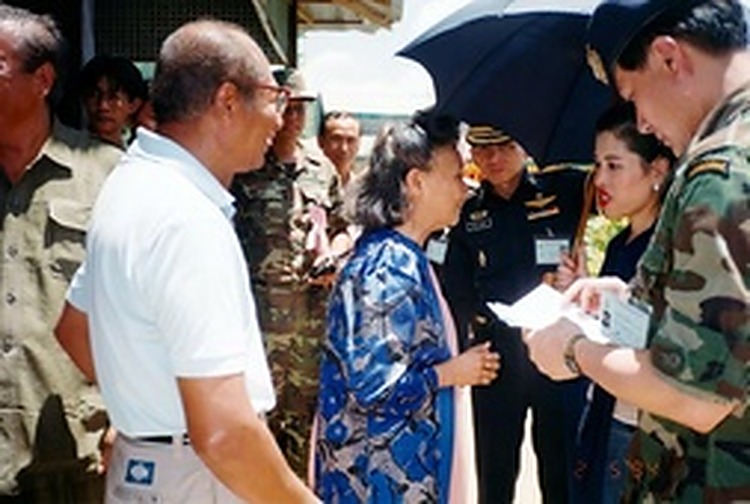
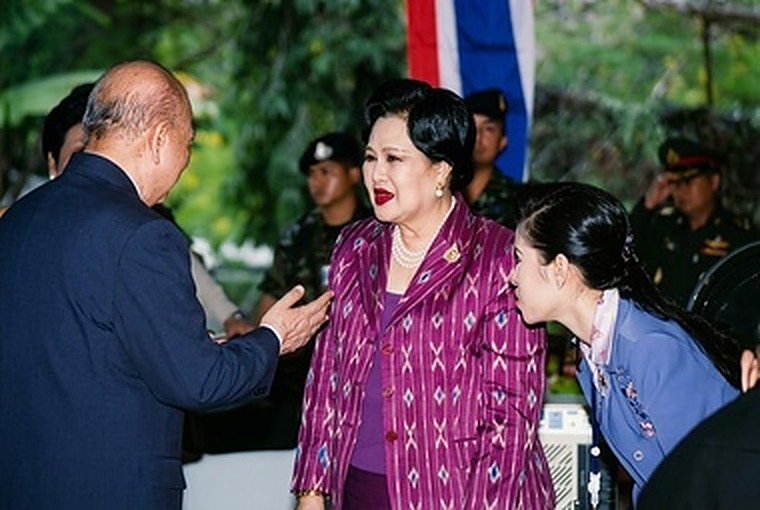
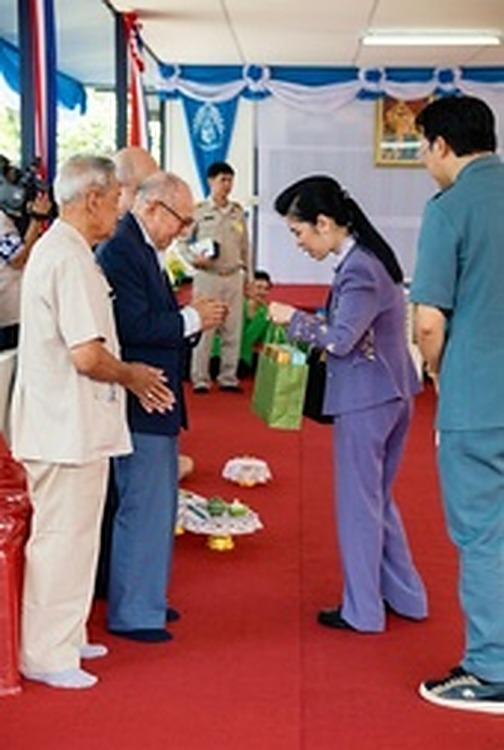
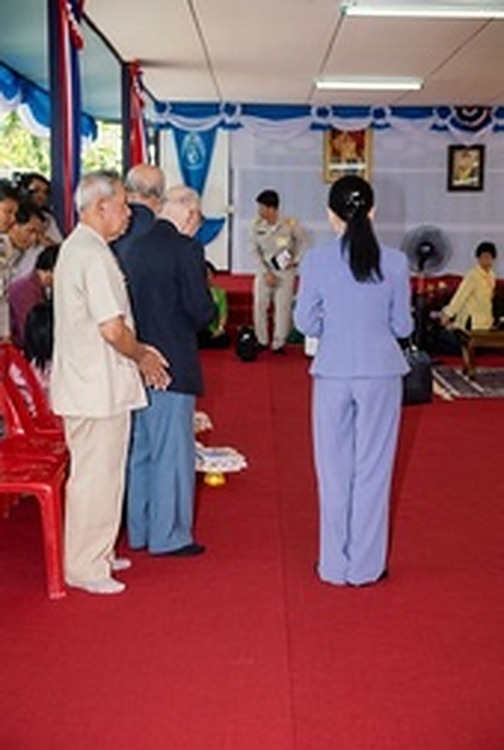
2005年9月15日,马共中央总书记陈平(左立者)与党主席阿都拉·西迪(左下)在泰南和平村向莅临视察的诗丽吉王后(右)致敬握手,朱拉蓬公主(中背影者)随侍在侧,象征着几十年丛林硝烟彻底化为真正的和平与和解。
On September 15, 2005, CPM Secretary-General Chin Peng (standing left) and Party Chairman Abdullah C.D. (lower left) pay respects and shake hands with HM Queen Sirikit (right) alongside HRH Princess Chulabhorn, symbolizing the transformation of decades of jungle conflict into genuine peace and reconciliation.

【武装力量终章全集】1990年至1991年和平村建村掠影:前马来亚人民军指战员驾驶推土机披荆斩棘、手写《建筑材料大约估计费》公开核算建屋经费、竖立《和平纪念碑》与《烈士们永垂不朽》纪念碑 ➔ 1991年至1992年泰南第四军区吉滴·拉达那差亚将军多次率团展开“丛林访问”,将前马共成员尊为“特殊的国家客人”与未来新公民,在行动上真正践行了和平 ➔ 1993年起泰南四个和平村由朱拉蓬公主亲自关照并命名为第9、10、11、12朱拉蓬公主发展村,2005年9月15日陈平总书记、阿都拉·西迪主席在现场向诗丽吉王后致敬握手 ➔ 绿色的新生:邦朗、勿洞、也哈、苏基林四大和平村的建立与今日风貌。

[Armed Forces Final Monograph] 1990–1991 Founding of the Peace Villages: Former MPA combatants clearing virgin forest by bulldozer, posting transparent handwritten building budgets, and erecting the Peace and Martyrs Monuments ➔ 1991–1992 'Jungle Visits' by 4th Army Region Commander Gen. Kitti Rattanachaya, treating former combatants as 'special state guests' and future citizens to practice peace in action ➔ Royal patronage of HRH Princess Chulabhorn from 1993 onward (Ban Chulabhorn Patana 9, 10, 11, and 12) and the historic September 15, 2005 handshake between Chin Peng, Abdullah C.D., and HM Queen Sirikit ➔ A Green Rebirth: Panoramic views of Banglang, Betong, Yaha, and Sukhirin Peace Villages.

第一章:披荆斩棘辟新天:1990至1992年和平村建村掠影与吉滴将军的“丛林访问”

Chapter 1: Pioneering a New Homeland: 1990–1992 Founding of the Peace Villages and General Kitti's 'Jungle Visits'

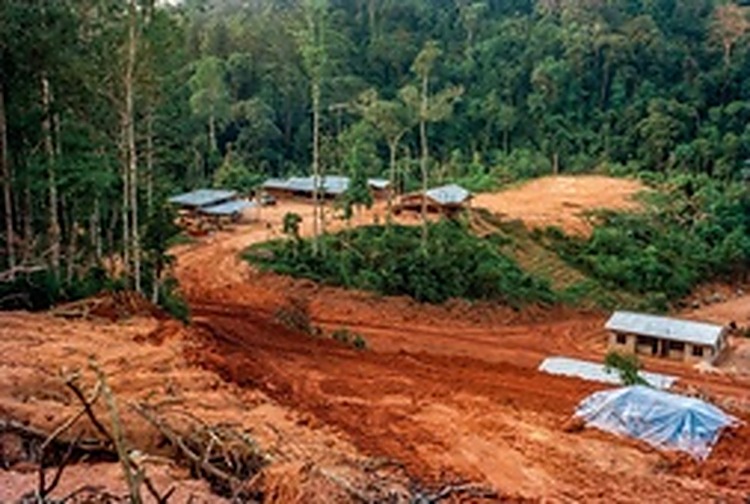
1990年春,随着丛林营地销毁武器的硝烟散去,选择留居泰国南部的马来亚人民军指战员与家属迎来了另一场同样艰巨的战斗:在荒无人烟的泰马边境崇山峻岭间,亲手建造属于自己的和平家园。根据《合艾和平协议》中泰王国政府与马共达成的行政安排,泰方按原人民军三大主力支队及中央直属机关的分布,在惹拉府(Yala)与陶公府(Narathiwat)拨出四片国有林地,建立邦朗(Banglang)、勿洞(Betong)、也哈(Yaha)和苏基林(Sukhirin)四个和平村,为每户家庭拨发2.4公顷(15莱)耕地、屋基地以及每间20,000泰铢的建屋补助金,并在三年过渡期内提供每人每日22泰铢的生活津贴。

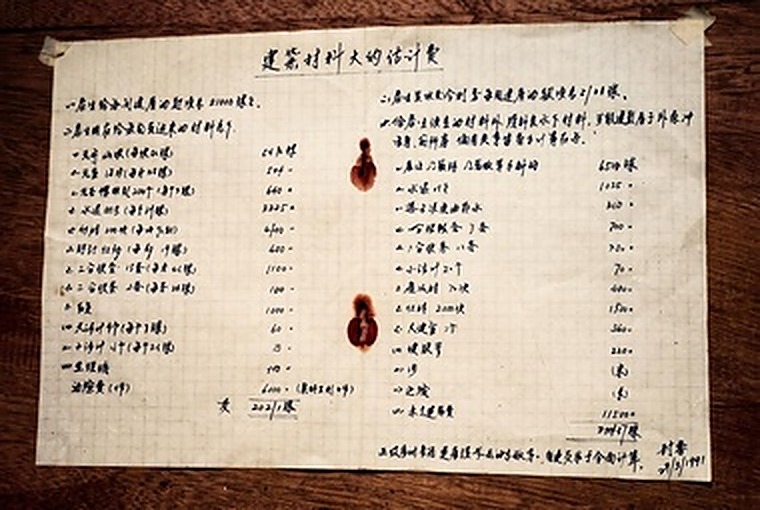
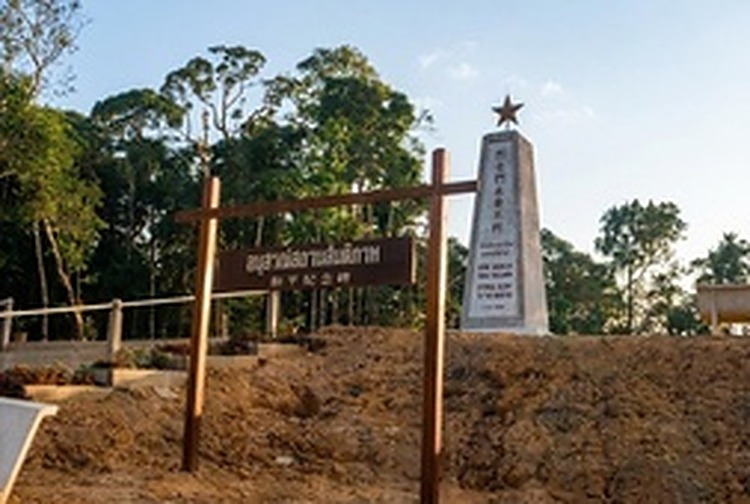
走出森林的革命军人没有等待观望,而是立即把军事化组织转化为合作化建设队伍。昔日操纵迫击炮与无线电的指战员们开动黄色履带推土机,在参天古木与陡峭山坡间推平宅基地、开辟盘山村道;大家动手锯木、烧砖、拌水泥,在简陋的帆布工棚与大寮厨房中同吃同住。1991年3月29日,和平村村委会在木墙上郑重张贴出手写的《建筑材料大约估计费》清单,将政府拨发的20,000铢建房款与村委会采购的每根木柱、2,000块红砖、水泥、锌片、铁钉及木工费用分毫毕现地公开列明(分别核算为20,211铢与20,967铢)。与此同时,村民们在各村制高点隆重竖立起《和平纪念碑》与顶端闪耀红星的《烈士们永垂不朽》纪念碑,让长眠于密林的战友英灵一同守望这片来之不易的和平热土。

In the spring of 1990, as the smoke of self-disarmament cleared from the jungle camps, Malayan People's Army combatants and family members who chose to settle in southern Thailand embarked on a new pioneering campaign: building peaceful homelands with their own hands amidst the rugged mountains of the Thai-Malaysian frontier. Under the Administrative Arrangement concluded between the Royal Thai Government and the CPM at Haadyai, Thailand allocated four tracts of state forest land in Yala and Narathiwat provinces corresponding to the MPA's main regiments and Central HQ—founding the Banglang, Betong, Yaha, and Sukhirin Peace Villages. Each household was granted 2.4 hectares (15 rai) of farmland, a housing plot, a 20,000-Baht construction grant, and a three-year subsistence allowance of 22 Baht per person per day.

Emerging from the forest, the former revolutionary soldiers immediately transformed their disciplined military organization into cooperative construction brigades. Combatants who had once operated mortars and field radios drove yellow bulldozers into virgin forest to level hillside terraces and grade mountain roads; they sawed timber, laid bricks, and mixed cement while sharing meals under canvas tarpaulins. On March 29, 1991, the Peace Village Committee posted a handwritten 'Estimated Cost of Building Materials' chart on the wooden wall, transparently accounting for every baht of the 20,000-Baht government housing grant down to every timber post, 2,000 red bricks, cement, zinc sheets, nails, and carpentry labor (totaling 20,211 Baht and 20,967 Baht respectively). At the same time, villagers erected the Peace Monument and the red-star Martyrs Cenotaph on high ground so that the spirits of fallen comrades could watch over their hard-won peaceful homeland.
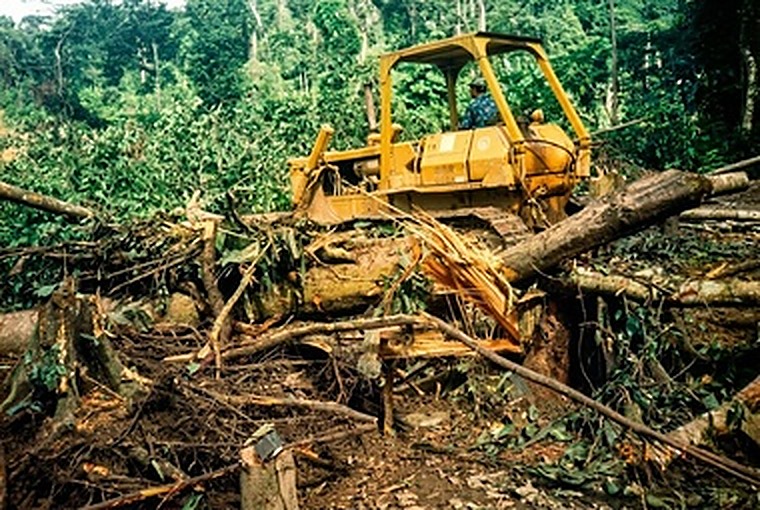
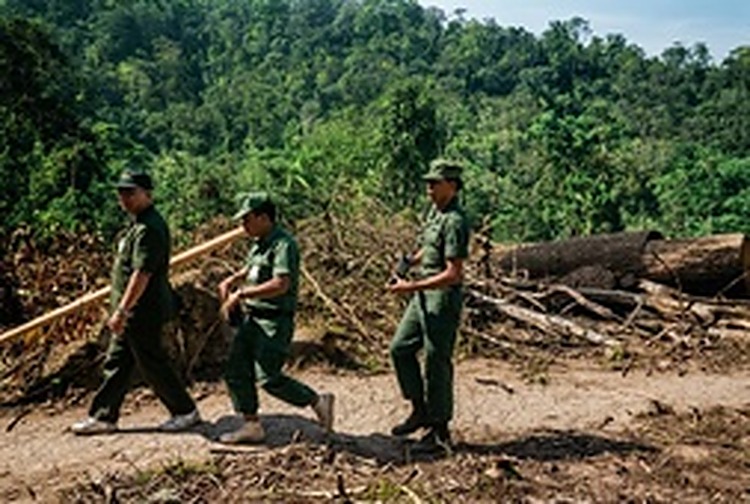
1990年至1991年泰南和平村建村掠影:前马来亚人民军指战员驾驶黄色履带推土机开进莽莽原始森林,推倒巨木、平整山坡,在昔日游击战场上辟出和平家园地基。
1990年至1991年泰南和平村建村掠影:前马来亚人民军指战员驾驶黄色履带推土机开进莽莽原始森林,推倒巨木、平整山坡,在昔日游击战场上辟出和平家园地基。 1990–1991 Peace Village construction: A former Malayan People's Army combatant operates a yellow bulldozer to clear virgin forest and level hillside terrain for the new settlement.
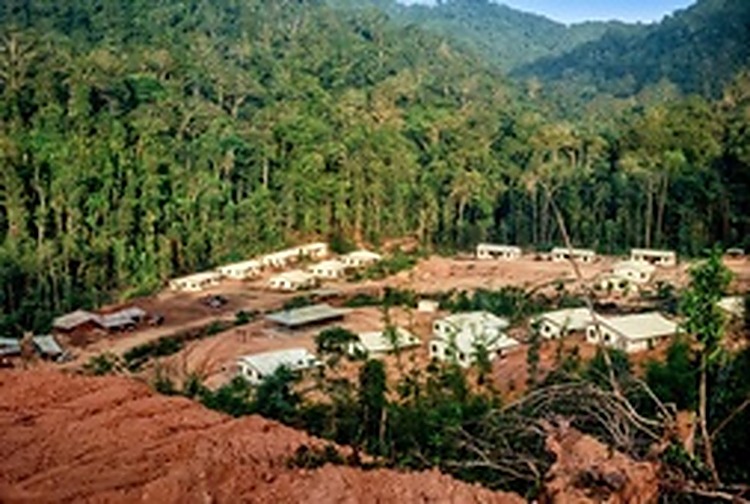
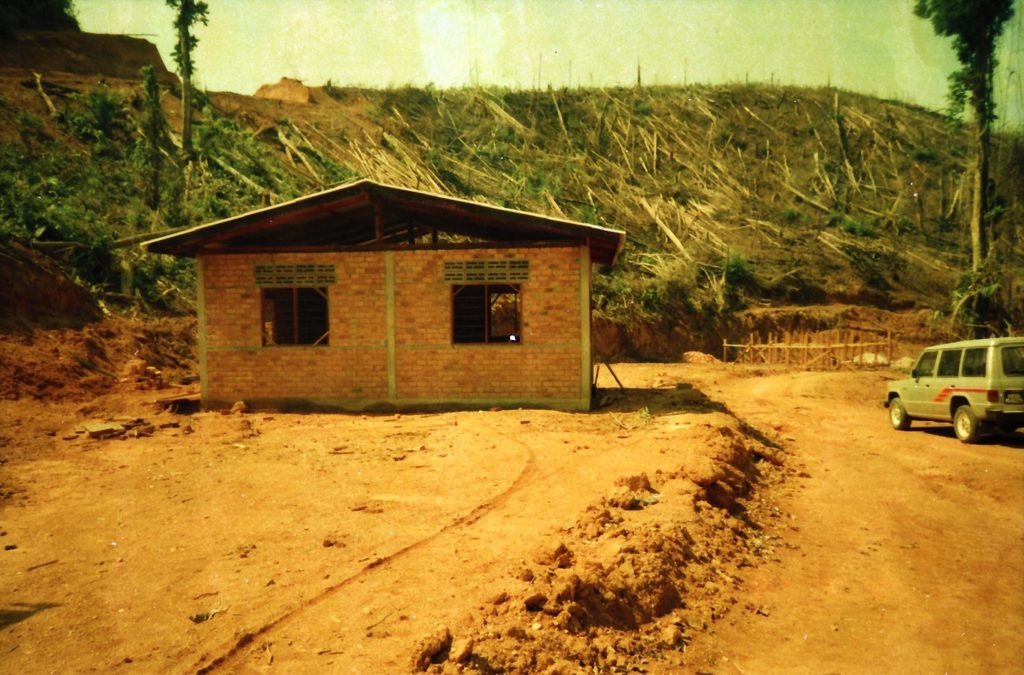
1991年初和平村首批建成的红砖瓦房住宅:背靠刚垦殖完毕的山坡,门前辟出宽阔的红土村道,右侧停放着村委会越野吉普车。
1991年初和平村首批建成的红砖瓦房住宅:背靠刚垦殖完毕的山坡,门前辟出宽阔的红土村道,右侧停放着村委会越野吉普车。 Early 1991 at the Peace Village: One of the first completed red-brick houses standing against a newly cleared hillside beside a wide dirt road and a village committee jeep.
1991年3月29日和平村村委会手写《建筑材料大约估计费》清单原件:详细列出政府拨发建房材料与自购木材、红砖、水泥、锌片、门窗等各项预算(分别核算为20,211铢与20,967铢),体现了建村经费公开透明的民主管理。
1991年3月29日和平村村委会手写《建筑材料大约估计费》清单原件:详细列出政府拨发建房材料与自购木材、红砖、水泥、锌片、门窗等各项预算(分别核算为20,211铢与20,967铢),体现了建村经费公开透明的民主管理。 Original handwritten 'Estimated Cost of Building Materials' chart dated March 29, 1991 by the Peace Village Committee, itemizing government-supplied and self-purchased timber, bricks, cement, zinc sheets, and doors/windows in Thai Baht (20,211 and 20,967 Baht).
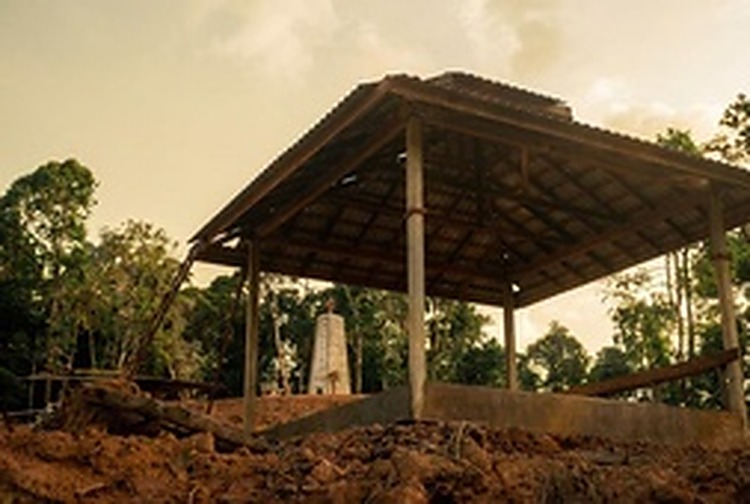
庄严矗立在和平村高地上的《和平纪念碑》(泰文:อนุสรณ์สถานสันติภาพ)与顶端镶嵌红星的《烈士们永垂不朽》纪念碑,铭记为反殖民族解放事业献出生命的革命先烈。
庄严矗立在和平村高地上的《和平纪念碑》(泰文:อนุสรณ์สถานสันติภาพ)与顶端镶嵌红星的《烈士们永垂不朽》纪念碑,铭记为反殖民族解放事业献出生命的革命先烈。 The completed Peace Memorial archway ('อนุสรณ์สถานสันติภาพ / 和平纪念碑') and the red-star obelisk inscribed 'Immortal Are the Martyrs' standing atop the Peace Village hill.
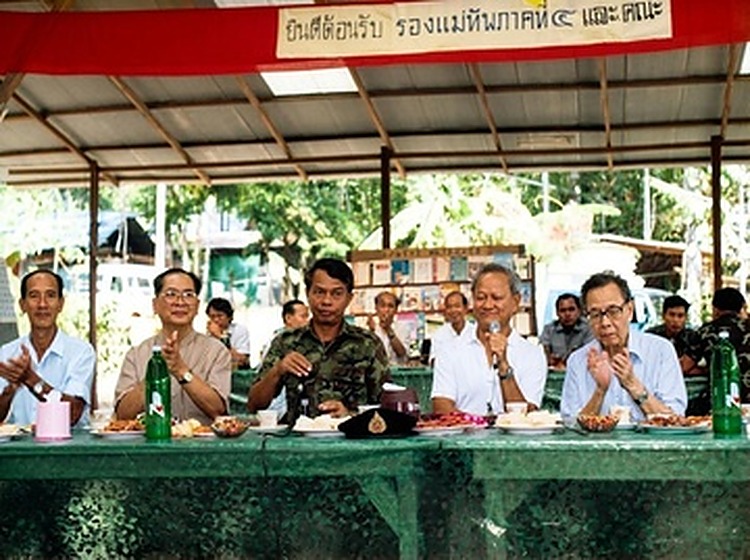
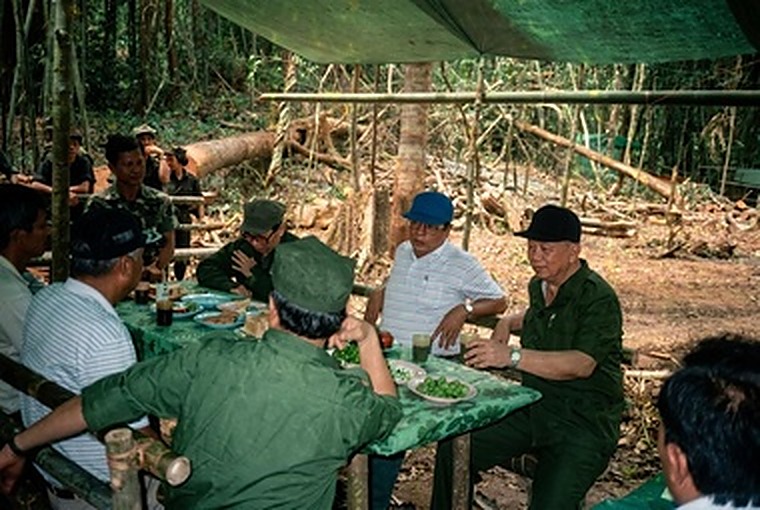
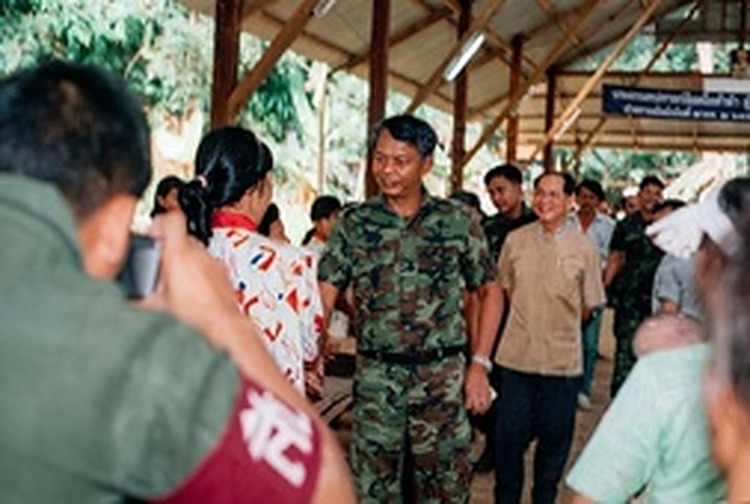
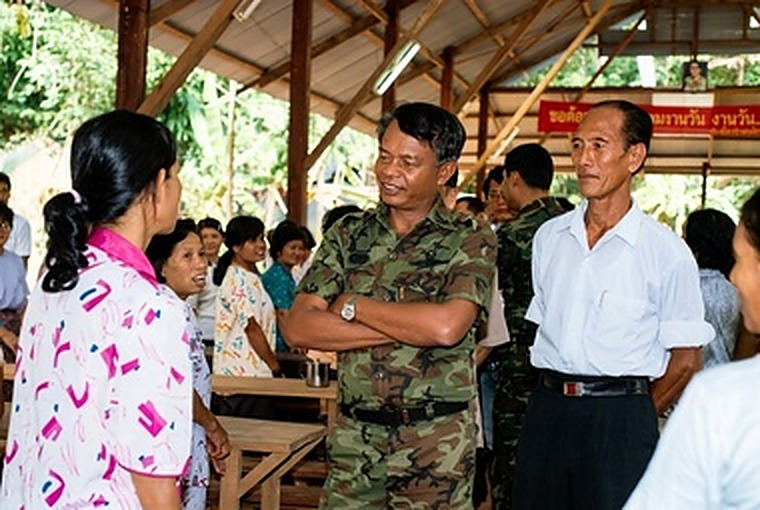
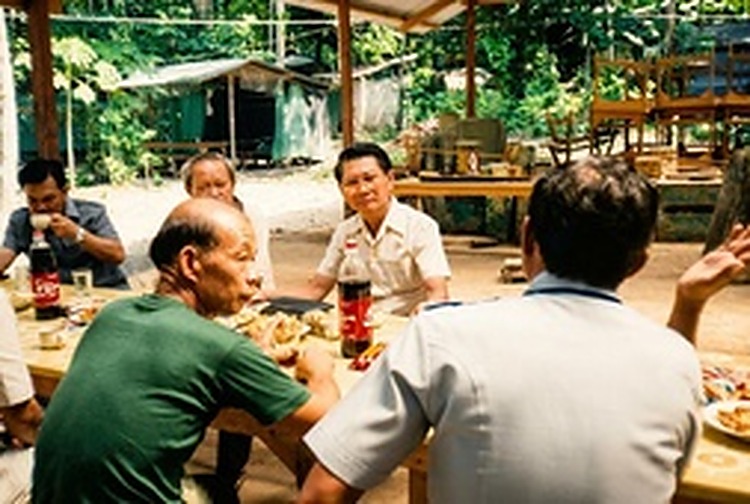
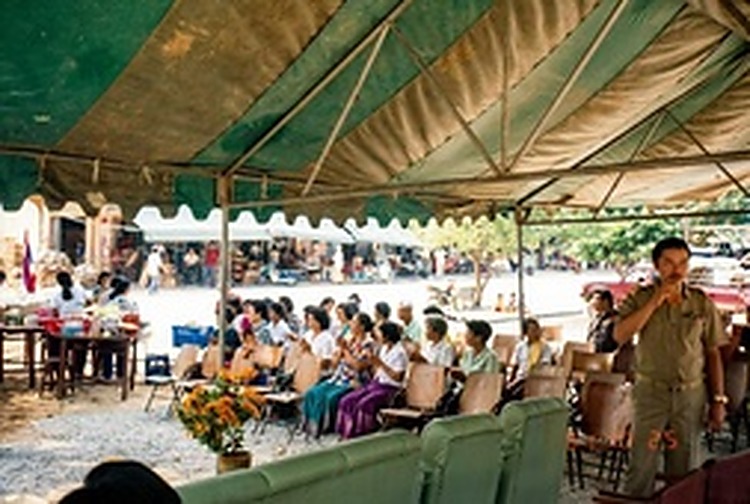
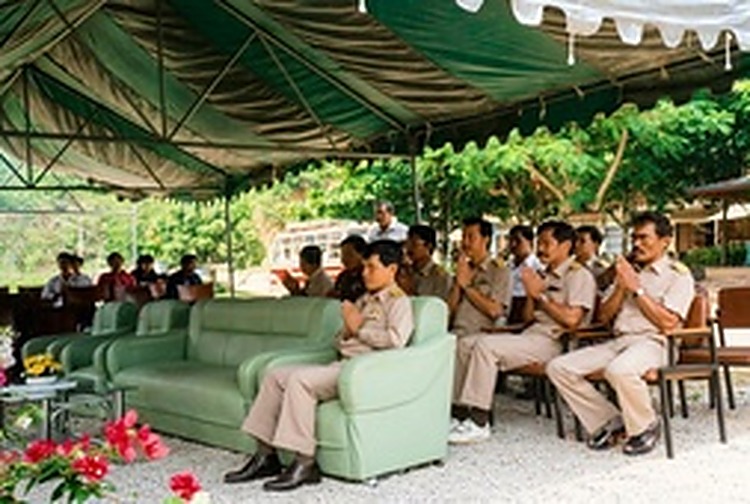
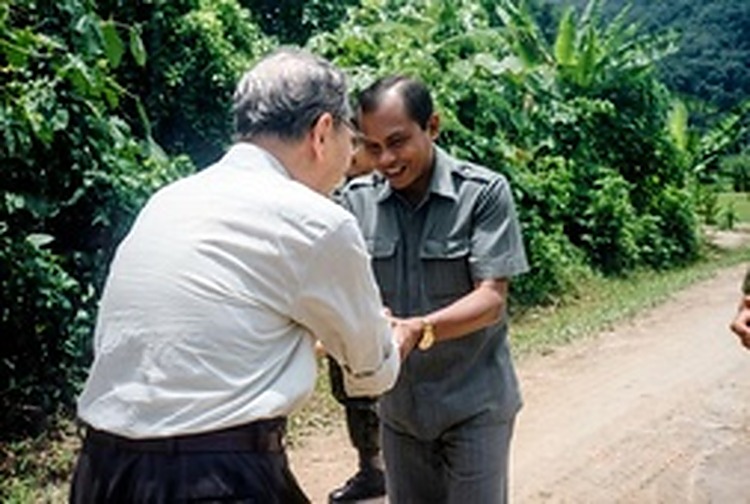
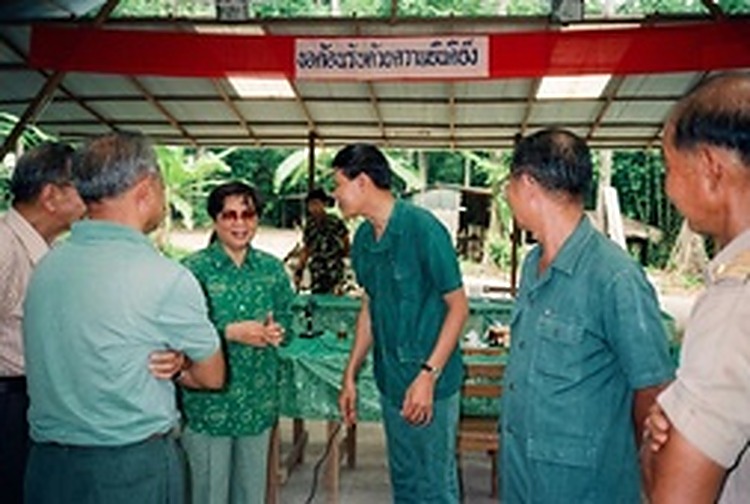
1991年至1992年吉滴将军访问和平村:在泰文横幅“热烈欢迎第四军区副司令及代表团”(ยินดีต้อนรับ รองแม่ทัพภาคที่ ๔ และคณะ)下,泰南第四军区吉滴·拉达那差亚将军(中穿迷彩服者)与和平村前马共领导人并肩就座、亲切会谈。
1991年至1992年吉滴将军访问和平村:在泰文横幅“热烈欢迎第四军区副司令及代表团”(ยินดีต้อนรับ รองแม่ทัพภาคที่ ๔ และคณะ)下,泰南第四军区吉滴·拉达那差亚将军(中穿迷彩服者)与和平村前马共领导人并肩就座、亲切会谈。 1991–1992 visit of General Kitti Rattanachaya: Seated beneath a Thai welcome banner ('Warmly Welcome the 4th Army Region Deputy Commander and Delegation'), Gen. Kitti (center, in camouflage uniform) holds cordial talks with former CPM leaders in the Peace Village.
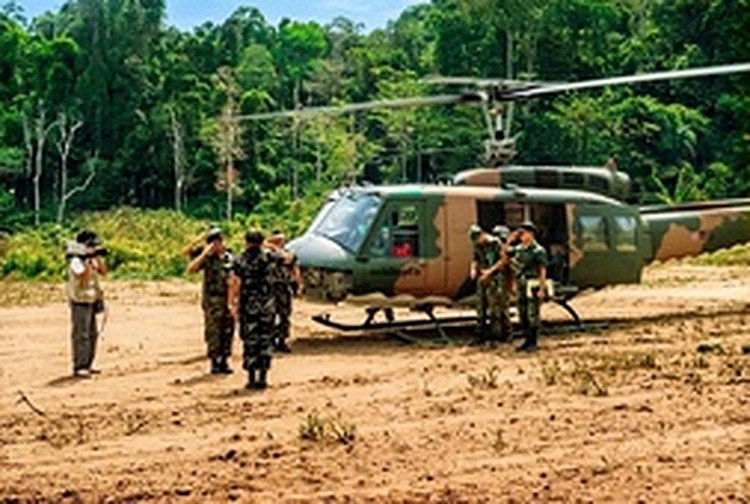
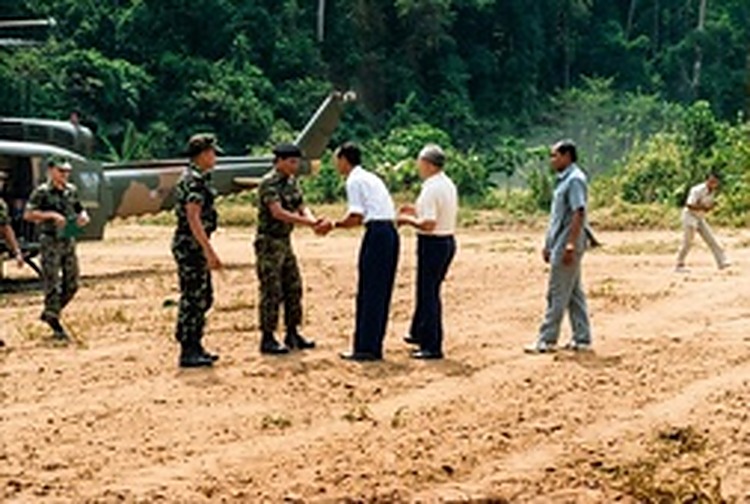
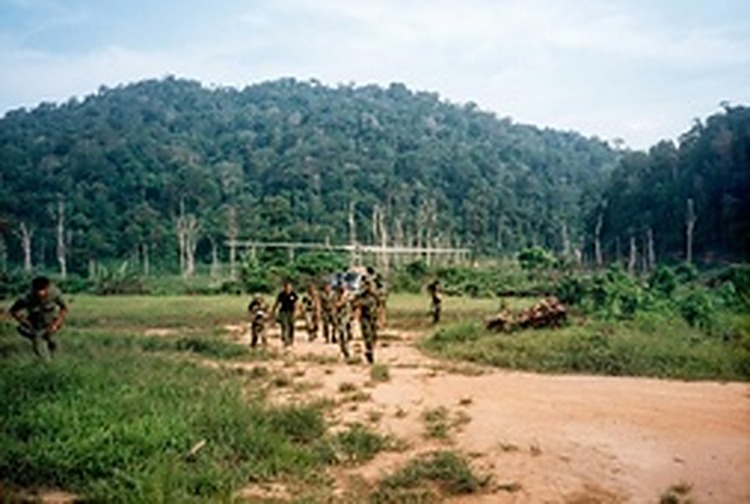
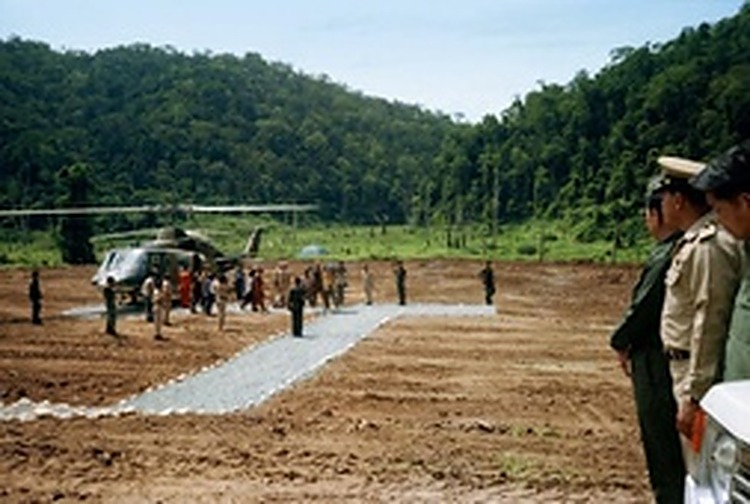
泰国皇家陆军UH-1直升机降落在群山环绕的和平村简易停机坪上,吉滴将军率军方高级代表团走下机舱,开启践行《合艾和平协议》的“丛林访问”。
泰国皇家陆军UH-1直升机降落在群山环绕的和平村简易停机坪上,吉滴将军率军方高级代表团走下机舱,开启践行《合艾和平协议》的“丛林访问”。 A Royal Thai Army UH-1 helicopter lands on the dirt helipad of a mountain Peace Village as General Kitti and his delegation step out for their historic 'jungle visit.'
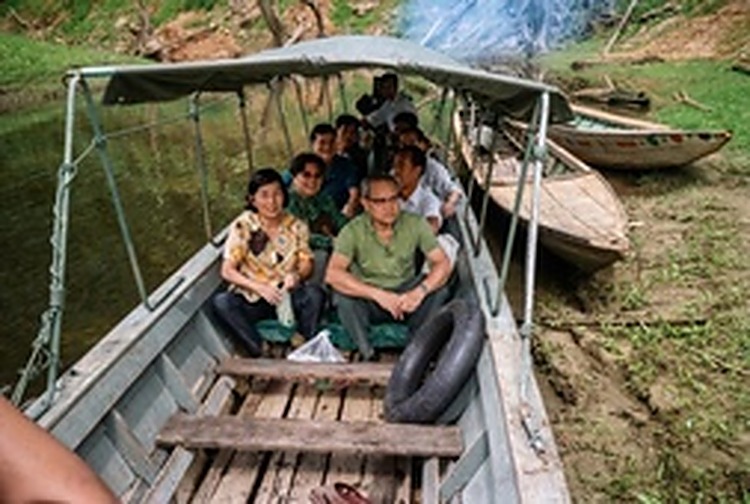
泰国军方代表团与和平村干部同乘长尾木船横渡碧波荡漾的邦朗湖(Banglang Lake),前往湖畔深处的邦朗和平村考察。
泰国军方代表团与和平村干部同乘长尾木船横渡碧波荡漾的邦朗湖(Banglang Lake),前往湖畔深处的邦朗和平村考察。 Members of the Thai military delegation and Peace Village cadres cross the emerald waters of Banglang Lake by longtail boat on their way to Banglang Peace Village.

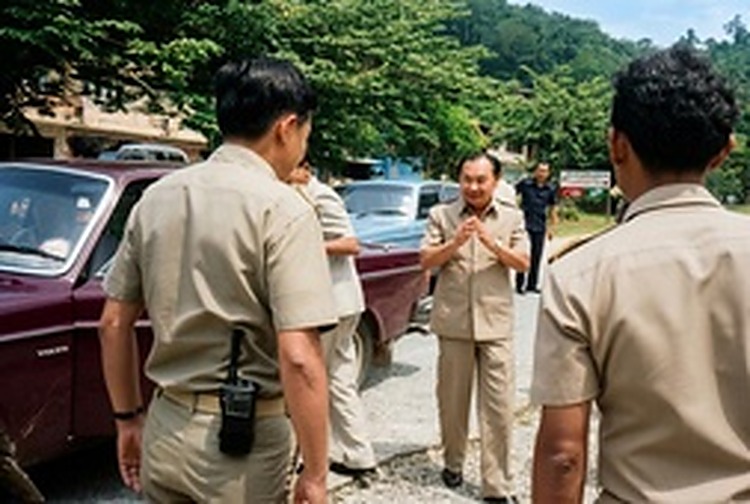
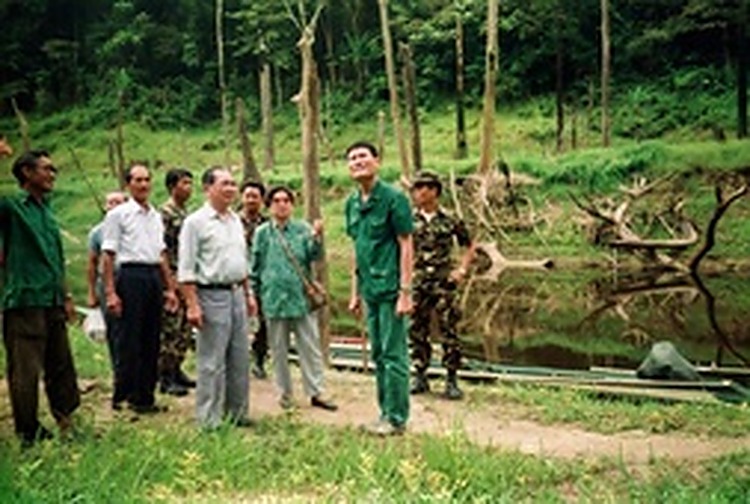
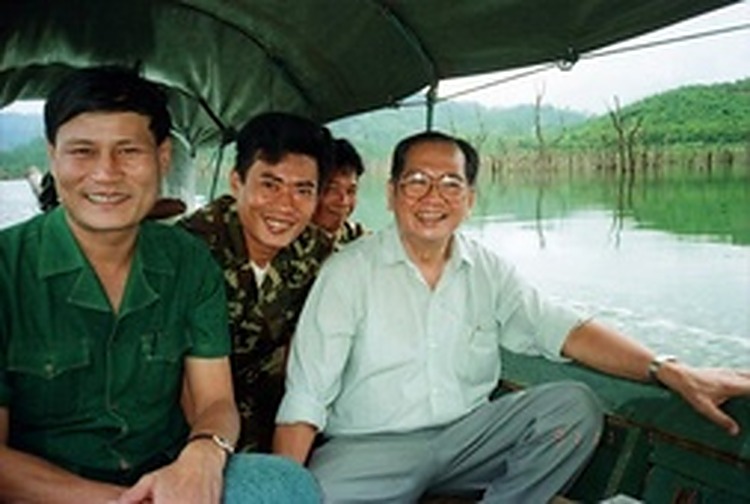
在和平村初创的1991年至1992年间,对于刚刚卸下武装的前人民军指战员而言,内心深处对外部政治环境与未来安全保障仍不免存有审慎与顾虑。正是在这一关键历史节点上,作为泰方合艾和谈核心促成者、时任泰南第四军区副司令及司令的吉滴·拉达那差亚将军(Gen. Kitti Rattanachaya),多次率领泰国军政高级代表团,搭乘皇家陆军UH-1直升机与邦朗湖长尾木船,深入这四个远离城镇的新建村落展开历史性的“丛林访问”。

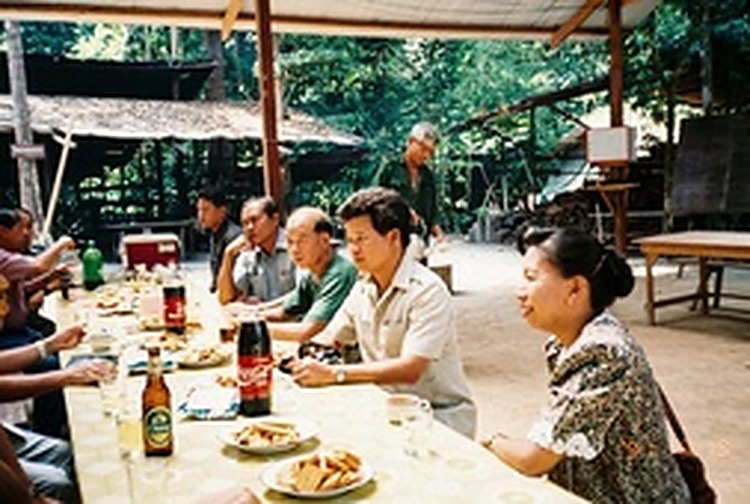
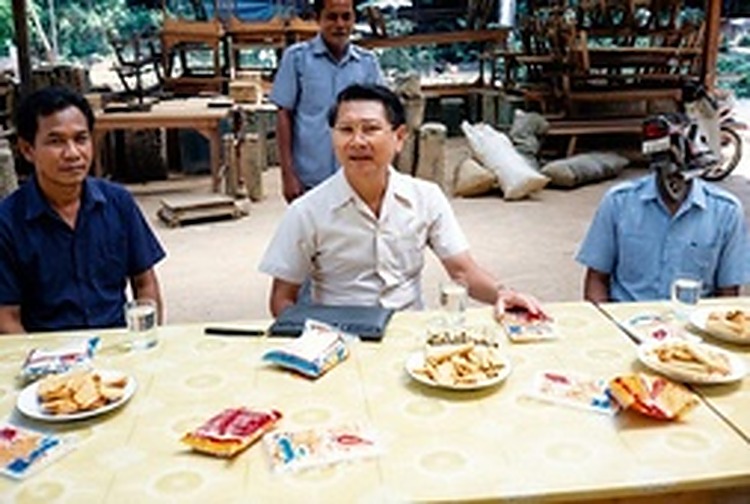
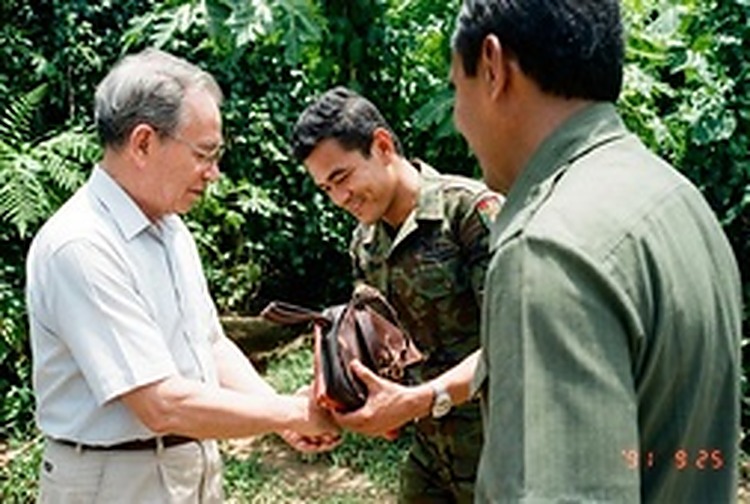
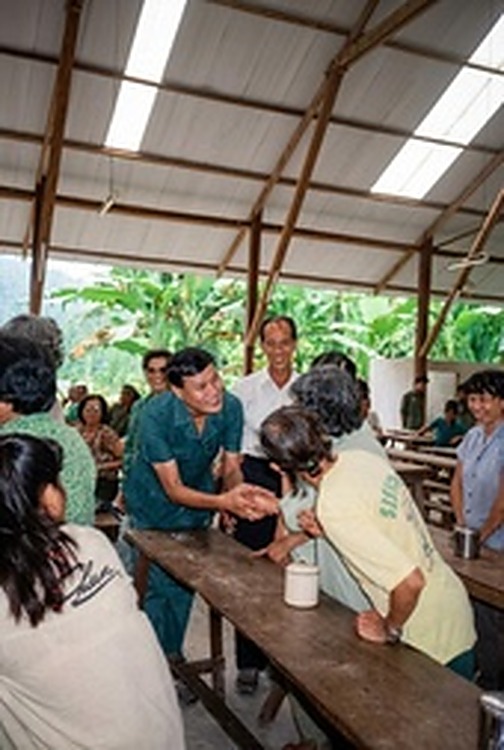
吉滴将军的到访绝非走马观花的官式巡视,而是从三大维度真正夯实了战后和平的根基:第一,展现和平诚意与建立政治互信。吉滴将军不带戒备地步入昔日战场对手的村落礼堂,在泰文欢迎横幅下与白发苍苍的前马共领导人及普通村民紧握双手、促膝长谈、同桌共进午餐,并接受村民赠送的林间根雕礼物,用坦诚的军人胸怀彻底消融了双方四十余年的军事戒心;第二,落实安置与民生援助。他每次均携泰军工程兵、医疗队及地方民政官员同行,现场办公解决开荒修路、桥梁涵洞、饮水供电及医疗卫生等燃眉之急;第三,推动身份与国籍转型。吉滴将军在村民大会上反复郑重宣布:前马共指战员不再是泰国军队的敌人,而是泰王国的“特殊的国家客人”与未来的合法新公民。这一掷地有声的政治承诺,为全体留泰成员日后顺利融入泰国社会、全面取得泰国身份证与公民权奠定了坚实基础。

During the pioneering years of 1991–1992, former MPA combatants who had just decommissioned their weapons naturally harbored lingering concerns regarding their long-term security and political future. At this critical juncture, General Kitti Rattanachaya—a key architect of the Haadyai Peace Accord and Deputy Commander (later Commander) of Thailand's 4th Army Region—repeatedly led senior delegations of Thai military and civilian officials by Royal Thai Army UH-1 helicopter and longtail boat deep into the four remote settlements on historic 'jungle visits.'

General Kitti's visits consolidated postwar peace across three vital dimensions: First, demonstrating sincerity and building mutual trust. Entering the halls of his former battlefield adversaries without hesitation, Gen. Kitti shook hands, conversed, and shared meals at wooden tables with white-haired former CPM leaders and villagers, dissolving four decades of military suspicion. Second, delivering concrete livelihood and infrastructure assistance. Accompanied by Thai army engineers, medical teams, and civil administrators, he held on-site working sessions to resolve road grading, water supply, electricity, and healthcare needs. Third, championing civic integration. Addressing village assemblies, Gen. Kitti repeatedly declared that former CPM combatants were no longer enemies of the Thai military, but 'special state guests' and future citizens of Thailand—laying the institutional groundwork for their full naturalization as Thai citizens.

如果说1989年的《合艾和平协议》是在纸面上结束了40多年的对抗,那么1991年吉滴将军的这场“丛林访问”,则是在行动上真正践行了和平。
If the 1989 Haadyai Peace Accord ended more than forty years of confrontation on paper, then General Kitti's 1991 'jungle visit' truly practiced peace in action.
— 《1991–1992 吉滴将军与泰国军方的访问》历史定评 | Historical Assessment: General Kitti and the Thai Military's 1991–1992 Visits
🎬 1990年泰南和平村建村初期前人民军指战员清理烧芭林地与播撒玉米种子实录(Pembangunan Baru 6a) (VS_Pembangunan_Baru_6a): 真实记录1990年和平村建村初期,昔日游击队指战员深入泰南山坡垦荒工地,分工协作清理烧芭后的焦木林地、掘土点播第一批玉米种子,用双手开辟和平新家园的珍贵镜头。 1990 Early Peace Village Construction: Former MPA Combatants Clearing Hillside Land and Sowing Corn Seeds (Pembangunan Baru 6a): Authentic archival footage from the early construction of the Peace Villages in 1990, showing former guerrilla fighters clearing burned timber on a hillside slope and dibbling corn seeds by hand to build their new civilian homeland.
🎬 馆藏原始历史影像:《1990年初和平村筹建初期:1月18日砍伐巨竹建屋与2月16日营地追思集会(M-45-F,全2卷)》 (VS_M_45_F): 全2卷历史影像:第一卷(画面时间戳1990年1月18日)记录指战员在密林中挥刀砍伐、修整并捆扎巨型毛竹,为筹建和平村首批营房准备建筑材料;第二卷(画面时间戳1990年2月16日)记录指战员在礼堂内悬挂“阿伦”横幅、举行晚间追思悼念与合唱集会的纪实画面。 Archival Footage: 'Early 1990 Peace Village Preparation: January 18 Giant Bamboo Harvesting for Construction and February 16 Camp Memorial Assembly (M-45-F, 2 Parts)': Two-part archival film: Part 1 (time-stamped January 18, 1990) shows fighters felling, trimming, and binding giant bamboo poles in the rainforest to build the first Peace Village dwellings; Part 2 (time-stamped February 16, 1990) documents an evening memorial assembly and choir tribute beneath a banner reading 'Ah Lun'.
🎬 1990年1月12日泰南和平村“Selamat Datang / ยินดีต้อนรับ”盛大欢迎仪式与军民联欢纪实 (VS_Selamat_Datang): 记录1990年1月12日泰国军政代表团与和平村指战员在泰马双语欢迎横幅下夹道迎宾、亲切会谈、握手言欢的历史瞬间,展现泰方将前马共成员尊为“特殊的国家客人”的和平诚意。 January 12, 1990 Grand 'Selamat Datang / ยินดีต้อนรับ' Welcome Ceremony and Military-Civilian Fellowship at the Peace Village: Original January 12, 1990 footage capturing the warm welcome ceremony beneath bilingual Malay-Thai banners ('Selamat Datang / ยินดีต้อนรับ'), cordial talks, and fellowship between Thai military delegations and Peace Village residents.
🎬 馆藏原始历史影像:《1990年5月和平村初期农垦、泰方官员实地勘测与“耿浩同志追悼会”纪实(No. 49,全6卷)》 (VS_No_49_Mov): 全6卷历史影像(画面时间戳1990年5月17日至23日):第一至第五卷记录和平村初期菜园丰收(紫茄、木瓜与各类蔬菜)、山坡林地清理,以及马共干部与泰国军政官员手持地图实地勘测村落规划边界的现场;第六卷完整记录在庄严肃穆的礼堂内举行“耿浩同志追悼会”、全体人员在遗像与挽联前默哀致敬的珍贵画面。 Archival Footage: 'May 1990 Peace Village Vegetable Farming, Joint Land Survey with Thai Officials, and Memorial Service for Geng Hao (No. 49, 6 Parts)': Six-part archival film (time-stamped May 17–23, 1990): Parts 1 to 5 document thriving vegetable gardens (eggplants and papayas), hillside land clearing, and CPM cadres surveying village boundaries with Thai officials using maps; Part 6 records the solemn memorial service for Geng Hao ('耿浩同志追悼会') before his portrait and elegiac banners.

第二章:王室关怀与世纪和解:朱拉蓬公主发展村(第9至12村)历次视察与2005年陈平向诗丽吉王后致敬

Chapter 2: Royal Patronage and Historic Reconciliation: HRH Princess Chulabhorn's Inspections of Villages 9–12 and Chin Peng's 2005 Handshake with HM Queen Sirikit

泰南四个和平村的稳步发展,得到了泰王国普密蓬国王(拉玛九世)及王室家族的高度重视与直接关怀。自1993年起,邦朗、勿洞、也哈、苏基林四个和平村正式纳入泰王幼女朱拉蓬公主(HRH Princess Chulabhorn Mahidol)主持的皇家发展基金会体系,由朱拉蓬公主亲自关照,并正式更名为“第9、10、11、12朱拉蓬公主发展村”(Ban Chulabhorn Patana 9, 10, 11 and 12)。这一王室命名不仅赋予了四个前人民军定居点崇高的法律与社会地位,更从根本上消除了外部势力的政治歧视,使和平村全面纳入泰国国家乡村发展与现代公共服务体系。

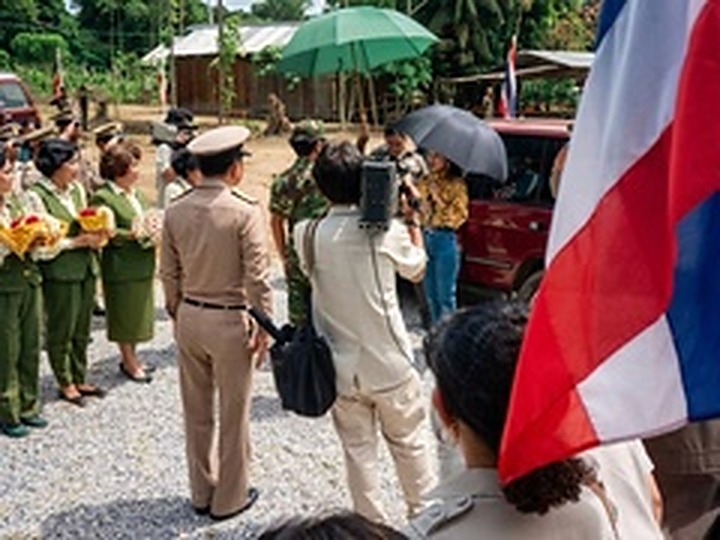
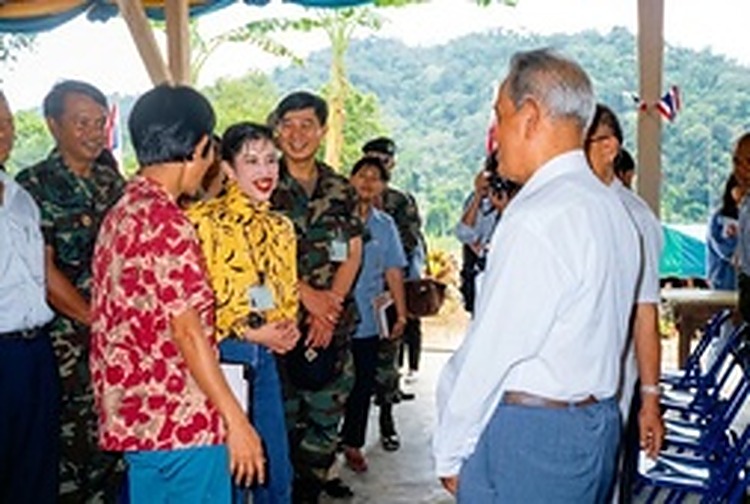
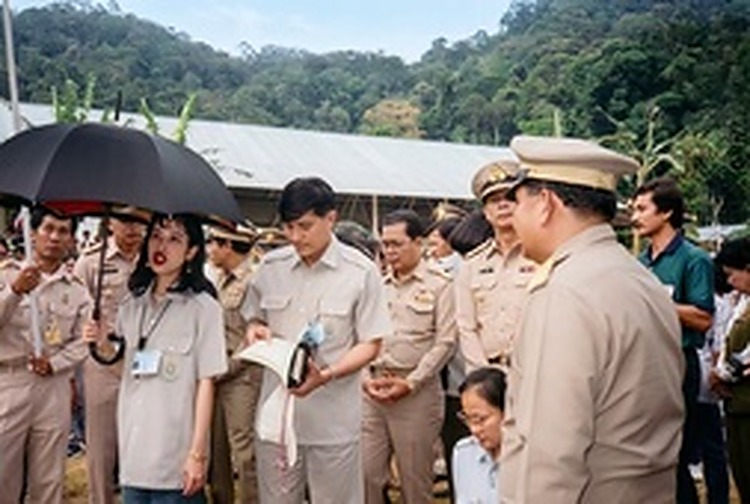
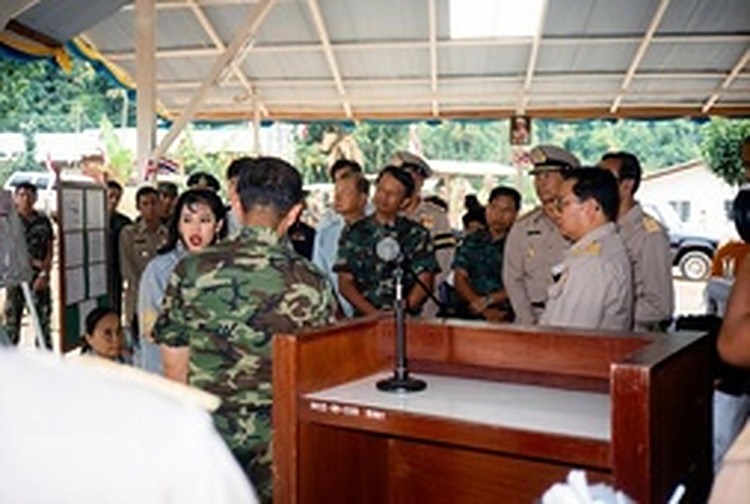
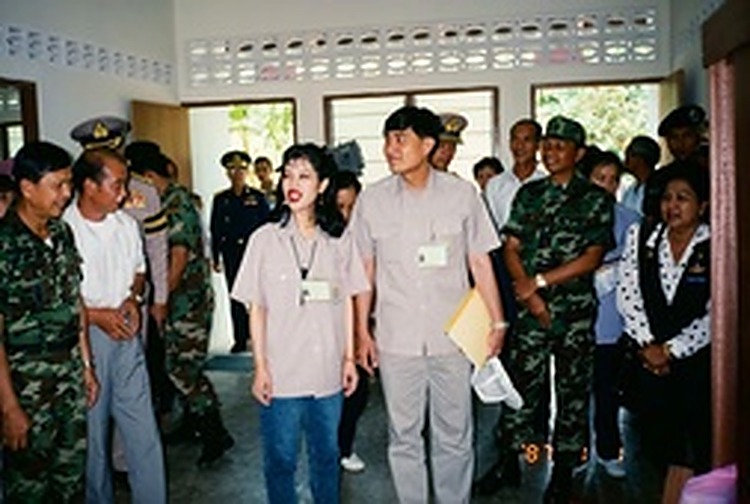
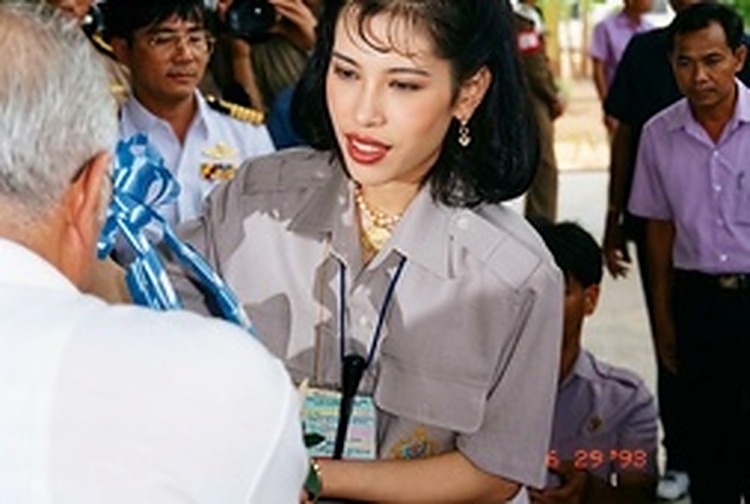
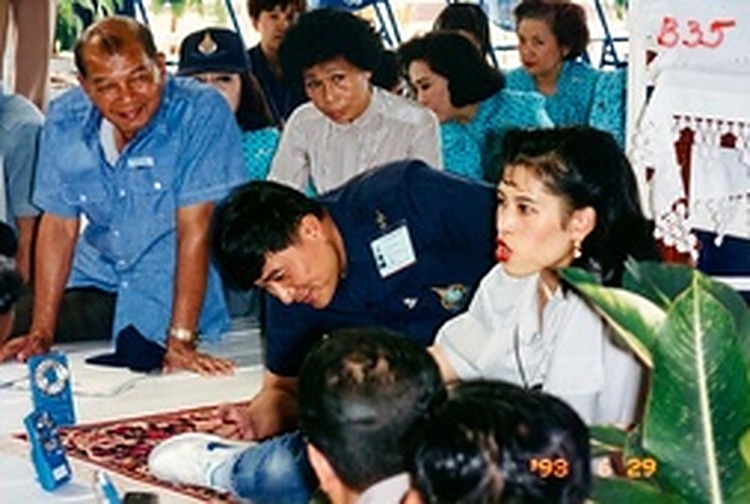
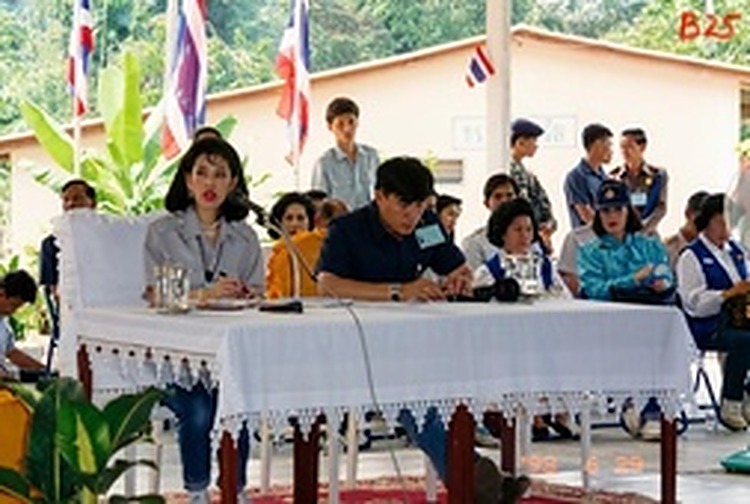
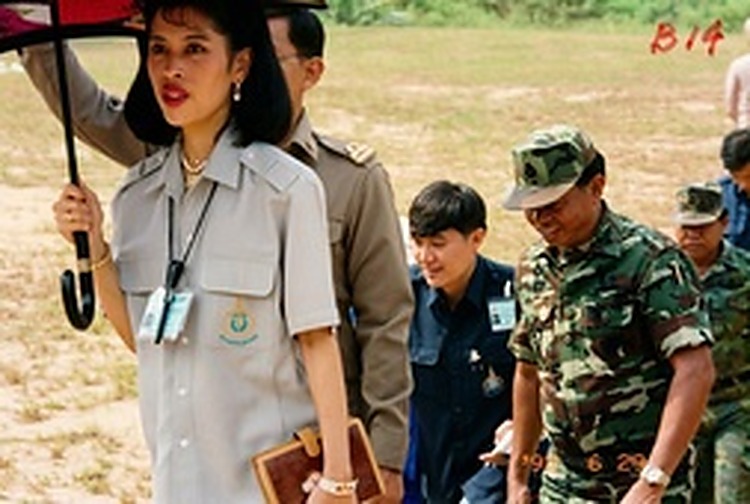
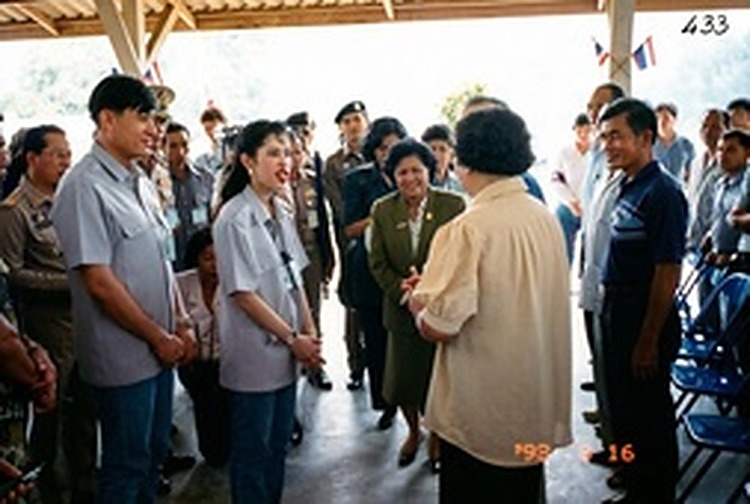
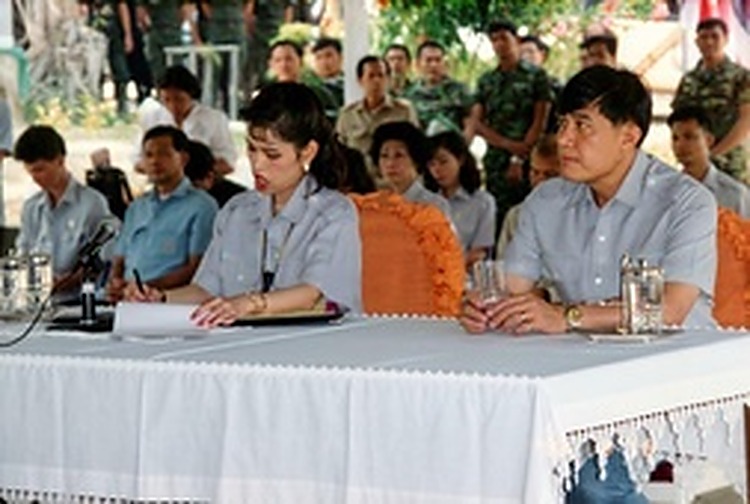
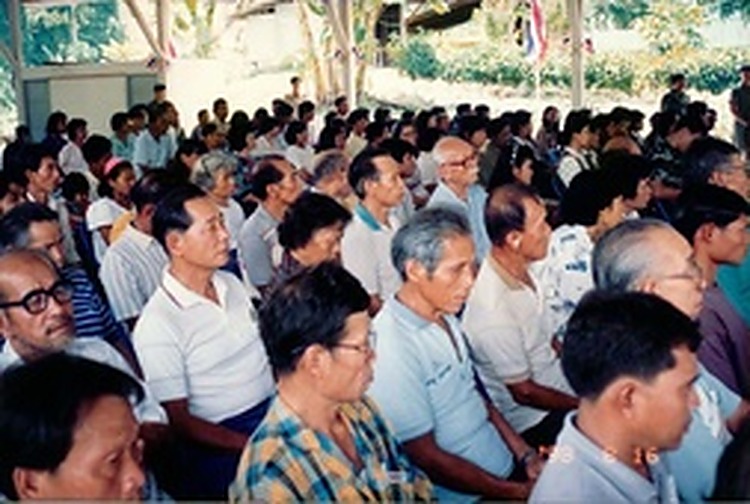
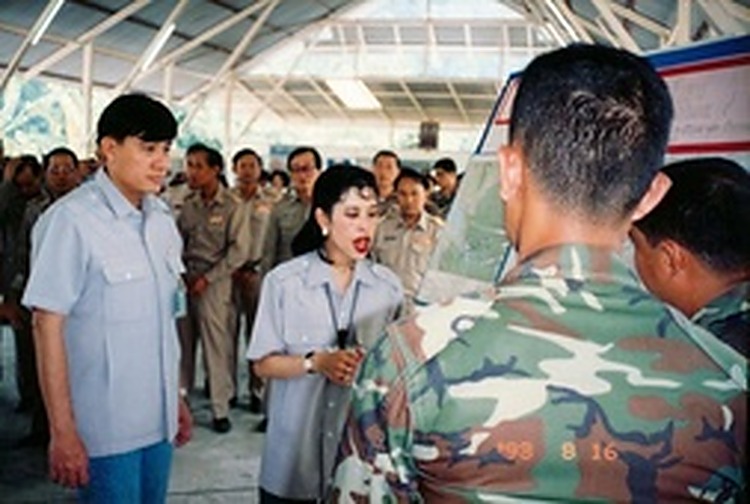
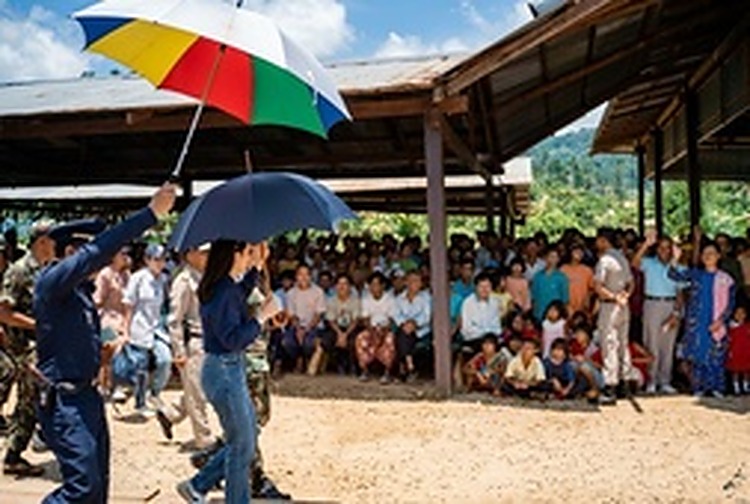
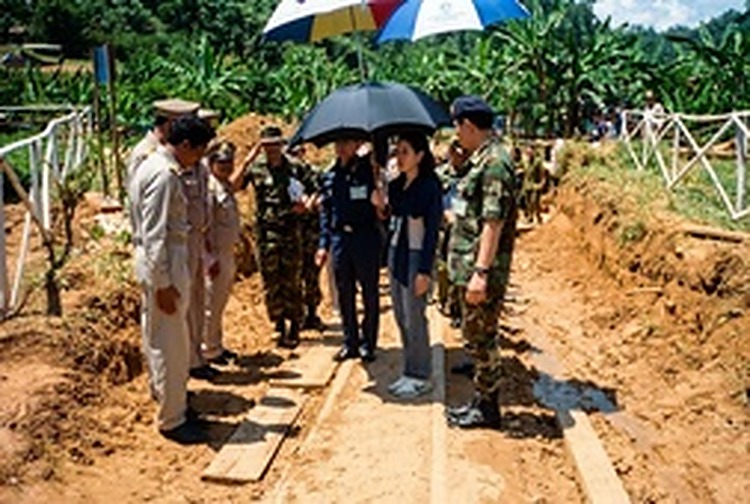
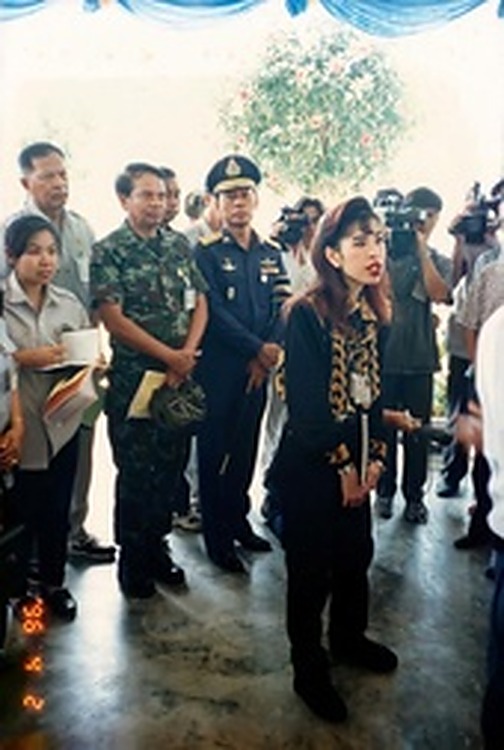
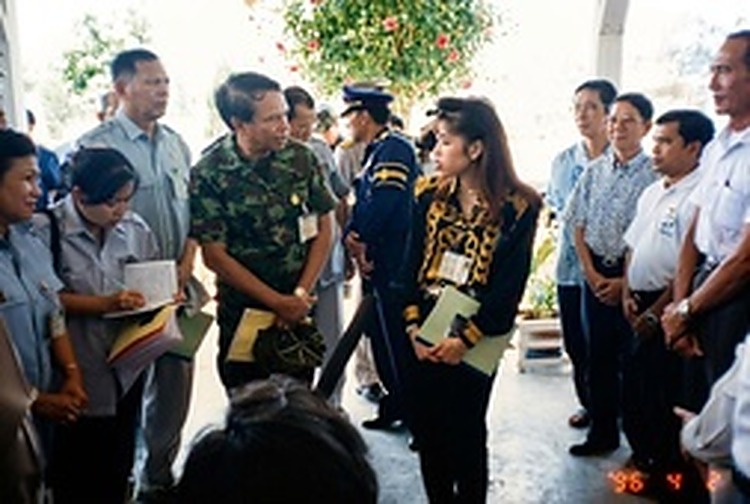
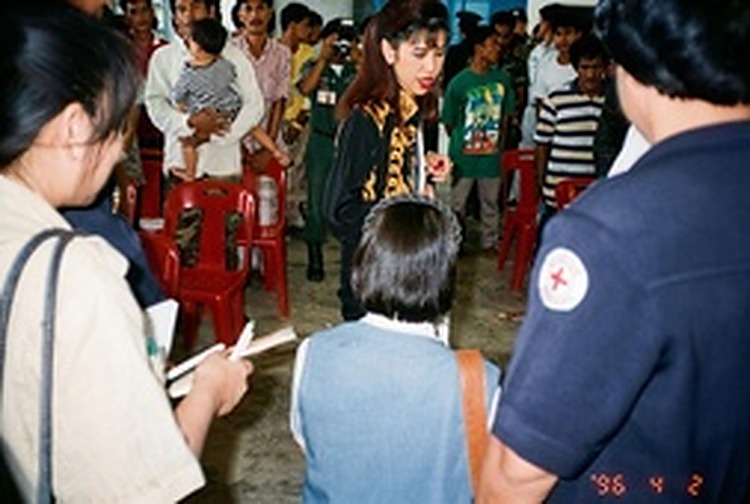
从1992年10月15日与12月17日的首轮视察开始,再到1993年6月29日、1993年8月15日、1994年2月5日以及1996年4月2日,朱拉蓬公主不辞山路崎岖,多次搭乘皇家直升机亲临第9、10、11、12发展村。无论是俯身慰问地席上的白发老战士与妇女儿童,还是在大型规划地图前听取道路水利汇报,抑或撑着雨伞踏过泥泞田埂实地察看村民种植的有机蔬菜园,朱拉蓬公主的历次到访都为和平村带来了学堂、卫生站、农业技术改良与生态旅游基金,使昔日的丛林游击区迅速蜕变为安居乐业的模范社区。

The steady growth of the four Peace Villages in southern Thailand received direct attention and patronage from His Majesty King Bhumibol Adulyadej (Rama IX) and the Thai Royal Family. Beginning in 1993, Banglang, Betong, Yaha, and Sukhirin Peace Villages were formally incorporated into the royal development program overseen by the King's youngest daughter, Her Royal Highness Princess Chulabhorn Mahidol, and officially renamed 'Ban Chulabhorn Patana 9, 10, 11, and 12' (Chulabhorn Development Villages No. 9, 10, 11, and 12). This royal designation conferred high legal and social standing upon the four former MPA settlements, integrating them fully into Thailand's national rural development and public service system.

Starting with her initial visits on October 15 and December 17, 1992, followed by repeated inspections on June 29, 1993, August 15, 1993, February 5, 1994, and April 2, 1996, HRH Princess Chulabhorn traveled by royal helicopter into the mountain villages. Whether bending down to greet white-haired veterans and women seated on mats, reviewing road and irrigation blueprints before large map boards, or walking across wooden planks under an umbrella to inspect thriving vegetable gardens, the Princess's visits brought schools, clinics, agricultural technology, and eco-tourism funding that transformed former guerrilla zones into model rural communities.
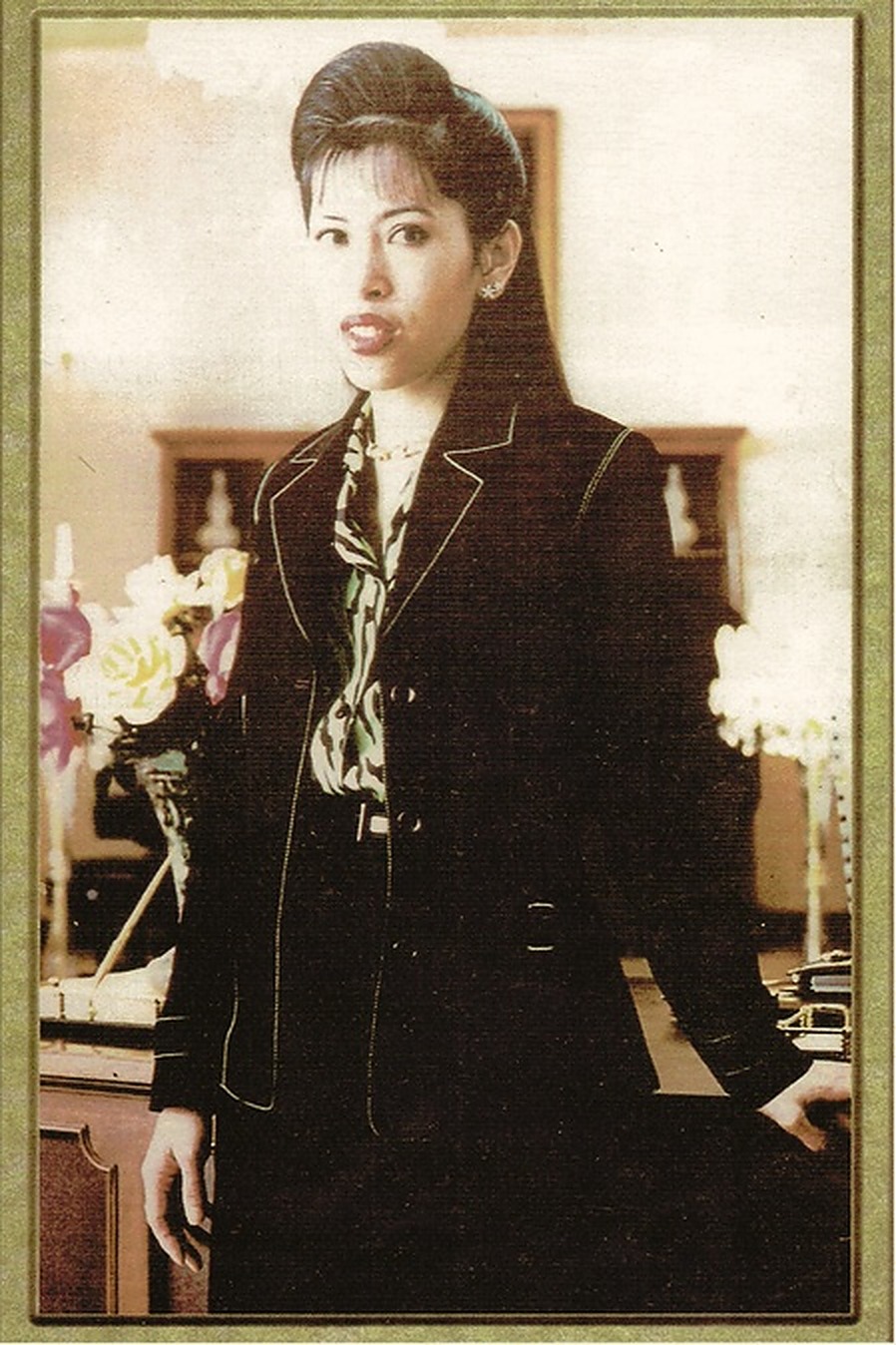
泰王国朱拉蓬公主(Princess Chulabhorn Mahidol)官方肖像。自1993年起,泰南四个和平村正式纳入朱拉蓬公主发展项目,由公主亲自关照,并命名为第9、10、11、12朱拉蓬公主发展村(Ban Chulabhorn Patana 9, 10, 11 and 12)。
泰王国朱拉蓬公主(Princess Chulabhorn Mahidol)官方肖像。自1993年起,泰南四个和平村正式纳入朱拉蓬公主发展项目,由公主亲自关照,并命名为第9、10、11、12朱拉蓬公主发展村(Ban Chulabhorn Patana 9, 10, 11 and 12)。 Official portrait of Her Royal Highness Princess Chulabhorn Mahidol of Thailand. Beginning in 1993, the four southern Thai Peace Villages were placed under her royal patronage and officially named Ban Chulabhorn Patana 9, 10, 11, and 12.
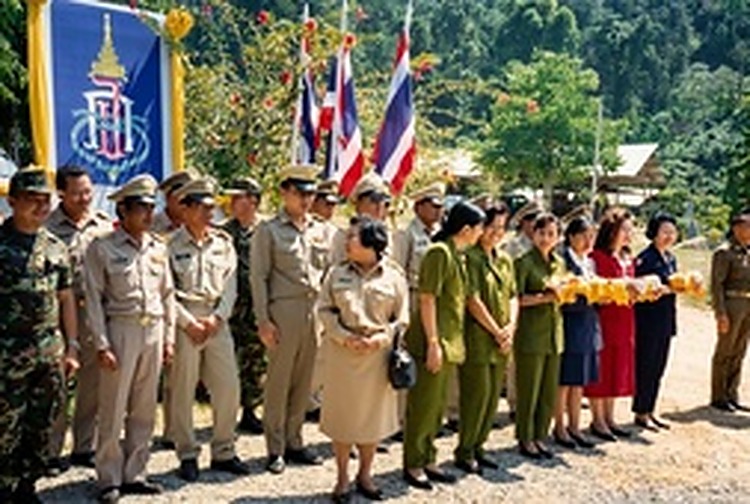
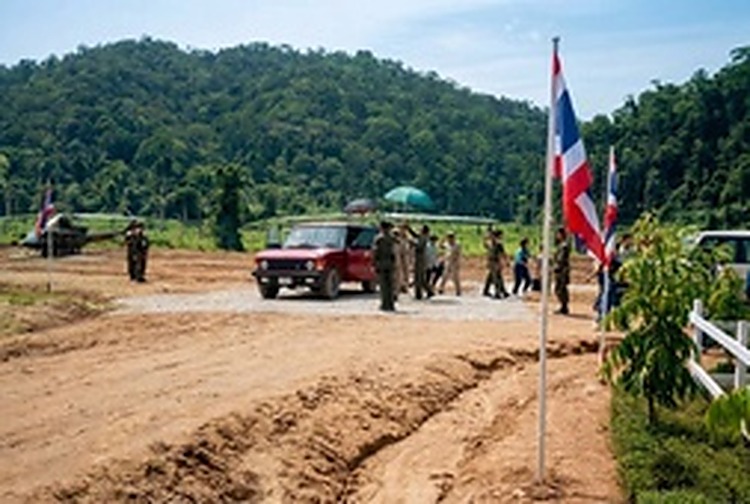
1992年王室专机与车队抵达群山环抱的和平村停机坪,开启王室扶助和平村发展的历史篇章。
1992年王室专机与车队抵达群山环抱的和平村停机坪,开启王室扶助和平村发展的历史篇章。 1992 royal visit: The royal helicopter and Range Rover motorcade arrive at the mountain helipad of the Peace Village.
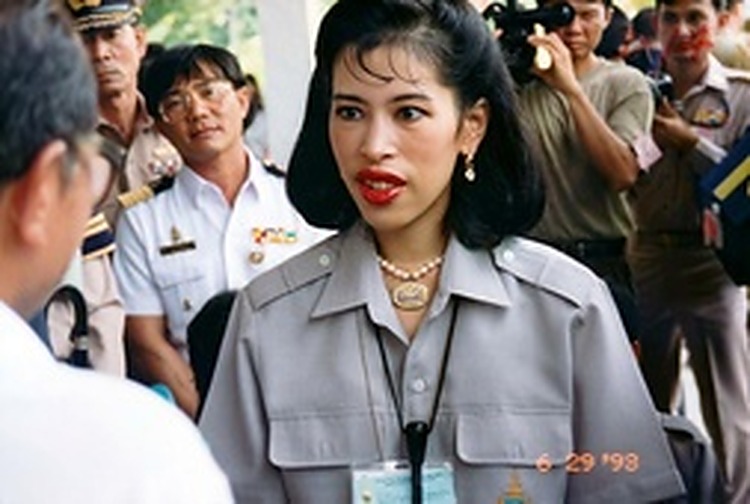
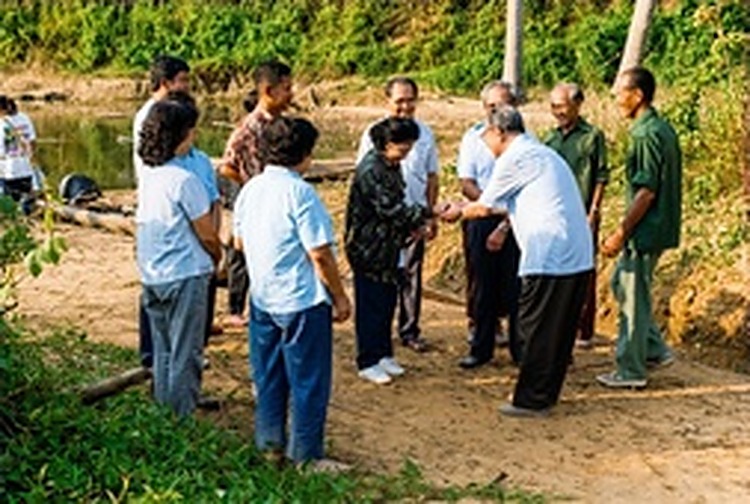
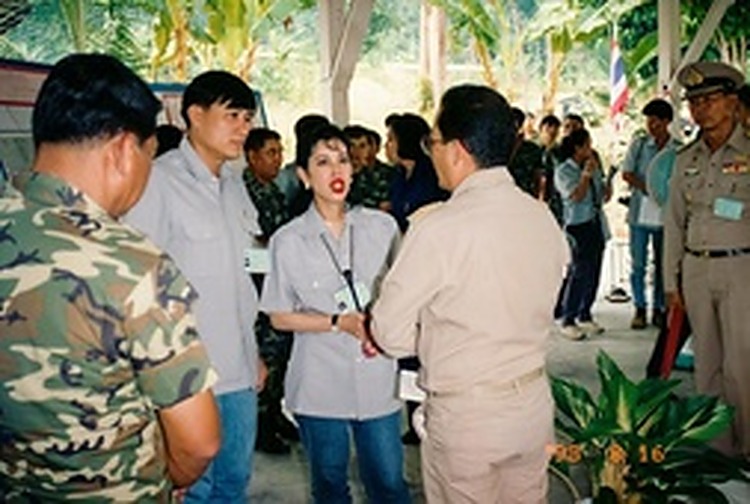
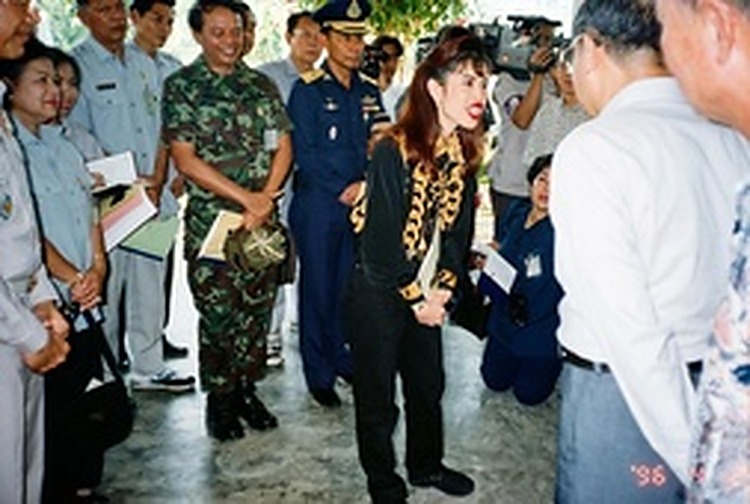
1993年6月29日(照片右下角印有6 29 '93日期戳):朱拉蓬公主在和平村会场亲切垂询前马共老干部,关切了解村民定居后的衣食住行。
1993年6月29日(照片右下角印有6 29 '93日期戳):朱拉蓬公主在和平村会场亲切垂询前马共老干部,关切了解村民定居后的衣食住行。 June 29, 1993 (date-stamped 6 29 '93): HRH Princess Chulabhorn speaks cordially with a veteran former CPM cadre, inquiring into the villagers' living conditions.
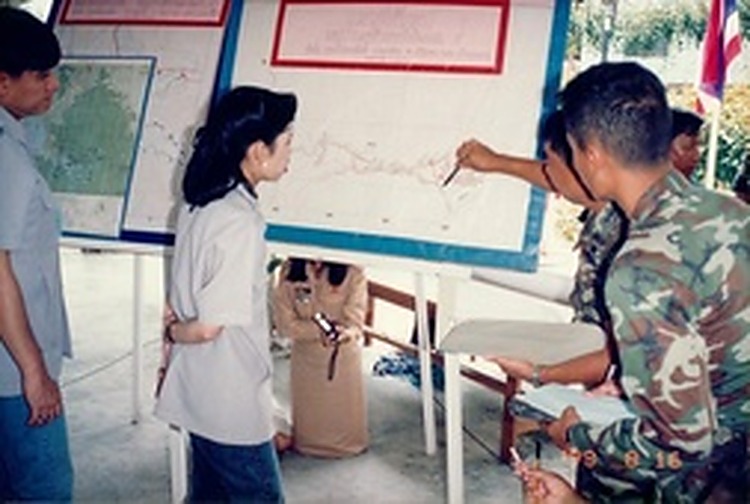
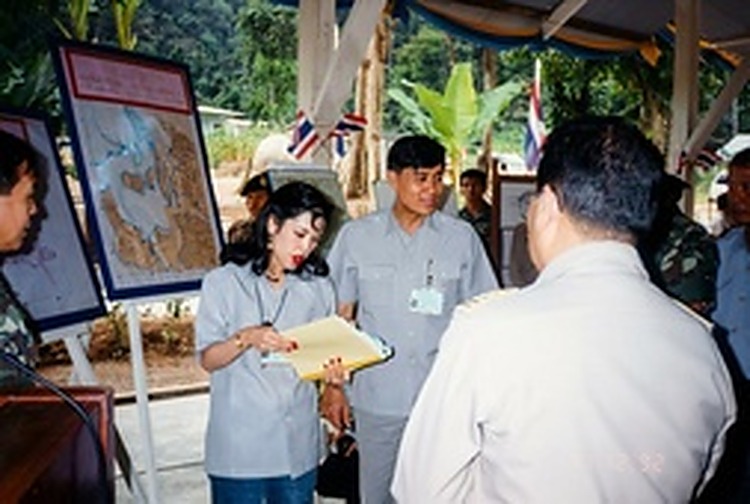
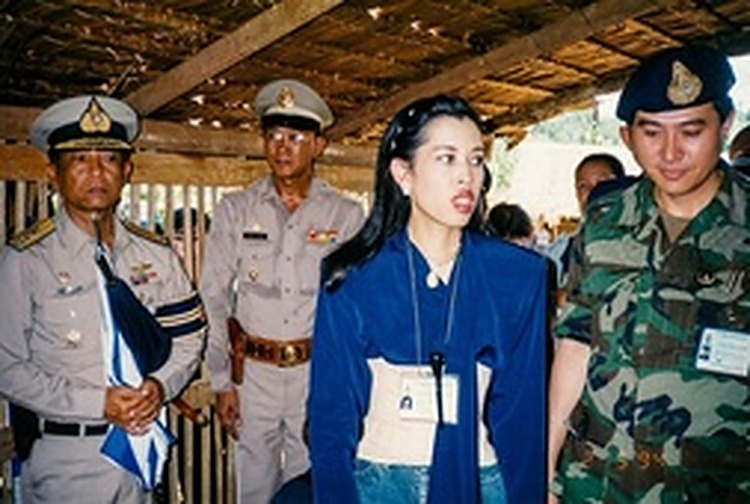
1993年8月:朱拉蓬公主驻足于大型规划地图图板前,听取军方工程人员用教鞭讲解和平村道路网与农田水利布局。
1993年8月:朱拉蓬公主驻足于大型规划地图图板前,听取军方工程人员用教鞭讲解和平村道路网与农田水利布局。 August 1993: HRH Princess Chulabhorn stands before a large map board as a military engineer points out the Peace Village road network and irrigation layout.
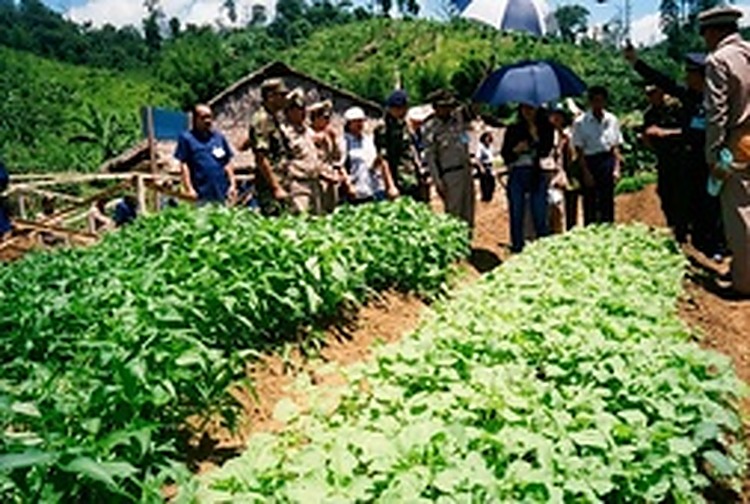
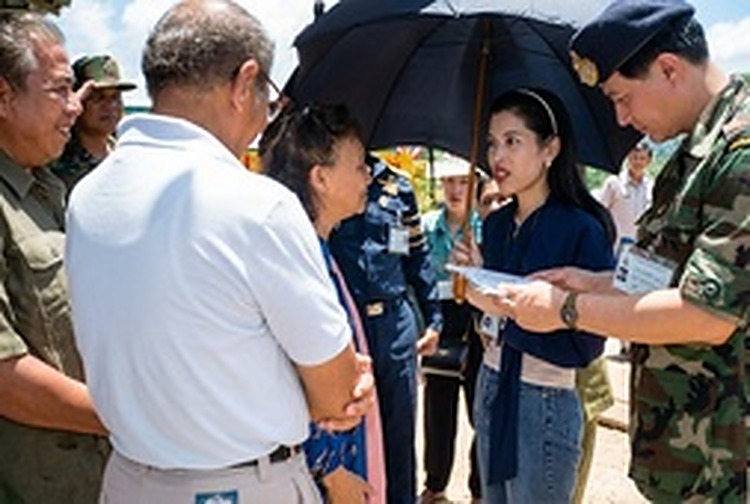
1994年2月5日:在郁郁葱葱的和平村生态菜园中,朱拉蓬公主与随行农艺专家察看绿叶蔬菜长势,见证昔日游击队员化剑为犁的丰硕成果。
1994年2月5日:在郁郁葱葱的和平村生态菜园中,朱拉蓬公主与随行农艺专家察看绿叶蔬菜长势,见证昔日游击队员化剑为犁的丰硕成果。 February 5, 1994: Surrounded by lush rows of leafy greens in the Peace Village vegetable garden, HRH Princess Chulabhorn and agricultural specialists inspect the thriving crops grown by former guerrillas.
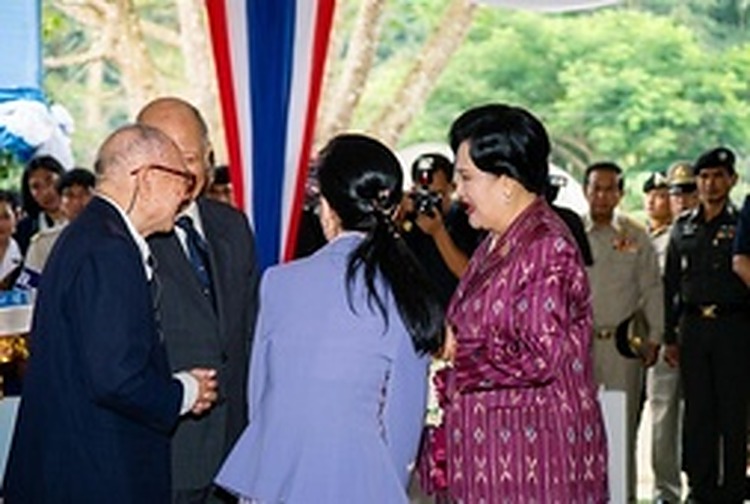
2005年9月15日世纪和解的历史性瞬间:泰王国诗丽吉王后(Queen Sirikit,右)在朱拉蓬公主(中背影者)陪同下莅临视察泰南勿洞第十朱拉蓬公主发展村时,八十一岁高龄的马共中央总书记陈平(左立者)与党主席阿都拉·西迪(左下戴眼镜者)上前向王后致敬、紧握双手,象征着丛林里几十年的硝烟与对抗彻底走入历史,换来了真正的和平与和解。
2005年9月15日世纪和解的历史性瞬间:泰王国诗丽吉王后(Queen Sirikit,右)在朱拉蓬公主(中背影者)陪同下莅临视察泰南勿洞第十朱拉蓬公主发展村时,八十一岁高龄的马共中央总书记陈平(左立者)与党主席阿都拉·西迪(左下戴眼镜者)上前向王后致敬、紧握双手,象征着丛林里几十年的硝烟与对抗彻底走入历史,换来了真正的和平与和解。 September 15, 2005 — A historic handshake of reconciliation: During Queen Sirikit's royal visit to Ban Chulabhorn Patana 10 in Betong accompanied by Princess Chulabhorn, 81-year-old CPM Secretary-General Chin Peng (standing left) and Party Chairman Abdullah C.D. (seated lower left, in glasses) pay respects and shake hands with Her Majesty Queen Sirikit, symbolizing the definitive replacement of decades of jungle conflict with genuine peace and reconciliation.
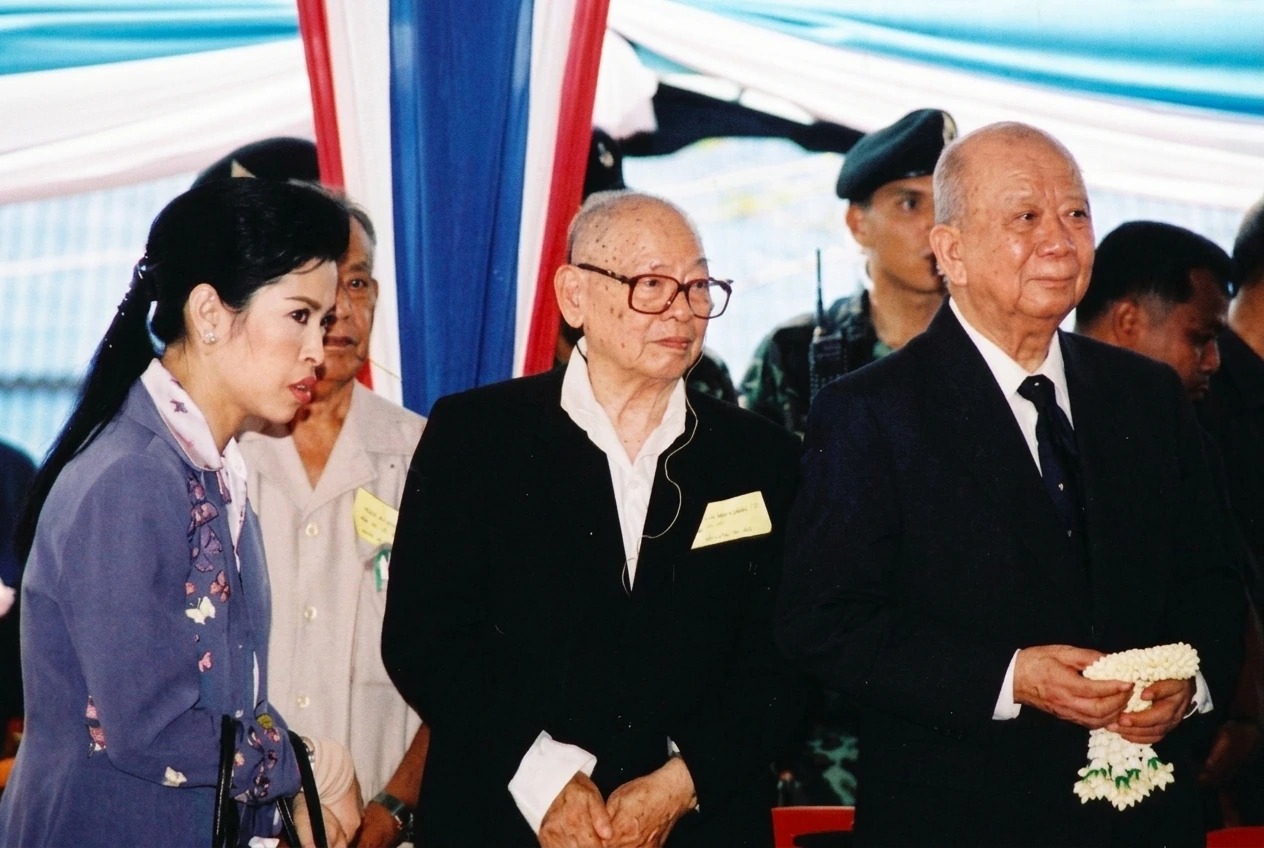
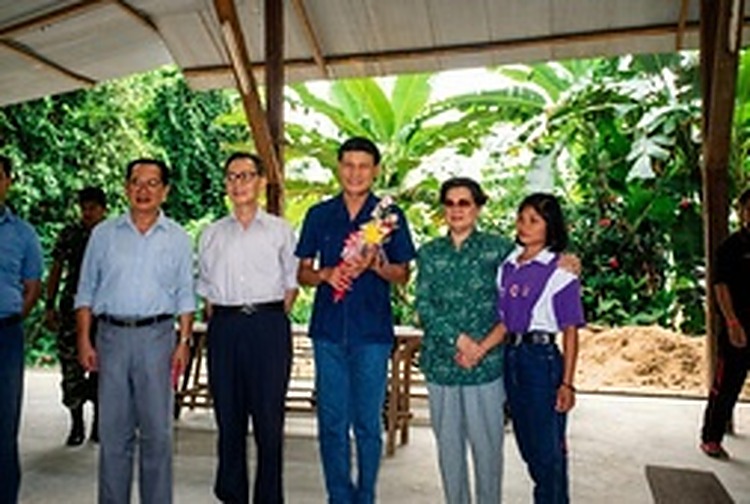
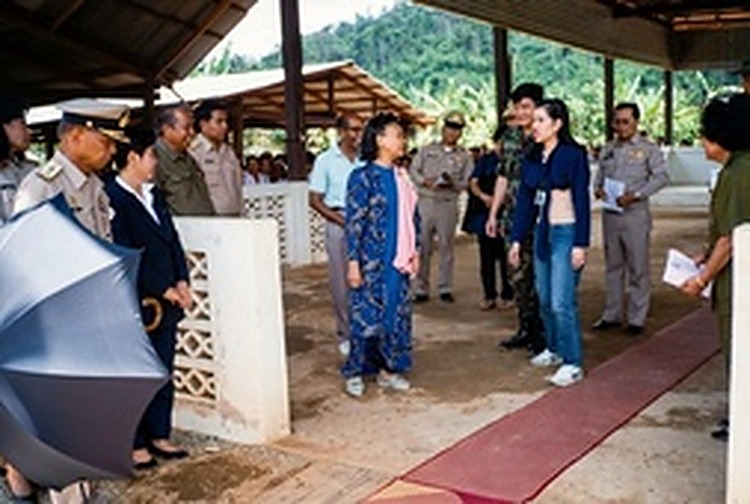
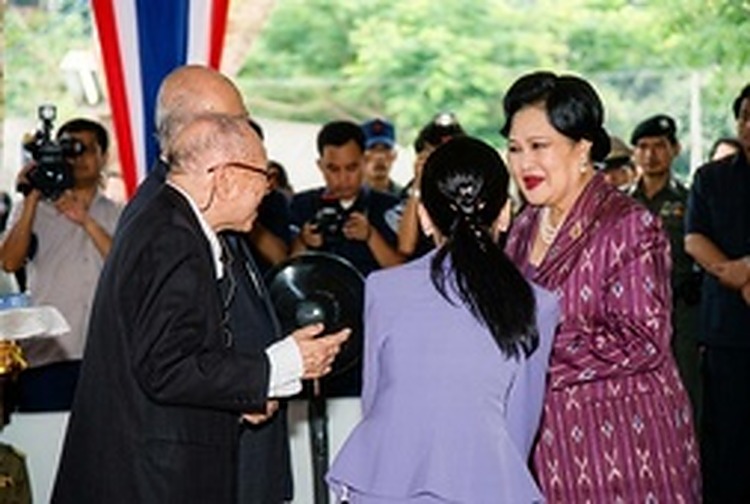
2005年9月15日:朱拉蓬公主(左一)亲自引导马共党主席阿都拉·西迪(中)与总书记陈平(右一,手捧茉莉花环)步入会场觐见诗丽吉王后。
2005年9月15日:朱拉蓬公主(左一)亲自引导马共党主席阿都拉·西迪(中)与总书记陈平(右一,手捧茉莉花环)步入会场觐见诗丽吉王后。 September 15, 2005: HRH Princess Chulabhorn (far left) personally escorts CPM Chairman Abdullah C.D. (center) and Secretary-General Chin Peng (right, holding a jasmine garland) into the royal reception pavilion.

2005年9月15日,泰南和平村迎来了载入东南亚史册的最高礼遇与世纪和解时刻。是日,泰王国诗丽吉王后(HM Queen Sirikit)在朱拉蓬公主的亲自陪同下,莅临泰南勿洞第十朱拉蓬公主发展村视察。八十一岁高龄的马共中央总书记陈平与八十二岁高龄的马共中央主席阿都拉·西迪身着笔挺深色西装,手捧洁白的泰式茉莉花环,在朱拉蓬公主的亲自引导下步入铺设红地毯的皇家礼堂,代表全体前马共指战员觐见诗丽吉王后。

在全场的掌声与镜头聚焦下,陈平总书记与阿都拉·西迪主席上前向诗丽吉王后鞠躬致敬、紧握双手,并与王后及公主亲切交谈。这一跨越半个多世纪风雨的历史性握手,向全世界宣告:昔日泰马边境丛林里几十年的硝烟、流血与军事对抗已经彻底走入历史,马来亚共产党人以其守信重诺的和平实践,赢得了泰王国最高元首王室与国际社会的由衷尊重,换来了真正持久的和平与民族和解。

On September 15, 2005, the southern Thailand Peace Villages witnessed a crowning moment of royal courtesy and historical reconciliation. On that day, Her Majesty Queen Sirikit of Thailand, accompanied by HRH Princess Chulabhorn, paid a royal visit to Ban Chulabhorn Patana 10 in Betong. Eighty-one-year-old CPM Secretary-General Chin Peng and eighty-two-year-old CPM Chairman Abdullah C.D., attired in dark suits and holding traditional Thai jasmine garlands, were personally escorted by Princess Chulabhorn onto the red carpet of the royal pavilion to meet Queen Sirikit on behalf of all former CPM and MPA members.

Amidst applause and flashing cameras, Secretary-General Chin Peng and Chairman Abdullah C.D. bowed in respect, shook hands warmly with HM Queen Sirikit, and conversed cordially with the Queen and Princess. This historic handshake across more than half a century of history proclaimed to the world that decades of jungle gunfire and confrontation along the Thai-Malaysian frontier had definitively passed into history; through their honorable fulfillment of the peace accord, the Malayan Communists had earned the profound respect of the Thai Royal Family and achieved genuine, lasting peace and reconciliation.

自1993年起,泰南四个和平村改由朱拉蓬公主亲自关照,并正式更名为第9、10、11、12朱拉蓬公主发展村 (Ban Chulabhorn Patana 9, 10, 11 and 12)。2005年9月15日,陈平及老战友们在现场向王后致敬、握手,象征着丛林里几十年的硝烟与对抗彻底走入历史,换来了真正的和平与和解。
Beginning in 1993, the four Peace Villages in southern Thailand were placed under the personal patronage of HRH Princess Chulabhorn and officially renamed Ban Chulabhorn Patana 9, 10, 11, and 12. On September 15, 2005, Chin Peng and his veteran comrades paid respects and shook hands with Her Majesty the Queen on site, symbolizing that decades of gunpowder and confrontation in the jungle had definitively passed into history, giving way to genuine peace and reconciliation.
— 《朱拉蓬公主发展村与2005年9月15日王后视察》文献定评 | Archival Assessment: The Chulabhorn Development Villages and Queen Sirikit's September 15, 2005 Visit
🎬 泰南朱拉蓬公主发展村(和平村)公共设施落成剪彩大典与王室扶助建设纪实(No. 84,全3卷) (VS_No_84): 记录在泰王国王室发展项目与军政部门关怀下,和平村新建公共礼堂、道路与民生设施隆重举行落成剪彩大典及村民盛装庆贺的历史画面。 Ribbon-Cutting Ceremony and Royal-Assisted Community Infrastructure at the Chulabhorn Development Peace Villages (No. 84, 3 Parts): Three-part archival documentary capturing the ribbon-cutting ceremony and community celebrations for newly completed public halls and infrastructure in the Peace Villages.
🎬 1992年8月至9月前马共老干部重访泰南、合艾迎宾聚餐与考察和平村建设实录(No. 56,全9卷) (VS_No_56_Mov): 带有1992年8月30日至9月3日原始时间码的纪实录像(全9卷),真实记录前马共老一辈领导干部乘机抵达合艾机场(TG 253航班)、于合艾香江楼同战友欢聚共餐、参访泰南卧佛寺,并深入和平村礼堂与村民亲切叙旧、实地考察新村建设的温馨画面。 August–September 1992: Veteran CPM Cadres Arrive in Hat Yai and Tour the Southern Thai Peace Villages (No. 56, 9 Parts): Nine-part archival video time-stamped August 30 to September 3, 1992, documenting veteran CPM cadres arriving at Hat Yai Airport (Flight TG 253), dining with comrades at Hong Kong Restaurant, visiting a reclining Buddha temple, and touring the southern Thai Peace Villages to reunite with villagers.
🎬 1992年9月前马共老干部考察泰南和平村、山林橡胶园与泛舟邦朗湖区纪实(No. 57,全11卷) (VS_No_57_Mov): 带有1992年9月2日至6日原始时间码的纪实录像(全11卷),记录前马共老干部在和平村负责人陪同下,实地走访泰南各和平村木屋民居、徒步考察山林果园与橡胶垦殖区,并乘船泛舟邦朗水坝湖区、在村礼堂举行欢送茶话会的完整过程。 September 1992: Veteran CPM Cadres Tour the Peace Villages, Rubber Estates, and Bang Lang Lake (No. 57, 11 Parts): Eleven-part archival video time-stamped September 2–6, 1992, capturing veteran CPM cadres accompanied by Peace Village leaders inspecting village homes, walking through hillside orchards and rubber plantations, cruising across Bang Lang Lake by boat, and attending a farewell gathering in the village hall.

第三章:绿色的新生:邦朗、勿洞、也哈、苏基林四大和平村的建立与今日风貌

Chapter 3: A Green Rebirth: The Founding and Present-Day Panorama of Banglang, Betong, Yaha, and Sukhirin Peace Villages

历经三十余年的辛勤耕耘与代际传承,当年在原始森林废墟上开辟出的四个和平村,如今已各自发展为兼具革命历史底蕴与绿色生态活力的现代化社区,在泰南青山绿水间谱写出“绿色的新生”(A Green Rebirth):

第一,邦朗和平村(Banglang Peace Village,第9朱拉蓬公主发展村 / Ban Chulabhorn Patana 9):位于惹拉府ธารโต县(Than To)碧波万顷的邦朗水坝湖畔,主要由原马来亚人民军第八支队指战员建立。村庄三面环水、背靠苍翠雨林,村民们发展起橡胶种植、果园、淡水鱼养殖与湖畔生态旅游,鲜花簇拥的村舍倒映在湛蓝的邦朗湖水中,宛如世外桃源。

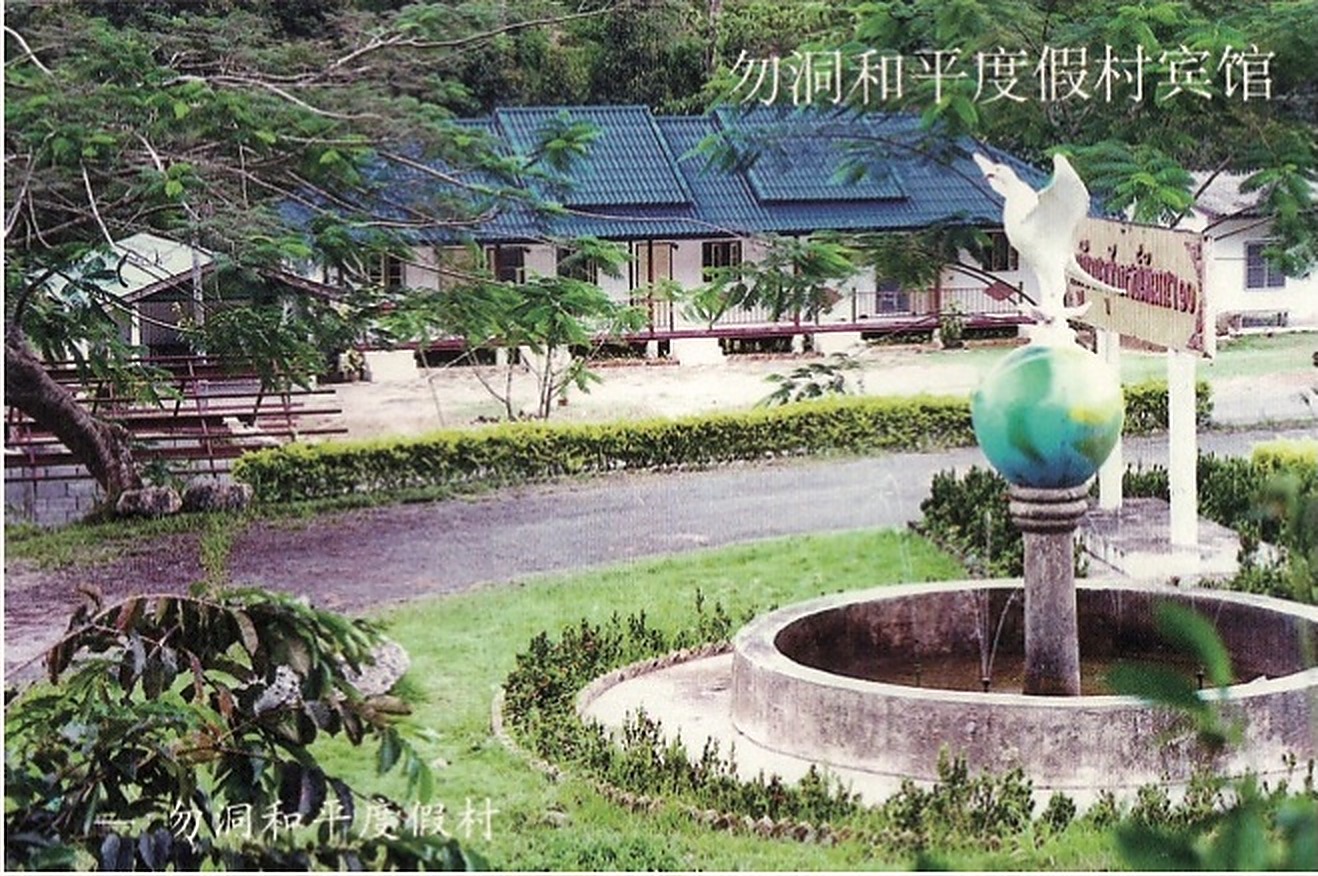
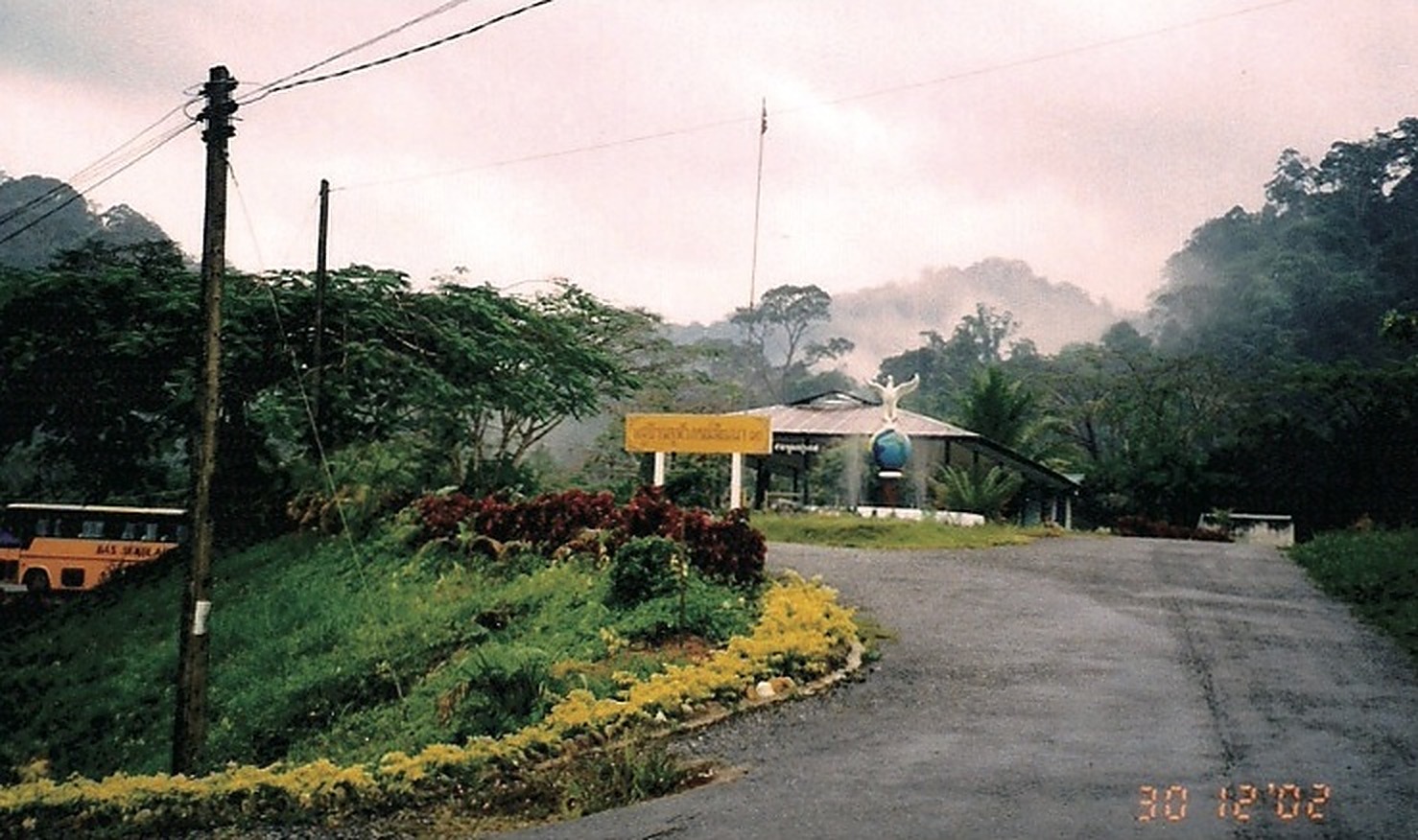
第二,勿洞和平村(Betong Peace Village,第10朱拉蓬公主发展村 / Ban Chulabhorn Patana 10):位于惹拉府勿洞县云雾缭绕的群山之中,由原马共中央直属机关及第十二支队部分指战员建立。村口及勿洞和平度假村宾馆前矗立着洁白的“和平鸽与地球仪”喷泉雕塑,村内建有马共历史文物馆、千年大树生态森林公园与地道遗址,每年吸引数以万计的新马泰游客前来寻访历史、缅怀先辈。

Through more than three decades of diligent cultivation and generational stewardship, the four Peace Villages carved out of the wilderness in 1990 have blossomed into vibrant modern communities blending revolutionary historical heritage with ecological vitality—achieving a true 'Green Rebirth':

First, Banglang Peace Village (Ban Chulabhorn Patana 9): Situated on the emerald shores of Banglang Lake in Than To District, Yala Province, and founded primarily by former combatants of the 8th Regiment of the Malayan People's Army. Surrounded on three sides by tranquil reservoir waters and backed by primary rainforest, its residents cultivate rubber, tropical fruit orchards, and freshwater aquaculture.

Second, Betong Peace Village (Ban Chulabhorn Patana 10): Nestled in the mist-shrouded mountains of Betong District, Yala Province, and established by former personnel of the CPM Central HQ and part of the 12th Regiment. Graced by its iconic white Peace Dove and globe fountain in front of the Betong Peace Resort Hotel, the village houses a historical museum, ancient rainforest park, and preserved tunnel sites that welcome tens of thousands of visitors from Malaysia, Singapore, and Thailand each year.
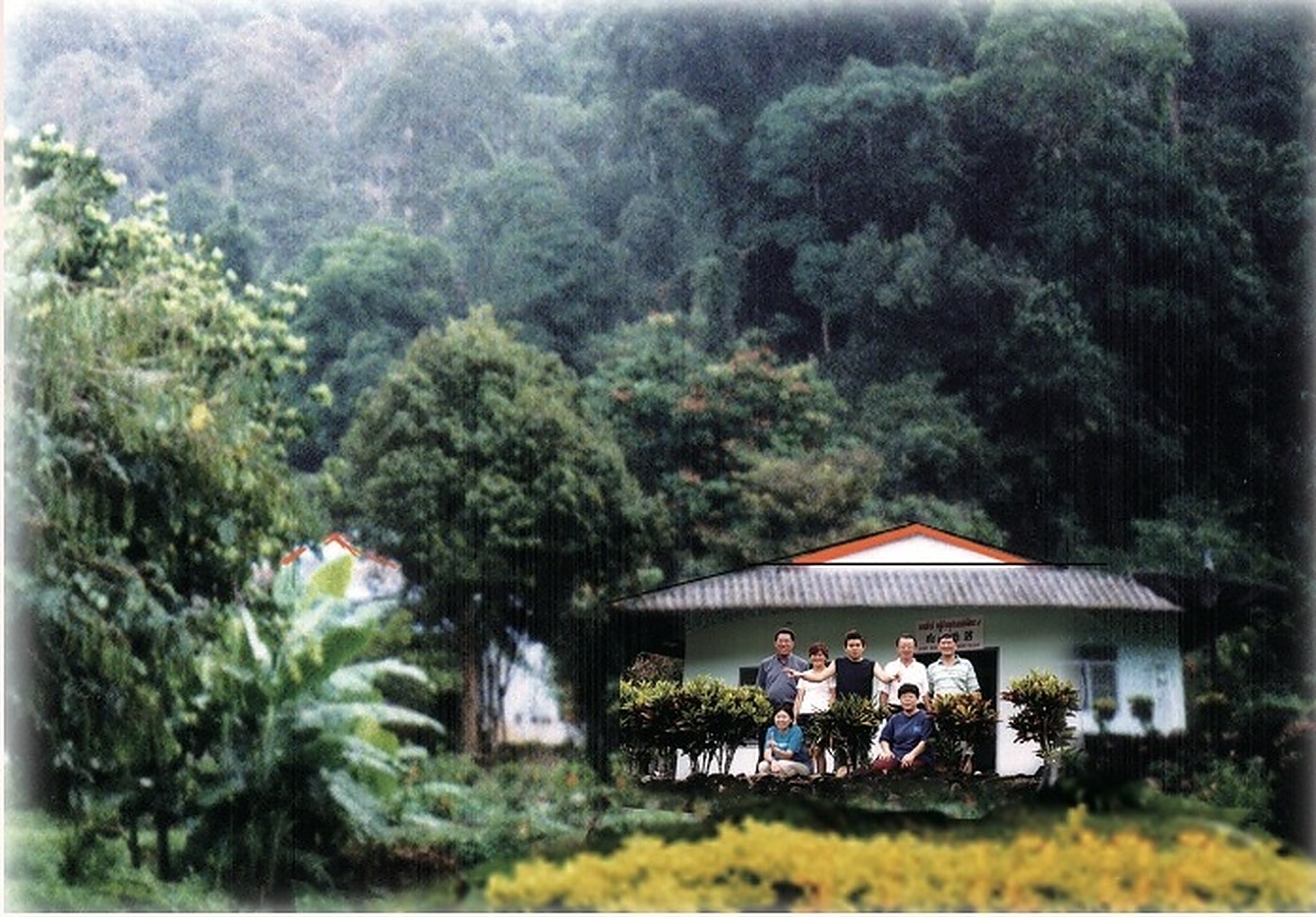
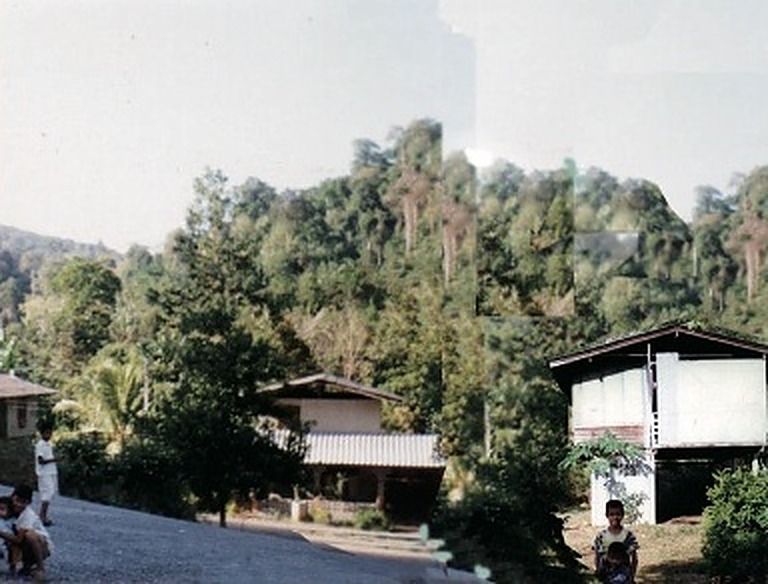
邦朗和平村(Banglang Peace Village,第9朱拉蓬公主发展村 / Ban Chulabhorn Patana 9):原马来亚人民军第八支队指战员定居点。图为村民与家属在背靠苍翠原始雨林、门前鲜花盛开的村委会平房前合影。
邦朗和平村(Banglang Peace Village,第9朱拉蓬公主发展村 / Ban Chulabhorn Patana 9):原马来亚人民军第八支队指战员定居点。图为村民与家属在背靠苍翠原始雨林、门前鲜花盛开的村委会平房前合影。 Banglang Peace Village (Ban Chulabhorn Patana 9), the settlement of former 8th Regiment combatants of the Malayan People's Army: Residents and family members pose in front of a flower-lined village house backed by lush primary rainforest.
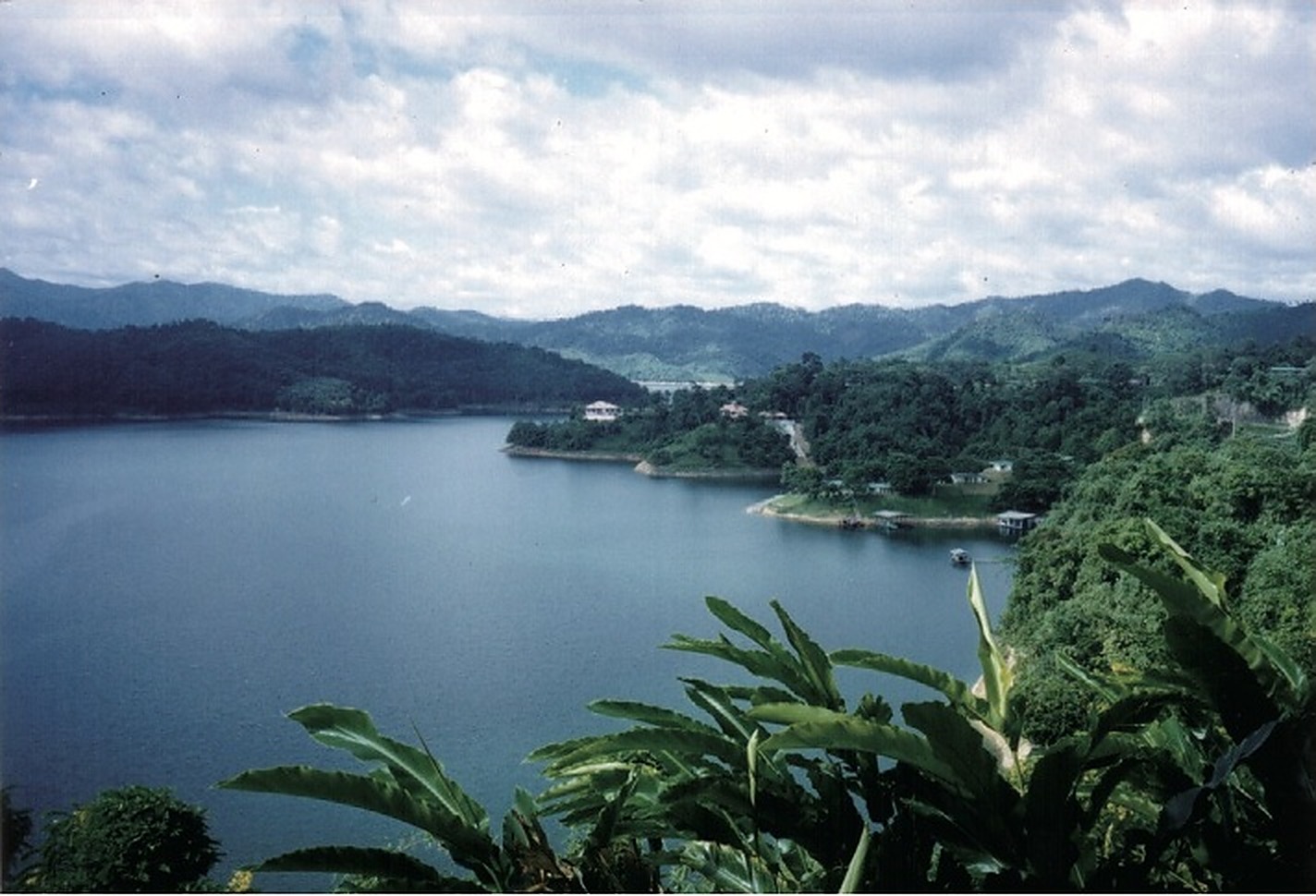
邦朗和平村(第9朱拉蓬公主发展村)壮丽的湖光山色:碧波万顷的邦朗水坝湖泊(Banglang Reservoir)与连绵起伏的蒂蒂旺沙山脉环抱着这座宁静的世外桃源。
邦朗和平村(第9朱拉蓬公主发展村)壮丽的湖光山色:碧波万顷的邦朗水坝湖泊(Banglang Reservoir)与连绵起伏的蒂蒂旺沙山脉环抱着这座宁静的世外桃源。 Scenic panorama of Banglang Peace Village (Ban Chulabhorn Patana 9), where the tranquil waters of Banglang Lake and surrounding mountain ranges embrace the lakeside peninsula settlement.
勿洞和平村(Betong Peace Village,第10朱拉蓬公主发展村 / Ban Chulabhorn Patana 10):原马共中央机关与第十二支队部分指战员定居点。图为勿洞和平度假村宾馆门前著名的“和平鸽与地球仪”喷泉雕塑。
勿洞和平村(Betong Peace Village,第10朱拉蓬公主发展村 / Ban Chulabhorn Patana 10):原马共中央机关与第十二支队部分指战员定居点。图为勿洞和平度假村宾馆门前著名的“和平鸽与地球仪”喷泉雕塑。 Betong Peace Village (Ban Chulabhorn Patana 10), settlement of former CPM Central HQ and 12th Regiment personnel: The iconic white Peace Dove perched atop a globe fountain in front of the Betong Peace Resort Hotel.
勿洞和平村(第10朱拉蓬公主发展村)晨雾缭绕的进村大道(摄于2002年12月30日):路旁竖立着黄色泰文村牌与展翅欲飞的和平鸽地球雕塑,左侧停靠着接送学童的黄色校车。
勿洞和平村(第10朱拉蓬公主发展村)晨雾缭绕的进村大道(摄于2002年12月30日):路旁竖立着黄色泰文村牌与展翅欲飞的和平鸽地球雕塑,左侧停靠着接送学童的黄色校车。 The misty entrance road of Betong Peace Village (Ban Chulabhorn Patana 10, photographed December 30, 2002), featuring the yellow Thai village signboard, the peace dove globe monument, and a yellow school bus.
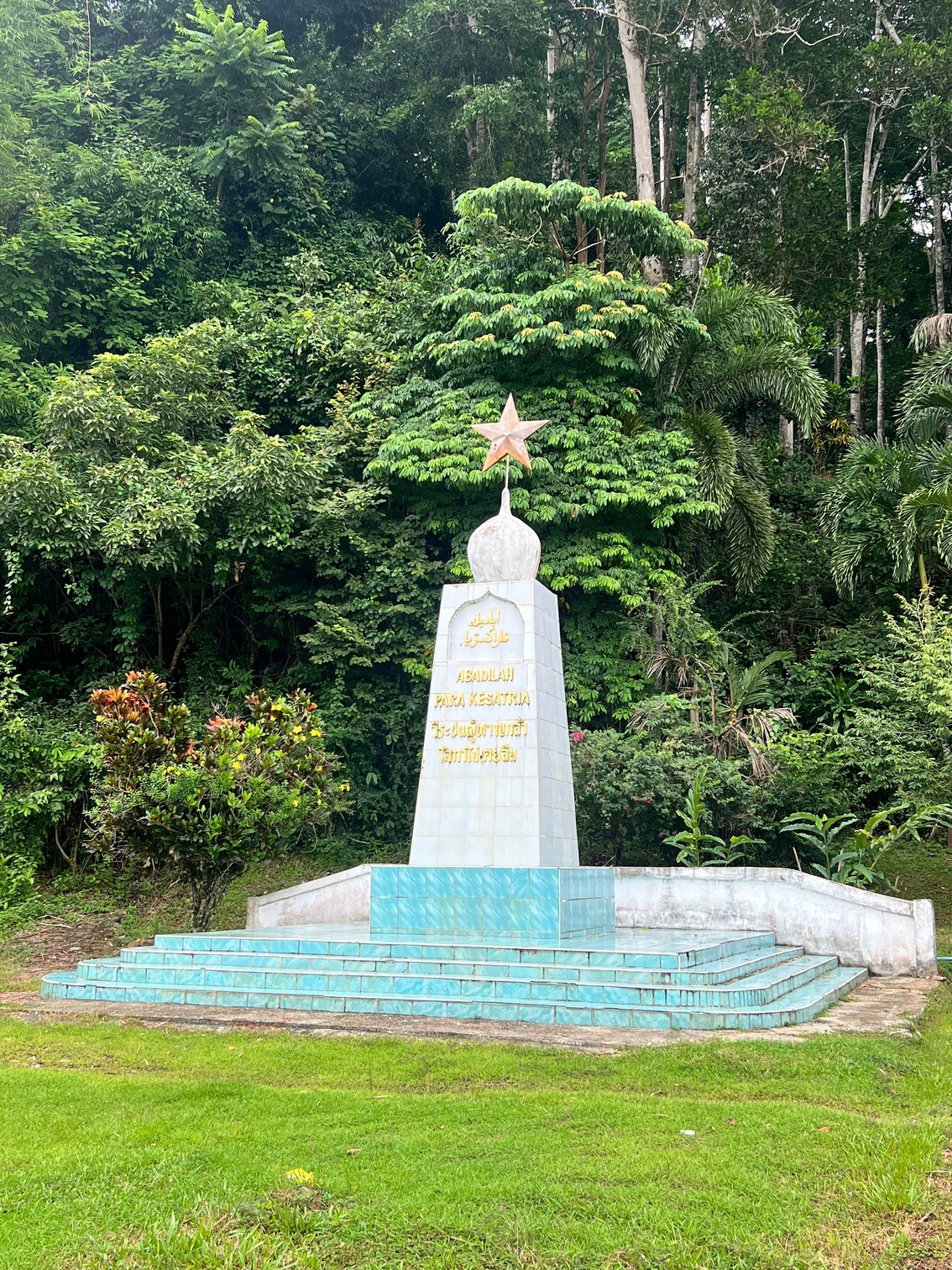
也哈和平村(Yaha Peace Village,第11朱拉蓬公主发展村 / Ban Chulabhorn Patana 11)烈士纪念碑:这座由原马来亚人民军第十支队(以马来族指战员为主体)建立的和平村,在苍翠山林前竖立起顶端闪耀红星与新月穹顶的洁白纪念碑,碑身以爪夷文、马来文(ABADILAH PARA KESATRIA)及泰文(วีรชนผู้หาญกล้า โลกาไม่เคยลืม)铭刻“勇士们永垂不朽,世人永志不忘”。
也哈和平村(Yaha Peace Village,第11朱拉蓬公主发展村 / Ban Chulabhorn Patana 11)烈士纪念碑:这座由原马来亚人民军第十支队(以马来族指战员为主体)建立的和平村,在苍翠山林前竖立起顶端闪耀红星与新月穹顶的洁白纪念碑,碑身以爪夷文、马来文(ABADILAH PARA KESATRIA)及泰文(วีรชนผู้หาญกล้า โลกาไม่เคยลืม)铭刻“勇士们永垂不朽,世人永志不忘”。 Martyrs Monument at Yaha Peace Village (Ban Chulabhorn Patana 11), founded by the predominantly Malay 10th Regiment of the MPA: Crowned with both a crescent dome and a red star, the white-tiled obelisk bears inscriptions in Jawi, Malay ('ABADILAH PARA KESATRIA'), and Thai ('วีรชนผู้หาญกล้า โลกาไม่เคยลืม' — 'Immortal Are the Warriors, Whom the World Will Never Forget').
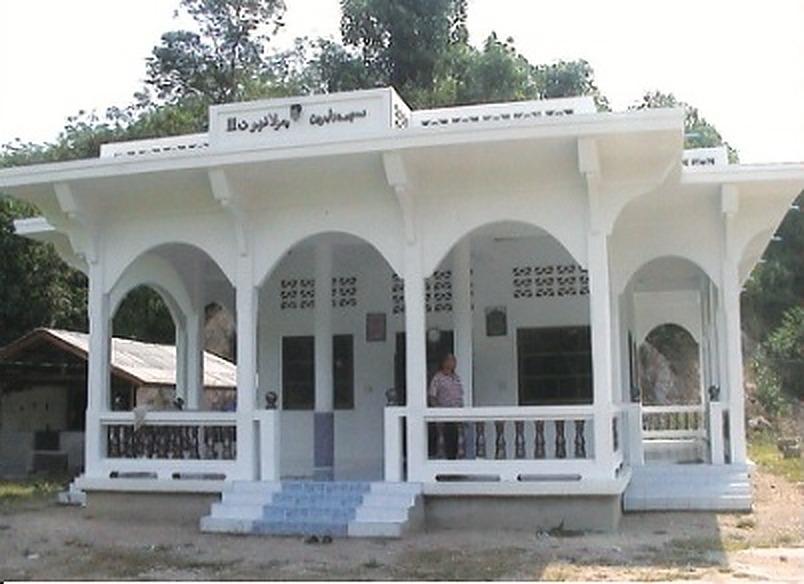
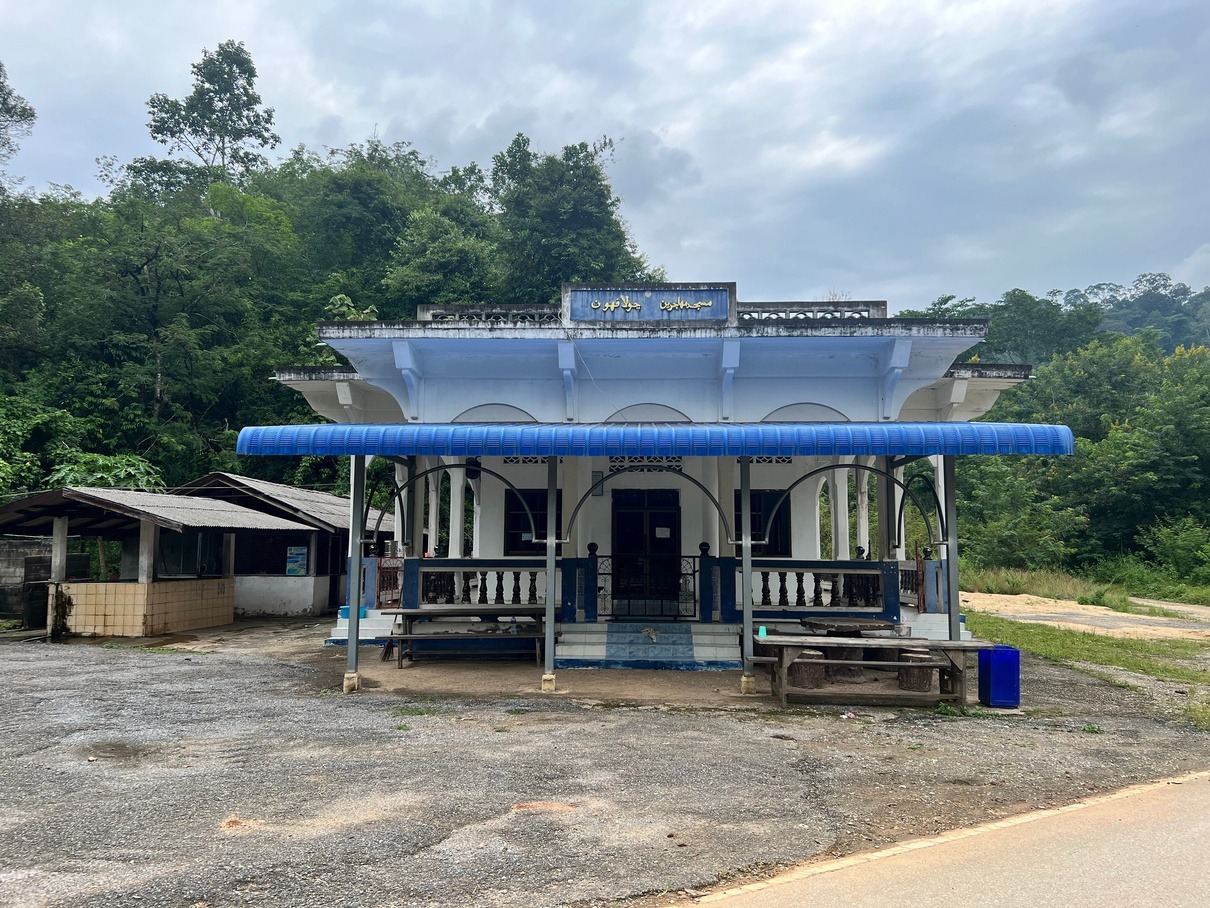
也哈和平村(第11朱拉蓬公主发展村)清真寺:洁白的伊斯兰拱廊建筑上方以爪夷文题写清真寺名称,体现了马共与人民军尊重马来族指战员伊斯兰宗教信仰的优良传统。
也哈和平村(第11朱拉蓬公主发展村)清真寺:洁白的伊斯兰拱廊建筑上方以爪夷文题写清真寺名称,体现了马共与人民军尊重马来族指战员伊斯兰宗教信仰的优良传统。 The white-arched village mosque of Yaha Peace Village (Ban Chulabhorn Patana 11) with its Jawi inscription on the facade, reflecting the religious and cultural life of the former 10th Regiment Malay comrades.
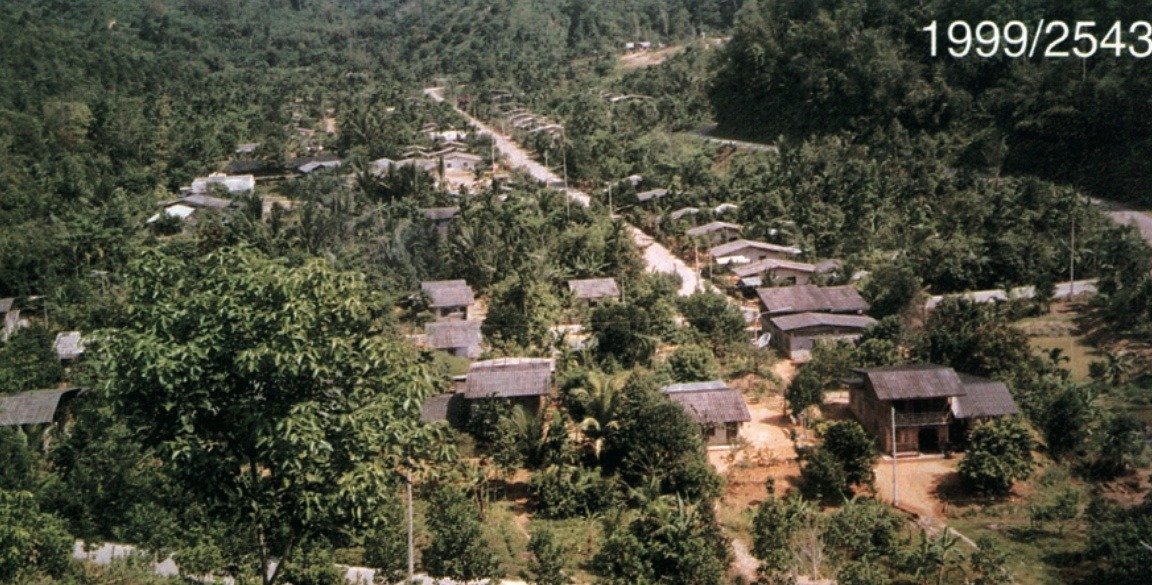
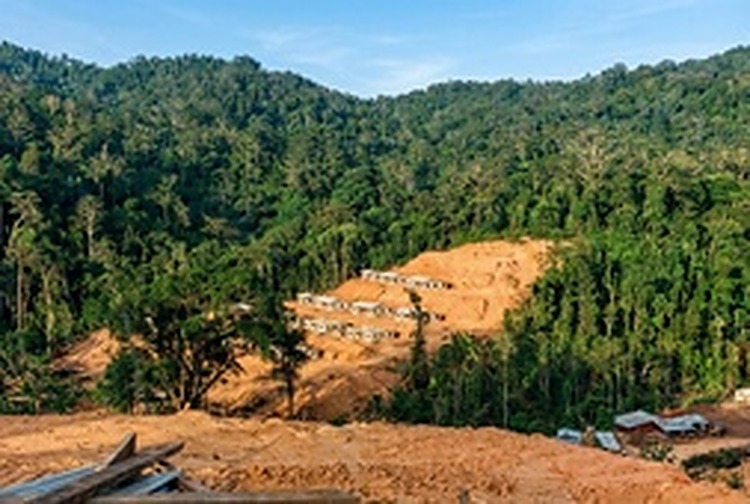
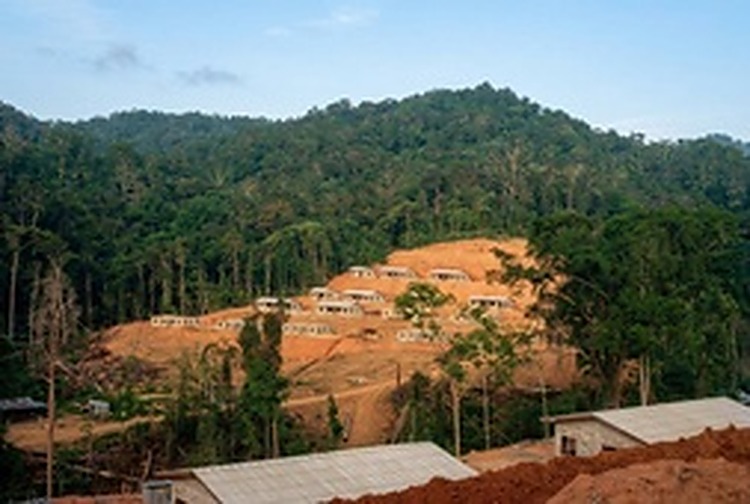
苏基林和平村(Sukhirin Peace Village,第12朱拉蓬公主发展村 / Ban Chulabhorn Patana 12)1999年(佛历2543年)山谷全景俯瞰:原马来亚人民军第十二支队与第十支队部分指战员在此垦荒建村,笔直的村道两旁整齐排列着灰瓦民居,掩映在苍翠的陶公府群山之中。
苏基林和平村(Sukhirin Peace Village,第12朱拉蓬公主发展村 / Ban Chulabhorn Patana 12)1999年(佛历2543年)山谷全景俯瞰:原马来亚人民军第十二支队与第十支队部分指战员在此垦荒建村,笔直的村道两旁整齐排列着灰瓦民居,掩映在苍翠的陶公府群山之中。 1999 (B.E. 2543) valley panorama of Sukhirin Peace Village (Ban Chulabhorn Patana 12) in Narathiwat Province, founded by former 12th and 10th Regiment combatants: Neat rows of grey-roofed houses line the straight village avenue amidst verdant mountains.
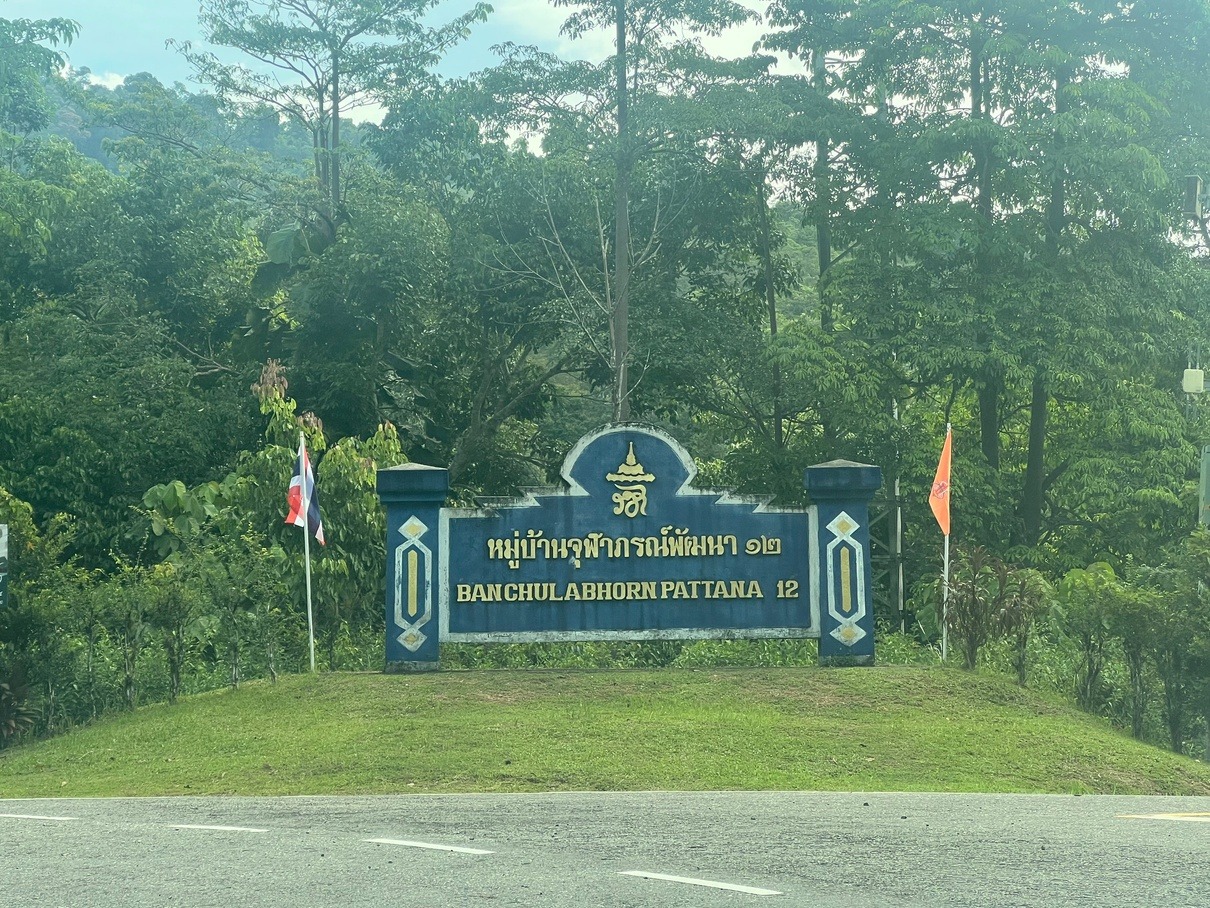
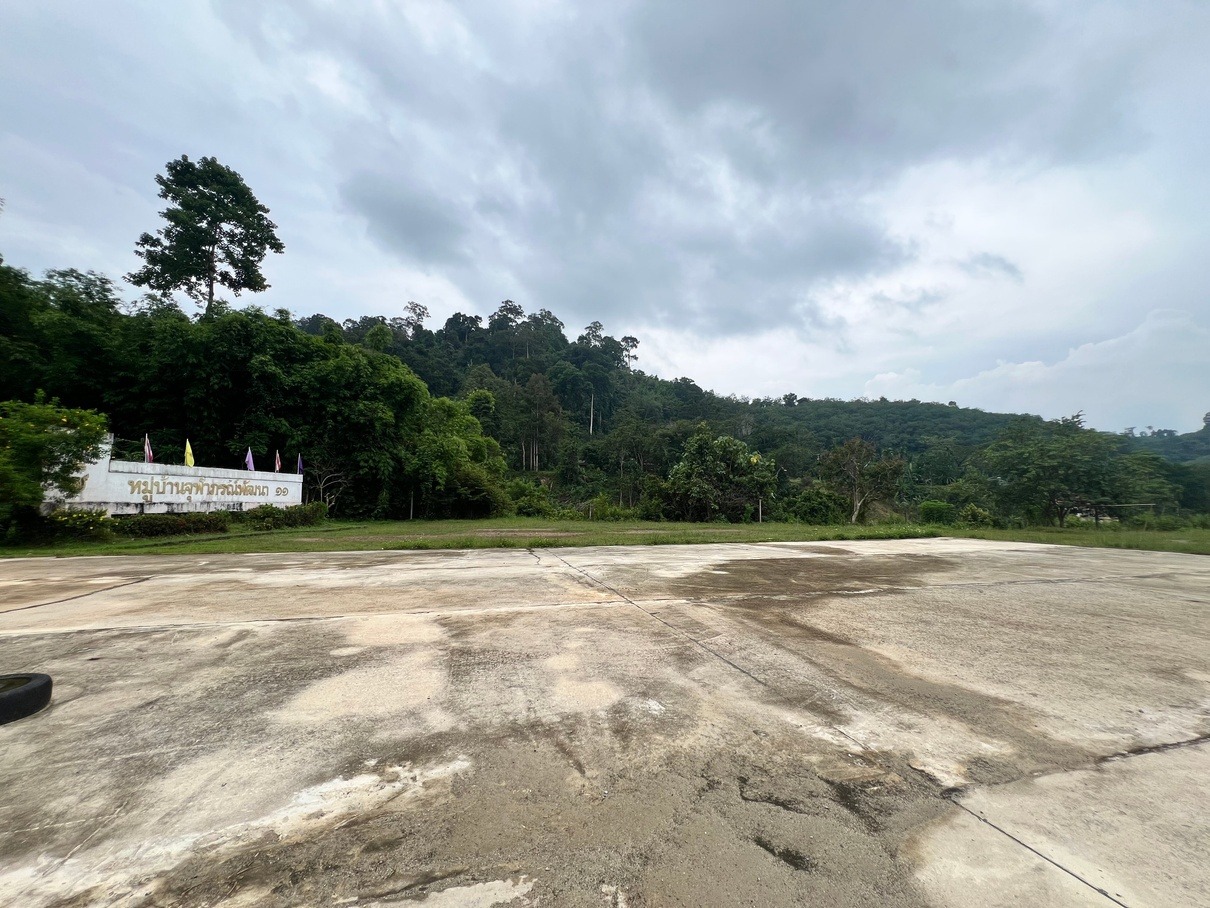
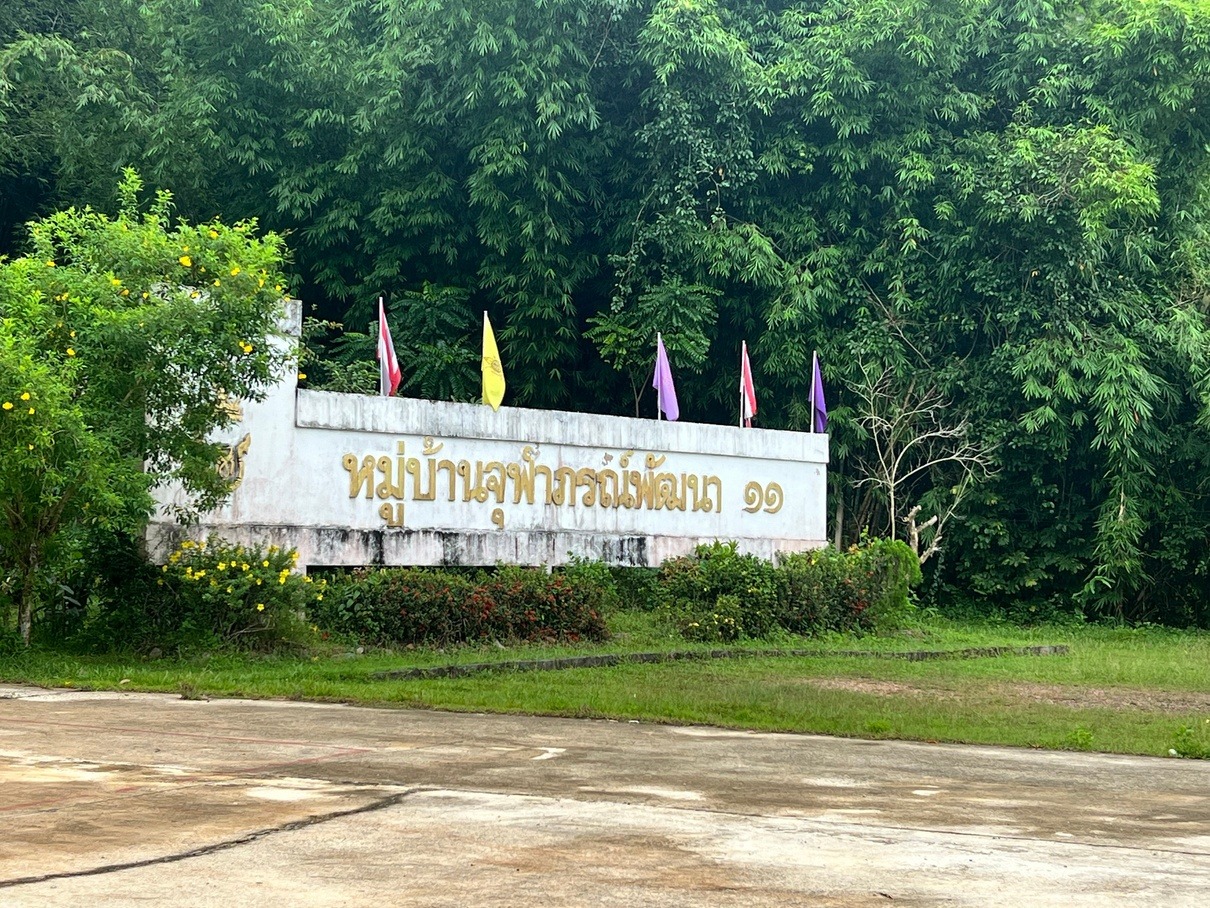
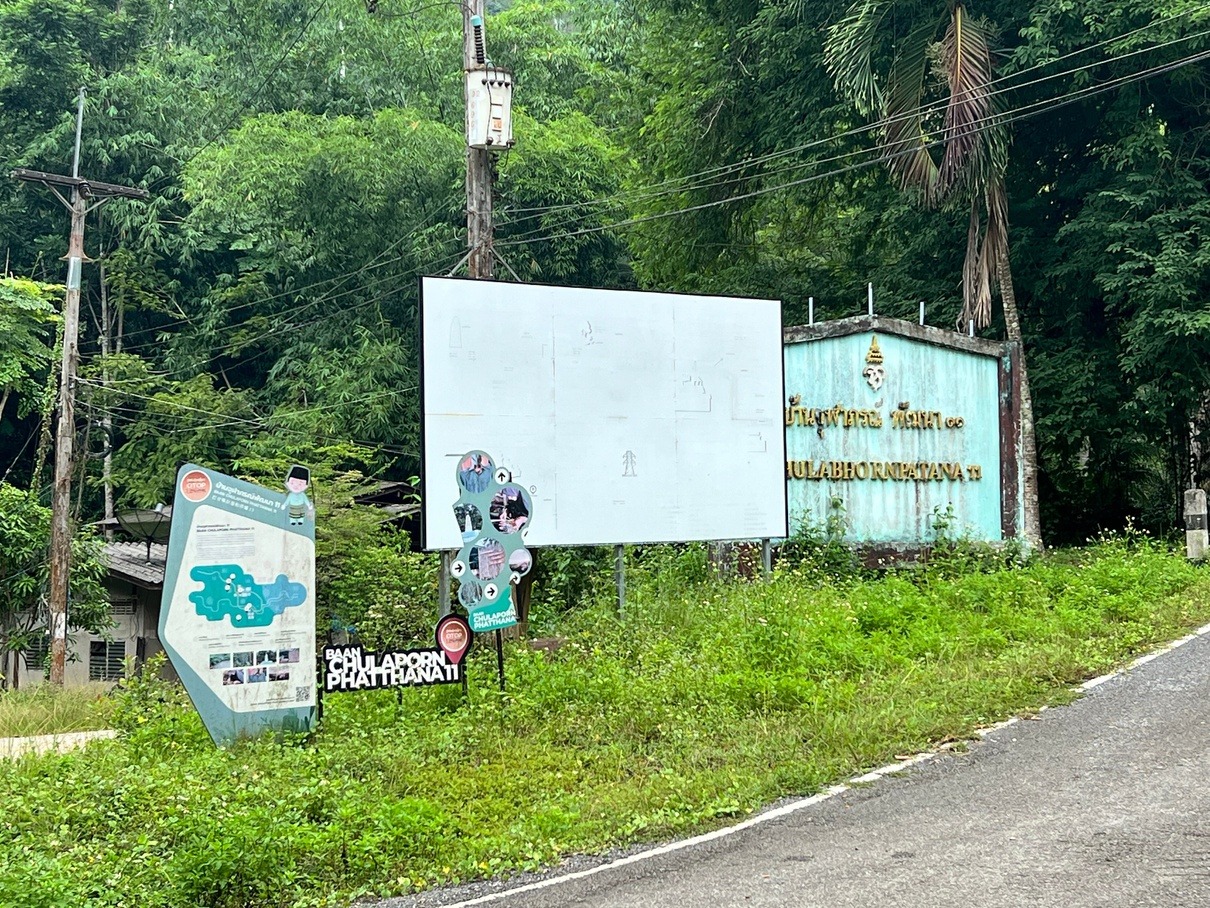
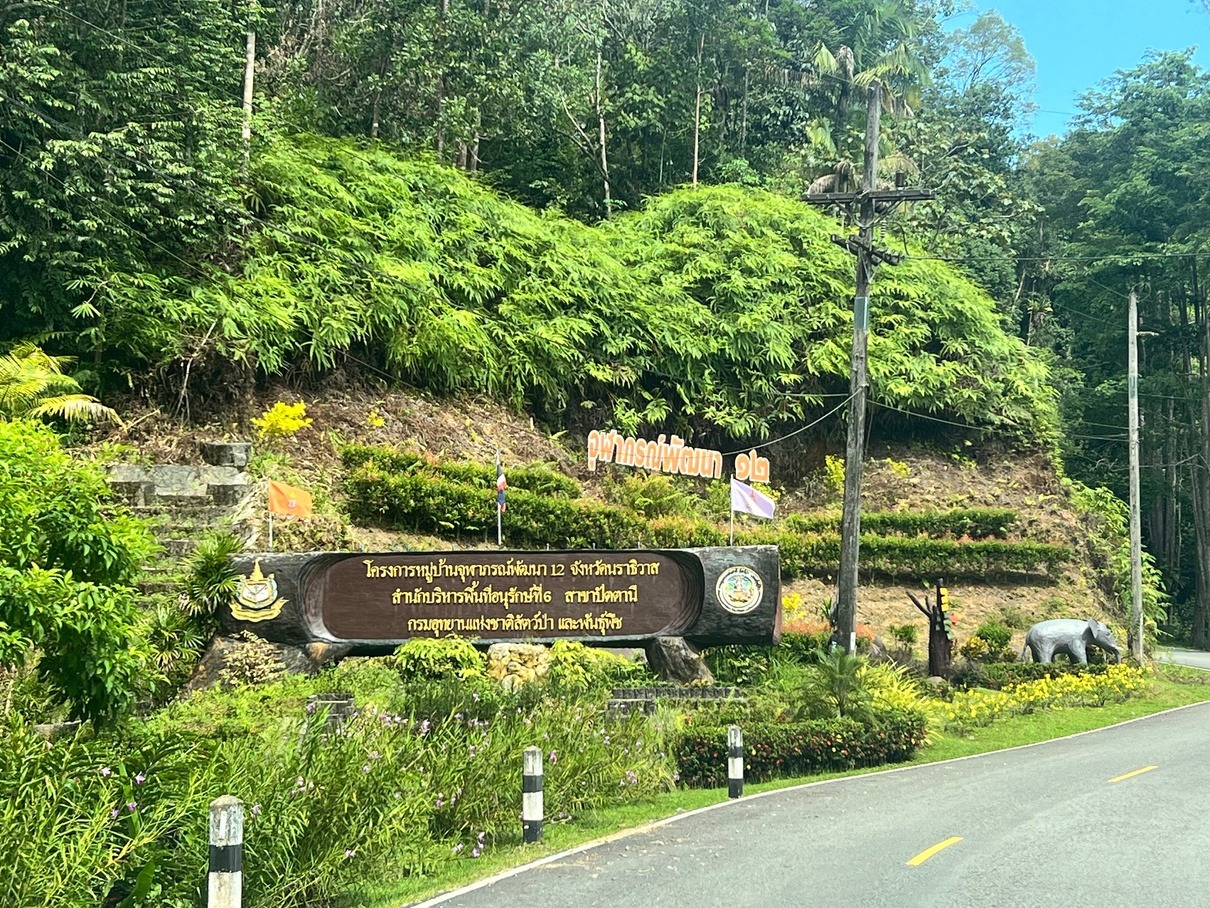
苏基林和平村(第12朱拉蓬公主发展村)公路口宏伟的蓝底金字泰英双语门楼石牌:“หมู่บ้านจุฬาภรณ์พัฒนา ๑๒ / BAN CHULABHORN PATTANA 12”,上方镶嵌着朱拉蓬公主王室徽章。
苏基林和平村(第12朱拉蓬公主发展村)公路口宏伟的蓝底金字泰英双语门楼石牌:“หมู่บ้านจุฬาภรณ์พัฒนา ๑๒ / BAN CHULABHORN PATTANA 12”,上方镶嵌着朱拉蓬公主王室徽章。 The grand blue-and-gold bilingual archway monument at the entrance of Sukhirin Peace Village reading 'หมู่บ้านจุฬาภรณ์พัฒนา ๑๒ / BAN CHULABHORN PATTANA 12' beneath the royal monogram of HRH Princess Chulabhorn.

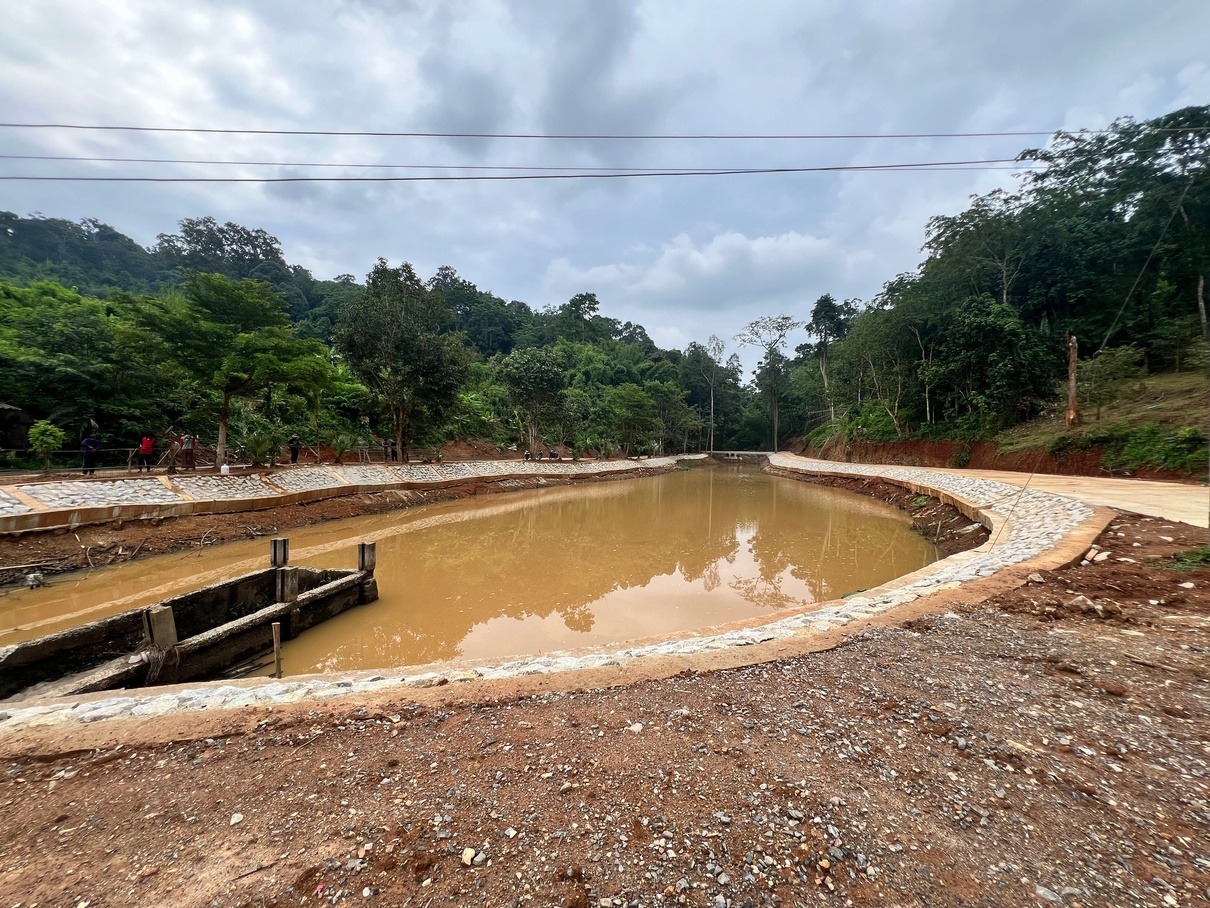
第三,也哈和平村(Yaha Peace Village,第11朱拉蓬公主发展村 / Ban Chulabhorn Patana 11):位于惹拉府也哈县(กาบัง / Kabang与Yaha交界山区),主要由原马来亚人民军第十支队(以马来族指战员为主体,由阿都拉·西迪、拉昔·迈丁、阿布·萨马赫等领导)建立。村内不仅建有现代化社区大礼堂、蓄水池与宽阔广场,更矗立着洁白庄严的伊斯兰拱廊清真寺,以及顶部同时饰有伊斯兰新月穹顶与红色五角星的烈士纪念碑,碑身以爪夷文、马来文(ABADILAH PARA KESATRIA)及泰文镌刻着“勇士们永垂不朽,世人永志不忘”,生动铭记了马来族革命先烈为民族解放献身的崇高精神。

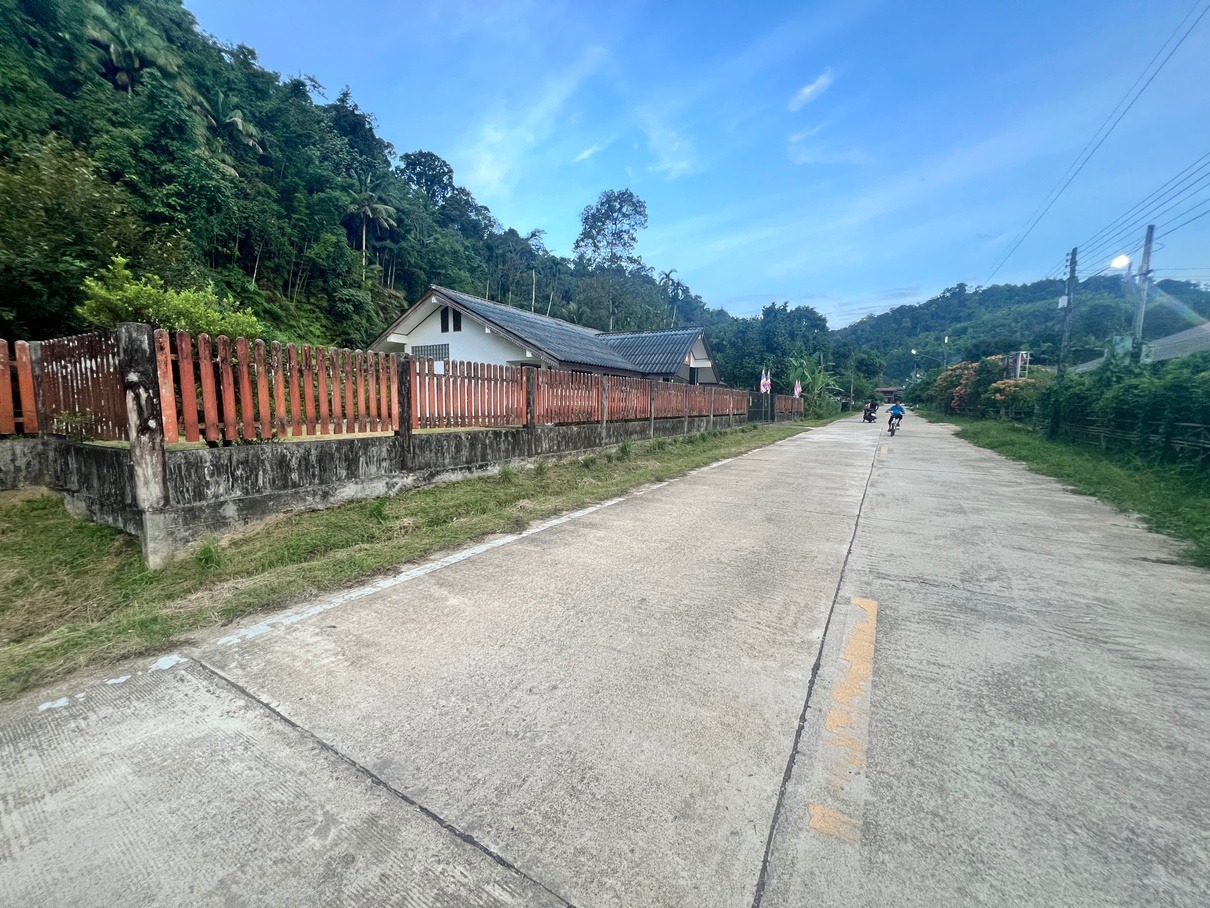
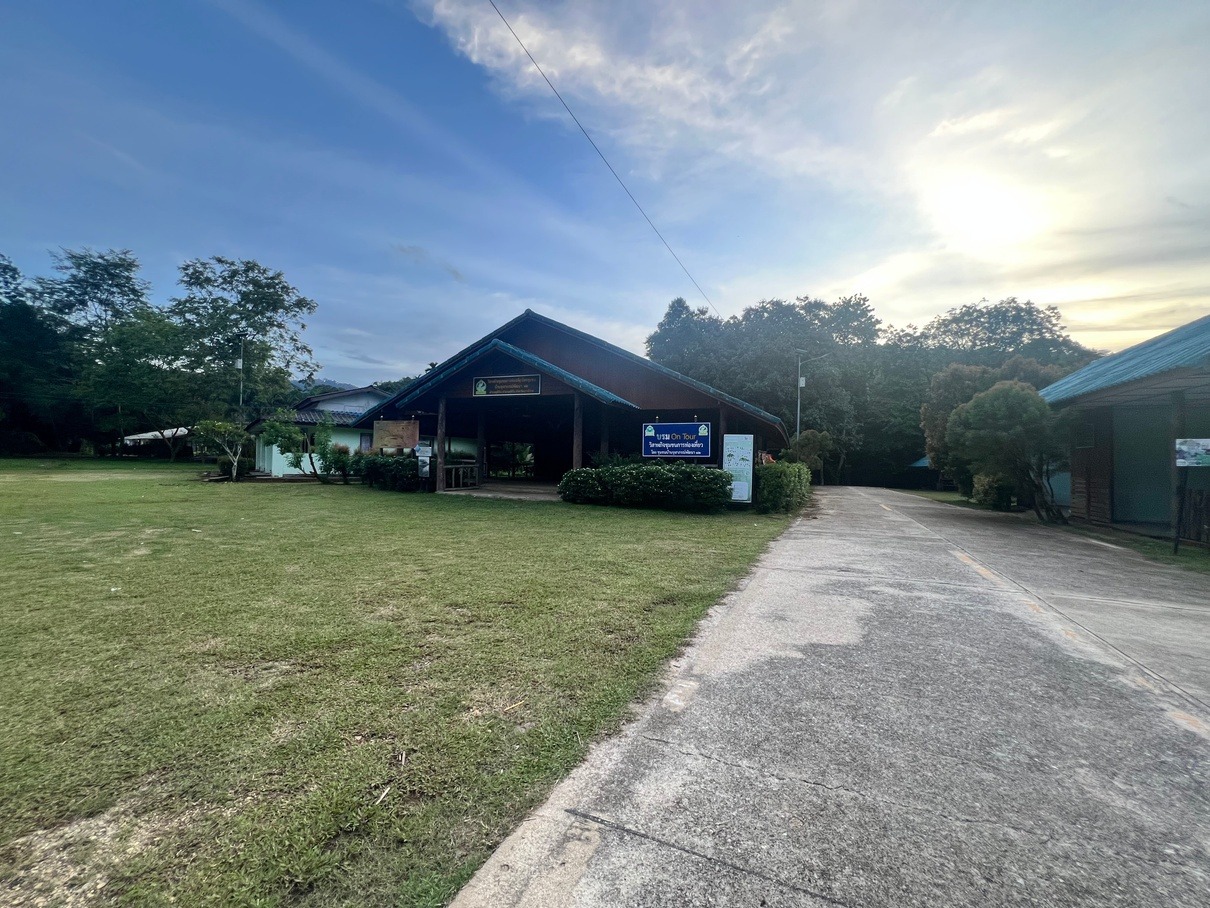
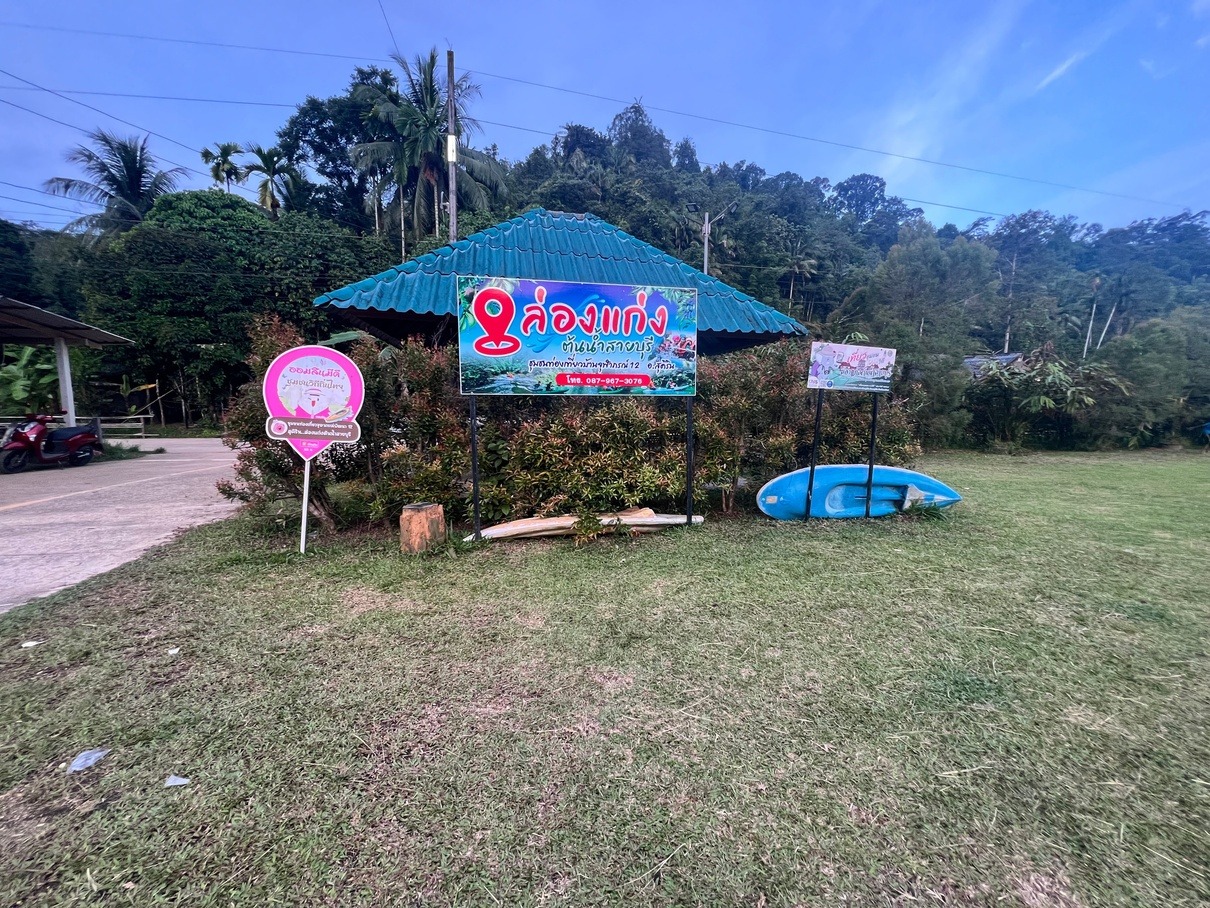
第四,苏基林和平村(Sukhirin Peace Village,第12朱拉蓬公主发展村 / Ban Chulabhorn Patana 12):位于陶公府(那拉提瓦府)苏基林县(Sukhirin)群山峡谷之中,由原人民军第十二支队及第十支队部分指战员共同建立。从1999年(佛历2543年)俯瞰山谷的航拍全景到今日笔直整洁的混凝土街巷、宏伟的蓝底金字“BAN CHULABHORN PATTANA 12”门楼石牌与历史文化展馆,苏基林和平村同邦朗、勿洞、也哈一道,共同构成了马来亚共产党武装力量从半世纪烽火岁月走向尊严、和平与新生的不朽历史丰碑。

Third, Yaha Peace Village (Ban Chulabhorn Patana 11): Located in the mountains of Yaha/Kabang in Yala Province and founded by the predominantly Malay 10th Regiment of the Malayan People's Army (led by Abdullah C.D., Rashid Maidin, and Abu Samah). Alongside its modern community hall, reservoir, and public square stands a white-arched mosque and a unique Martyrs Monument crowned with both an Islamic crescent dome and a red five-pointed star, inscribed in Jawi, Malay ('ABADILAH PARA KESATRIA'), and Thai ('Immortal Are the Warriors, Whom the World Will Never Forget').

Fourth, Sukhirin Peace Village (Ban Chulabhorn Patana 12): Located in a mountain valley of Sukhirin District, Narathiwat Province, and jointly founded by former combatants of the 12th and 10th Regiments. From the 1999 (B.E. 2543) valley panorama showing neat rows of houses along its main avenue to its present-day paved streets, historical exhibition center, and grand blue-and-gold 'BAN CHULABHORN PATTANA 12' archway, Sukhirin stands alongside Banglang, Betong, and Yaha as a living monument to the Malayan People's Army's journey from half a century of armed struggle to dignity, peace, and green rebirth.

🎬 馆藏原始历史影像:《1990年下半年和平村木屋封顶、村道平整与村落集会纪实(No. 50,全8卷)》 (VS_No_50_Mov): 全8卷历史影像(画面时间戳1990年7月6日至11月4日):忠实记录前游击队员在泰南“和平村(หมู่บ้านสันติภาพ)”泰文标志牌旁平整红土村道、攀上木质屋架铺设新居屋顶(7月6日)、在新建村落礼堂举行夜间集会(8月25日)以及1990年11月4日举行晚间追思仪式的建设历程。 Archival Footage: 'Late 1990 Peace Village Timber Roof Construction, Road Leveling, and Community Assemblies (No. 50, 8 Parts)': Eight-part archival film (time-stamped July 6 to November 4, 1990): documents former guerrillas erecting timber roof frames (July 6), leveling earth roads beside the Thai 'Peace Village (หมู่บ้านสันติภาพ)' signpost (August 12), holding evening village hall meetings (August 25), and gathering for a November 4 evening memorial tribute.
🎬 馆藏原始历史影像:《1990年9月泰南公路行车、和平村礼堂议事、木工坊劳作与挑水浇菜日常(No. 51,全6卷)》 (VS_No_51_Mov): 全6卷历史影像(画面时间戳1990年9月21日至22日):记录乘车沿泰南公路驶入和平村沿途风光、村民在礼堂举行议事会议与集体聚餐(9月21日),以及次日清晨视察新建高脚木屋与木工坊、村民肩挑水桶辛勤浇灌菜园的和平安居生活画卷(9月22日)。 Archival Footage: 'September 1990 Southern Thai Highway Journey, Peace Village Hall Meeting, Carpentry Workshop, and Vegetable Garden Irrigation (No. 51, 6 Parts)': Six-part archival film (time-stamped September 21–22, 1990): captures driving along southern Thai highways into the Peace Village, holding a community hall meeting and communal meal (September 21), and inspecting newly built wooden homes, carpentry workshops, and villagers carrying water buckets on shoulder poles to irrigate vegetable plots (September 22).
🎬 馆藏原始历史影像:《1990年10月邦朗湖游船迎宾、泰南传统长甲舞与和平村军民联欢晚会(No. 62,全6卷)》 (VS_No_62_Mov): 全6卷历史影像(画面时间戳1990年10月19日至20日):第一卷记录乘快艇在邦朗水库湖面泛舟迎宾;第二至第五卷完整呈现10月19日晚在和平村礼堂举行的盛大联欢晚会,包含泰国传统长甲舞(Fawn Leb)、电声乐队伴奏、游击队题材歌舞剧及大合唱;第六卷记录10月20日清晨村民列队欢送来宾的温馨场面。 Archival Footage: 'October 1990 Bang Lang Lake Boat Excursion, Traditional Thai Fingernail Dance, and Peace Village Cultural Gala (No. 62, 6 Parts)': Six-part archival film (time-stamped October 19–20, 1990): Part 1 shows motorboats cruising across Bang Lang Lake; Parts 2 to 5 capture the October 19 evening cultural gala in the Peace Village hall featuring traditional Thai fingernail dancing (Fawn Leb), live band accompaniment, guerrilla dance skits, and choirs; Part 6 records the October 20 morning send-off for visiting guests.
🎬 凤凰卫视专题纪录片:《丛林深处的和平》:泰南四大马共和平村历史变迁与老战士访谈(全2卷) (VS_丛林深处的和平): 实地探访泰南邦朗、勿洞、也哈、苏基林四大朱拉蓬公主发展村(和平村),记录老战士们从丛林游击战走向绿色新生的口述历史与今日风貌。 Phoenix TV Documentary: 'Peace Deep in the Jungle': The Four CPM Peace Villages and Veteran Interviews (2 Parts): Two-part on-location documentary exploring Banglang, Betong, Yaha, and Sukhirin Peace Villages (Ban Chulabhorn Patana 9–12), featuring oral histories of veteran combatants and present-day village life.
🎬 馆藏原始历史影像:《泰南和平村“新发展”(Pembangunan Baru 2a):油锯伐木、刀耕火种与开山辟地建家园纪实》 (VS_Pembangunan_Baru_2a): 真实记录前游击队员在泰南崇山峻岭间启动“新发展(Pembangunan Baru)”拓荒工程的艰辛历程:指战员们操作油锯、双人手拉锯与斧头砍伐原始林木,并通过山林烧荒清理陡峭坡地,用双手在荒山野岭间开辟出和平村的农耕园区与定居点。 Archival Footage: 'New Development in the Peace Villages (Pembangunan Baru 2a): Chainsaw Timber Felling and Hillside Land Clearing for the New Homeland': First-hand archival footage documenting the arduous 'New Development (Pembangunan Baru)' pioneering work in southern Thailand, showing former guerrillas operating chainsaws, two-person handsaws, and axes to fell giant forest trees and clear steep mountainsides for Peace Village housing and farmland.